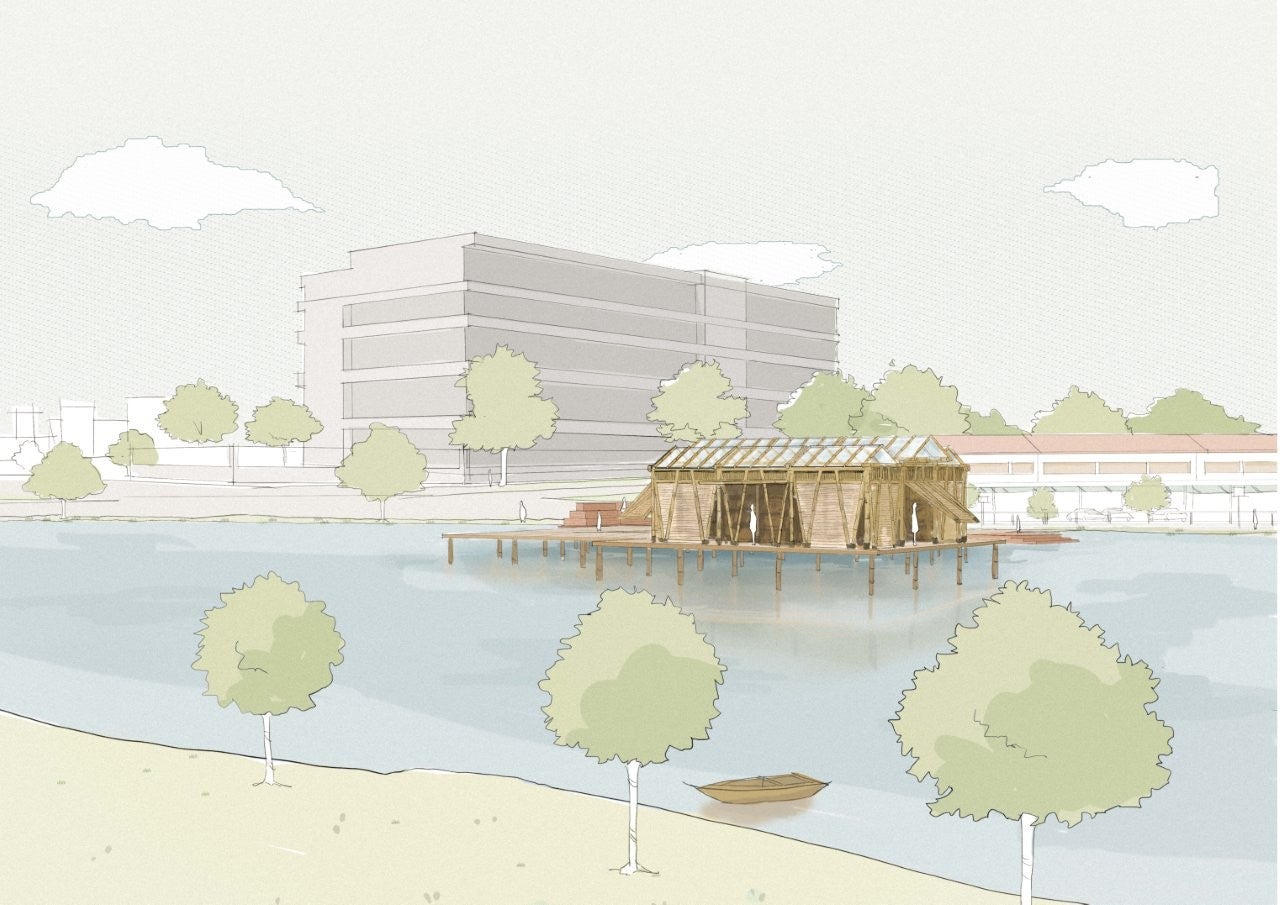
Reconnecting Faith, Water, and Labour into a Shared Ecology
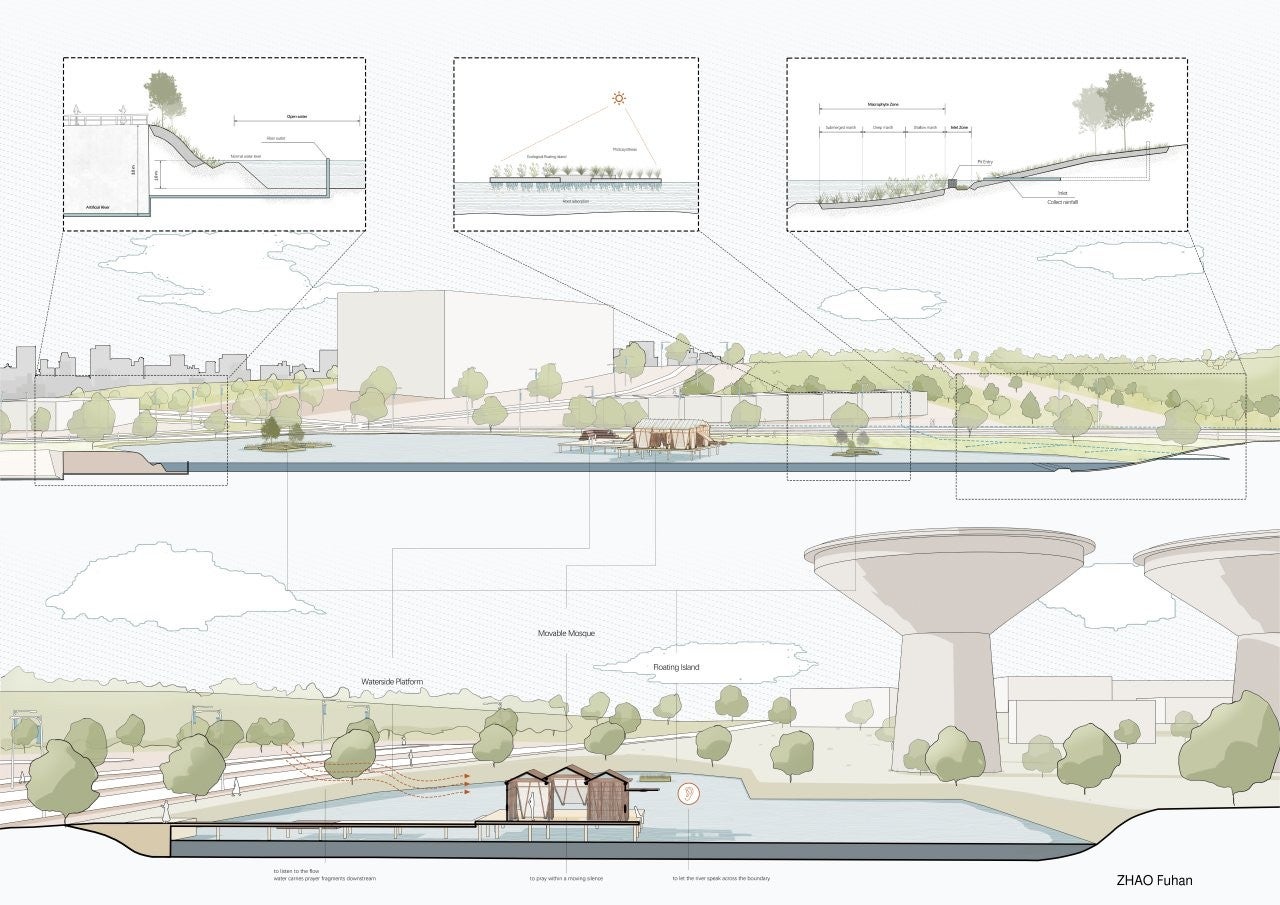
This project is located in Tampines, Singapore, an area with a unique spatial structure: migrant worker dormitories, temples, and an artificial river coexist, yet remain isolated and lack communication. The enclosed garden is conceived as a medium to deconstruct the dislocated relationships between humans and nature, faith and migration, and to refine a new logic of symbiosis. By analyzing the displacements caused by multiple factors, I proposed the concept of ‘Fifth Nature’ for this project. Rather than recreating pristine nature, it constructs a negotiated ecology through design, in which social and environmental processes intertwine.
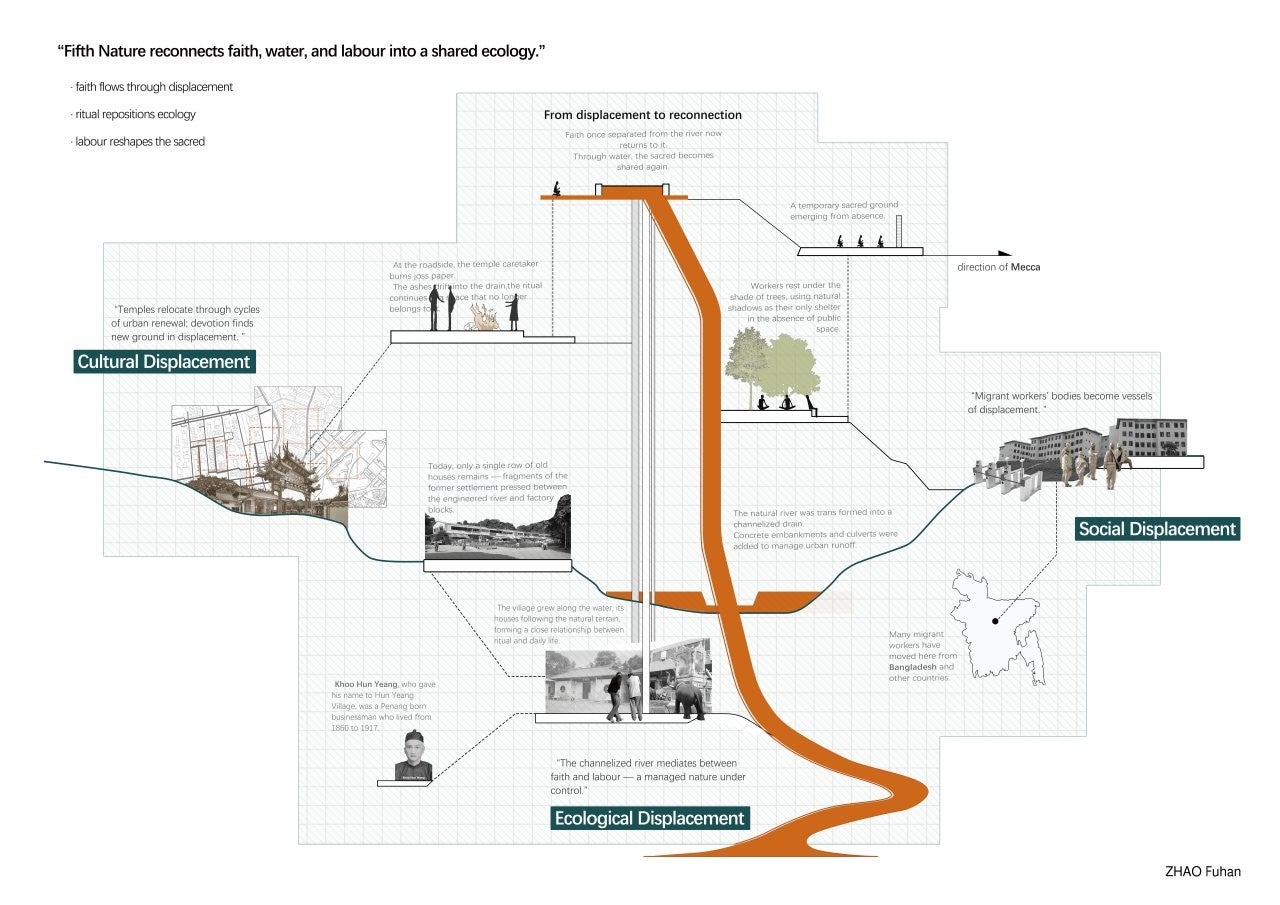
The core of the design thinking lies in how to make the garden a ‘familiar device’ where mobile people can reorganize space, regain control, and establish a sense of belonging. Here, nature is no longer an external spectacle to be admired, but a cultural product shaped and continuously generated by humans and non-humans. The project seeks to reconnect the three dimensions of displacement: water, temple, and workers, exploring their underlying relationships, allowing water, faith, and labor to jointly shape a new spatial order.
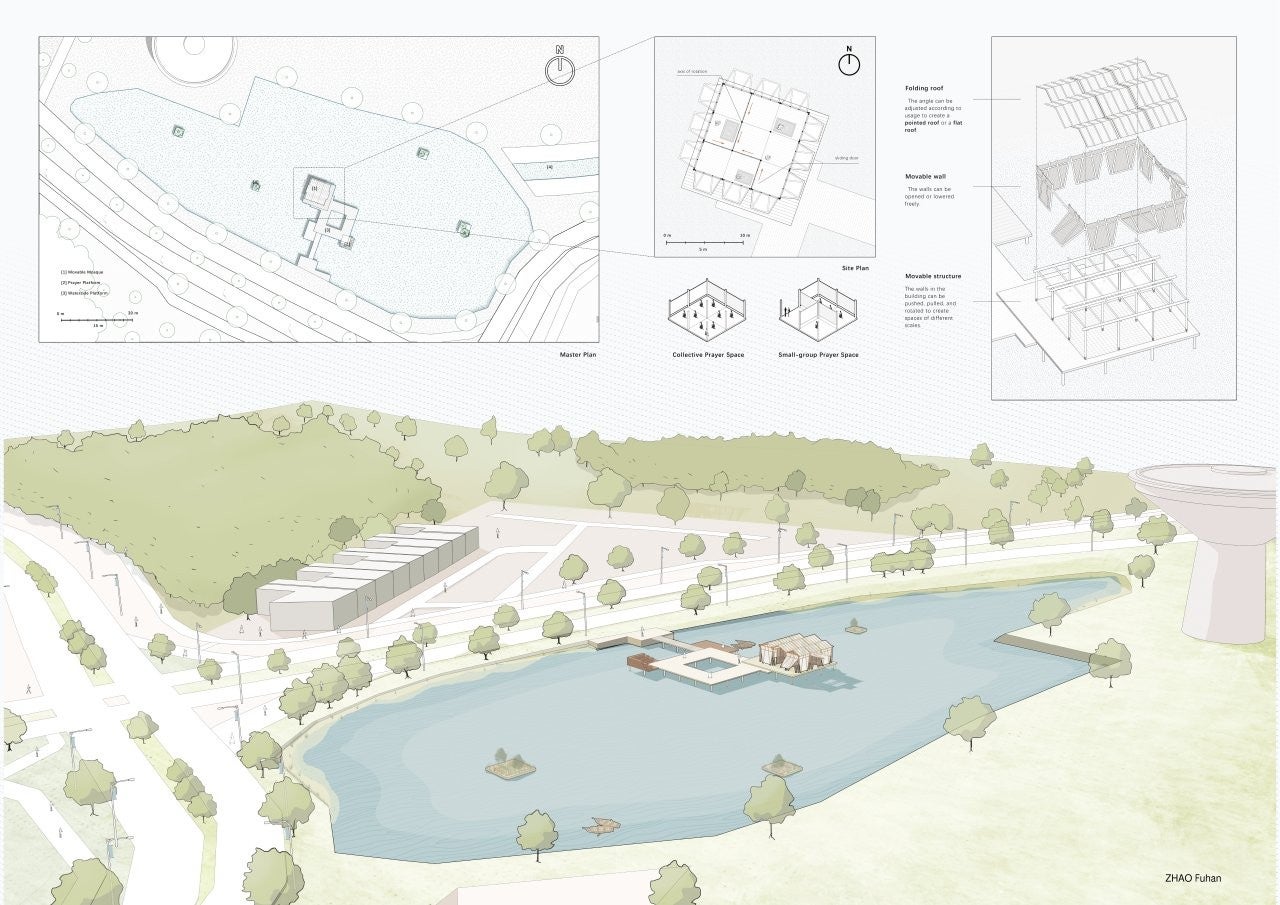
Research revealed that the majority of the migrant workers on the site were from Bangladesh, primarily practicing Islam. Therefore, I created a mobile spatial system in my design. Through rotating and sliding walls, workers can proactively adjust the spatial format for prayers or gatherings of varying scales, freeing themselves from the confines of their dormitories and regaining a sense of familiarity and control in a foreign land.
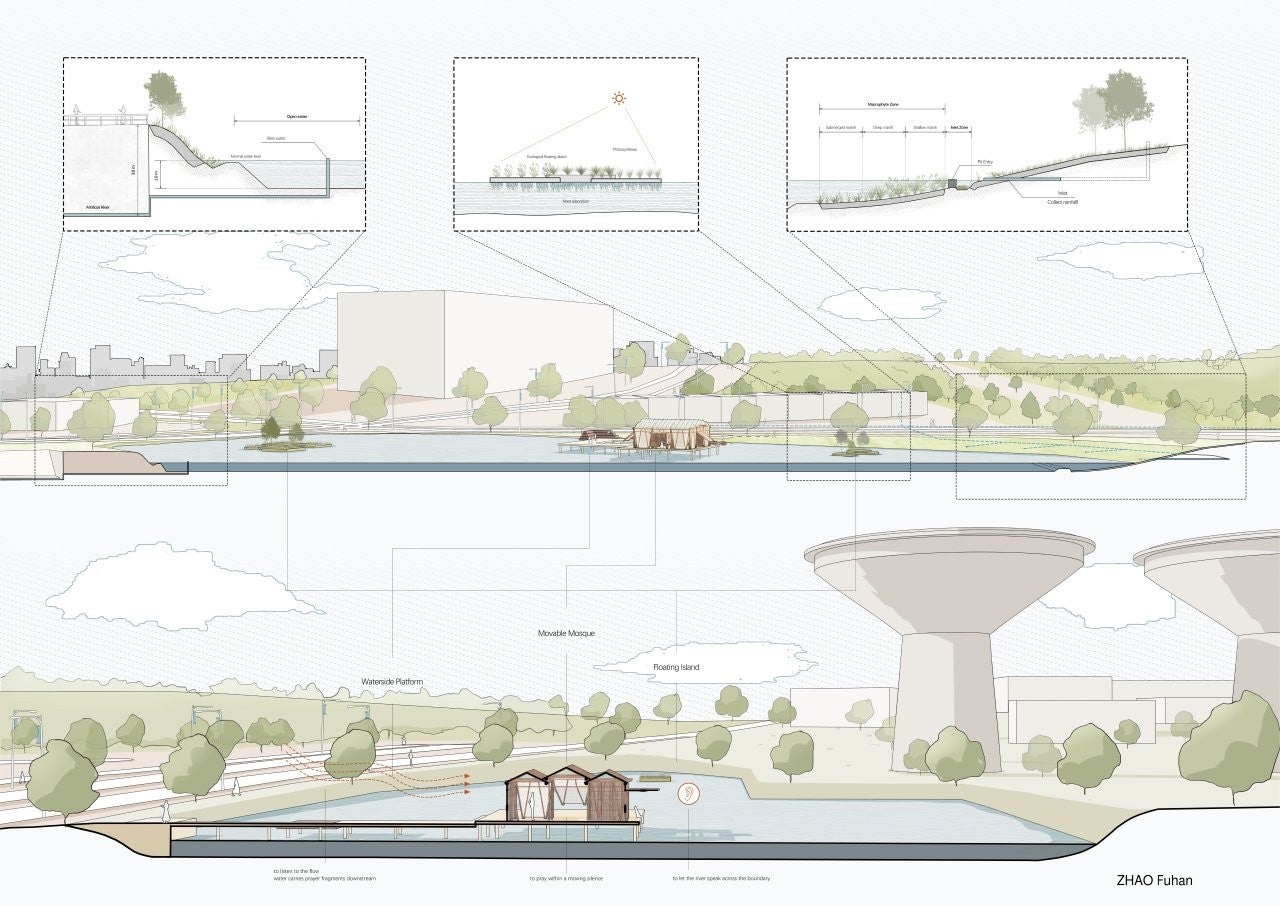
Ultimately, this enclosed garden is not a natural refuge from the city, but a microcosm of urban relations. It redefines fifth nature—an interface where displaced people and displaced ecologies temporarily coexist; here, faith, labor, and the environment constantly intertwine and mutually generate, collectively reshaping the meaning of nature in the contemporary era.