Revealing the Potential for Green: Retrofit Strategies for High-Density Urban Streetscapes in Ho Chi Minh City
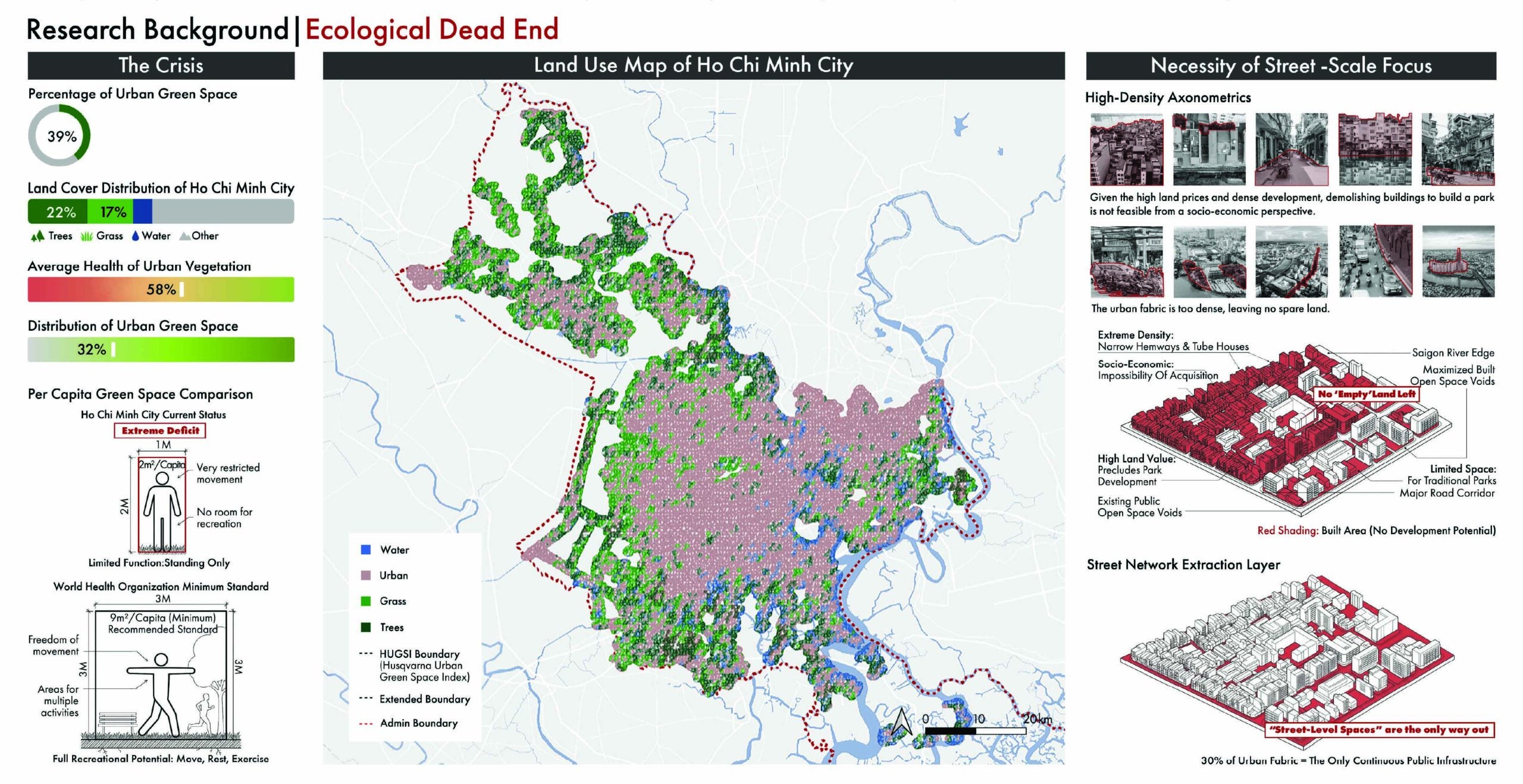
This thesis addresses Ho Chi Minh City’s critical shortage of public green space by reimagining its street network as a continuous ecological infrastructure. In a rapidly urbanising and high-density urban environment where conventional parks are increasingly difficult to deliver, the project shifts attention from creating new green spaces to retrofitting the city’s existing public realm.
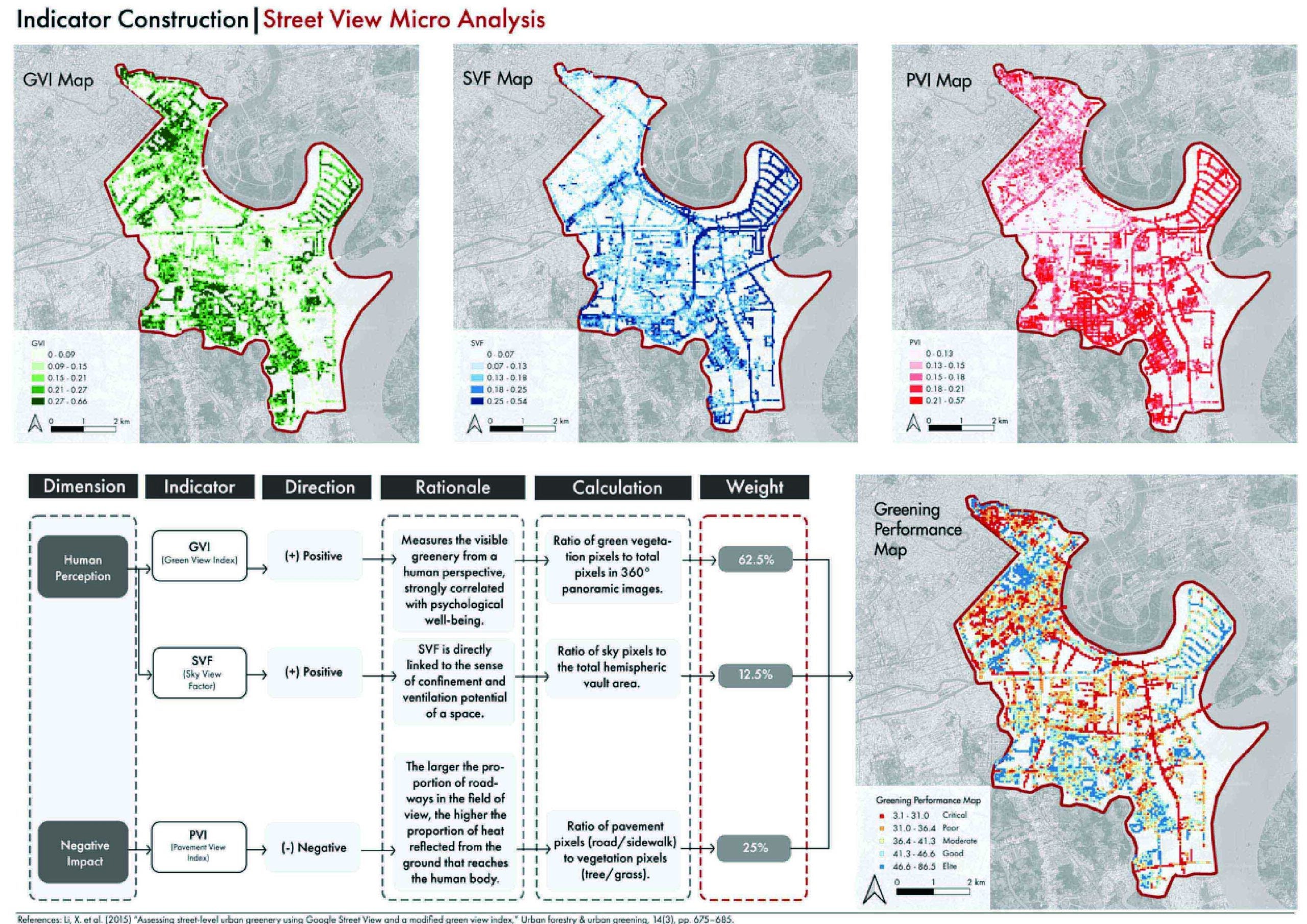
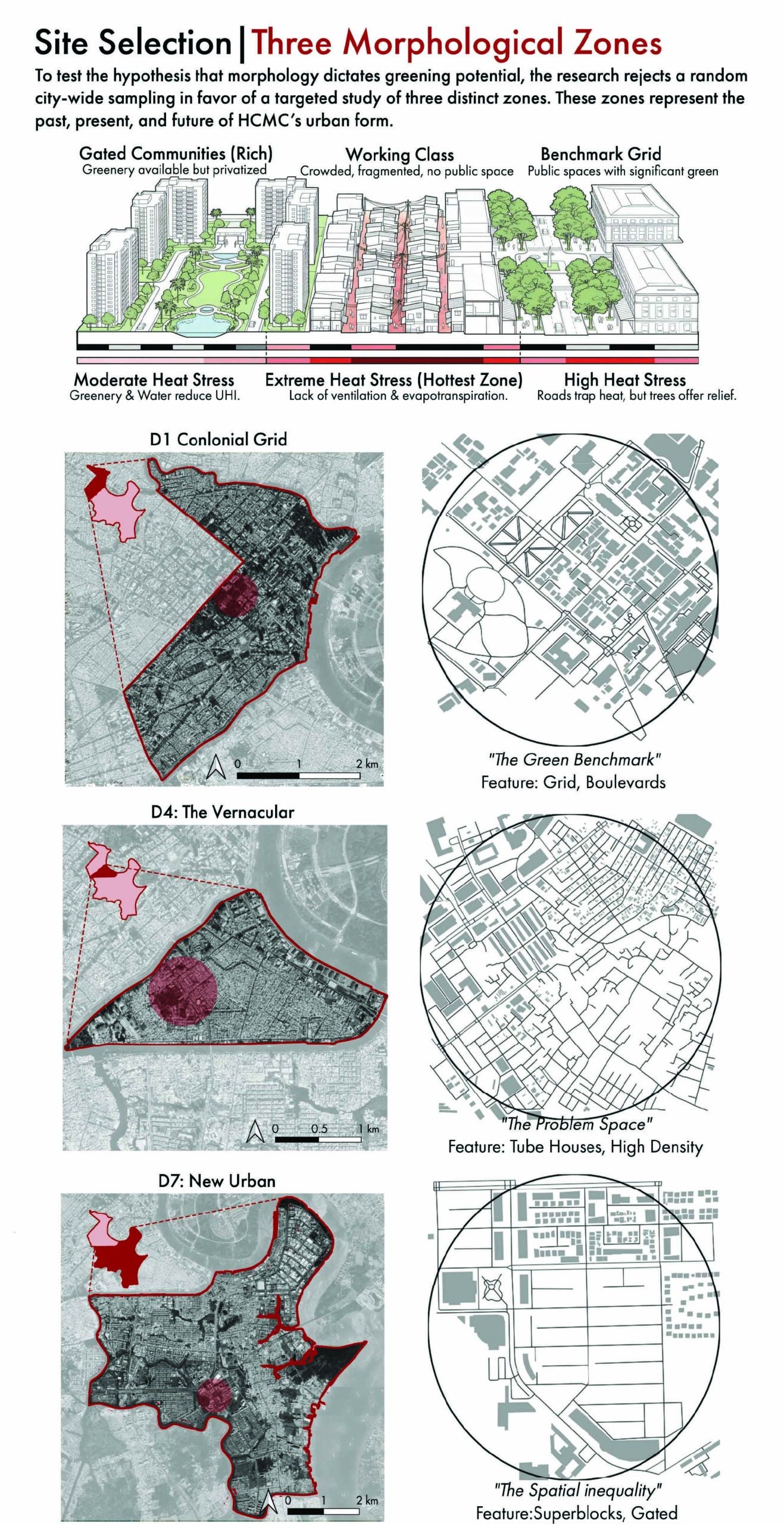
The research develops an integrated evaluation–diagnosis–intervention framework that combines macro-scale GIS analysis with street-view image semantic segmentation to assess environmental performance at multiple scales. Using the Green View Index (GVI), the study identifies and quantifies “Grey Voids”—underutilised urban spaces including blank walls, oversized pavements, and areas beneath elevated infrastructure. Through K-Means clustering across three characteristic urban morphologies—colonial grids, vernacular Hem alleyways, and modern superblocks—the project classifies street conditions and reveals five recurring spatial constraints that limit ecological performance.
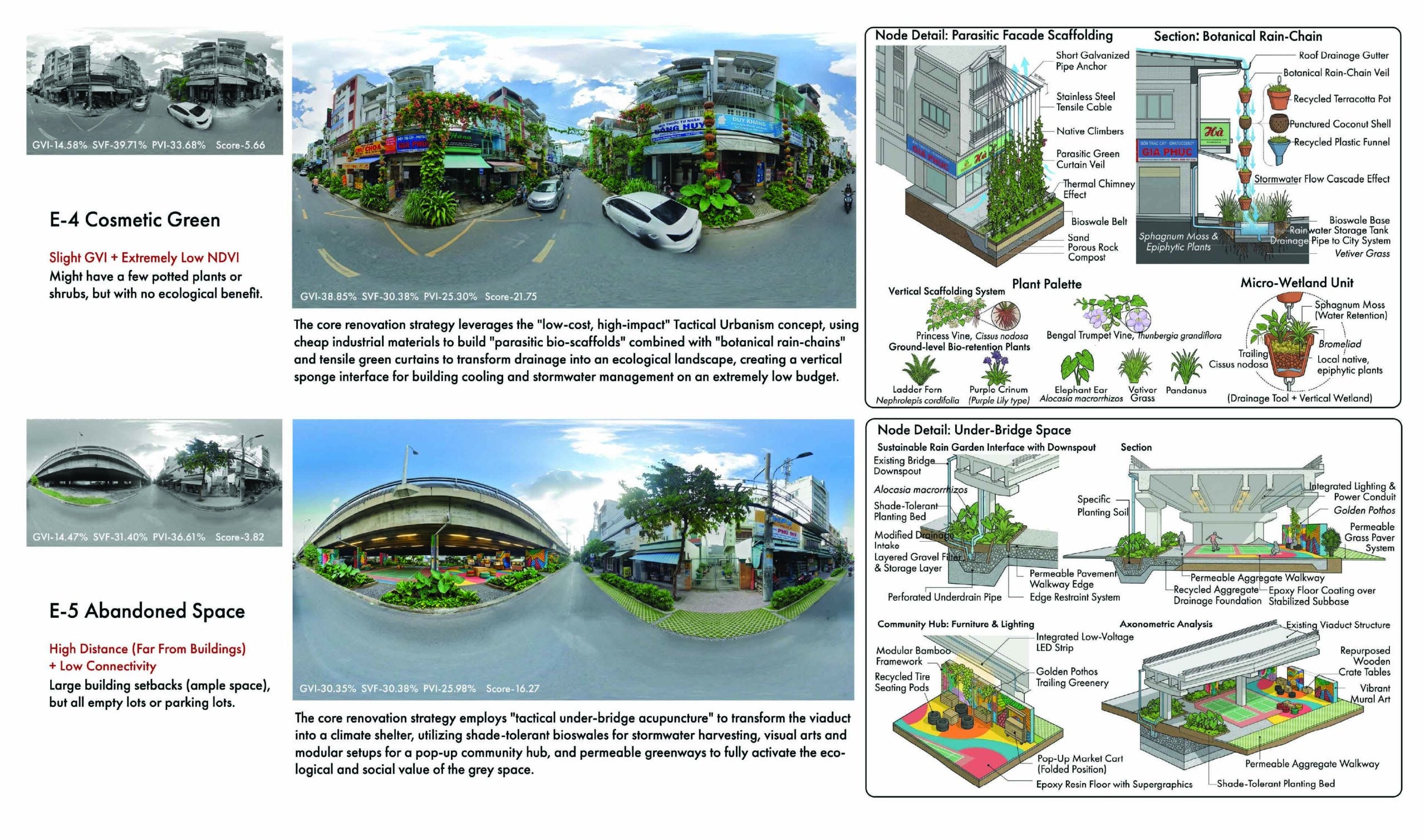
Building on this analysis, the thesis proposes a Street Greening Toolkit that translates diagnostic findings into site-specific design strategies. Guided by a philosophy of minimum footprint, maximum impact, the toolkit pairs targeted, low-disruption interventions—including parasitic bio-scaffolds, tactical under-bridge greening, and vertical planting systems—with different street typologies and spatial conditions. Rather than relying on large-scale redevelopment, the approach demonstrates how incremental interventions can collectively transform everyday streets into an interconnected green network.
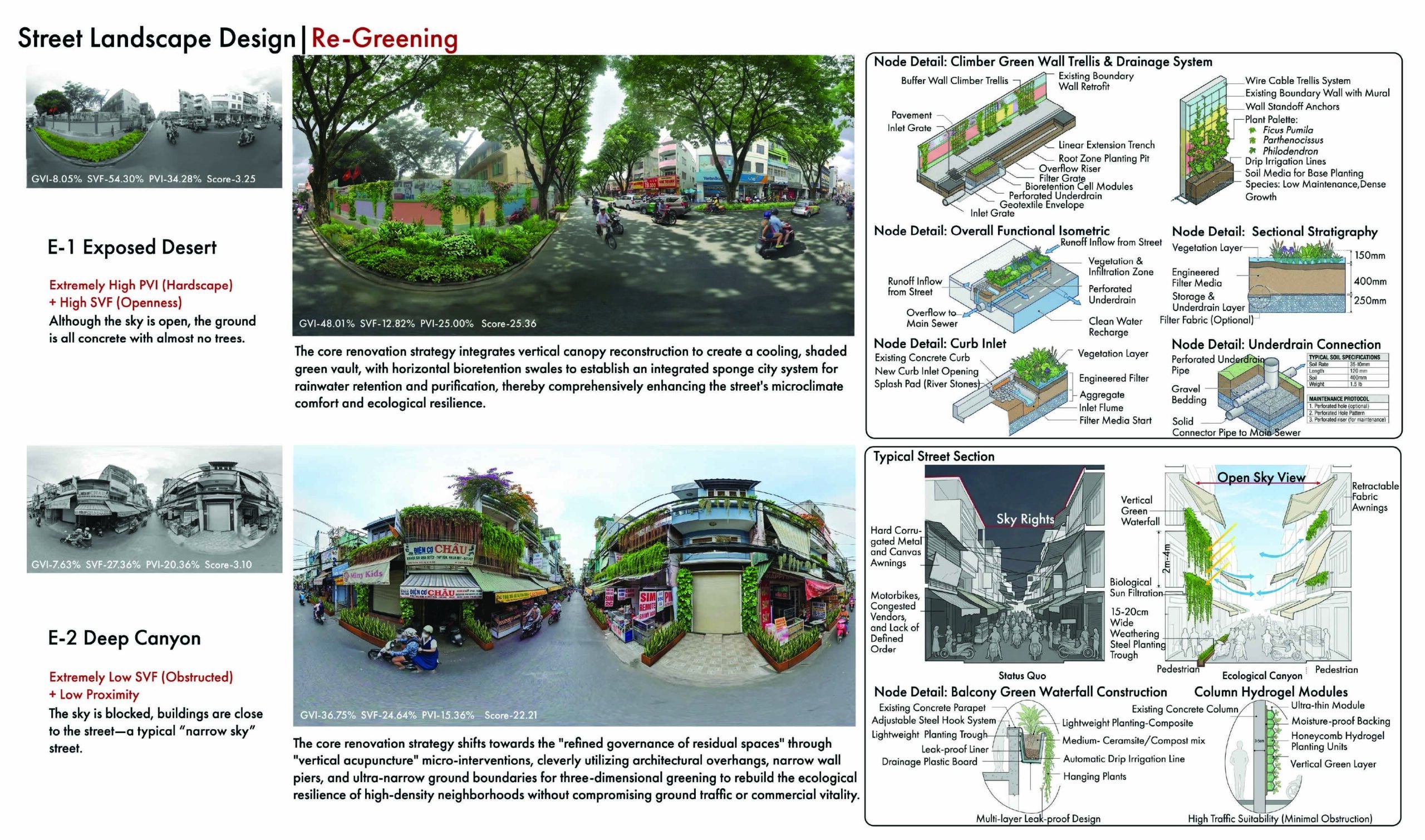
By integrating computational urban analysis with tactical landscape design, the project presents a scalable methodology for enhancing ecological resilience, thermal comfort, and environmental equity, offering a practical framework for greening high-density tropical cities through their most extensive public space: the street.