From Preferences to Places: A Computable, Evidence-Led Workflow for Redesigning Urban Parks
PROGRAMME
Master of Landscape Architecture
STUDENT
Wen Guangyuan
YEAR
2
ADVISOR/TUTOR
Lin Shengwei Ervine
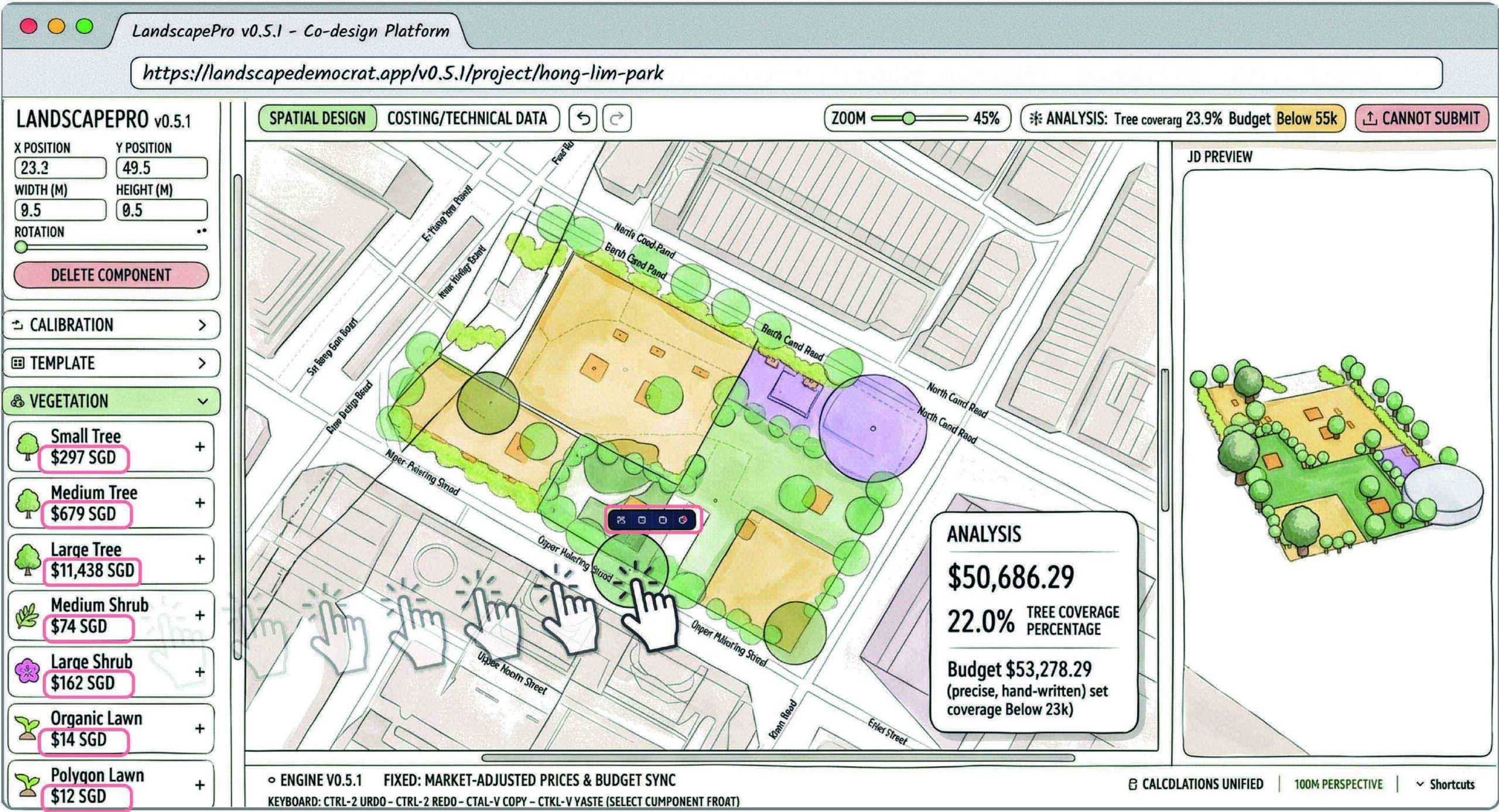
This thesis explores how computational design can bridge the gap between public participation and professional landscape practice by transforming community preferences into transparent, evidence-based design decisions. Rather than relying on one-off consultations that produce fragmented wish lists, the project proposes a computable workflow that translates public input into spatially coherent and auditable design outcomes.
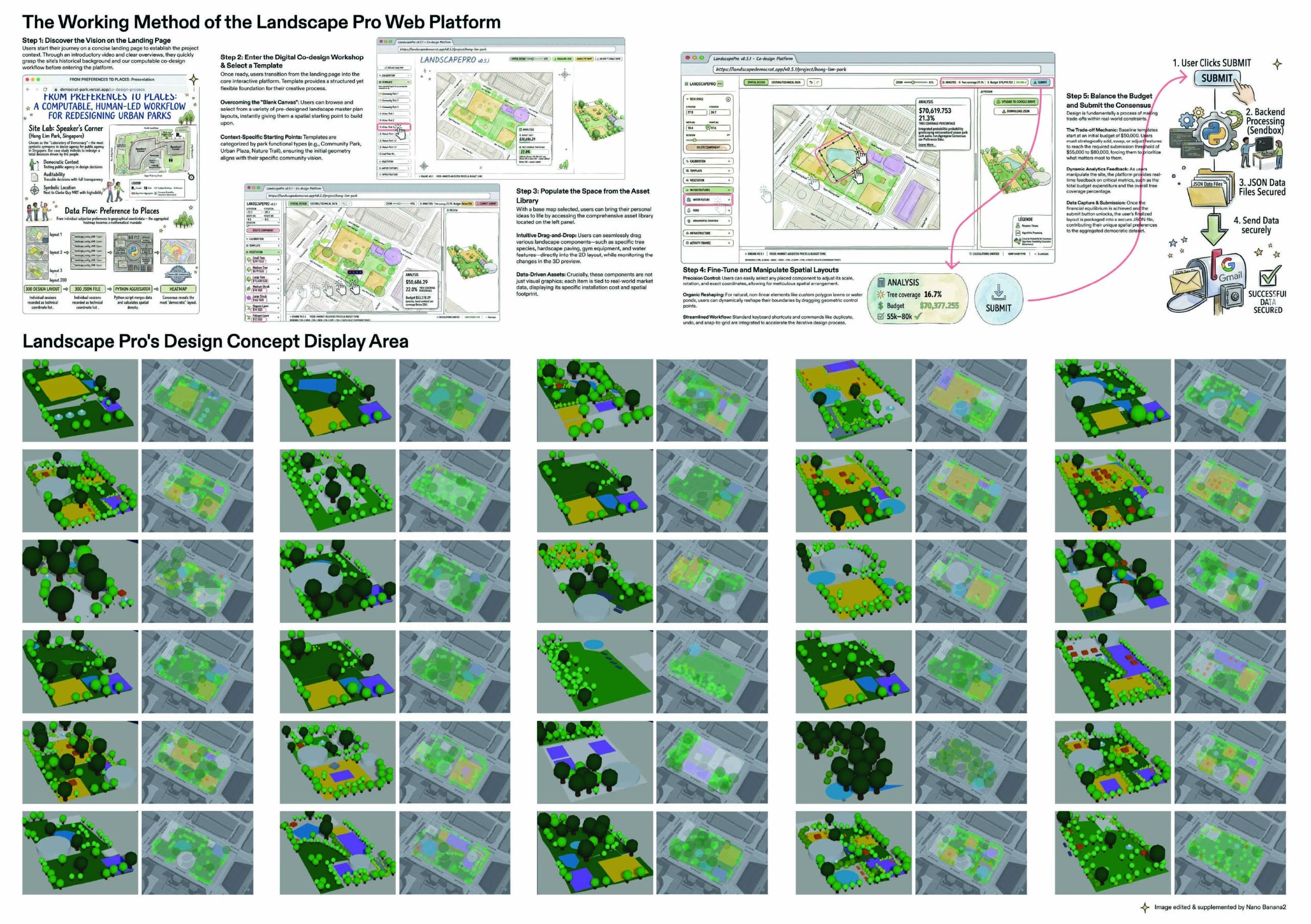
Using Hong Lim Park and its politically significant Speaker’s Corner as a testing ground, the project developed Landscape Pro, a custom browser-based application that records public design proposals as structured geometric data, including the location, size, orientation, and estimated cost of landscape elements. Fifty participant-generated designs were processed through an automated computational workflow that aggregated individual preferences into a statistically derived consensus landscape while preserving meaningful local variation.
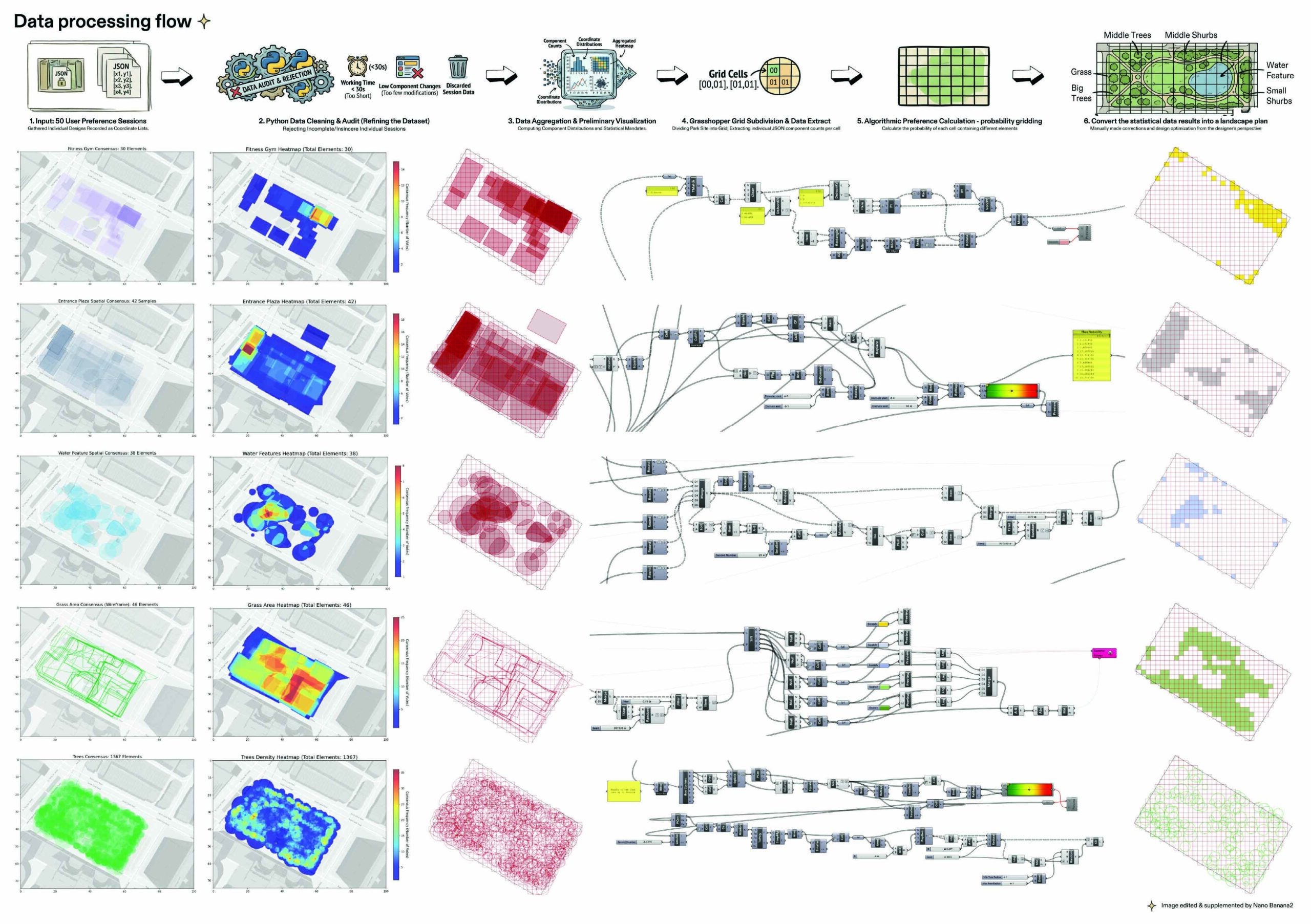
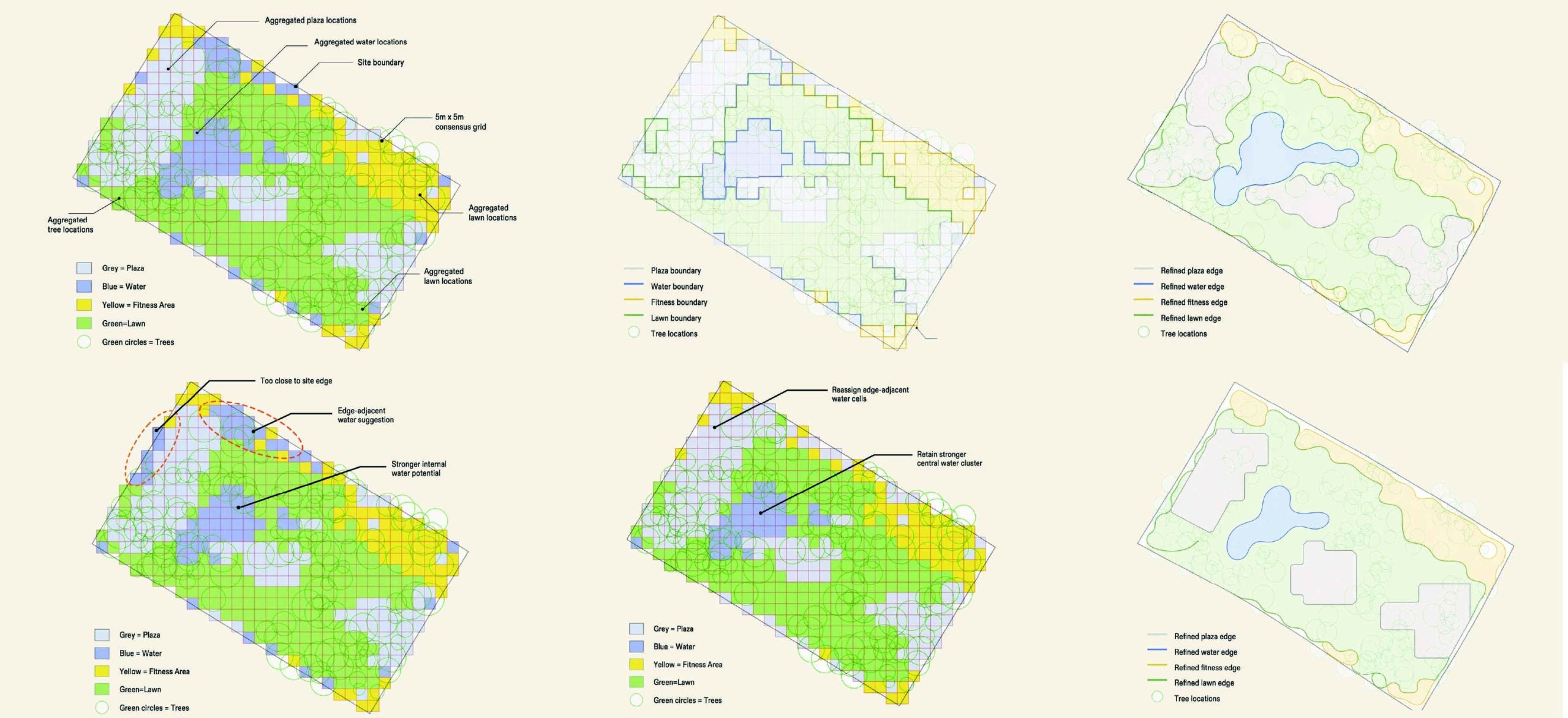
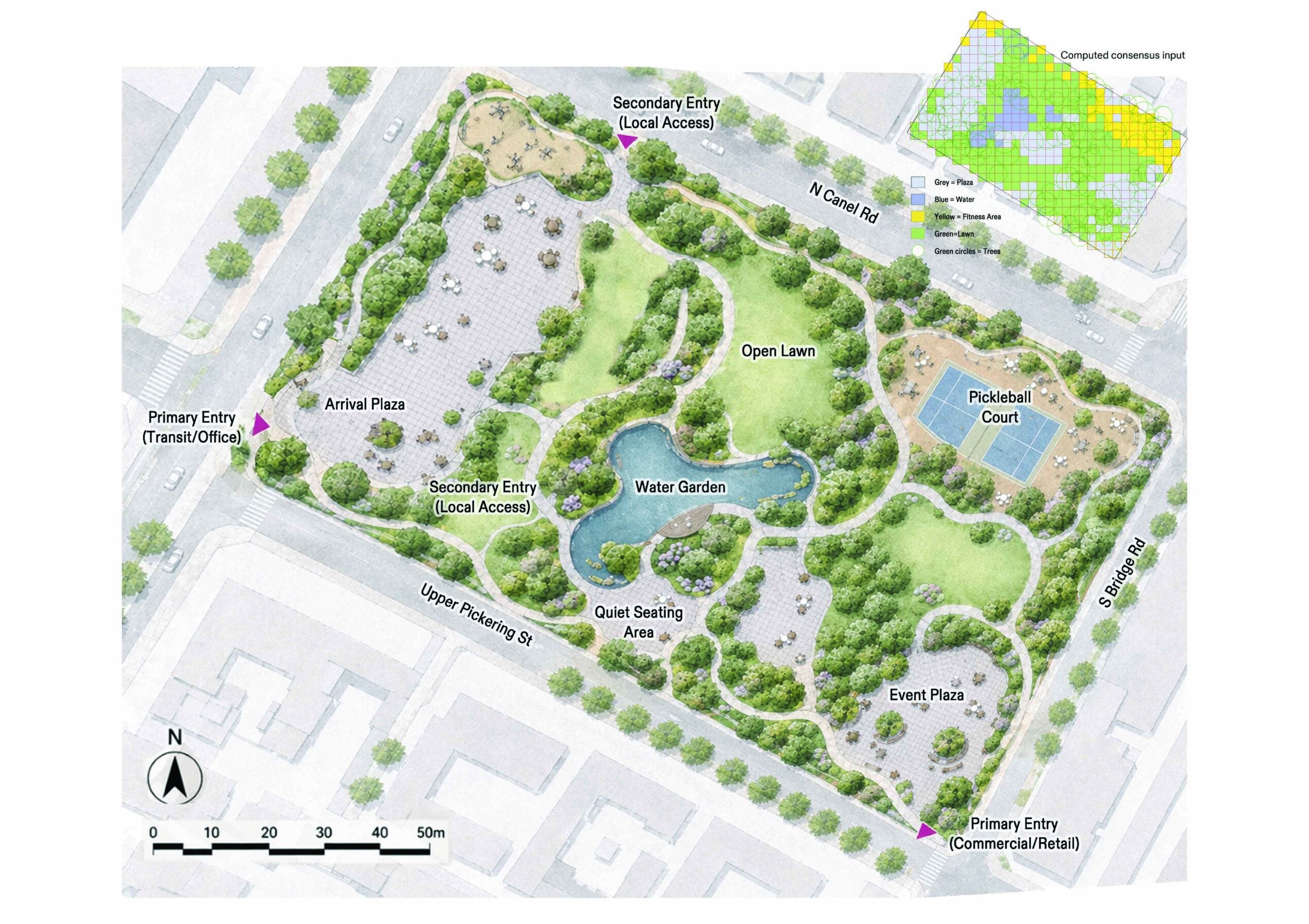
Recognising that computational outputs cannot fully account for site-specific conditions, the project introduces a three-stage translation framework that combines algorithmic analysis with professional judgement. Geometric refinement transforms aggregated data into coherent spatial forms, contextual adaptation responds to environmental and site constraints, and programmatic translation integrates surrounding urban conditions, circulation networks, and functional requirements to produce a comprehensive master plan.
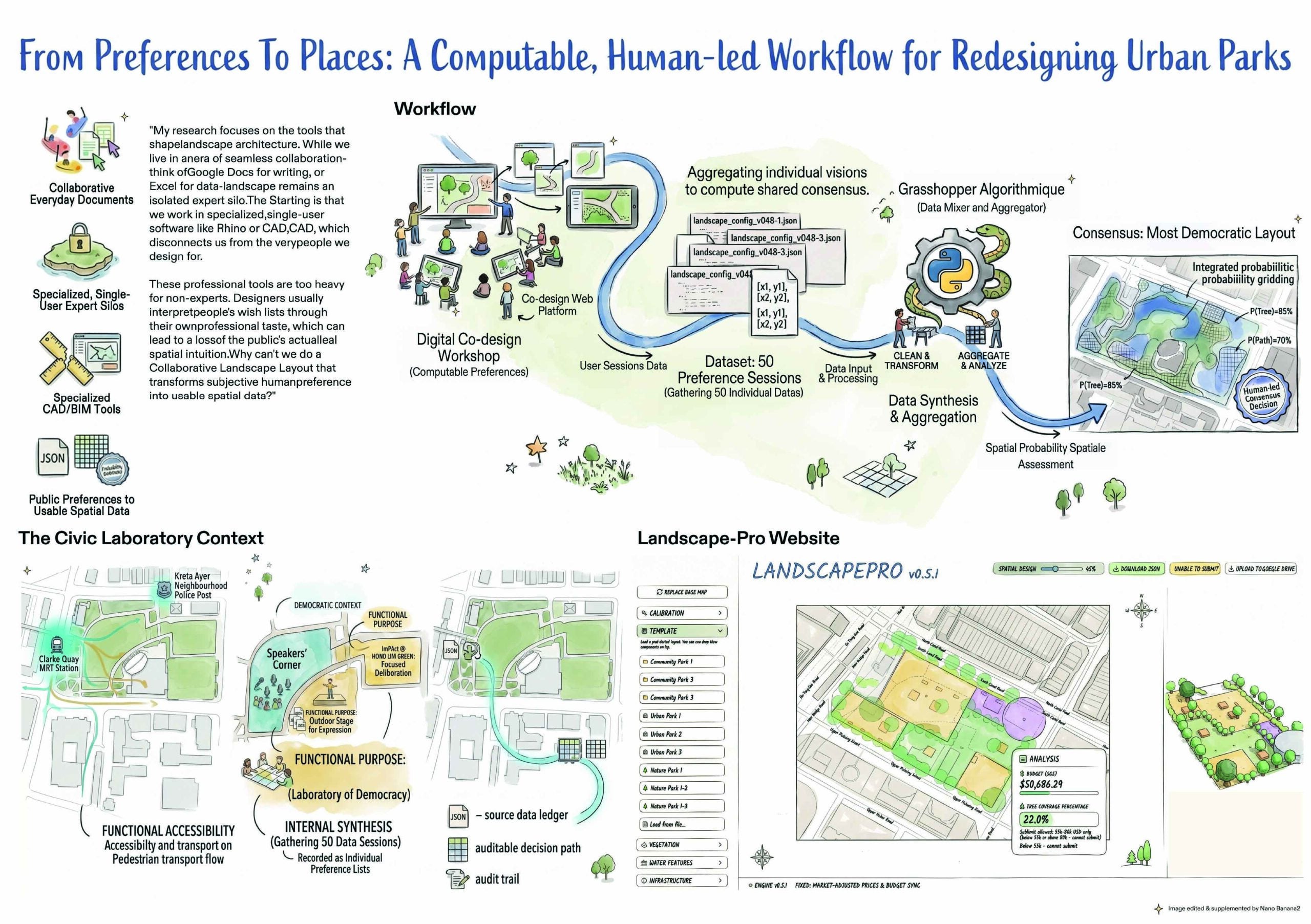
The resulting proposal for Hong Lim Park establishes a fully traceable design process in which every spatial decision can be linked back to its underlying public data. By integrating participatory design, computational methods, and landscape expertise within a transparent workflow, the thesis demonstrates a scalable approach to public space design that strengthens democratic engagement while maintaining the rigour required for professional implementation