From Bitter Roots to Living Routes: Reframing Coptis as a Living Corridor of Culture and Production
This project explores how landscape architecture can strengthen rural livelihoods by reconnecting agricultural production, local culture, and tourism through the cultivation of Coptis chinensis (Huanglian). Although Shizhu, Chongqing is the primary production region for Huanglian—the source of the increasingly popular dietary supplement berberine—local farmers capture only a small share of its economic value, remaining dependent on cultivation and primary processing while downstream industries generate most of the profits. Long cultivation cycles, fallow requirements, and crop disease further contribute to unstable incomes.
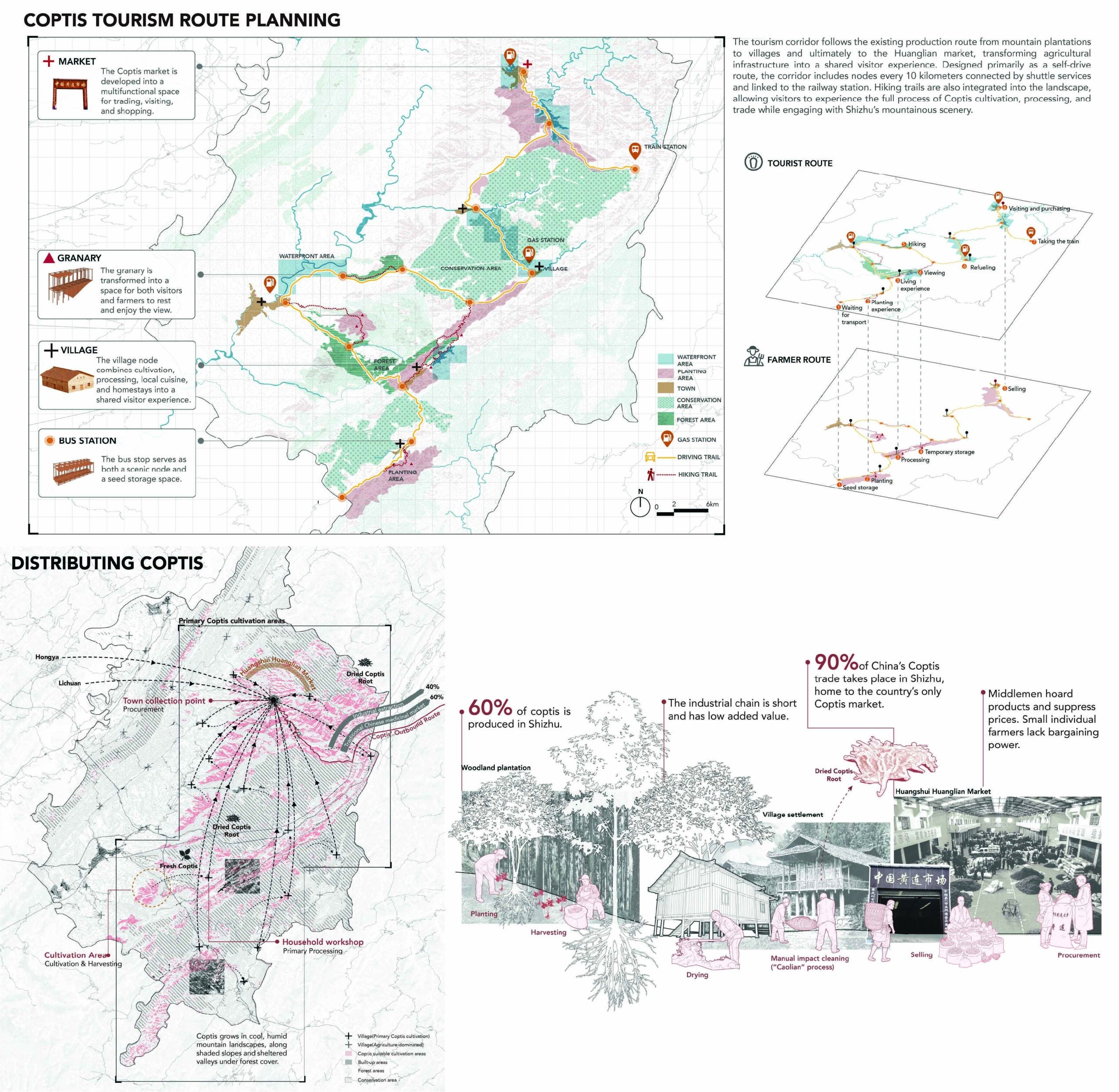
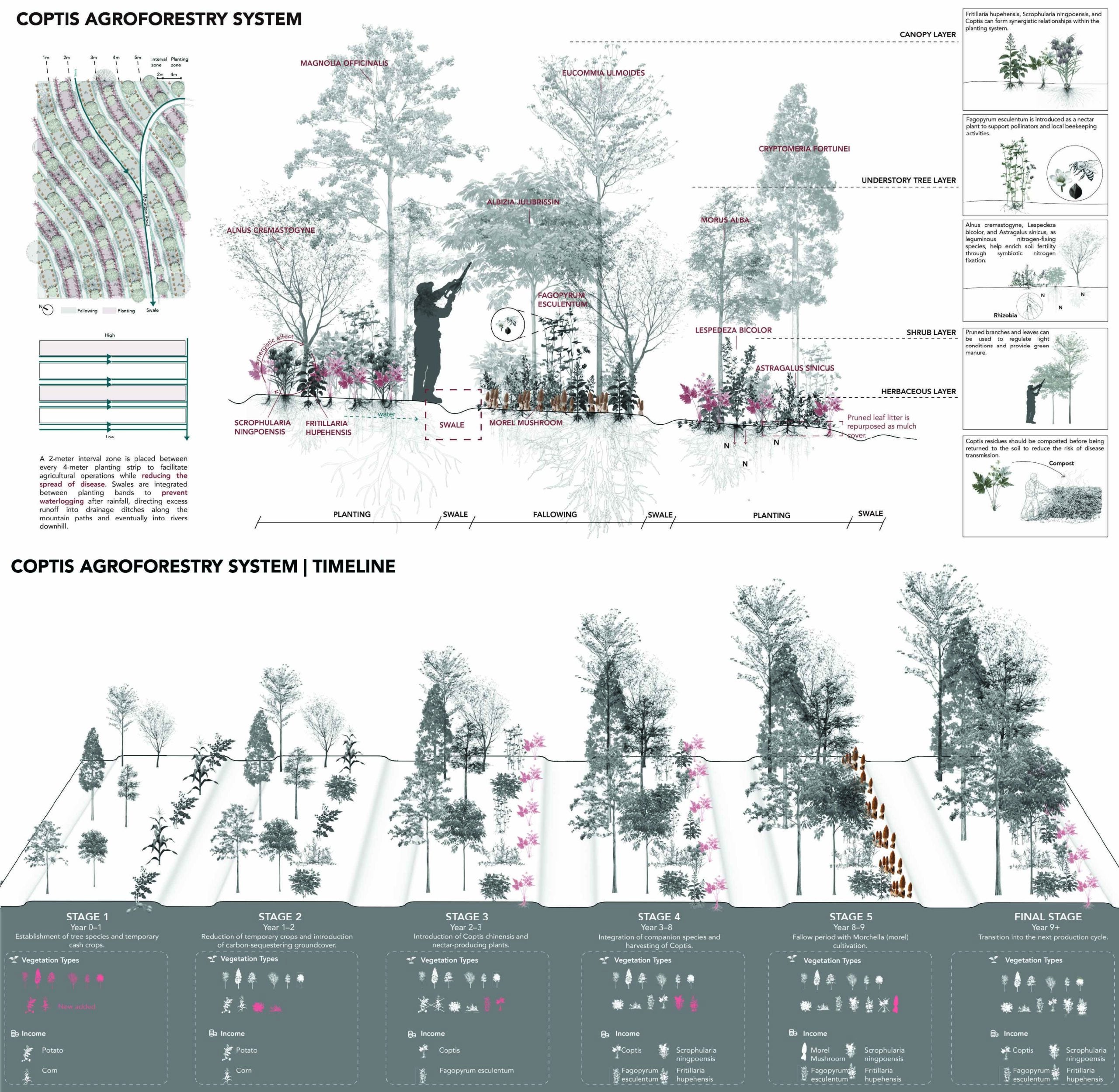
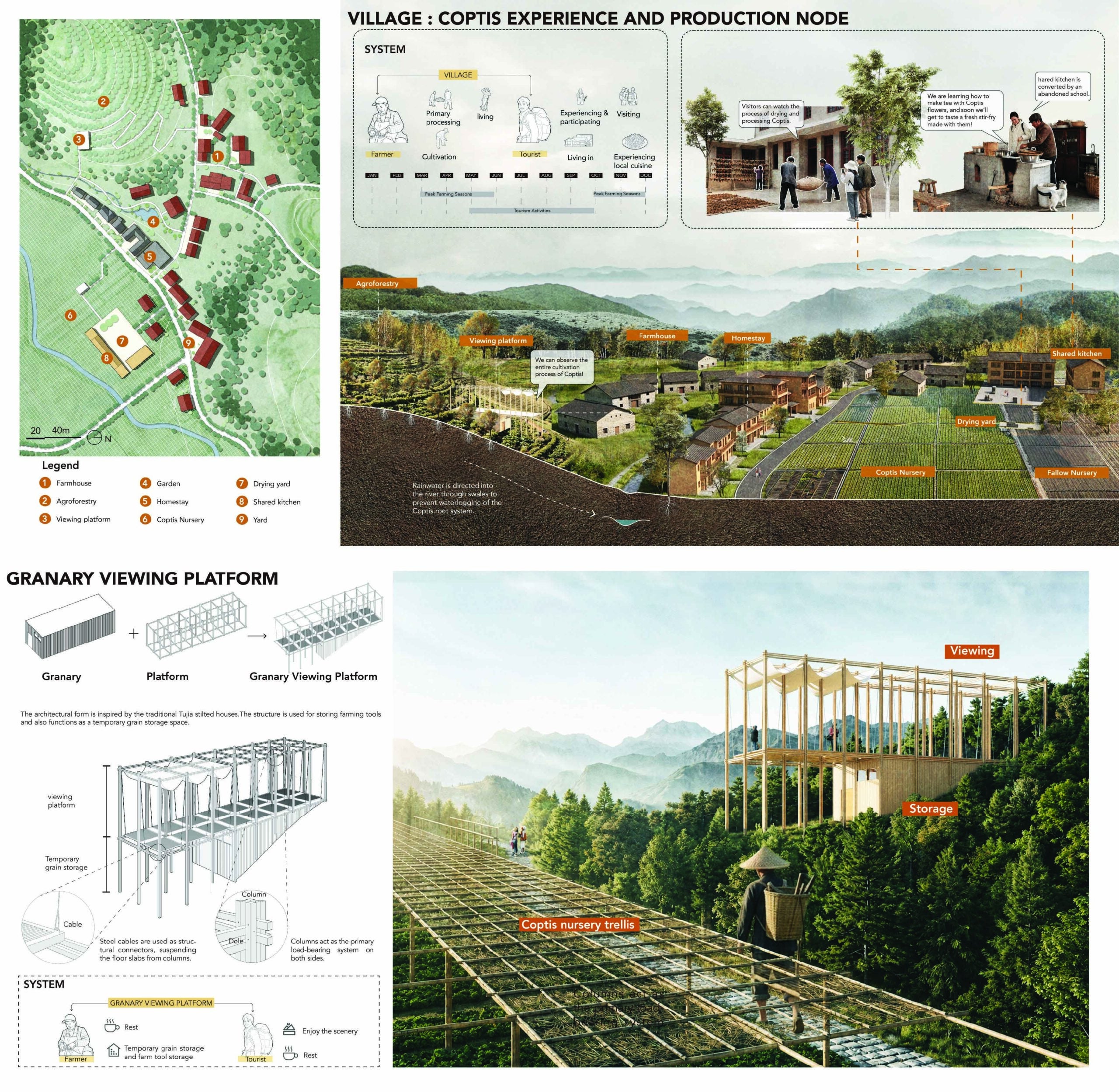
The proposal responds by developing an integrated landscape strategy that combines production optimisation with rural tourism. Agroforestry systems are introduced to improve soil health, diversify agricultural outputs, and reduce ecological and economic risks while enhancing the long-term resilience of Huanglian cultivation. Complementing these productive landscapes, a linear tourism network connects villages, plantations, processing facilities, and local markets, allowing visitors to experience the cultivation, harvesting, processing, and culinary traditions associated with Huanglian.
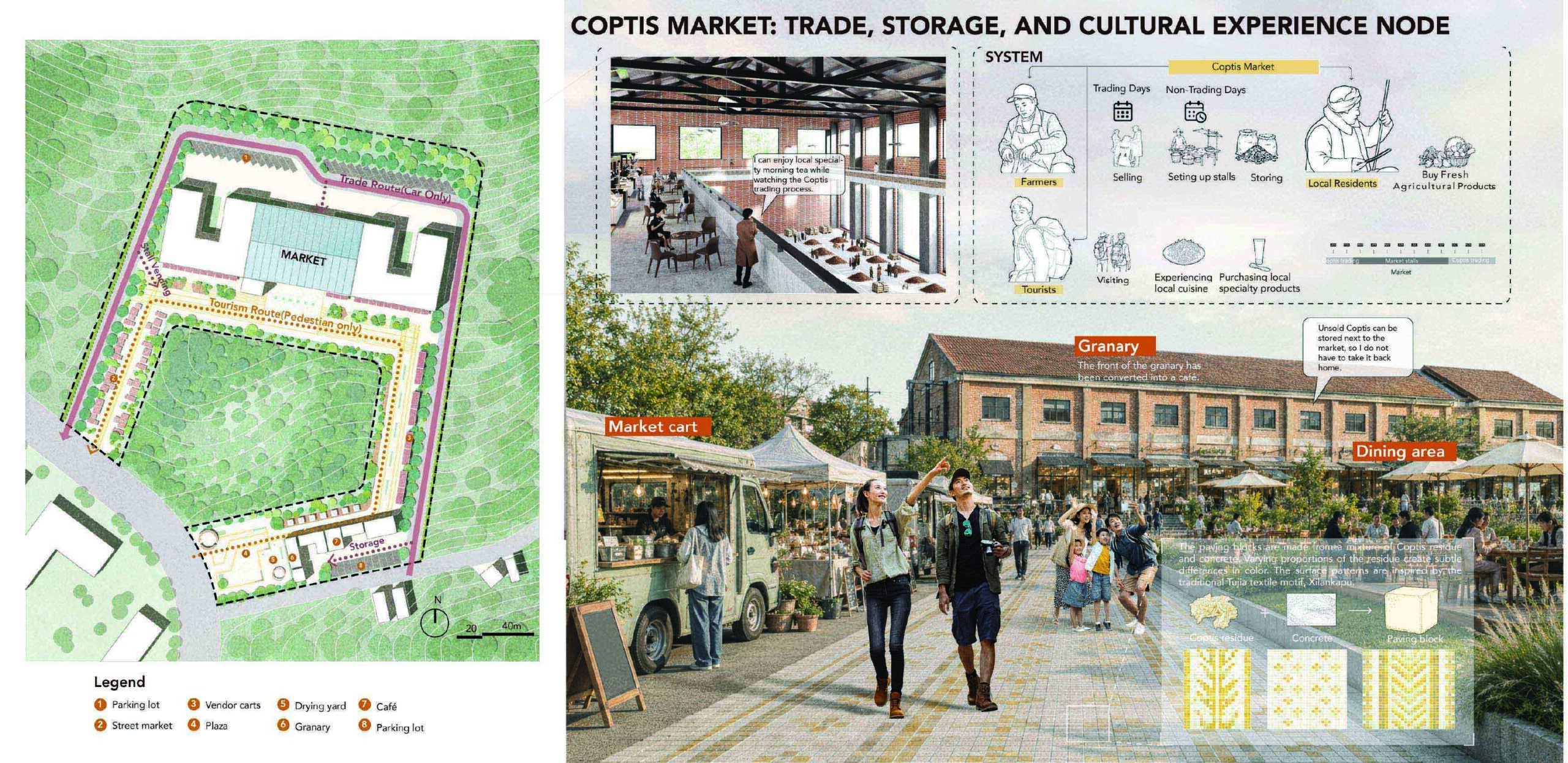
At the centre of the proposal, the existing Huanglian market is transformed into a multifunctional community hub that supports commerce, cultural exchange, and visitor engagement. Rather than treating agriculture and tourism as separate industries, the project integrates them into a mutually reinforcing system where productive landscapes become destinations and local knowledge becomes a cultural asset.
By linking ecological restoration, agricultural innovation, and experiential tourism, the project proposes a more diversified rural economy that increases local value capture, creates new income opportunities, and strengthens the long-term resilience of farming communities in Shizhu.