THE PATCH AND THE PALIMPSEST
AUTHORS
Victoria Marshall et al
The book Patch Atlas: Integrating Design Practices and Ecological Knowledge for Cities as Complex Systems (2019) by Victoria Marshall et al, was recently appraised in the edited volume Media Matter in Landscape Architecture (2025) by Karen M’Closkey and Keith VanDerSys.
In the chapter entitled The Patch and the Palimpsest, Heather Houser contrasts Victoria Marshall et al.s’ Patch Atlas: Integrating Design Practices and Ecological Knowledge for Cities as Complex Systems (2019) and Anuradha Mathur and Dilip da Cunha’s Mississippi Floods: Designing a Shifting Landscape (2001).
In a close reading of the two books, Houser explores how they each “encode the temporality of landscapes in different ways” and “complicate the notion of utility” in an atlas (M’Closkey and VanDerSys, 2025, p. 26).
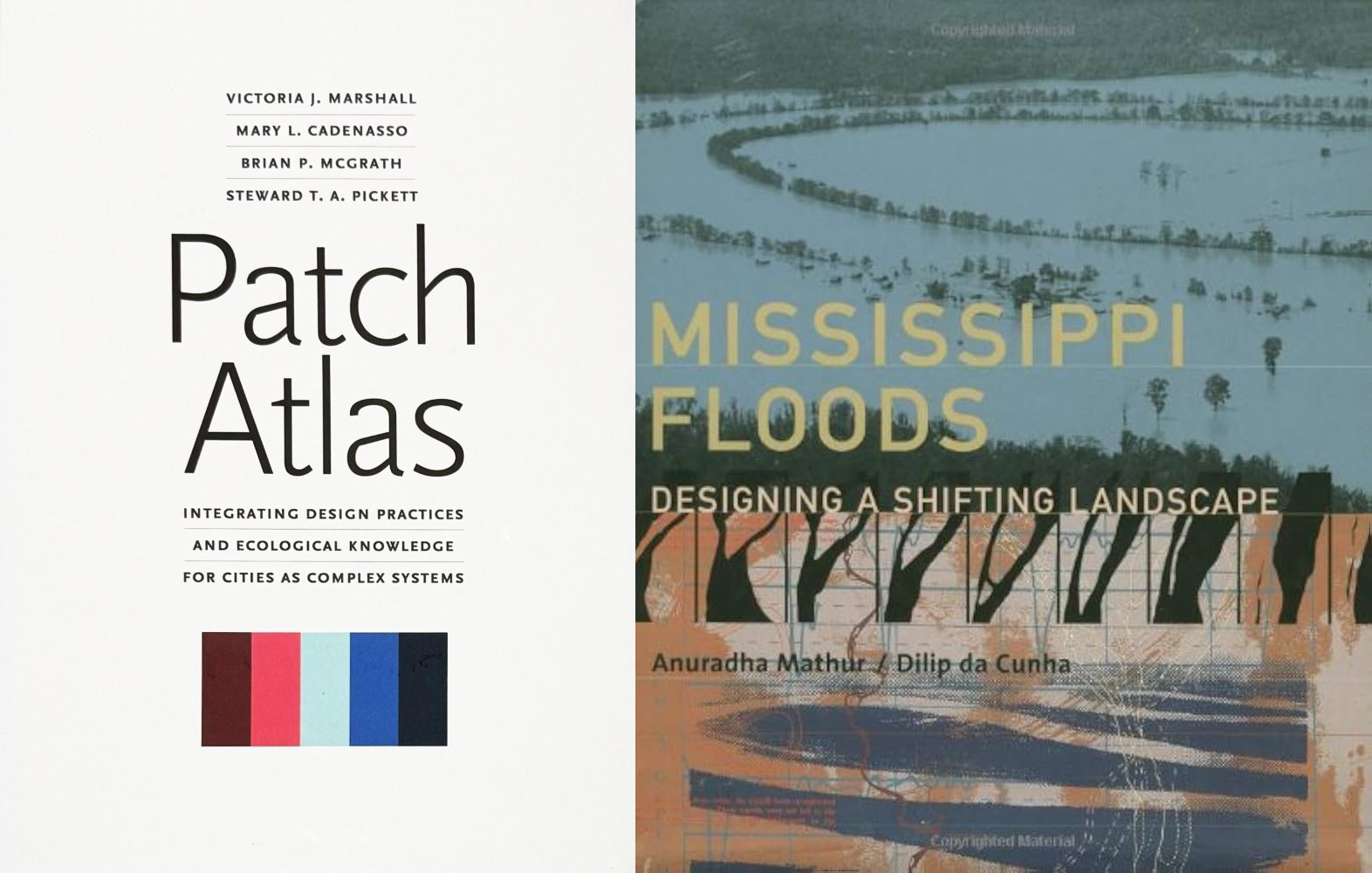
Houser writes, both books “stymie expectations for an atlas and [are] self-reflexive about how media representing environments shape environmental matter” (2025, p.186). They encourage users to “halt in their design journey to ask what data and epistemologies are guiding their understanding of use, who/what has been harmed by use, and who/what might thrive from entanglement” (2025, p 192).
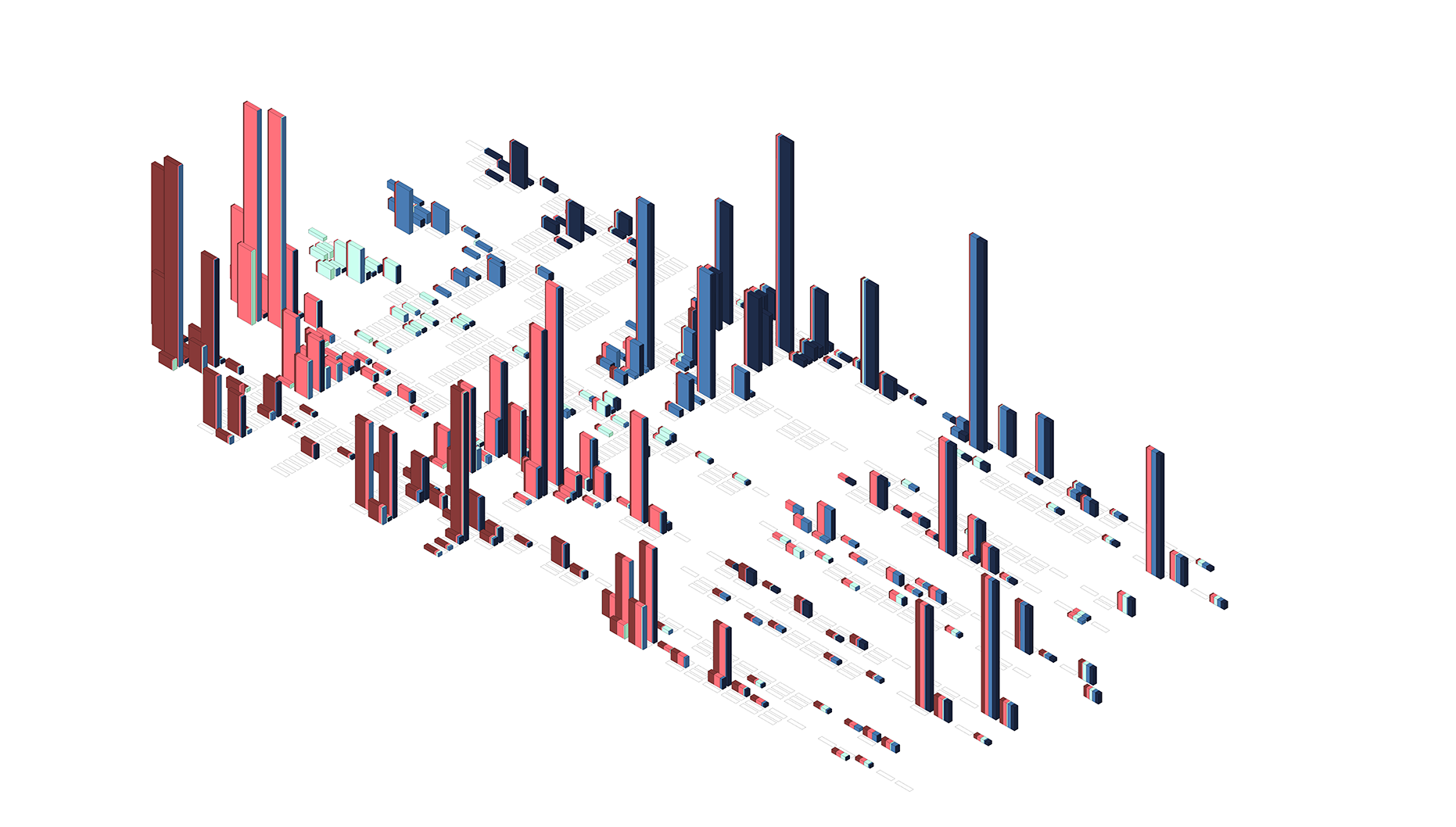
Patchy Realism. Three-dimensional graph or ‘signature’ of the Gwynns Falls watershed patch array. As the number of patches in the watershed increases, each patch swatch increases in height. Patch Atlas: Integrating Design Practices and Ecological Knowledge for Cities as Complex Systems (2019). (Source: M’Closkey and VanDerSys, 2025, p. 185).
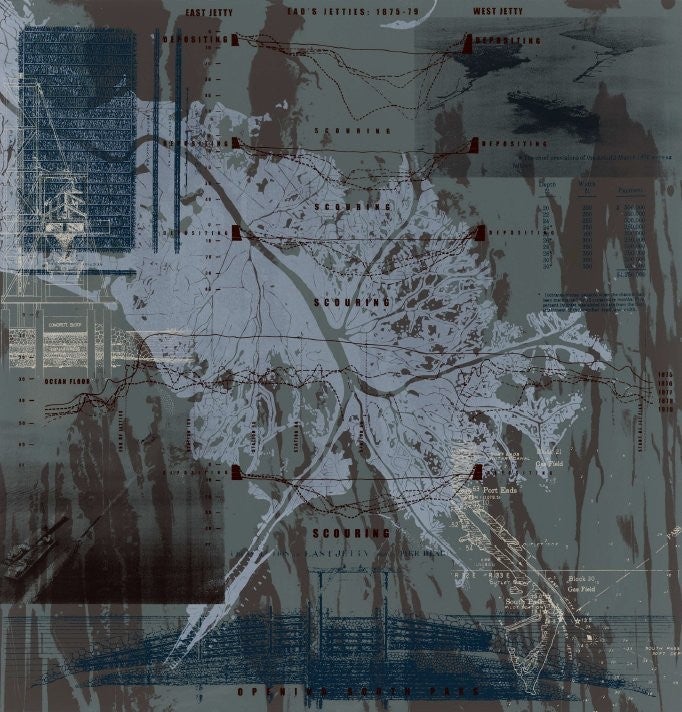
Palimpsesting. Passing Depth, screen print on paper, 112 x 76 cm (cropped). Anuradha Mathur and Dilip da Cunha’s Mississippi Floods: Designing a Shifting Landscape (2001). (Source: M’Closkey and VanDerSys, 2025, p. 19).