Climate-Resilient Design Leads NUS to Top Two Prizes at iNTA 2025
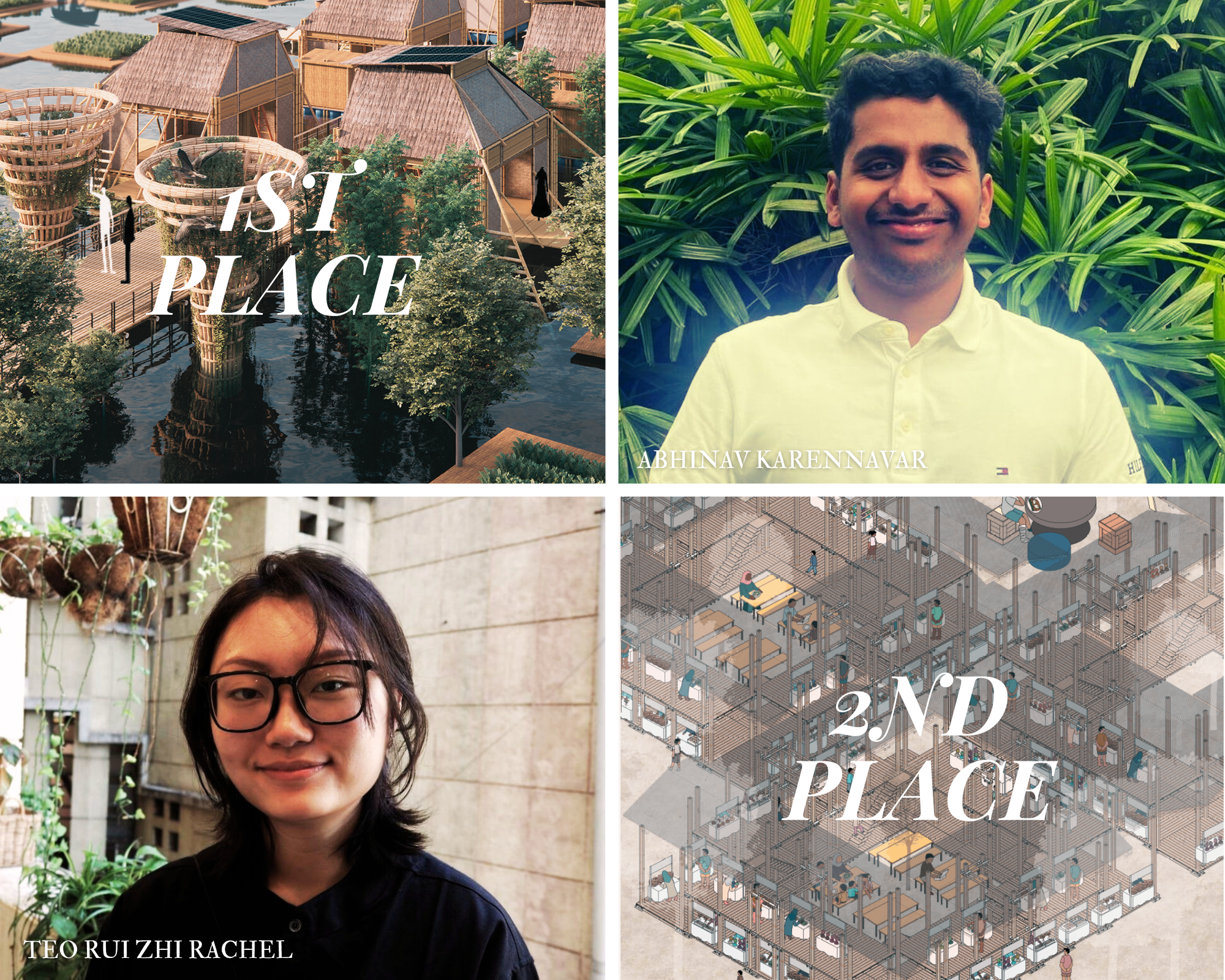
Two notable NUS entries earned first and second place in the iNTA 2025 Design Competition. First prize went to Ar. Abhinav Karennavar (MSc ISD) for “NIDIT: Riverine Resilience, India,” and second prize to M Arch alumna Teo Rui Zhi Rachel (Class of 2025) for “Kamp to Kampong, Banda Aceh, Indonesia,” which formed part of her master’s thesis.
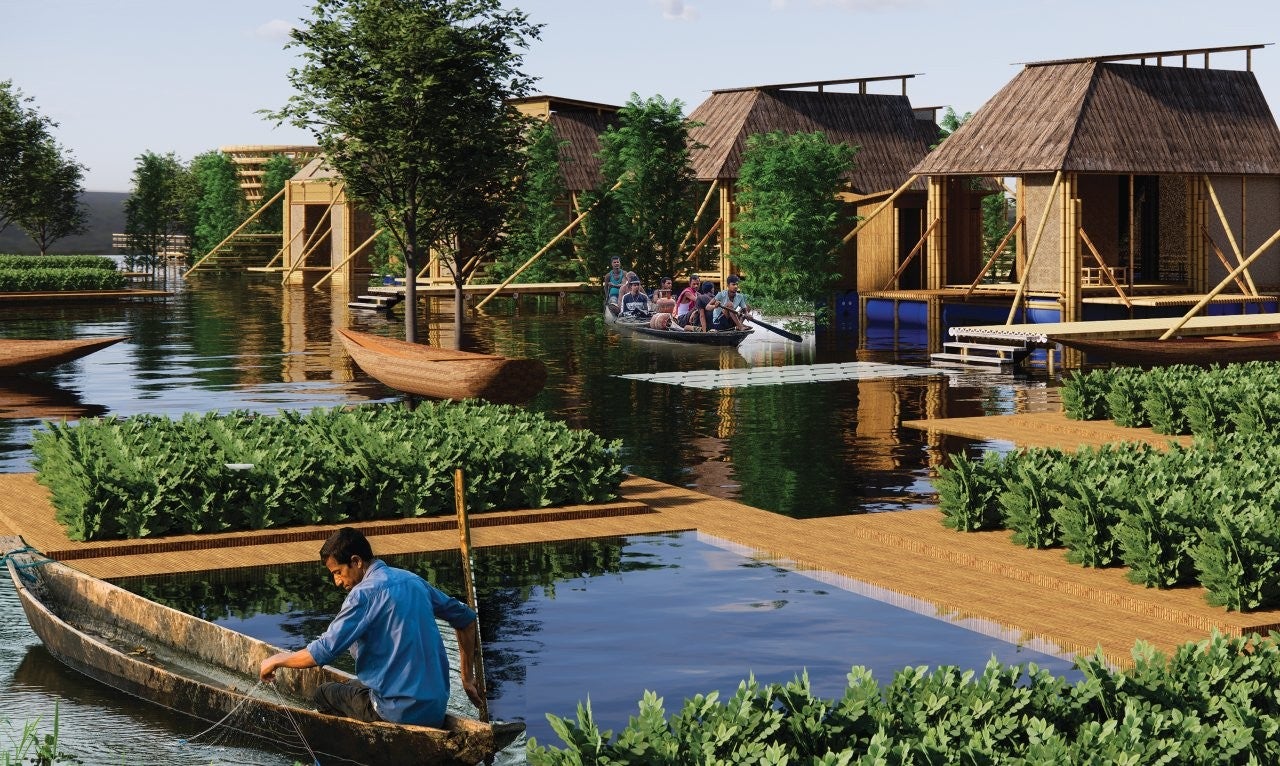
3D rendering of NIDIT: Riverine Resilience, India
Abhinav’s project is rooted in the fragile, ever-shifting riverine landscape of Majuli Island in the Brahmaputra River, Assam—one of the world’s largest inhabited river islands, continually shaped by erosion, flooding, and climate uncertainty. The project explores how architecture can respond meaningfully to such instability by proposing a resilient institutional and community-oriented framework that works with the rhythms of the Brahmaputra River rather than resisting them. Through elevated built forms, adaptive planning systems, modular strategies, and landscape-led design, NIDIT imagines an infrastructure that can grow, shift, and endure over time. At its core, the project positions architecture as a bridge between ecology, culture, and everyday life, seeking to support Majuli’s communities while safeguarding their socio-cultural identity.
“One of the most significant challenges was designing for a landscape in constant flux, where stability cannot be taken for granted,” Abhinav shared.
“Understanding how seasonal changes, flooding patterns, and erosion influence daily life required extensive research and interpretation. Another challenge was translating intangible aspects such as cultural practices, community resilience, and ways of inhabiting space into architectural form. Balancing these contextual layers with institutional requirements and environmental responsibility demanded a careful and iterative design process, ensuring the proposal remained both functional and deeply rooted in place. Another significant challenge was to witness the ground reality and look it from the perspectives of the people inhabiting on the island was quite adventurous and eye opening.”
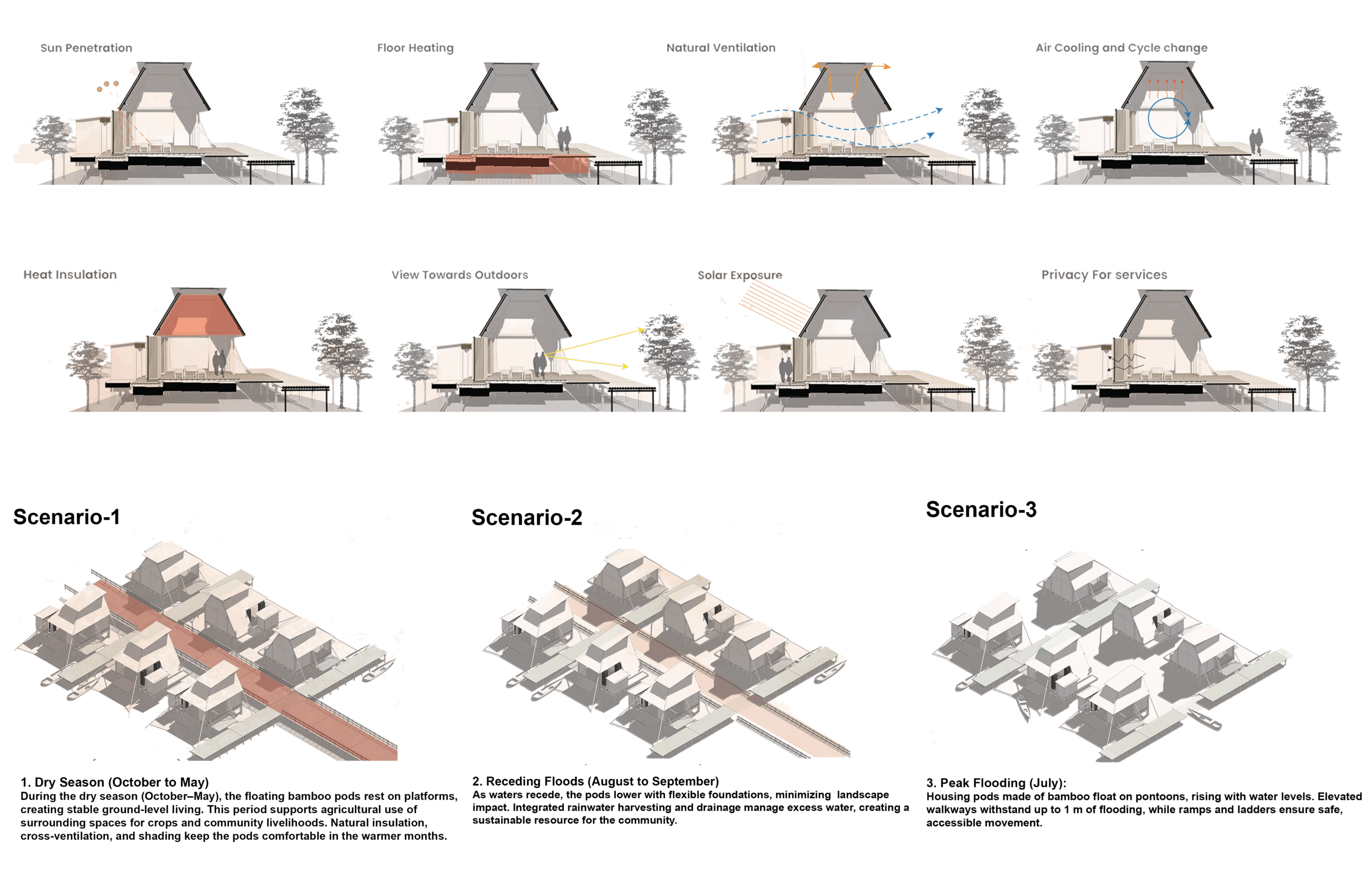
NIDIT — Passive design strategies for thermal comfort and spatial quality
His project stems from a strong interest in climate-responsive, socially grounded architecture. Majuli stood out as a place where environmental vulnerability and cultural depth meet. As the island loses land to the river, communities face repeated displacement—often losing not only homes, but belonging and continuity. This prompted him to question architectural permanence and instead embrace adaptability as a design ethic, engaging deeply with the relationship between water, land, and people.
“I am deeply grateful to everyone who guided and supported me throughout this journey,” Abhinav added. “I thank the ISD studio at NUS for the discussions and learnings on systems thinking, which added real value to a project I began during my undergraduate studies at BMSCA Bangalore. I also appreciate the iNTA jury for recognising the work and providing a platform that values design grounded in research, relevance, and social purpose.”
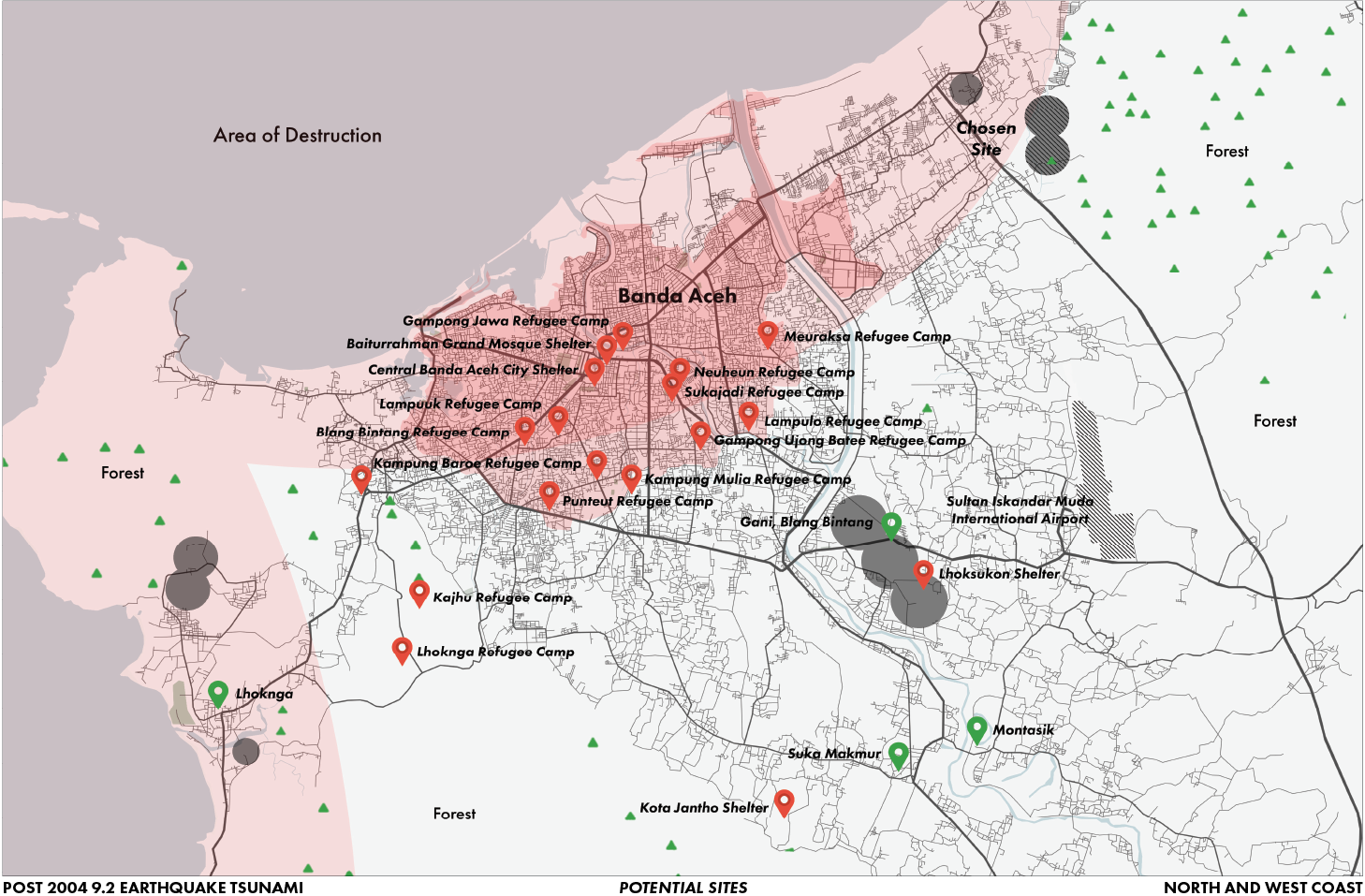
Kamp to Kampong — 2004 site analysis
Rachel’s “Kamp to Kampong” thesis reimagines refugee camps as adaptable, sustainable environments—moving beyond short-term emergency shelters to models that support long-term habitation and community resilience. Using the 2004 Banda Aceh tsunami as a case study, it critiques the limitations of conventional post-disaster camps, where tented shelters often degrade within one to two years yet remain occupied for decades due to prolonged recovery.
In response, the thesis proposes a flexible, scalable camp model that can be rapidly assembled and expanded over time. Key strategies include using locally sourced and renewable materials, establishing adaptable infrastructure, integrating the camp within its local environment, and fostering community-driven economic opportunities. The current research focuses on developing a prototype for Banda Aceh with the aim of creating a scalable model to address ongoing disaster-induced displacement across Southeast Asia. It envisions camps not only as places of shelter, but as catalysts for long-term recovery and resilience.
“The key challenge was navigating multiple scales of design without a strong background in large-scale urban planning,” Rachel reflected.
“Each scale demanded a different way of thinking, requiring constant recalibration as I moved between detail, building, and masterplan. Learning to engage with landscape systems, urban planning, and social, cultural, and geographical contexts—and integrating them into a single, coherent framework—became both the greatest challenge and most valuable outcome. The project strengthened my ability to synthesise architectural detail, landscape systems, urban strategies, and social contexts rather than treating them as isolated components. It has reshaped how I approach both academic work and practice, equipping me with a systems mindset and a deeper understanding of architecture’s role in shaping resilient, adaptable communities.”
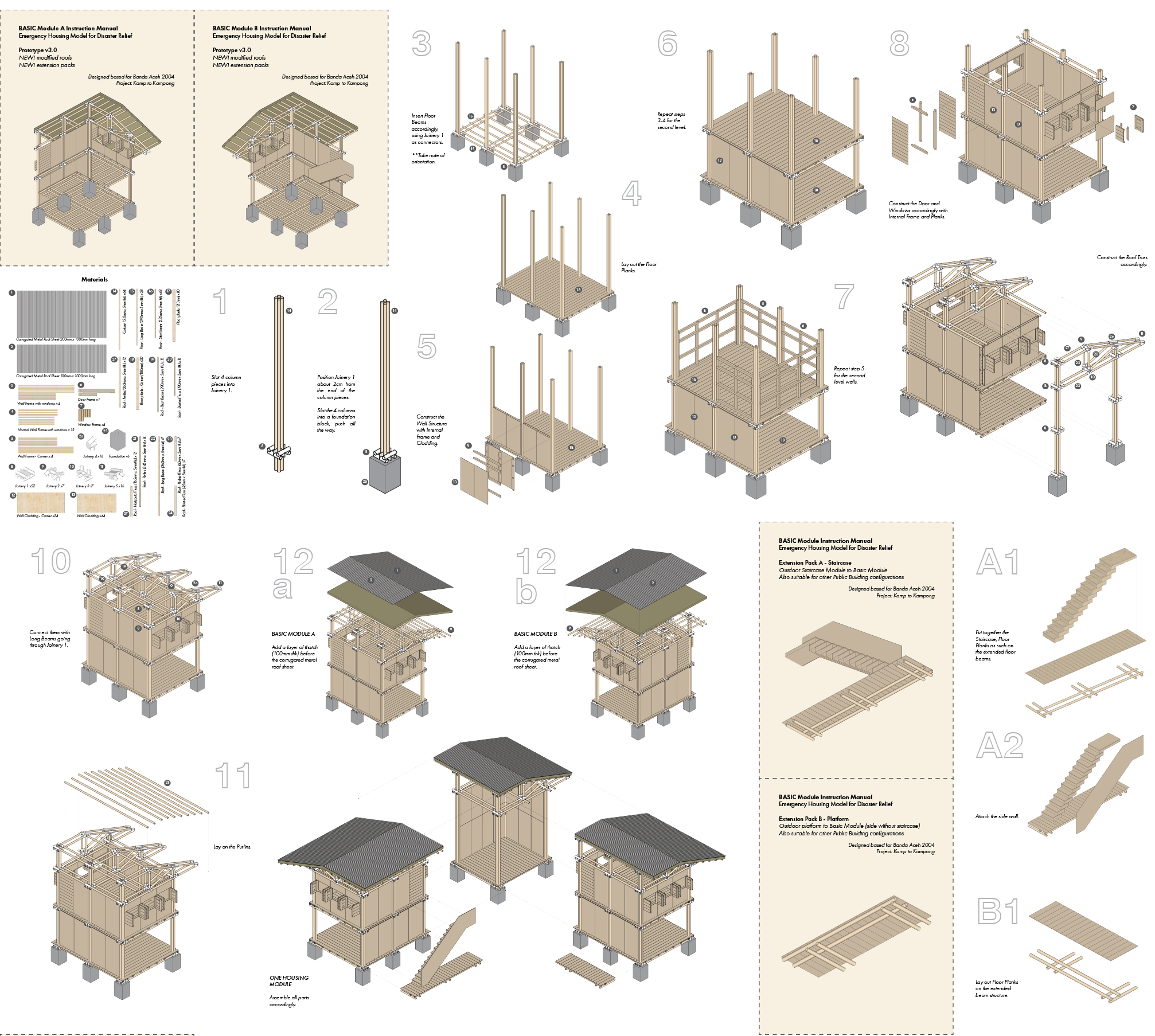
Kamp to Kampong — Instruction manual for an emergency-housing model for disaster relief
Rachel has chosen this topic out of a strong interest in humanitarian architecture and its potential for real-world impact. Disaster relief work provides a testbed for innovation, where conventional rules are often challenged and novel ideas are necessary. Her approach—designing small, detailed modules that can scale into larger systems—reflects an interest in modular thinking, ensuring each unit remains flexible, intuitive to construct, and scalable while balancing simplicity with community impact. By reframing camps as adaptable, long-term environments rather than temporary fixes, she hopes to contribute a prototype that empowers communities and supports recovery with dignity.
“My deepest gratitude to Prof. Florian Heinzelmann for his invaluable guidance throughout this project and continued mentorship beyond graduation, especially in competitions,” Rachel said. “Many thanks as well to my studio and cohort mates for their constant feedback, and to my friends and family for their unwavering support.”
iNTA 2025 Design Competition – Design Innovations for Housing in the Tropics
In coordination with the 9th International Conference of the International Network for Tropical Architecture (INTA), the 2025 iNTA Design Competition invites designers, architects, engineers, students, and interdisciplinary teams to submit climate-responsive housing projects for tropical regions that address the unique environmental, cultural, and social challenges of tropical climates.
Designs should embody the conference’s themes of resilience, sustainability, action, and adaptive reuse focusing on the integration of environmental performance with architectural expression. Housing proposals should demonstrate sensitivity to local culture, materials, and community needs, while advancing strategies for climate adaptation and mitigation.
Entrants are challenged to rethink tropical housing as an ecological interface, a cultural artifact, and a platform for community action. The competition calls for innovative, resilient, and sustainable roof designs that respond to the unique challenges of tropical climates while embracing local culture, materials, and community needs. Designs should reflect the conference’s themes of resilience, sustainability, and action, focusing on the intersection of environmental performance and architectural expression.