How Alumnus Aw Wei Kang Reimagined Architecture Through Coffee and Won the SIA Student Award 2026
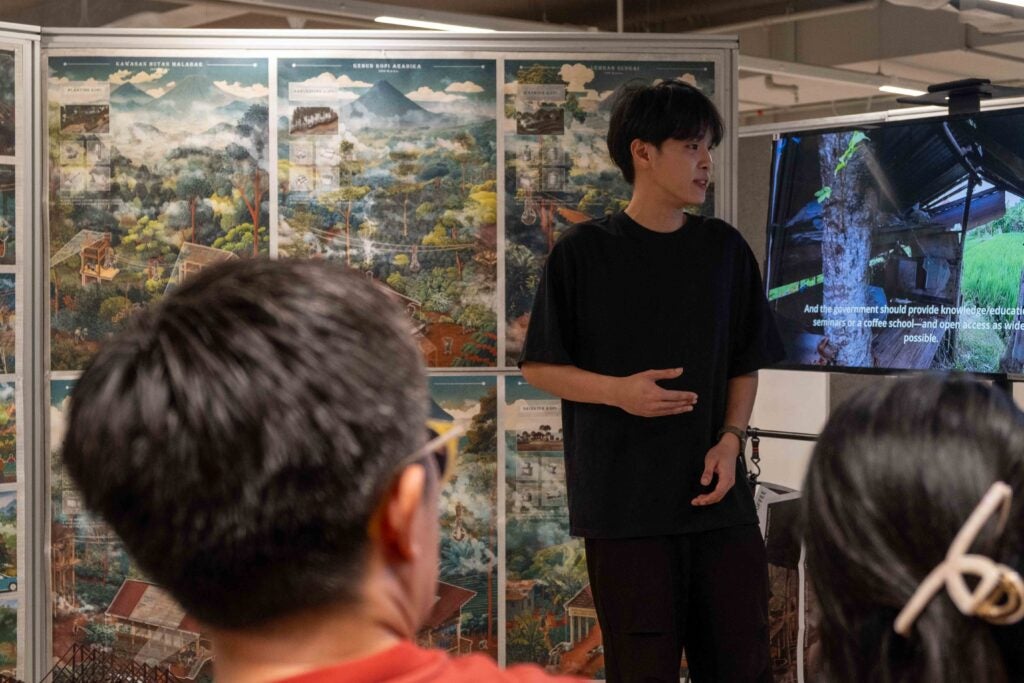
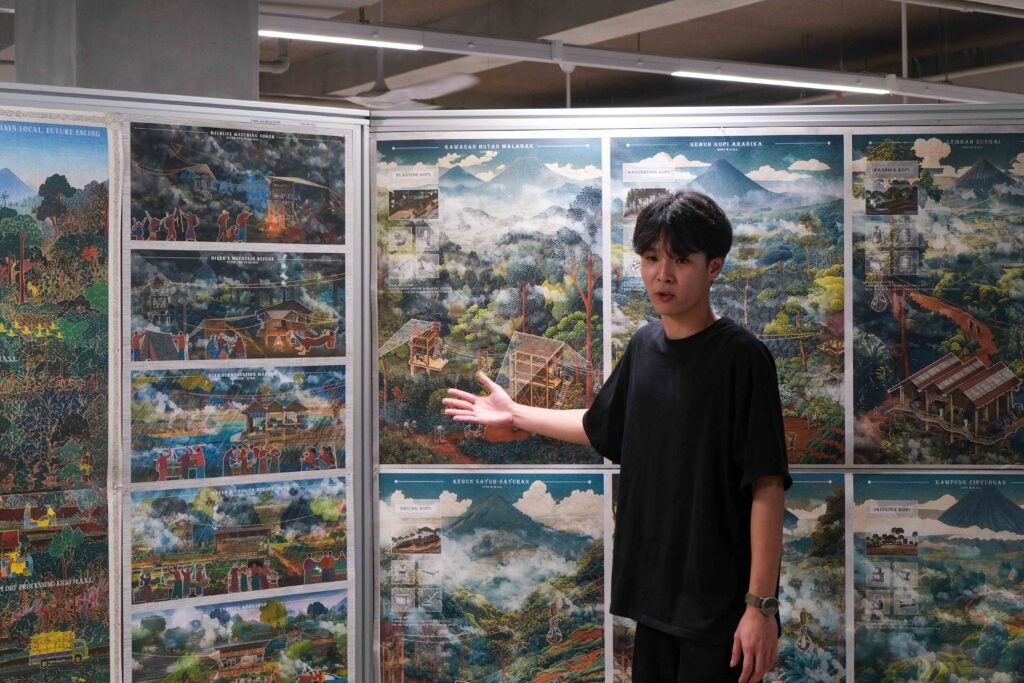
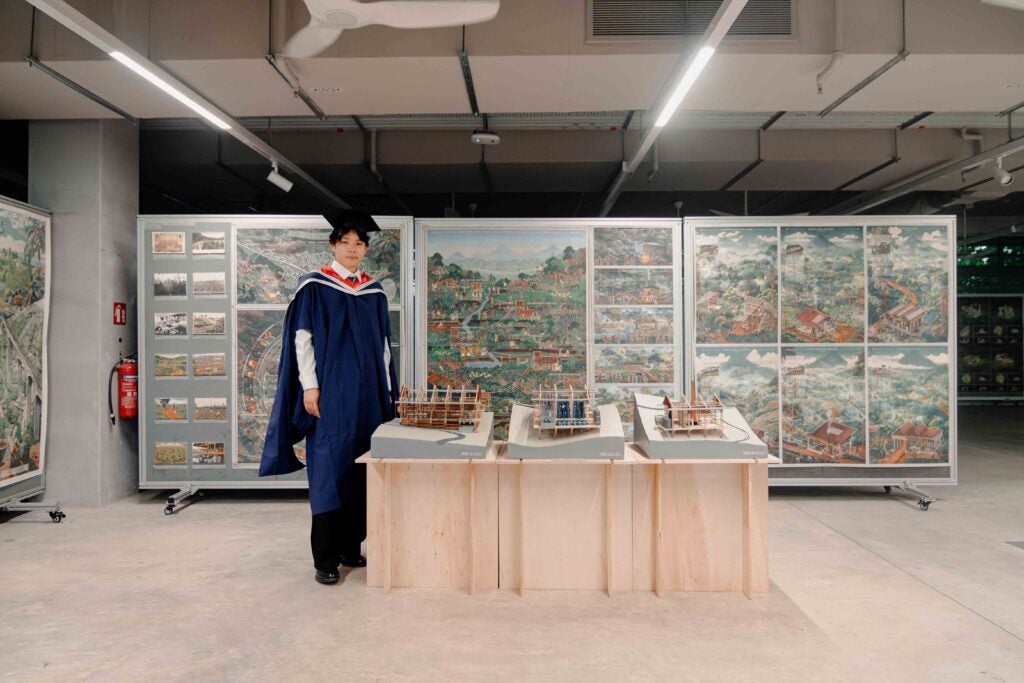
We are pleased to announce that alumnus Aw Wei Kang (Class of 2026) has received the Singapore Institute of Architects Medal for the M.Arch category at the SIA Student Awards 2026(opens in new tab), in recognition of his outstanding Master of Architecture thesis, "Kopi Pangalengan" Takes Command.
Aw's interest in the topic began with two personal experiences. His father grew up around his grandfather's rubber plantation in Kluang, Malaysia, and childhood visits there introduced Aw to productive landscapes as places shaped by labour, infrastructure and everyday life. Later, as he grew older and began to appreciate coffee, he became curious about a deceptively simple question: where does the coffee he drinks come from? How does a fruit grown on a mountain become a cup of coffee, and who determines its value along the way?
In his own words: "These questions brought me to Pangalengan, a coffee-producing territory in West Java. The thesis began by examining colonial artefacts that depicted plantations as smooth, orderly and controlled landscapes. Through repeated fieldwork and conversations with farmers, processors and local communities, however, I encountered a far more dispersed landscape sustained by smallholder farmers, local knowledge, seasonal labour and constant adaptation.
Although the structure of farming has changed, the coffee market remains largely linear and hierarchical. Farmers carry many of the risks associated with land, weather, transport and seasonal uncertainty, while processing capacity, quality assessment, market access and recognition tend to accumulate further downstream. As coffee from individual microplots is aggregated into larger lots and market identities, the final product becomes more recognisable while the farmers and decisions responsible for its quality become less visible.
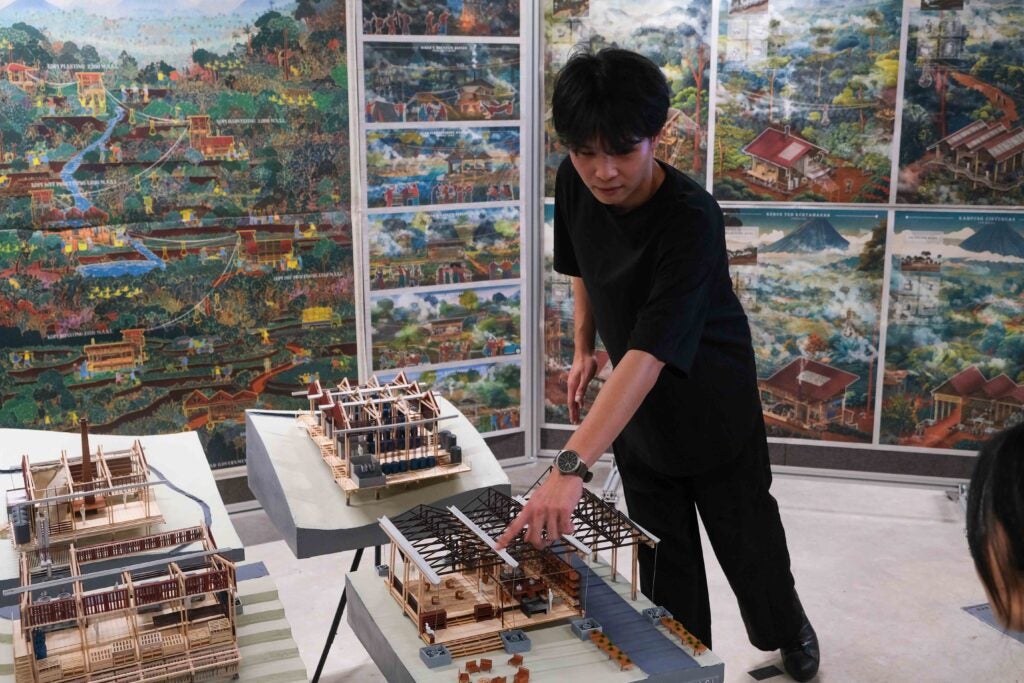
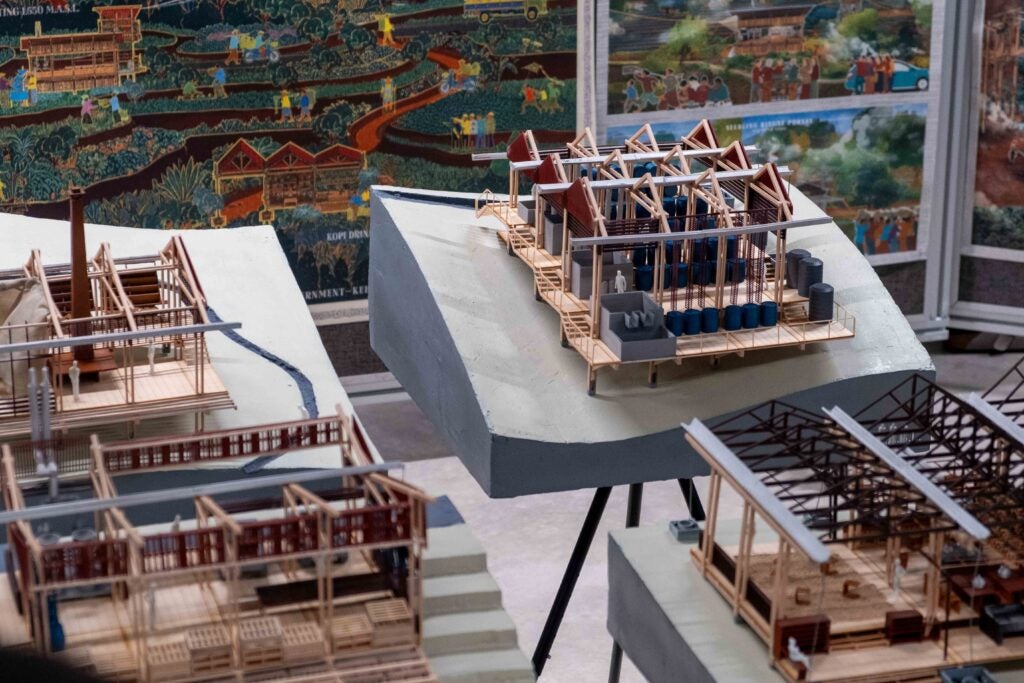
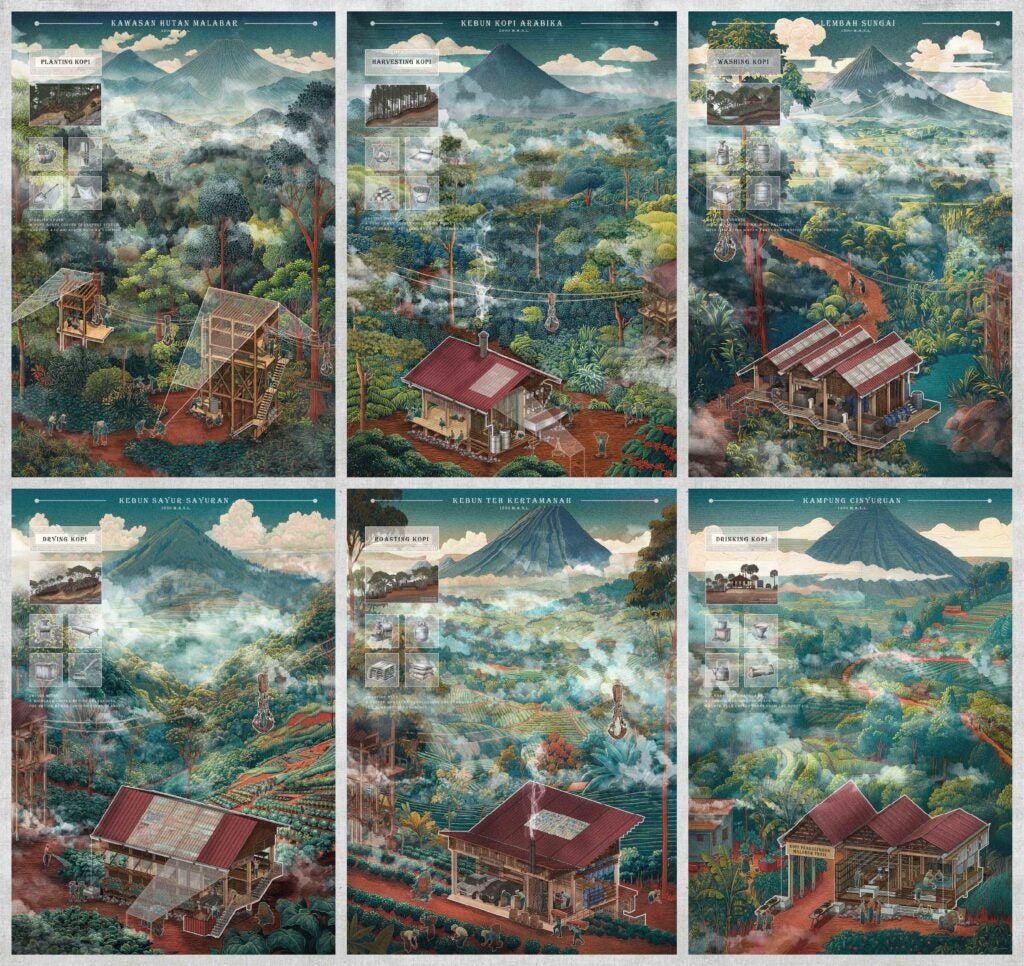
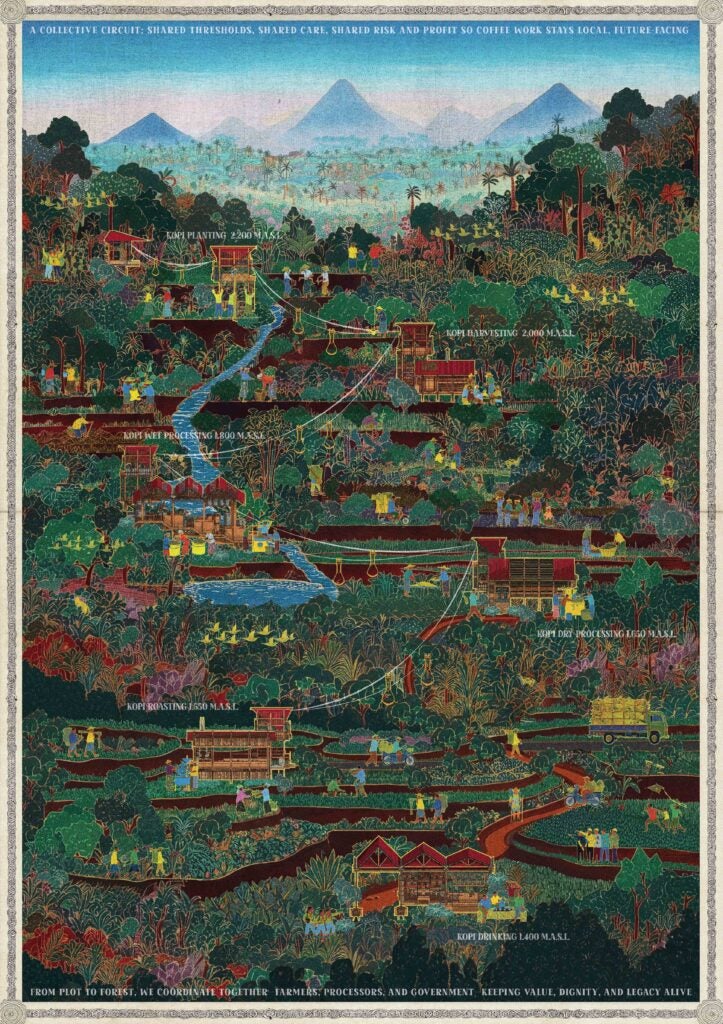
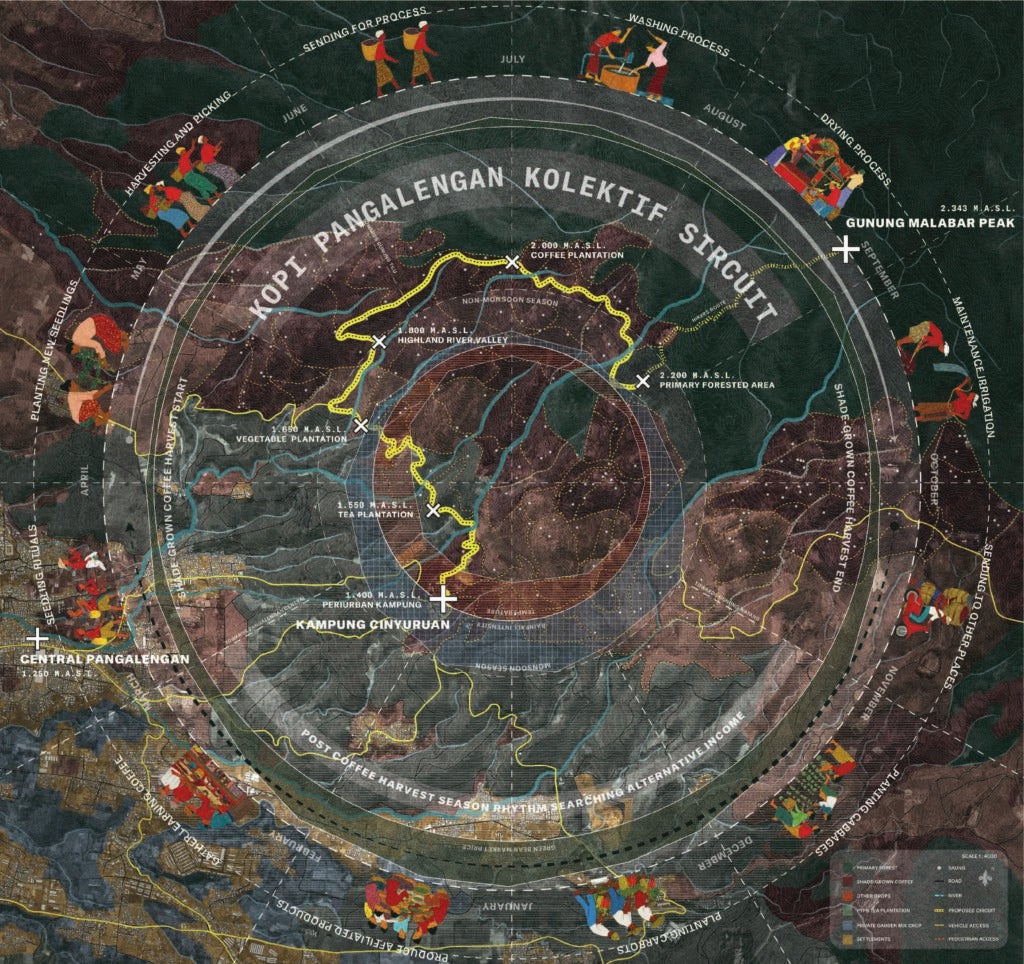
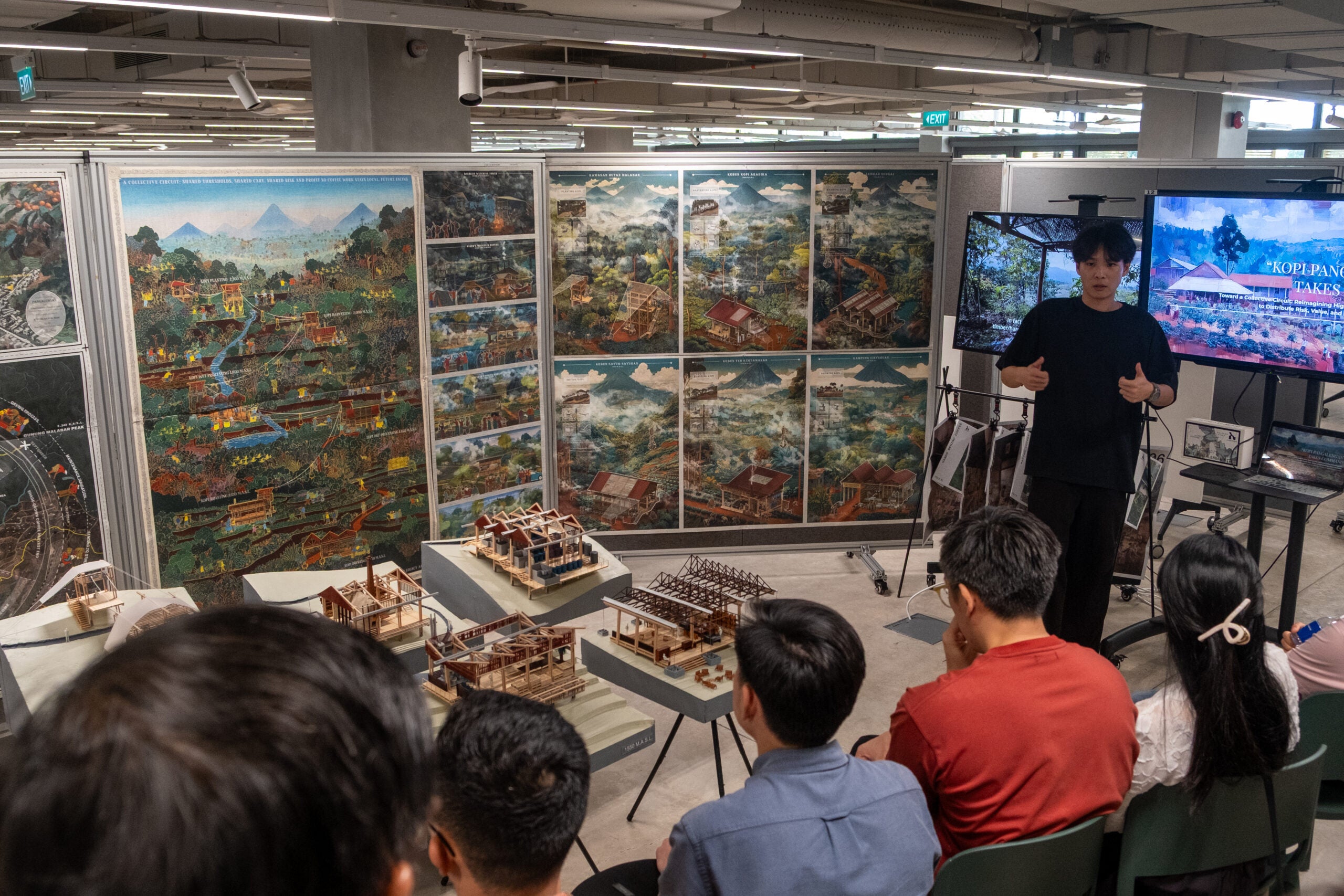
Rather than proposing a single building, the thesis develops a collective circuit of six small infrastructures distributed along the Mt. Malabar trail: a basecamp, roastery, drying house, washing facility, resting saung and manual highline transport system. Together, they bring processing, learning, exchange and public encounters closer to where coffee is grown.
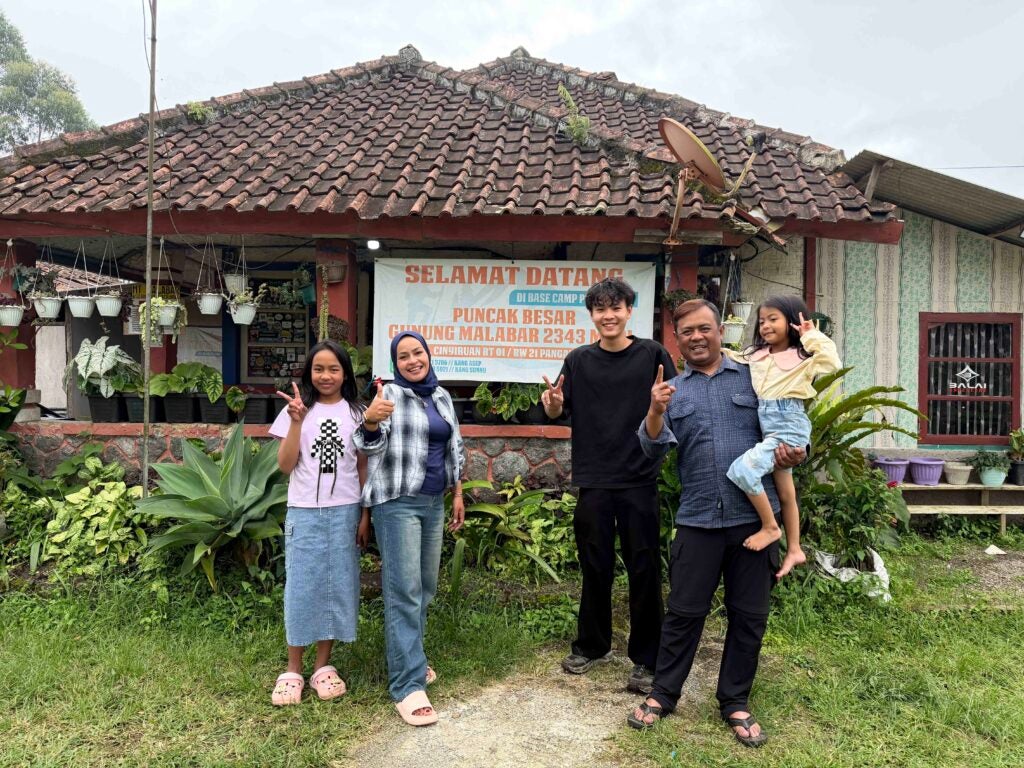
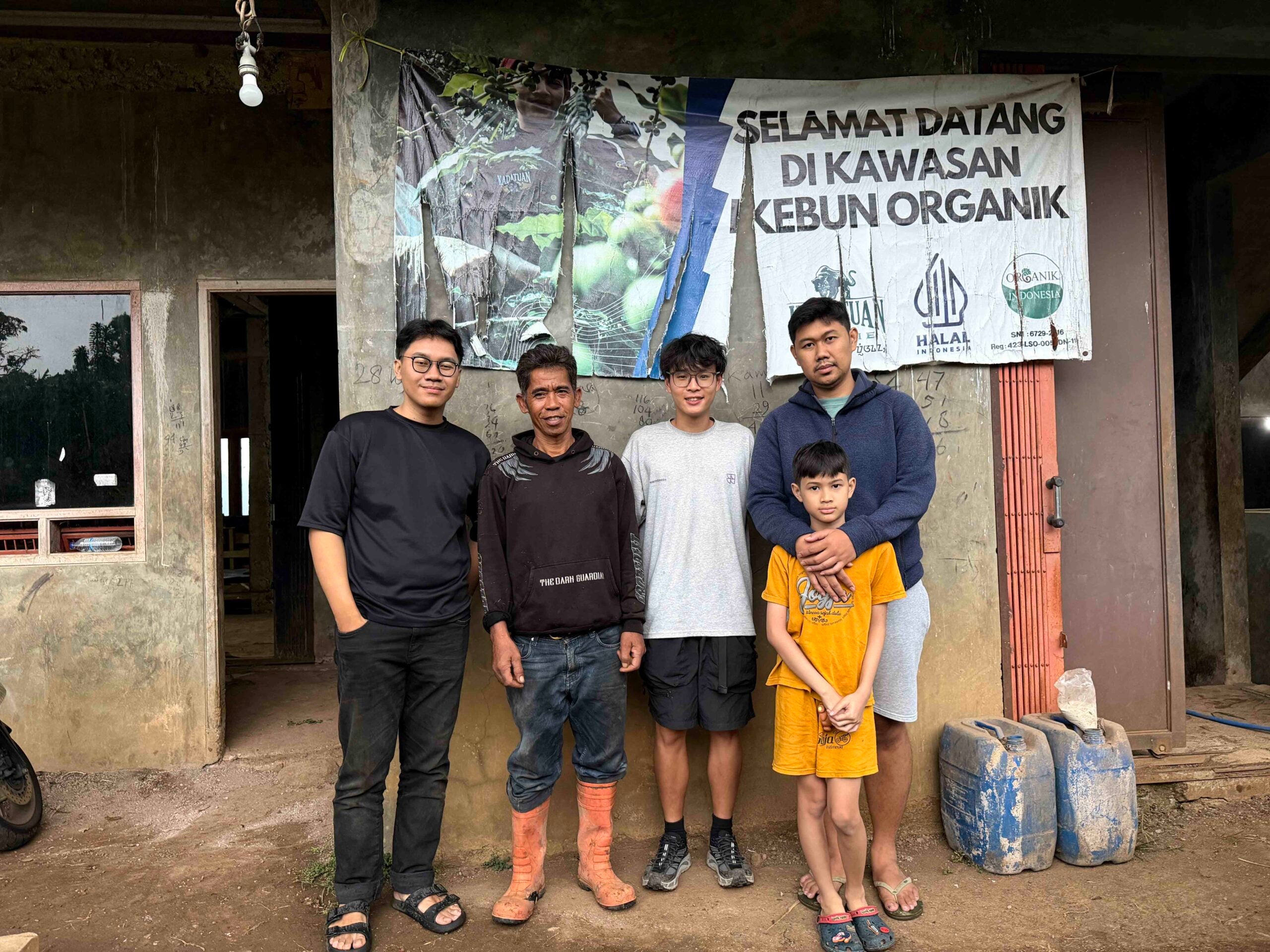 AW WEI KANG WITH THE LOCALS DURING HIS THESIS RESEARCH IN PANGALENGAN, WEST JAVA
More importantly, the proposal creates a new seasonal rhythm. During the harvest, the infrastructures support collection, transportation, washing, drying and roasting. During the low season, often one of the most difficult periods for farmers, the same spaces can support maintenance, coffee tasting, hospitality, hiking and community activities. This seasonal switch offers possibilities for alternative income while connecting farmers more directly with processors, buyers, visitors and coffee drinkers.
Recognition, in this project, means more than simply making farmers visible. It means connecting the quality of coffee to the people, knowledge and sustainable practices that produced it. By strengthening feedback, collaboration and economic opportunity at origin, the project asks whether coffee farming can become a more viable and dignified livelihood, one whose knowledge and care can be sustained and passed on to future generations."
"My key takeaway is that architecture can operate as shared infrastructure rather than only as an individual building. It can create conditions for people, knowledge and resources to become better connected. The proposal remains unbuilt, and I hope to return to Pangalengan to use it as a basis for further conversations. Its most meaningful future would not be to construct the project exactly as drawn, but to allow farmers, processors and other participants to question, adapt and collectively shape its possibilities."
- Aw Wei Kang (Class of 2026)
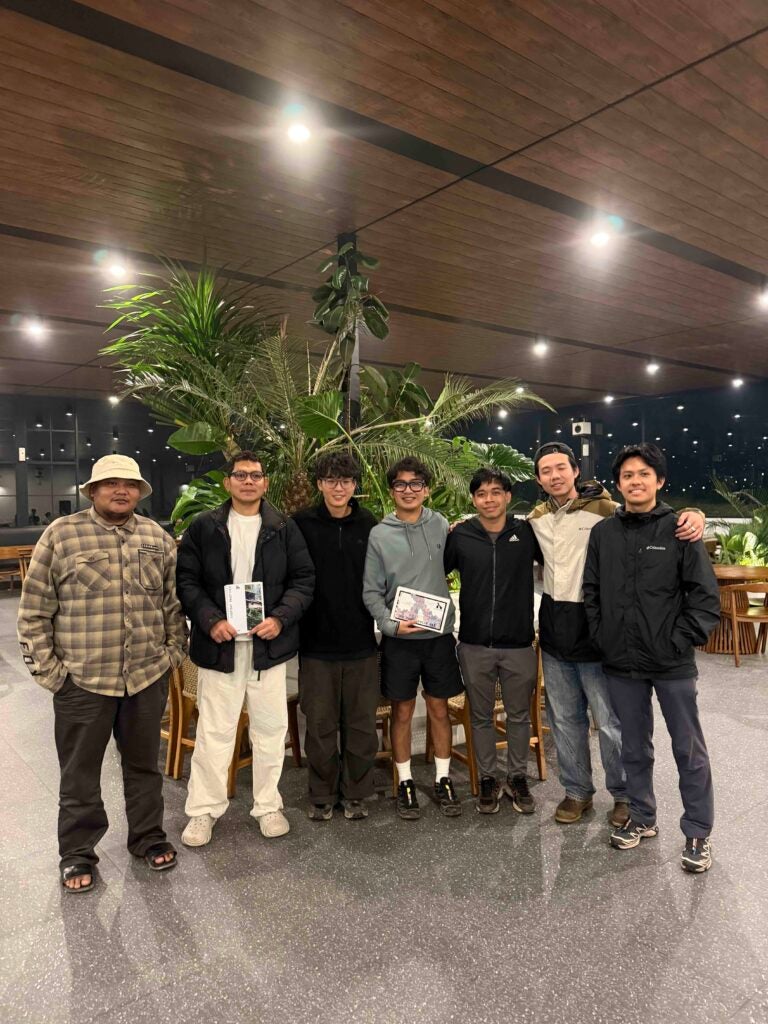
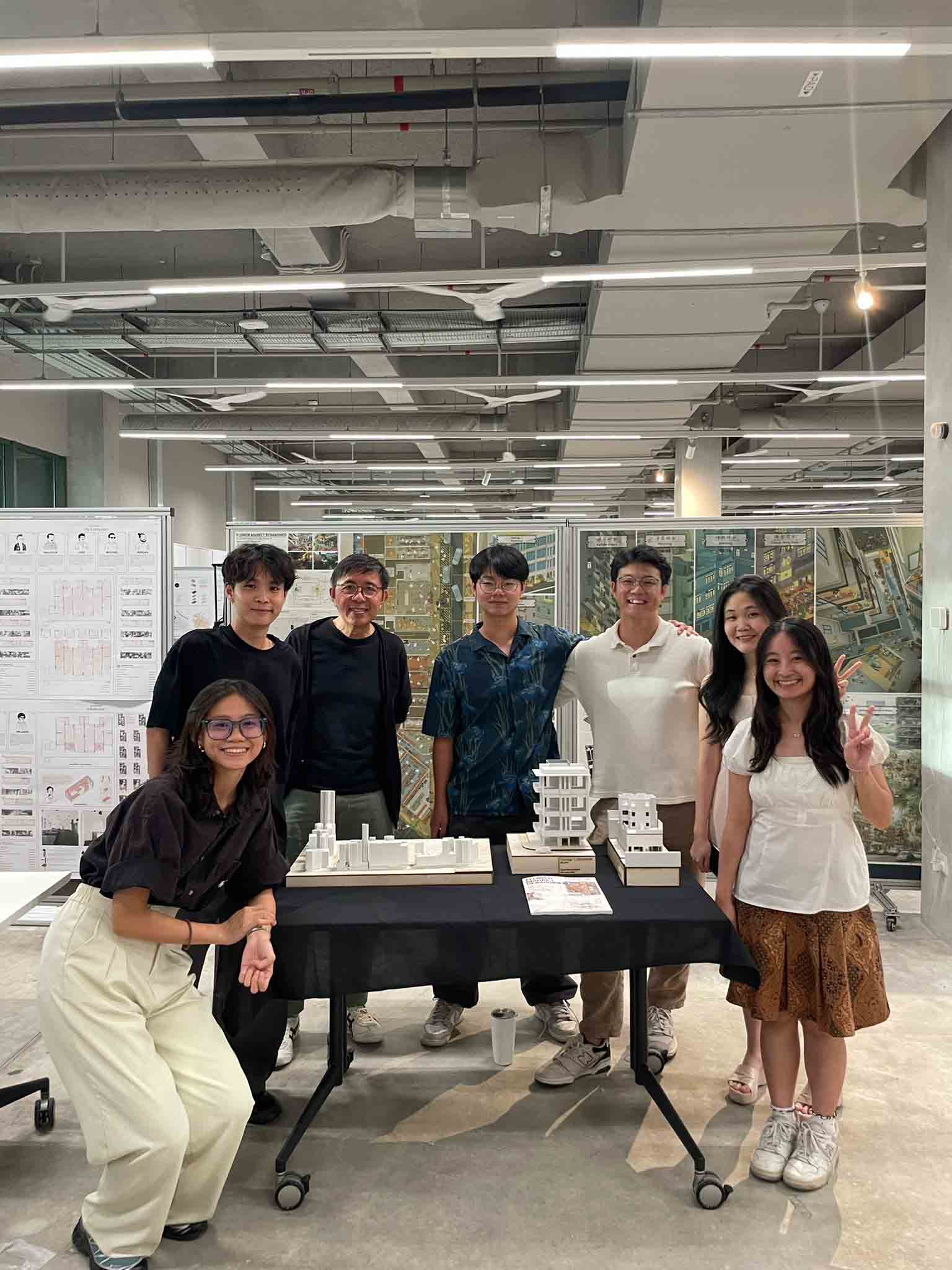 AW WEI KANG WITH HIS STUDIO MATES AND THESIS SUPERVISOR, ASSOC. PROF CHEAH
In celebrating this achievement, Aw would like to share the recognition with his thesis supervisor, Associate Professor Cheah Kok Ming, and his tutors, Senior Lecturer Dr Victoria Jane Marshall and Assistant Professor Robin Hartanto Honggare. He is grateful to Finca de Berman, Kedatuan Koffie, and the farmers, processors and individuals who generously shared their knowledge during his fieldwork. His thanks also go to his NUS Museum mentors, Ms Siddharta Perez and Mr Eugene Koh, as well as his studio mates, family, friends, and his partner, Yating, whose support made this project possible.
Since graduating, Aw has joined DCA Architects as an Architectural Associate, where he is currently working on a mixed-use supertall skyscraper under construction. This experience is allowing him to continue learning how architectural ideas are coordinated and translated into built reality, at a very different scale.
We wish Aw all the best in his career ahead, and look forward to seeing how his passion for uncovering the hidden stories behind everyday landscapes continues to shape his work.