
RAISE: Robotics, AI & Sustainable Environment/Infrastructure
RAISE: Robotics, AI & Sustainable Environment/Infrastructure
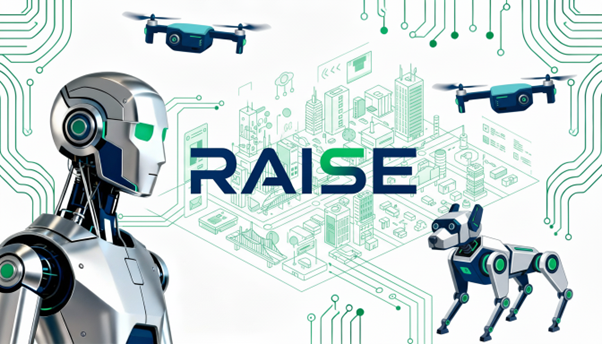
The RAISE Research Cluster at NUS CEE brings together robotics, AI, and digital technologies to transform how we design, build, and maintain infrastructure—delivering higher productivity, precision, safety, and sustainability. We advance Singapore’s national goals in digital transformation and decarbonisation through applied research, real-world pilots, and industry partnerships.
What we do
- Deploy autonomous and collaborative robots for safer, faster, higher-quality construction
- Use AI for predictive insights, risk detection, and resource optimisation across the project lifecycle
- Create intelligent digital twins integrating BIM, IoT, and analytics for real-time decision-making
- Enable circular and low‑carbon construction through DfMA, selective deconstruction, and advanced manufacturing
Research thrusts
- Autonomous + collaborative robotics: Assembly, inspection, maintenance, logistics; safe human–robot collaboration.
- AI for predictive + prescriptive management: Risk detection, automated quality control, and resource optimisation.
- Digital twins + intelligent BIM: Lifecycle monitoring, simulation, and adaptive optimisation powered by IoT and AI.
- Sustainable + circular construction: DfMA, recycling, and selective deconstruction to close the resource loop.
- Cyber-physical systems + smart sensing: Real-time sensing, automation, and control for resilient operations.
- AI for predictive maintenance of ageing infrastructure: Early defect detection, deterioration forecasting, and maintenance optimisation.
Capabilities and past successes
- BIM Design-for-Safety automated checker
- BIM-driven automatic scheduling and lean DfMA planning
- Autonomous drones for GPS‑denied environments
- Vision-based defect detection for ageing infrastructure
- Low‑carbon materials for 3D concrete printing and modular construction
- Structural optimisation and metal additive manufacturing for infrastructure
Impact
- Productivity: Shorter timelines, fewer reworks, and data-driven decisions
- Quality and safety: Automated inspection, risk prediction, and HRC (human–robot collaboration)
- Sustainability: Lower material use, reduced waste, and circular workflows
- Resilience: Real-time monitoring and adaptive control across assets and systems
Cluster Director: Professor Richard Liew, ceeljy@nus.edu.sg
Co‑Director: A/Prof Yeoh Ker‑Wei Justin, ceeykw@nus.edu.sg