Master of Science (MSc) in Energy Systems

The Master of Science in Energy Systems is a unique combination of engineering and technology management to meet the current and near-future energy development in Singapore and globally under the threat of climate change.
This interdisciplinary programme equips students with holistic and fundamental knowledge of energy technology and innovation management, as well as facilitating decision-making in energy solutions through quantitative and qualitative methods. Students will acquire advanced knowledge and skills in:
- Understanding of principles of energy technologies such as solar, hydrogen, and carbon storage and utilisation
- Benefit and cost analysis of energy technology investment and the impact of market-based mechanisms
- Comprehend the economic, legislature, political, and societal influence on energy use and management
- Manage innovation and R&D in energy technologies
With technical and managerial knowledge, possibilities for sustainable energy and energy transition open up for graduates in the following professional industries and sectors:
- Energy analysis and operation management
- Consulting and policy advisory
- Investment analysis and decisions related to energy technologies
- Technology and innovation management in the energy sector
Degree Requirements
| Degree Requirements | To qualify for the MSc (Energy Systems) programme, a candidate must:
|
| Continuation and Graduation Requirements | * Refer to the degree requirements for more details:
MSc (Energy Systems) Degree Requirements (for cohorts AY2022/2023 and onwards) * Refer to detailed course descriptions here. Listed graduate courses offered every semester or academic year are subject to programme curriculum changes and schedules of teaching staff. Candidates should note this in planning their study programme. All courses offered in the academic year can be found at NUSMods. |
Candidature
| Full-time | Minimum 1 year – maximum 2 years |
| Part-time | Minimum 2 years – maximum 4 years |
The academic study workload in a typical semester is as shown below:
| Recommended Workload per Semester | Part-time | Full-time |
| Maximum workload | 12 Units | 20 Units |
| Minimum workload | 4 Units | 12 Units |
Continuation and Graduation Guidelines
All graduate coursework programmes follow stipulated continuation and graduation guidelines established by the Office of the University Registrar (OUR) here.
| Eligibility | At least a Bachelor’s degree in Engineering and other STEM disciplines.
The above-mentioned is a minimum requirement, which does not guarantee admission; selection is on a competitive basis. For more information on admission requirements, please refer to the CDE (Admission Requirements) website. |
| English Requirements | TOEFL (internet-based test) ≥ 85 or IELTS (academic) ≥ 6.0 is required if your first language is not English. You may be waived from this requirement if you have completed your degree programme taught entirely in English, situated in an English-speaking country/territory, for example (non-exhaustive list) Australia, Canada, Hong Kong, India, New Zealand, Pakistan, Philippines, Singapore, United Kingdom, USA.
The TOEFL/IELTS result is only valid for 2 years after the test and should be valid at the beginning of the application period. Other tests (including the TOEFL Institutional Test) and those that claim to be predictions, estimations, equivalents, simulations, etc. (e.g. MyBestscores) of the TOEFL or IELTS (e.g. Oneskill retake) are unacceptable. For more details, refer to CDE (Admission Requirements) website. |
| Application Requirements | Please refer to the CDE (Application) website for detailed instructions and documents that need to be submitted upon application.
We regret to inform you that your application may be deemed invalid if you do not upload all the required documents upon submission. |
Admission Intake
There is one (1) intake per Academic Year. Candidates will be admitted at the beginning of each academic year in August.
| Intake | Application Period | Admission Outcome | Application Fee |
| August 2027 Intake | 1 October 2026 to 28 February 2027 | The admission outcome will be released in batches. Successful candidates will receive an email on their offer accordingly. | S$109 (9% GST) |
Application Link
Useful Information for Prospective Students
Admission Requirements for Master of Science Programmes in Engineering
Application Guide to Graduate Admission System (GDA3)
Frequently Asked Questions for Master of Science by Coursework Programmes
Continuation and Graduation Requirements (CDE)
Programme Fees for students admitted in AY2027/2028 (August 2027 intake)
| Programme Fees | Total Payable (inclusive of GST) |
Acceptance Fee (9% GST) |
1st Semester (9% GST) |
2nd Semester (9% GST) |
3rd Semester (9% GST) |
4th Semester (9% GST) |
| Full-Time Students | $57,200 | $5,450 | $25,875 | $25,875 | N.A. | N.A. |
| Part-Time Students | $57,200 | $5,450 | $12,937.50 | $12,937.50 | $12,937.50 | $12,937.50 |
- For AY2027/2028, Singapore Citizens, Singapore Permanent Residents and NUS Alumni* (regardless of citizenship) will receive a 40% fee rebate.
- Recipients of financial aid/scholarships/sponsorships from external (non-NUS) sources are not eligible for the 40% fee rebate.
- Information on the NUS Master’s by Coursework Enhanced Tuition Fee Rebate can be found here.
- All fees quoted here are in Singapore Dollars (S$) and inclusive of 9% Goods and Services Tax (GST).
- Fees are correct as at time of posting and are subject to changes without prior notice.
- A non-refundable and non-transferable Acceptance Fee of S$5,450 (9% GST) is payable upon acceptance of offer.
- The course fees are payable in instalments over regular semesters.
- Students need to additionally pay for Miscellaneous Student Fee (MSF) in every semester enrolled.
* You are an NUS alumnus if you have graduated from the National University of Singapore, or one of its five predecessor institutions i.e. King Edward VII College of Medicine, Raffles College, University of Malaya, Nanyang University and University of Singapore. All graduates awarded with an undergraduate or postgraduate degree, or graduate diploma are accorded alumni status.
Current Students
For current students, please refer to your cohort's respective full programme fees here.
SkillsFuture Credit
Student Finance Matters
Details on payment modes, student loans, SkillsFuture credit and financial aid can be found here.
Beyond the Books: Preparing Students for the Future of Work
10 September 2026, 2pm
E-Cubes
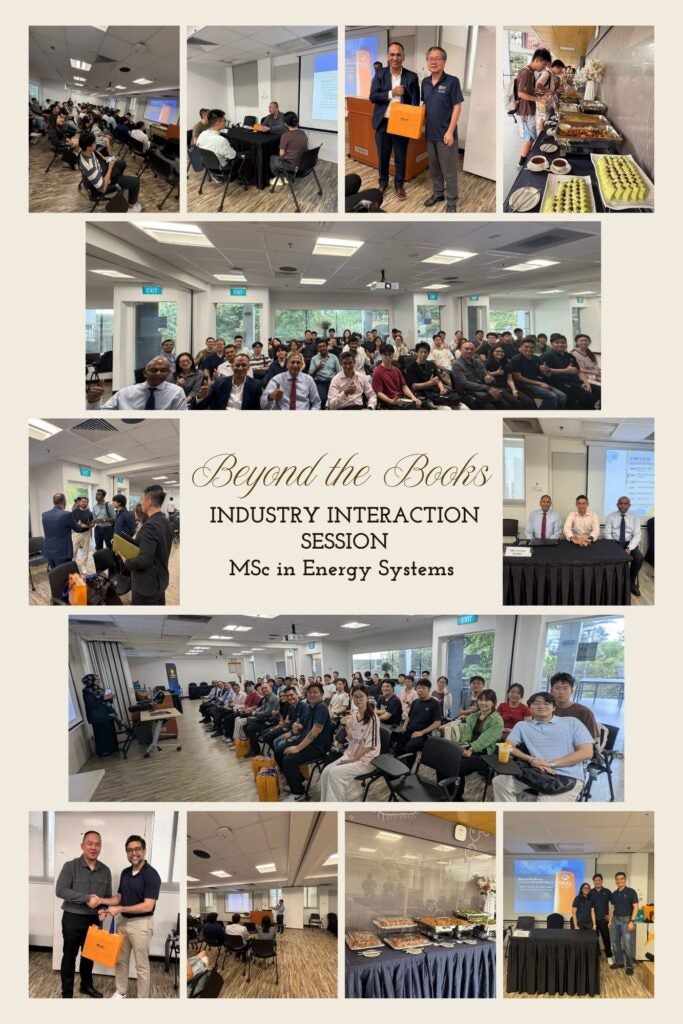
On Thursday, 10 September 2026, the MSc in Energy Systems programme hosted “Beyond the Books: Industry Interaction Session”, bringing students together with representatives from Yokogawa, HBA Future Energy, Micron Technology, and EY.
The session aimed to help students connect academic learning with real-world industry perspectives, career opportunities, and emerging challenges in the energy and sustainability sectors.
In his opening remarks, Head of Department (HOD) Professor Saif A. Khan highlighted the value of bridging classroom knowledge with professional practice. Alumna Aishwarya Sivakumar, who secured both an internship and subsequent employment with Yokogawa, shared her journey and encouraged students to keep learning, exploring, and asking questions.
Industry speakers offered insights into the future of work. Yokogawa and Micron Technology discussed the growing importance of big data, digitalisation, and the global transition towards net zero by 2050. HBA Future Energy highlighted the rising demand for sustainable energy solutions, while EY emphasised the global nature of sustainability efforts and carbon markets.
The session concluded with a networking segment, giving students the opportunity to engage directly with company representatives, alumni, programme directors and lecturers.
Beyond academic training, events like this reflect the programme’s commitment to preparing students for the world beyond graduation, helping them understand the industries they may enter, the challenges they may face, and the impact they can make in the future.
Three Programmes Come Together for First Combined Orientation
31 August 2026, 9am
Gardens by The Bay
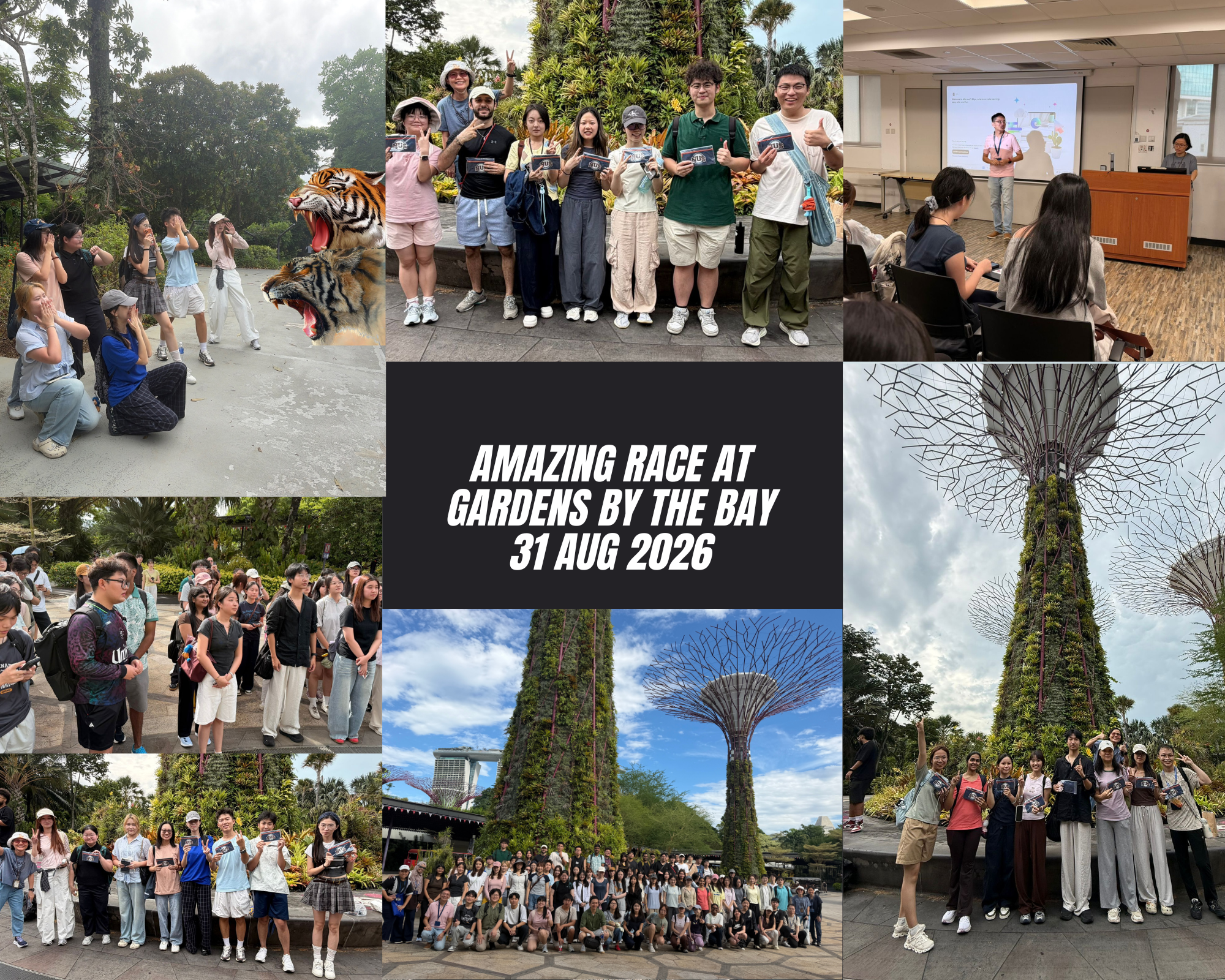
On 31 August 2026, students from the MSc in Chemical Engineering (CHE), MSc in Safety, Health and Environment (SHE) Technology, MSc in Energy System (ES) came together for their first combined orientation at Gardens by the Bay.
The orientation featured an Amazing Race-style team activity, with students placed in mixed groups and using an interactive app to complete challenges, explore the gardens and learn about local plant species.
The activity encouraged teamwork and interaction among students from different programmes. For the predominantly international cohort, it also provided a fun and informal opportunity to familiarise themselves with Singapore and practise using English in everyday interactions.
More importantly, bringing the three programmes together helped foster a shared sense of collective identity and belonging within the Department of Chemical and Biomolecular Engineering (ChBE), providing a positive start to the new academic year and strengthening the wider student community.
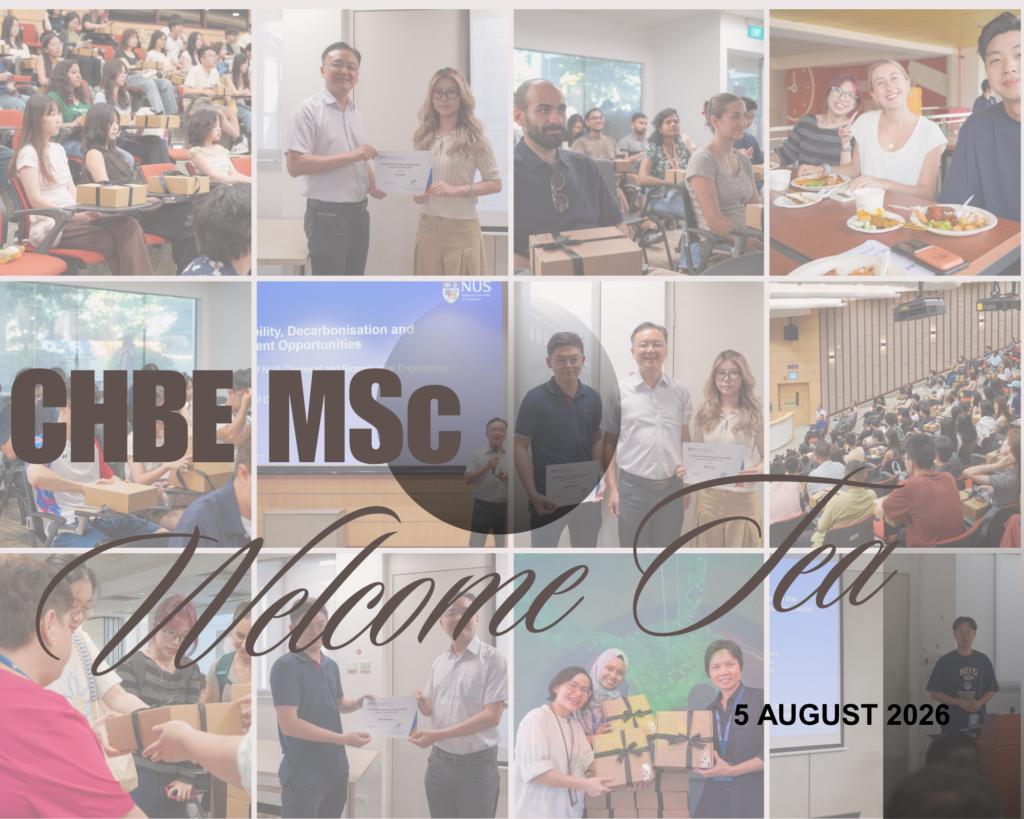
A Very Warm Welcome Tea
5 August 2026, 11am
E-Cubes Foyer
A total of 315 new MSc students from various nationalities joined the Department of Chemical and Biomolecular Engineering (ChBE) for the August 2026 intake, each bringing distinct educational backgrounds and personal aspirations.
During the Welcome Tea on 5 August 2026, students came together over a buffet lunch and had the opportunity to hear learn more about their journey ahead. Associate Professor Yang Kun-Lin, Deputy Head of ChBE, welcomed and shared with the students on the current competitive job market. He highlighted how the department's industrial attachment opportunities allowed international students to gain practical exposure and build relevant industry experiences in Singapore. He encouraged students to actively seek internship opportunities during their studies in NUS.
Associate Professor Jangam Sachin Vinayak provided an overview of the campus resources and student support systems available throughout their time at NUS, covering study facilities, administrative support, health and wellness services, and recreational activities. He encouraged students to not only do well academically but to also embrace and enjoy their student life at NUS.
The event served as an initial step for the new cohort to connect with teaching staff, meet fellow classmates, and familiarise themselves with the university's communities. Overall, it was a positive event marking a great start for ChBE MSc students of August 2026 intake.
Stop and Smell the Roses Coffee: MSc ES and MSc SHE Combined Event
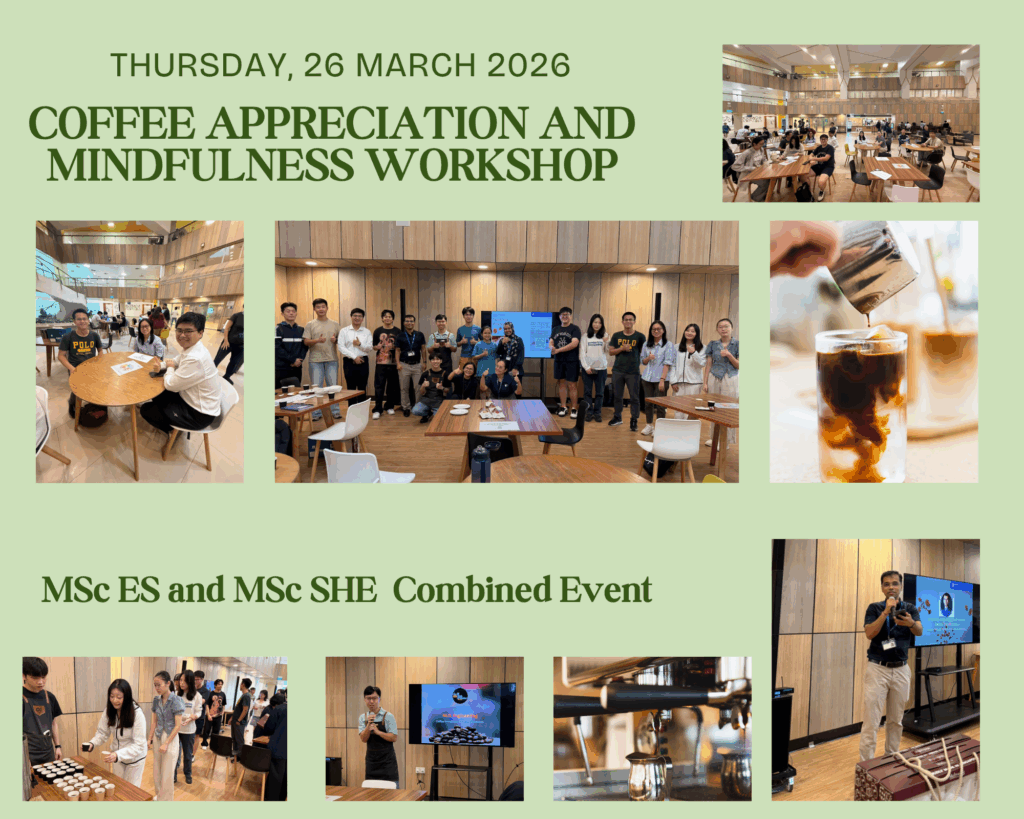
26 March 2026, 3pm.
Engineering Auditorium (EA) Atrium
You are probably a coffee drinker. But have you ever stopped to think about where your coffee comes from?
At the Coffee Appreciation Workshop, presented by The Coffee Roaster, students discovered there is more to coffee than what meets the eyes (and palate)
Opened by Associate Professor Sachin Jangam, the session took participants through coffee bean species, flavour profiles, and ethical sourcing (apparently, kopi luwak is not worth the hype). Learning came alive through interactive quizzes, with prizes along the way.
The highlight? A guided coffee tasting session that doubled as a lesson in mindfulness.
At the heart, this workshop taught students, amid their busyness, to pause, slow down and reconnect with their senses and enjoy the moment.
Because often, the simplest moments are the most meaningful ones!
Combined MSc Student Welfare Event
11-13 November 2025, 3pm
E-Cubes Foyer
The combined student welfare activity was held at the E‑Cubes foyer from 11–13 November 2025. Melvados cookie hampers were distributed to students from the MSc Chemical Engineering, MSc Energy System, and MSc Safety, Health and Environment Technology programmes to wish them well for the upcoming exam weeks.
At the same time, students completed a survey to share feedback on their academic experience. These inputs will help us identify areas for improvement within each programme.
Thank you to everyone who joined us and contributed your views. Your feedback is invaluable, and we will use it to enhance student support and teaching delivery. We wish all students the very best for your exams.
See you at the future welfare events!

Beyond Solar: Students’ First Industry Interaction on Future Energy
11 September 2025, 2.30 p.m.
E-Cubes Foyer
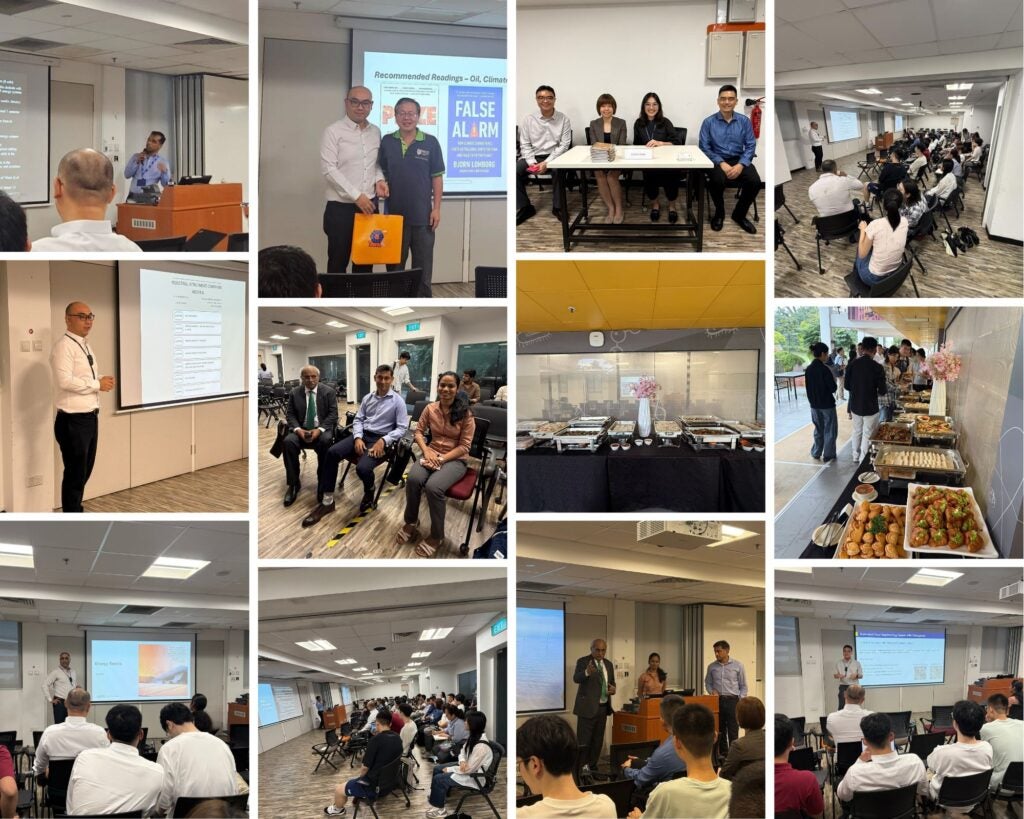
The long-awaited first interaction between MSc Energy Systems students and industry partners, chaired by Assoc. Prof. Jangam Sachin Vinayak and Professor Jiang Jianwen, marked an important step in connecting classroom learning with the energy sector. Participating companies included Yokogawa, HBA Energy, BRG and Engie, representing both established industry leaders and emerging firms in the energy sector. The session gave students the chance to learn about current industry trends while building connections with partners for future attachments.
Alumnus Jonathan Tai, from the programme’s first cohort, reminded students that decarbonisation goes beyond solar power, sharing how his own journey broadened into hydrogen and carbon capture. Yokogawa delivered an engaging session that combined valuable industry insights with light-hearted jokes about Japanese culture, making the talk both memorable and inspiring. Future Energy (HBA) showcased its commitment by hosting MSc alumni such as Swathi for industry attachment, giving students a glimpse of what lies ahead. Closing the event, Prabat Agarwal captured the moment: “Renewables are entering a golden age.”
Students left with a deeper understanding of the evolving energy industry and new connections with professionals shaping its future.
| Department office | Ms. Siti Nurfatin Mz fatinmz@nus.edu.sg |
| College of Design & Engineering Postgraduate Coursework Engineering | CDEGradCoursework@nus.edu.sg |