
RESEARCH
Tips for researchers considering MOE Tier3 and NRF Competitive Research Programme Funding
Large-scale research grants are about more than securing funding. They are fundamentally about enabling exceptional science, leadership, judgement and the responsibility of guiding ambitious research programmes over several years.
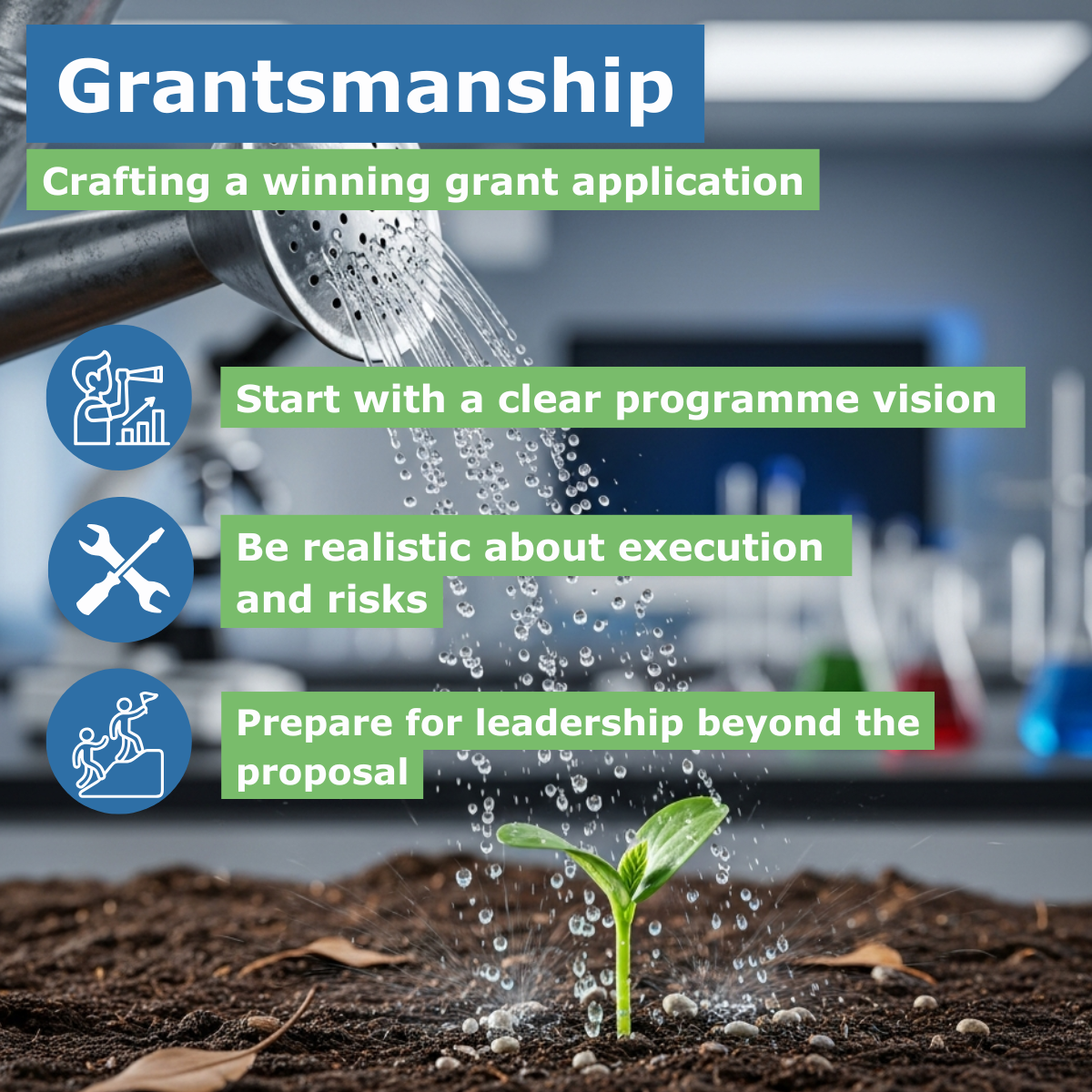
At a recent Grantsmanship Workshop jointly organised by CDE, the Faculty of Science, and the NUSMedSci Alliance (Yong Loo Lin School of Medicine), three themes stood out for researchers considering MOE Tier 3 and NRF Competitive Research Programme (CRP) funding:
- Start with an ambitious scientific idea, clear programme vision, then build the team to deliver it, not the other way round
- Be realistic about execution, including risk management, integration across work packages and long-term commitment
- Prepare for leadership beyond the proposal, from interviews and programme management to accountability after the award
Read more about the Grantsmanship Workshop and the perspectives and advice shared by experienced grant holders here: https://cde.nus.edu.sg/news/grantsmanship-workshop/
First atom probe tomography facility in SE Asia opens at NUS
Introducing the Invizo 6000, a game-changing atom probe tomography microscope housed at NUS.
The first of its kind in Southeast Asia, the Invizo 6000 enables near atomic-scale, three-dimensional chemical analysis of materials, giving researchers new insight into how elements are distributed and interact at the nanoscale.
Asst Prof Xipeng Tan, who played a central role in bringing the Invizo 6000 to NUS, said the microscope’s ultrawide field of view makes it a critical tool in developing next-generation materials and devices.
“This microscope allows us to understand why materials behave the way they do, and how we can engineer them to perform better,” he said.
Housed within the NUS Electron Microscopy Facility, hosted at CDE, the new facility will be used for research across semiconductors, advanced alloys, energy materials and nanotechnology, while encouraging collaboration with academic and industry partners in the region.
Watch the video to learn how the Invizo 6000 is opening up new possibilities for materials research at NUS.
Read more about the Invizo 6000 facility opening and inaugural symposium here: https://cde.nus.edu.sg/news/first-atom-probe-tomography-facility-in-se-asia-opens-at-nus/
How CDE researchers support Singapore's push to stay at the forefront of global maritime leadership
As competition intensifies among the world’s leading ports, planning for the future demands new ways of thinking about resilience, efficiency and sustainability.
The Centre of Excellence in Modelling and Simulation for Next Generation Ports (C4NGP) at CDE develops digital tools and data-driven approaches to support better decisions in the design and operation of complex port systems.
In this short video Prof Chew Ek Peng, Director of C4NGP, shares how the centre’s work is supporting Singapore’s efforts to stay at the forefront of global maritime leadership.
Discover more about C4NGP’s work - watch the full video on our YouTube channel: https://youtu.be/-iussSGsJJM
Prof Heng Chye Kiang's interview as part of Lianhe Zaobao's Future365 series

As technology increasingly mediates our daily interactions, does Singapore risk losing the spontaneity and human connection that make a city feel like home?
This question is at the heart of a recent interview with Professor Heng Chye Kiang, Deputy Dean of CDE, for Lianhe Zaobao's "Future365" series.
In the feature, Prof Heng cautions against a purely technology-driven vision for the future. Instead, he advocates for designing homes and cities as adaptable frameworks that prioritise human needs and emotional connection. As technology becomes more pervasive, he argues, it is even more critical to deliberately create spaces for spontaneous social interaction to avoid living in a "cold and emotionless environment."
This perspective is central to Prof Heng’s role as an architect-planner and the Director of CDE’s Centre for Sustainable Asian Cities (CSAC), where he spearheads research into innovative urban planning and design solutions for high-density environments. A key example of this human-centric approach is a study led by Prof Heng contributing to DesignSingapore Council’s “Loveable Singapore Project.” The research explored "loveability" factors within two quintessential Singaporean spaces: our vibrant hawker centres and the communal public areas of HDB neighbourhoods.
Professor Heng's work underscores a vital message: the most advanced cities are not just smart, but also deeply human.
To learn more about the Centre's initiatives and related research, do check out: Centre for Sustainable Asian Cities (CSAC): https://cde.nus.edu.sg/csac
To read the Future365 feature: https://interactive.zaobao.com.sg/future365/2026/heng-chye-kiang-urban-planning-future-smart-home.html
CDE researchers develop new AI approach that keeps long-term climate simulations stable and accurate
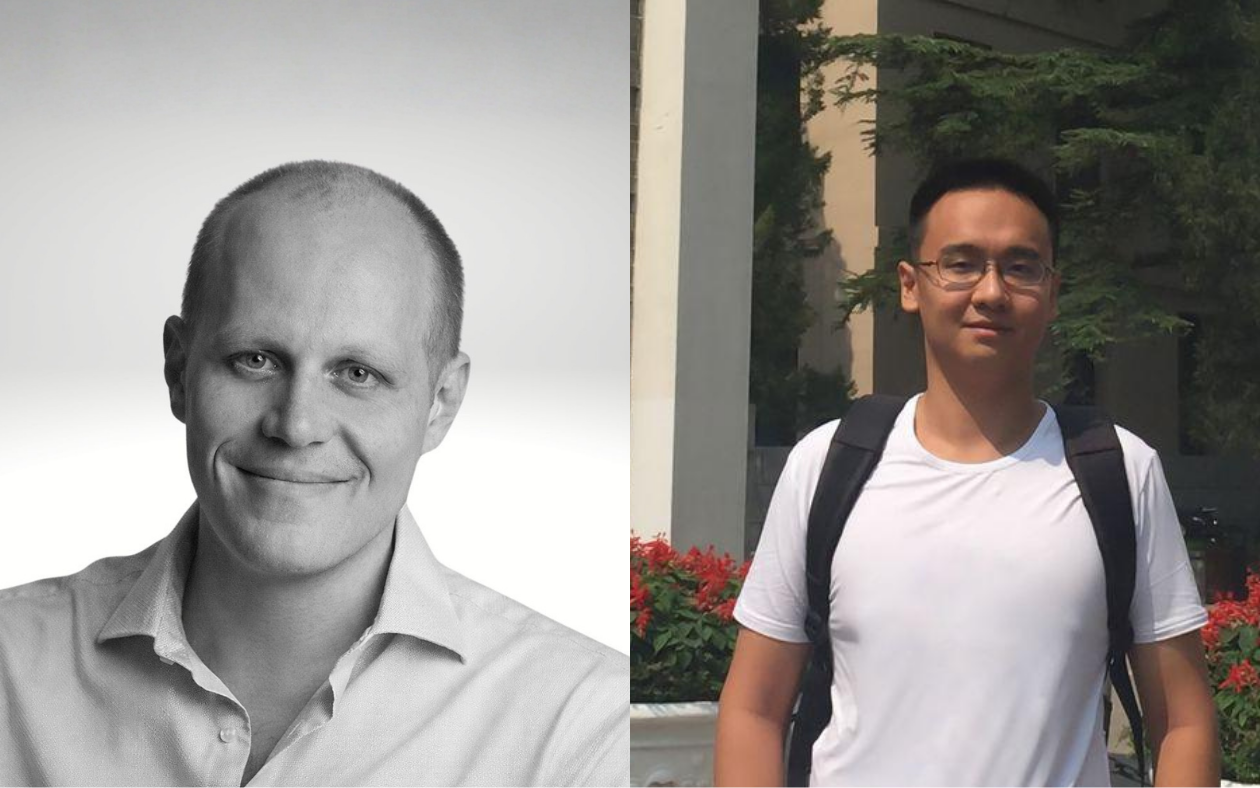
Deep learning is increasingly being used to emulate cloud and convection processes in climate models, offering a faster alternative to computationally intensive cloud-resolving simulations. However, because these processes unfold at kilometre scales or smaller — far below the resolution of global climate models — hybrid AI–physics approaches often become unstable when run over long time horizons. A team of researchers led by Assistant Professor Gianmarco Mengaldo, in collaboration with Tsinghua University, NVIDIA and the Centre for Climate Research Singapore, have traced a key instability to a moisture imbalance during condensation. They developed CondensNet, an adaptive, physics-constrained neural-network that can correct physically inconsistent behaviour. Integrated into a global climate model, it enables stable, accurate long-term simulations while running far faster than cloud-resolving approaches.
Read more here: https://cde.nus.edu.sg/news/nus-cde-researchers-develop-new-ai-approach-that-keeps-long-term-climate-simulations-stable-and-accurate/
Major Grants Awarded
The major grants (start date in February 2026) with total project value > $1M.
| Hosting Unit | Project Title | Funding Programme (Source of Funding) |
Principal Investigator | Co-Investigator |
| ECE | From fundamental physics to next-generation magnetic memories based on altermagnets | ACRF tier 2 grant – 2025/MOE | Yang Hyunsoo | Shen Lei |
| MSE | High-performance memristors with confined-filament switching mechanism | NRF open/general competitive research programme (NRF-CRP) – 2025/NRF | Mario Lanza Martinez | Silvija Gradecakgaraj; Oezyilmaz, Barbaros |
| ECE | Orbital currents and torques for spin memory applications | NRF thematic competitive research programme (NRF-T-CRP): Nanomechanics – 2025/NRF | Yang Hyunsoo; Shen Lei | Shen Lei |
| ECE | Electrostatic/piezoelectric hybrid-actuated CMOS-compatible nano optomechanical building blocks and technology platform for next-generation optical IoT sensing/communication Systems | NRF thematic competitive research programme (NRF-T-CRP): Nanomechanics – 2025/NRF | Lee Chengkuo | Qiu Chengwei; Zhou Guangya |
| CEE | Harnessing regional tropical timber/bamboo for sustainable and durable mass-engineered products for the tropics | Cities of tomorrow R&D programme: Advanced construction – 2025/NRF | Pang Sze Dai | Shinya Okuda; Kua Harn Wei; Kong Kian Hau |
| MSE | Self-sustaining embedded electronics in knitted fabric | NRF open/general competitive research program (NRF-CRP) – 2025/NRF | Tural Khudiyev |