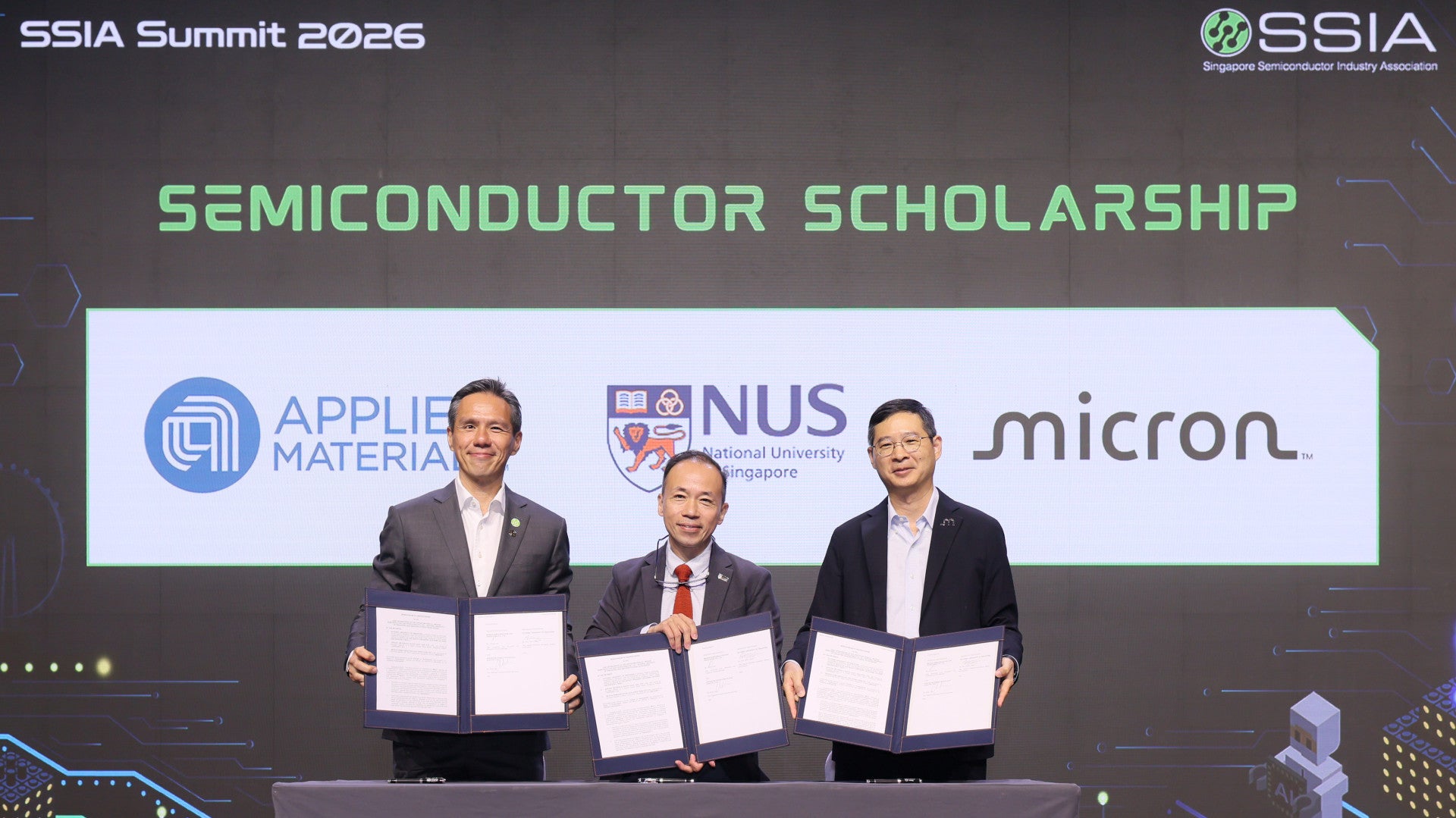
At the Singapore Semiconductor Industry Association Summit 2026, NUS signed a Memorandum of Understanding (MOU) with Applied Materials and Micron to strengthen the pipeline of industry-ready professionals through CDE’s Master of Science in Semiconductor Technology & Operations (MSc STO) programme. Under the partnership, outstanding MSc STO students will be considered for scholarships and industry internships, with potential employment opportunities upon graduation.
The MSc STO programme is a multidisciplinary coursework programme hosted by the Department of Electrical and Computer Engineering, in collaboration with the Department of Materials Science and Engineering and the Department of Industrial Systems Engineering and Management. The programme is further enriched by NUS’ major semiconductor research initiatives, including the Singapore Hybrid-Integrated Next-Generation µ-Electronics (SHINE) Centre, which provides students with exposure to cutting-edge research and industry-relevant technologies.
Offered on both a full-time and part-time basis, the MSc STO programme equips STEM graduates and working professionals with comprehensive expertise across the semiconductor value chain, from materials and devices to manufacturing, packaging, supply chain management and strategic decision-making. Students can also pursue specialised industry pathways, including AI training combined with experiential learning. Graduates are prepared for diverse engineering and management roles across foundries, equipment suppliers, and government agencies. Through formal training and cross-disciplinary perspectives, the curriculum fosters critical thinking, technical expertise, and an awareness of industrial impacts on society.
"By combining rigorous postgraduate education with industry internships and expert mentorship, this partnership will accelerate the development of highly skilled industry-ready talent," said Professor Aaron Thean, Deputy President (Academic Affairs) and Provost at NUS. "It will build talent capacities needed to power the next phase of semiconductor innovation and manufacturing, strengthening Singapore's position as a global semiconductor hub."
As the semiconductor industry evolves, so too are the opportunities for CDE students and alumni – bringing together different disciplines, tackling complex challenges and continually building new skills as technologies advance.
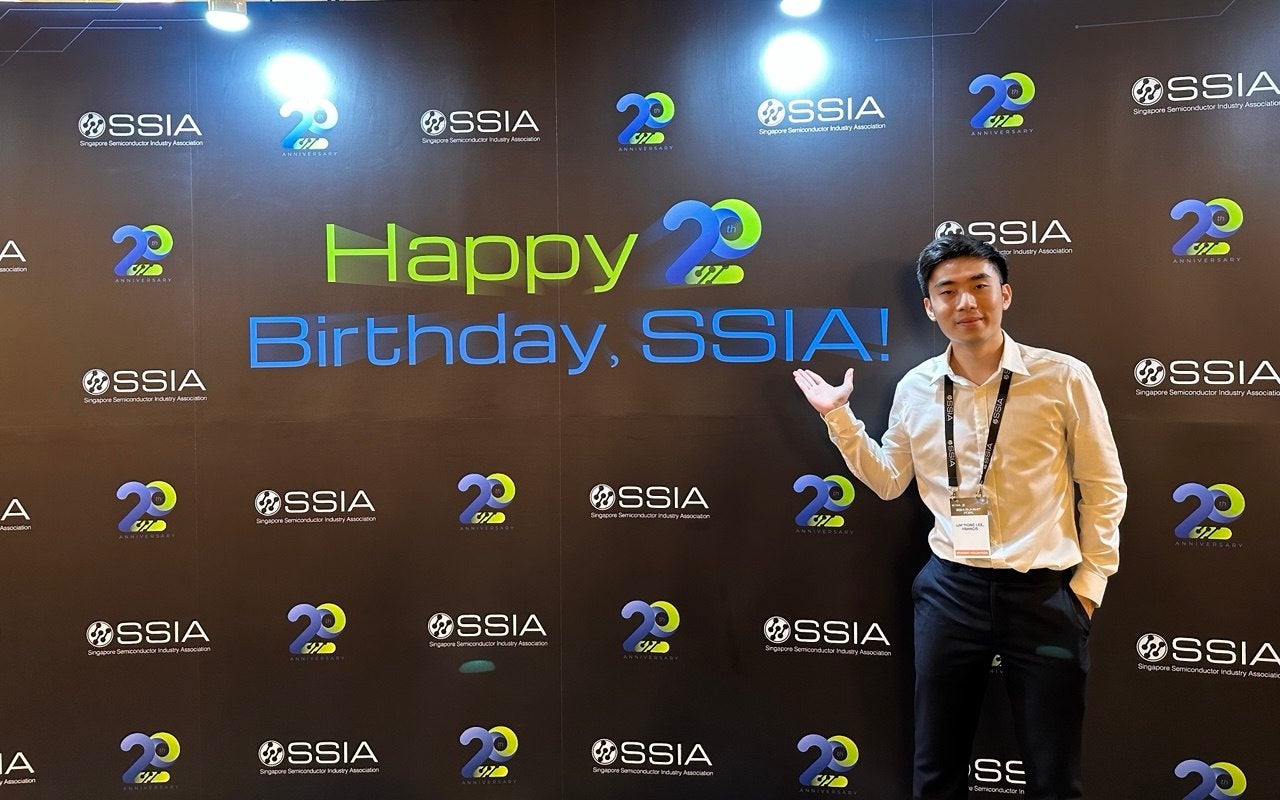
Electrical Engineering student Lim Tiong Lee Francis is already gaining first-hand experience of these possibilities through his engagement with the semiconductor sector. “Semiconductors sit at the foundation of technologies such as AI and advanced computing,” says Francis, who is also President of NUS Semiconductor Club and an SSIA Semiconductor Active Youth Ambassador. “I see exciting opportunities for young engineers like me to learn, innovate, and contribute.”
CDE alumna Harini Ravichandran (Materials Science and Engineering, Class of 2026), now an R&D Process Engineer at Applied Materials, values the breadth and complexity of the work.
“I get to see how quickly things are changing and how the industry is constantly responding to growing demand and increasingly demanding specifications. What makes this an exciting time for me to be entering the semiconductor industry is that there is still so much changing and so much to learn,” Harini said.

For Archi Sinha (Chemical Engineering, Class of 2025), now with Micron Technology, agreed, stating, "What I find exciting is that the semiconductor industry sits at the intersection of many different engineering disciplines, making it a highly dynamic field with constant opportunities to learn and solve new challenges.”

More about the partnership here(opens in new tab).
More about the MSc STO here(opens in new tab).