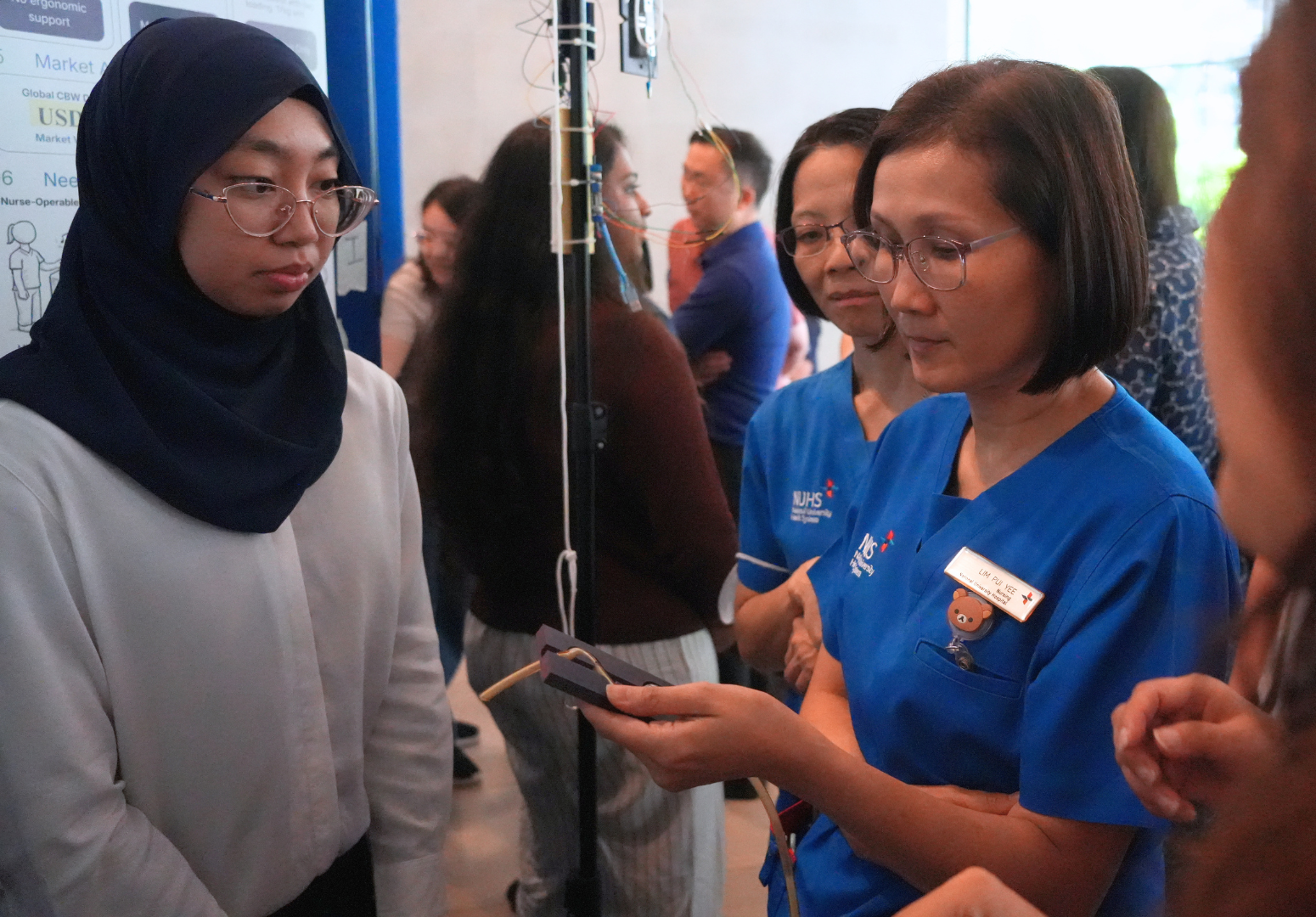
Over 13 weeks, Year 2 and 3 students from Biomedical Engineering worked alongside clinicians from the National University Hospital (NUH) to uncover real-world healthcare challenges and develop early-stage solutions.
Offered for the first time, BN3101B Clinical Immersion and HealthTech Innovation is a collaboration between CDE and NUH that introduces students to clinical environments and healthcare innovation through structured immersion and interdisciplinary learning. Reflecting on the learning journey, Associate Professor Mark Chong from the Department of Biomedical Engineering shared, “Our students moved from observing care delivery to framing needs and identifying innovation opportunities using the Biodesign framework.”
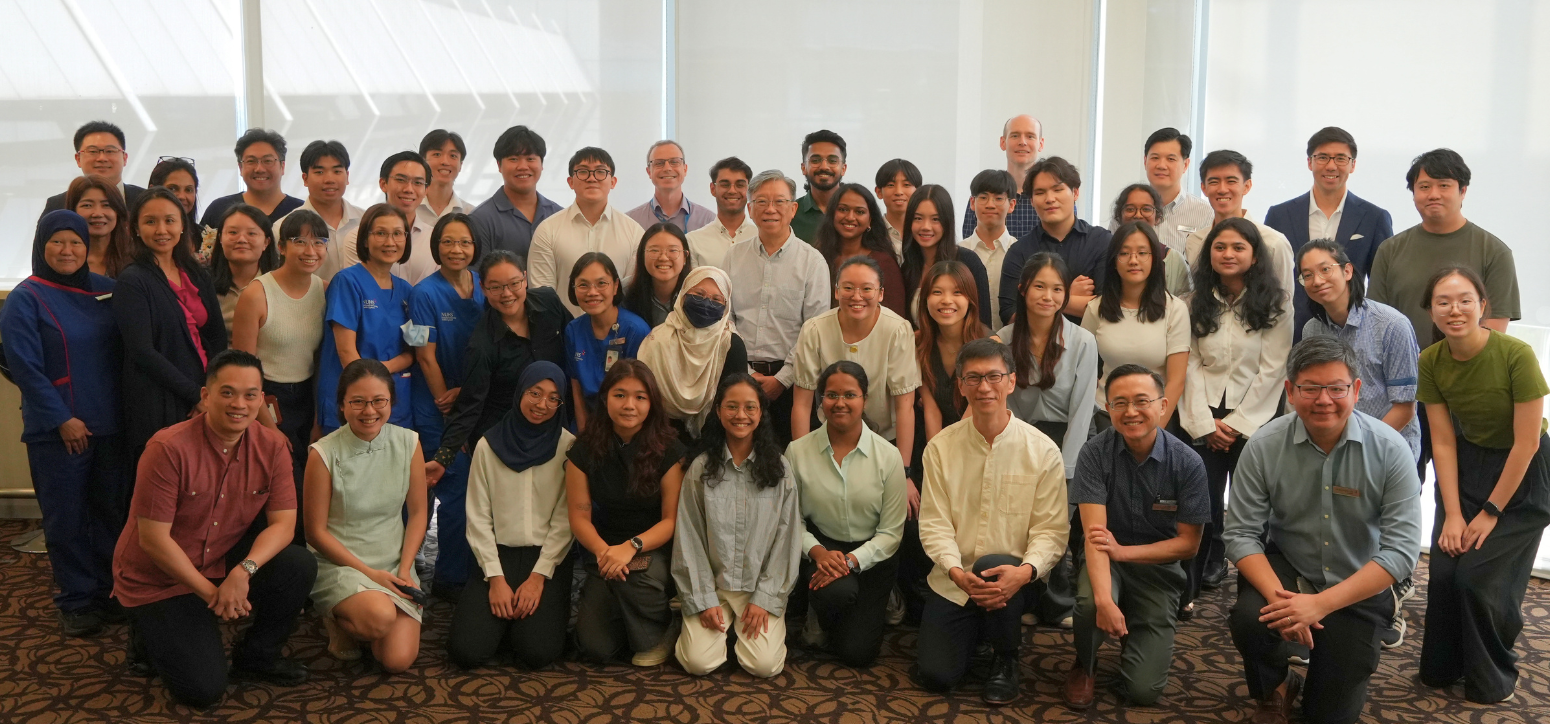
“Engineers and clinicians see problems differently. By combining these viewpoints, we can create more meaningful solutions,” said Adjunct Professor Mark Edward Puhaindran, Chairman, Medical Board, NUH.
The course culminated in a showcase, where 13 teams shared their projects through oral and poster presentations to a panel of clinicians and faculty members from NUH and CDE, respectively.
The panel included industry and clinical experts:
- Mr Colin Tan (Investment Director, Coronet Ventures)
- Assistant Professor James Hallinan (NUH, Department of Diagnostic Imaging)
- Dr Clara Ngoh (NUH, Department of Medicine)
- Ms Siti Zubaidah Bte Mordiffi (NUH, Nursing Administration)
- Adjunct Associate Professor Francis Ho (NUH, Department of Radiation Oncology)
- Adjunct Associate Professor Gao Yujia (NUH, Department of Surgery)
- Associate Professor Alberto Corrias (Deputy Head, Education & Student Life).
- Associate Professor Yeow Chen Hua, Raye (Deputy Head, Outreach & Industry)
- Associate Professor Mark Chong (Course Director of BN3101B)
- Dr Leo Chen Huei
Best Oral Presentation: ArthroLock
Emerging as Best Oral Presentation was ArthroLock, developed by Gregory Neow and Kieran Chan Yi Jun, in collaboration with the Department of Hand and Reconstructive Microsurgery at NUH. Through their clinical immersion, the team identified a key challenge surgeons face during arthroscopic procedures. “As we observed procedures, we realised that surgeons often experience strain while having to manage both the camera and instruments. Even with an assistant, coordination can be challenging and may affect the overall procedure time,” Gregory shared.
ArthroLock addresses this with an intuitive, precise camera-holding device that improves stability and streamlines surgical workflows. Reflecting on their journey, the team noted that narrowing down to a viable, impactful problem was one of their biggest challenges. “We observed many potential needs but struggled to identify one that was clinically viable, feasible, and unique within our scope. Continued engagement with our mentors, Dr Lim Jin Xi and Dr Lim Zhixue, helped us refine our direction and move forward with confidence.”
Looking ahead, the team envisions refining the design through surgeon feedback, followed by benchtop testing and exploration of clinical translation pathways as a cost-effective alternative to existing robotic systems.
Team members: Gregory Neow, Kieran Chan Yi Jun (Year 2 Biomedical Engineering)
CDE mentors: Assoc Professor Mark Chong
NUH mentors: Dr Lim Jin Xi, Dr Lim Zhixue
Best Poster Presentation: When the Brain Moves
Securing first place for Poster Presentation was When the Brain Moves, developed by Cherish Nicole Ng and Dantu Sriya. The team focused on improving accuracy in brain tumour surgery, where a key challenge known as “brain shift” can cause the brain to move during procedures, reducing the reliability of pre-operative scans.
To address this, they proposed a solution that provides surgeons with real-time guidance during surgery, helping them adapt to changes and improve precision. Reflecting on the experience, they shared, “Working with our mentors emphasised the importance of practicality, making sure our solution is not only innovative, but also feasible and safe in an actual surgical setting.”
The team noted that limited existing research in this area posed a challenge and relied on insights from their clinician mentors to refine their approach. Looking ahead, they aim to further develop their model to support greater surgical accuracy and improved patient outcomes.
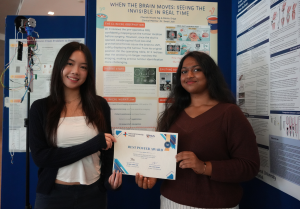
Team members: Cherish Nicole Ng, Dantu Sriya (Year 2 Biomedical Engineering)
CDE mentor: Assoc Professor Mark Chong
NUH Mentor: Dr Swati Jain
Runner-up Poster Presentation: Assist-Hand
Placing second place for Poster Presentation was Assist-Hand, a mobile-based rehabilitation platform that leverages computer vision and artificial intelligence to remotely track patients’ wrist and finger movements.
“Working with our clinician mentors made what we learned in the classroom come to life and gave us insight into real challenges faced by both patients and healthcare professionals.”
Developed under the guidance of NUH clinicians, Dr Lim Zhixue and Dr Sandeep Sebastian, the solution enables occupational therapists to monitor patient progress using data captured on mobile devices, supporting more efficient and accessible rehabilitation. The team highlighted that one of their key challenges was narrowing the scope of the problem. “Initially, we aimed to tackle multiple aspects of rehabilitation but realised that focusing on a specific issue, reducing frequent clinic visits, allowed us to develop a more practical and meaningful solution.”
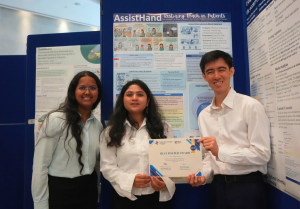
Team members: Noor Sameeha, Too Chuan Tze Benjamin (Year 2 Biomedical Engineering), and Pedapudi Vishnu Raghavi (Year 3 Biomedical Engineering)
CDE mentors: Assoc Prof Bina Rai, Assoc Prof Mark Chong
NUH mentors: Dr Lim Zhixue, Dr Sandeep Sebastian
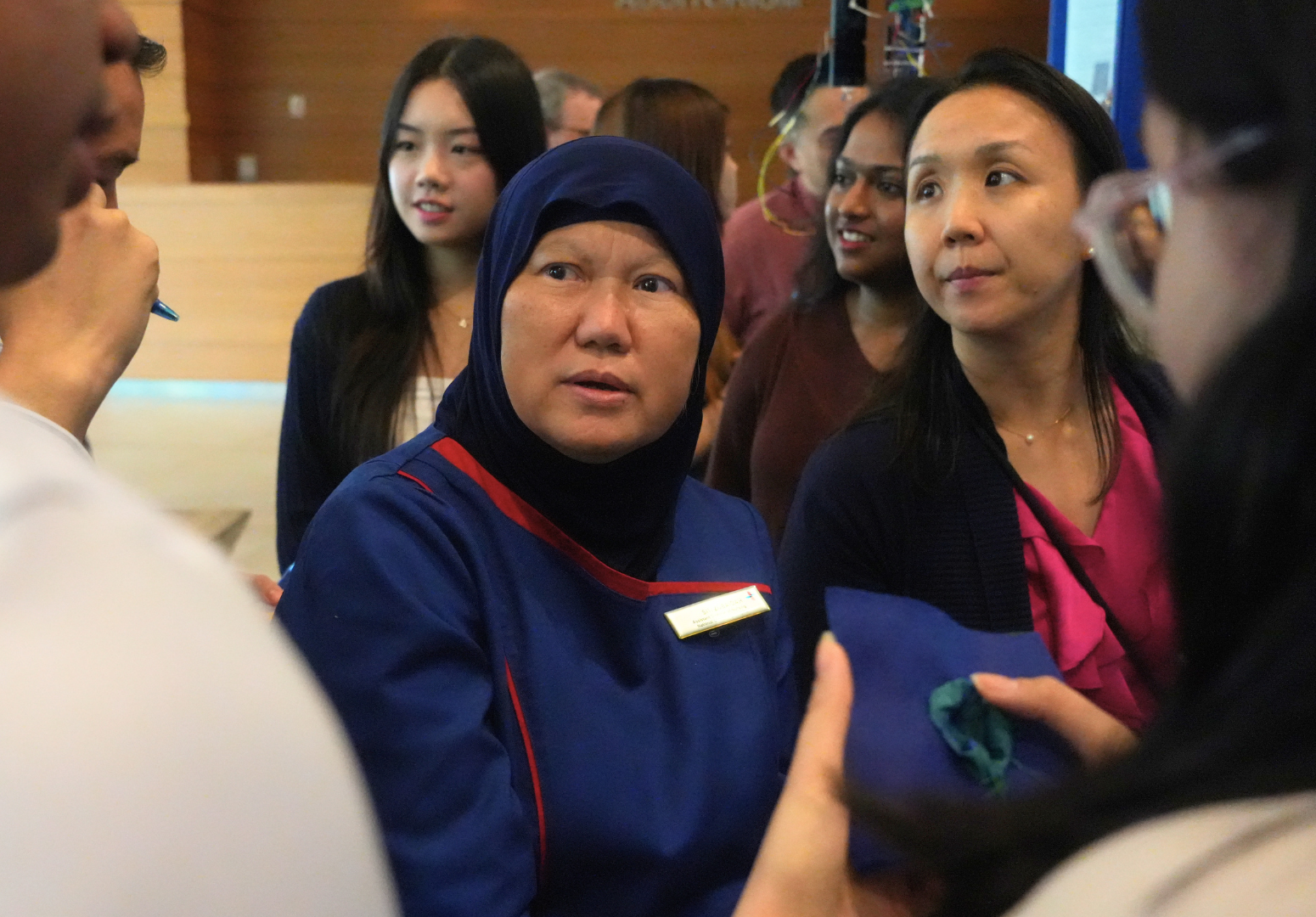
Following the presentations, judges commended the clarity and relevance of the student work. As Assoc Prof Alberto Corrias (Deputy Head, Education and Student Life) from the Department of Biomedical Engineering, shared, “I tried to push the students when assessing their posters, asking what the potential pitfalls might be. They had clearly thought about it, and I’m impressed by that.”
Ms Siti Zubaidah Bte Mordiffi, Assistant Director (Research), NUH Nursing Administration, added, “What stood out to me was how clearly you defined the problems, and how well your solutions aligned with them. The solutions were simple but addressed long-standing issues. There is real potential; your journey doesn’t end here.”