

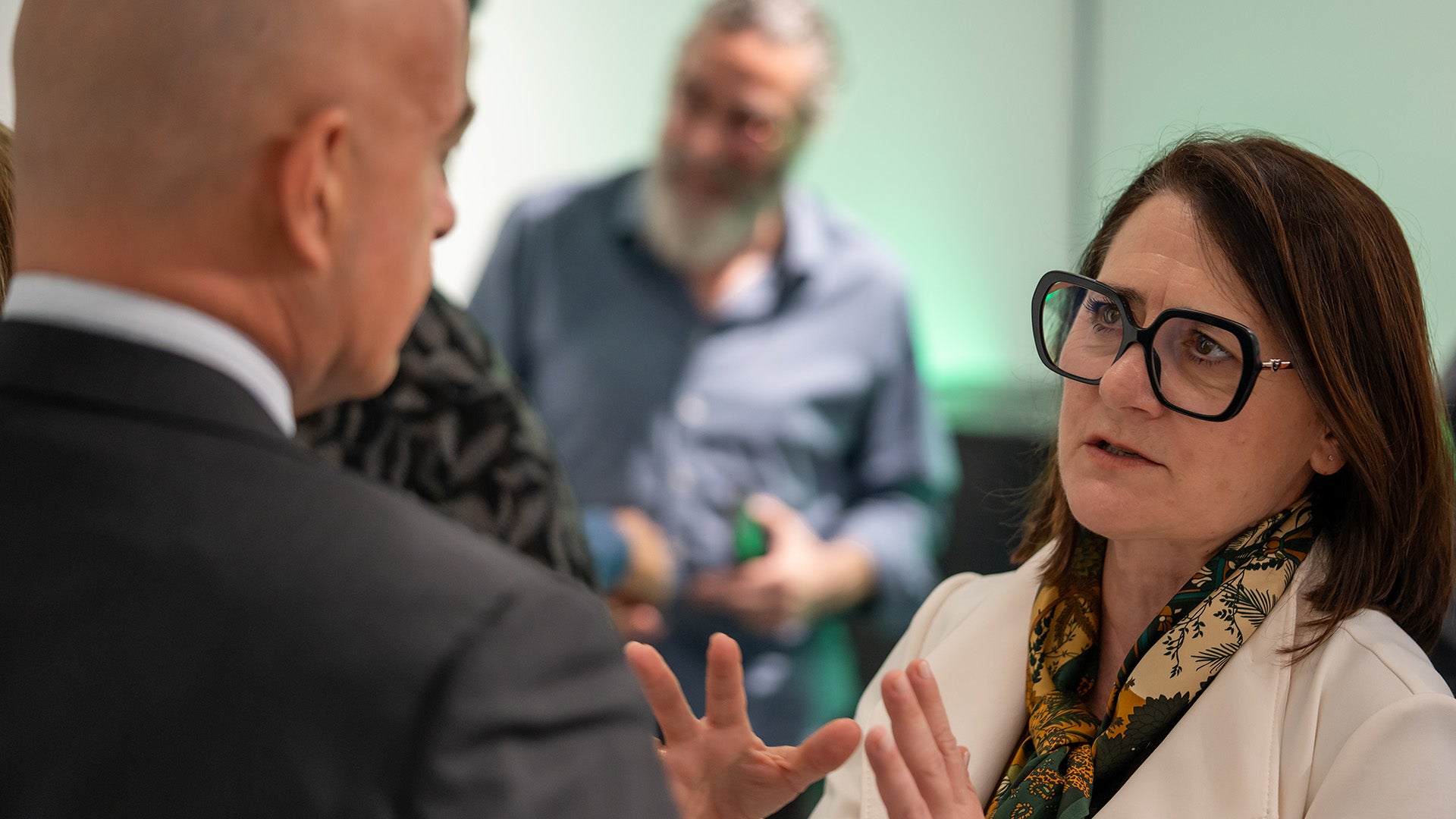
Robots do not need to precisely control every movement in order to function effectively. At a recent seminar hosted by the Italian Embassy in Singapore, Professor Cecilia Laschi (Mechanical Engineering) explained how learning from nature could simplify robotics while opening up significant improvements in performance.
The event brought together researchers, industry and policymakers from Italy and Singapore to discuss advances and opportunities for collaboration in biorobotics, a field that combines robotics, bioengineering and artificial intelligence to develop technologies that can work more closely with humans.
In her talk, Prof Laschi, who is Director of the Advanced Robotics Centre at NUS, introduced the concept of embodied intelligence, where a system’s behaviour is shaped not only by its “brain”, but also by its body and its interaction with the environment. “Intelligence is not confined to the brain,” she said, explaining how the body itself plays a role in shaping behaviour.
“Living systems are far more complex than our robots, yet their behaviour appears simple and efficient,” Prof Laschi said, pointing to a broader lesson. “In robotics, there are simplifying principles in nature that we need to understand and use.”
Instead of controlling every detail, engineers can design robots whose movements emerge naturally from interactions with their environment. “You have to accept that you don’t control everything,” Prof Laschi said, describing a shift away from traditional approaches to robotics.
Prof Laschi’s work in soft robotics draws heavily on biological models, with a particular focus on the octopus.
“The octopus is a powerful model because it has a very complex body, yet achieves efficient movement,” Prof Laschi said. Despite its highly flexible body and complex movements, the octopus achieves efficient motion not by controlling every action, but by allowing its interaction with the surrounding water to do much of the work.
By applying these principles, her team has developed soft robotic systems that require fewer controls while maintaining a wide range of movement. These designs have potential applications across sectors, from industrial handling and search and rescue to healthcare.
At CDE, a significant part of Prof Laschi’s research is focused on supporting Singapore’s ageing population. Working closely with clinicians, her team is developing soft robotic systems drawing on biological principles, designed to safely assist elderly users with everyday movements.
The work she presented also forms part of a bilateral Italy–Singapore project on soft robotics, bringing together research institutions from both countries to study biological systems such as the octopus and elephant trunk and apply these principles to robotic design.
In her talk, Prof Laschi also highlighted the potential for a more structured partnership, proposing a joint research lab based in Singapore to support long-term biorobotics research and development.
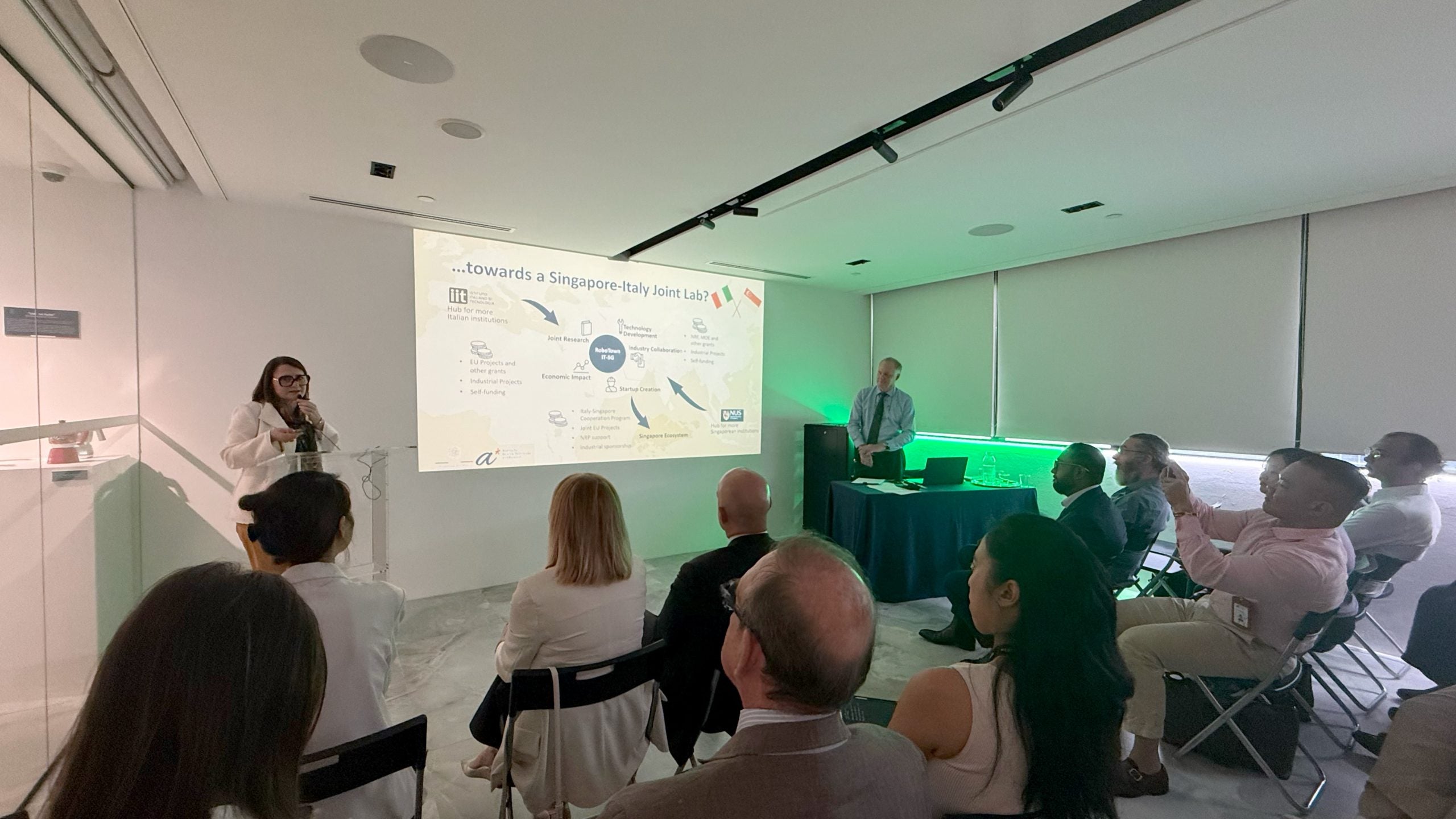
Prof Laschi’s work reflects a broader push within biorobotics to translate insights from nature into real-world applications. The event provided a platform to situate these advances within a growing landscape of collaboration between Italy and Singapore, especially in the area of biomedical applications.
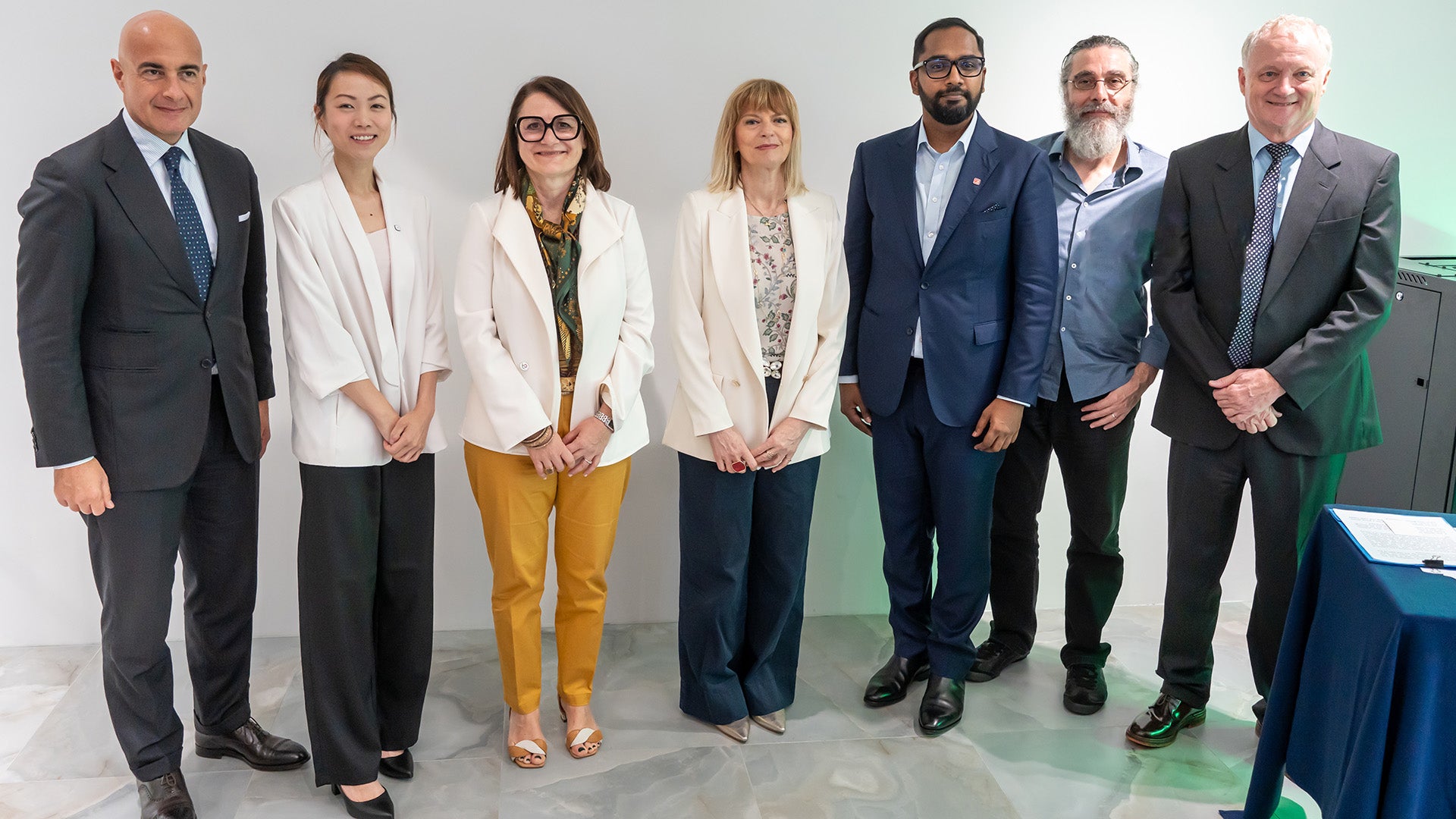
Other speakers at the seminar included Barbara Mazzolai from the Istituto Italiano di Tecnologia, who discussed how bio-inspired robotics, including plant-inspired systems, can improve energy efficiency and sustainability in robotic design; and Jennifer Woo Yan Lin from Singapore’s National Robotics Programme, who highlighted efforts to connect research, industry and government to translate robotics innovations into real-world applications.
Opening the event, Ambassador Dante Brandi noted that the seminar took place on the eve of Leonardo da Vinci’s birthday, a symbolic nod to Italy’s long-standing tradition of scientific and technological innovation.
He highlighted that emerging technologies such as artificial intelligence and advanced robotics are reshaping societies, bringing both opportunities and important considerations. “As it is always the case for disruptive innovations, they come with questions about the right balance between the legitimate concerns for their applicable scope and the anticipated aspiration for them to improve people's quality of life,” he said.
Emphasising the role of partnerships, Ambassador Brandi added: “To answer these questions, international collaboration is not just desirable, but essential,” pointing to the importance of joint efforts between governments, academia and industry in advancing research for the broader good.