As Singapore continues to strengthen the reliability, resilience and intelligence of its rail network, the next generation of engineers, designers and innovators will play an important role in shaping the future of mobility.
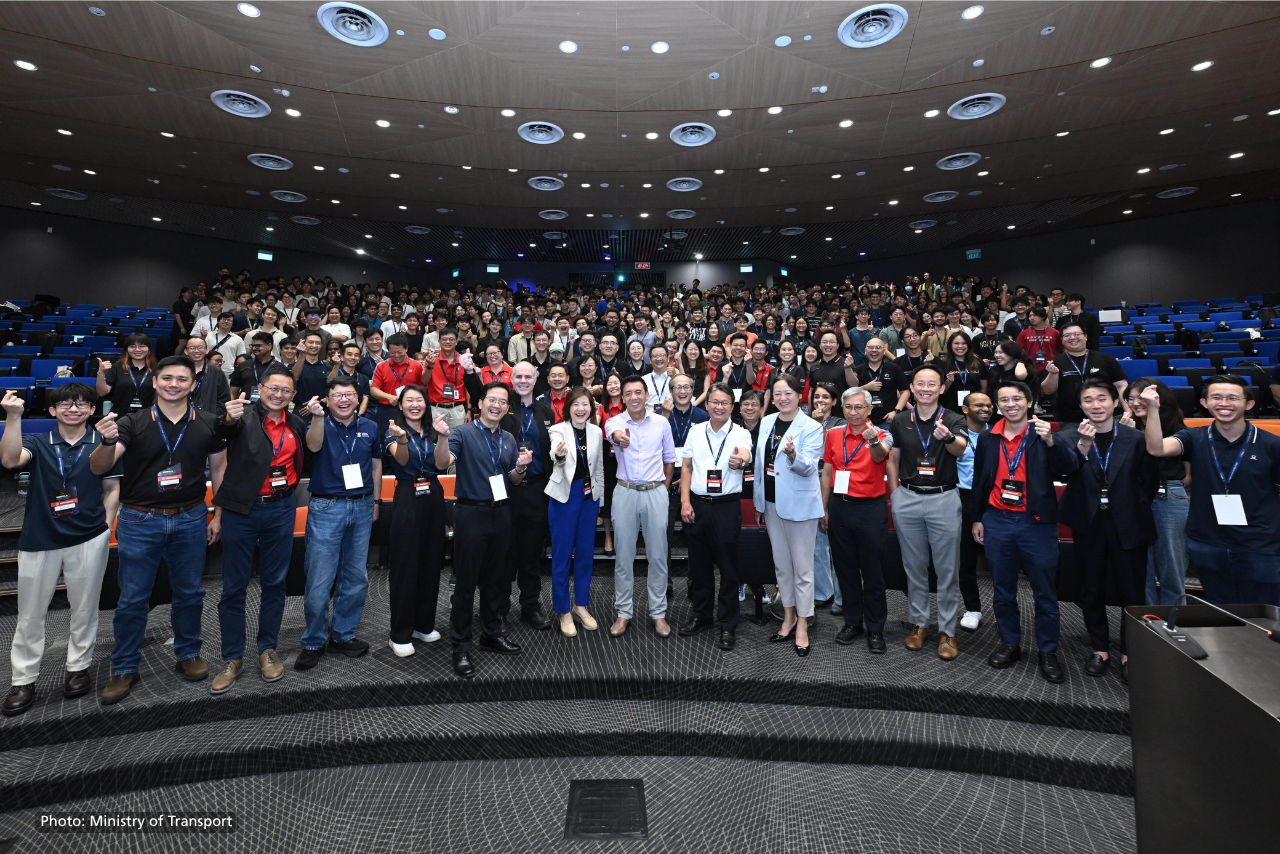
The College of Design and Engineering (CDE) at the National University of Singapore (NUS) hosted the inaugural NebulaX Hackathon, a three-day student innovation challenge organised by the Land Transport Authority (LTA), with support from Google Cloud, SMRT, SBS Transit and CRRC Qingdao Sifang Co. Ltd.
Held from 18 to 20 September, the hackathon invited university and polytechnic students in Singapore to develop practical solutions for real-world rail mobility challenges. It drew strong interest, with 241 teams and 884 participants registering, and 194 teams shortlisted to take part.
Mr Jeffrey Siow, Minister for Transport and Second Minister for Finance, joined as Guest of Honour on Day 1, officially launching the start of the three-day hackathon.
The hackathon brought together partners from academia, government and industry. LTA provided the real-world challenge context and transport expertise; Google Cloud supported AI learning and technical enablement; SMRT and SBS Transit contributed operational insights; CRRC brought rail technology expertise; and NUS CDE provided the academic setting and innovation support for student-led prototyping.
NebulaX Hackathon Winners
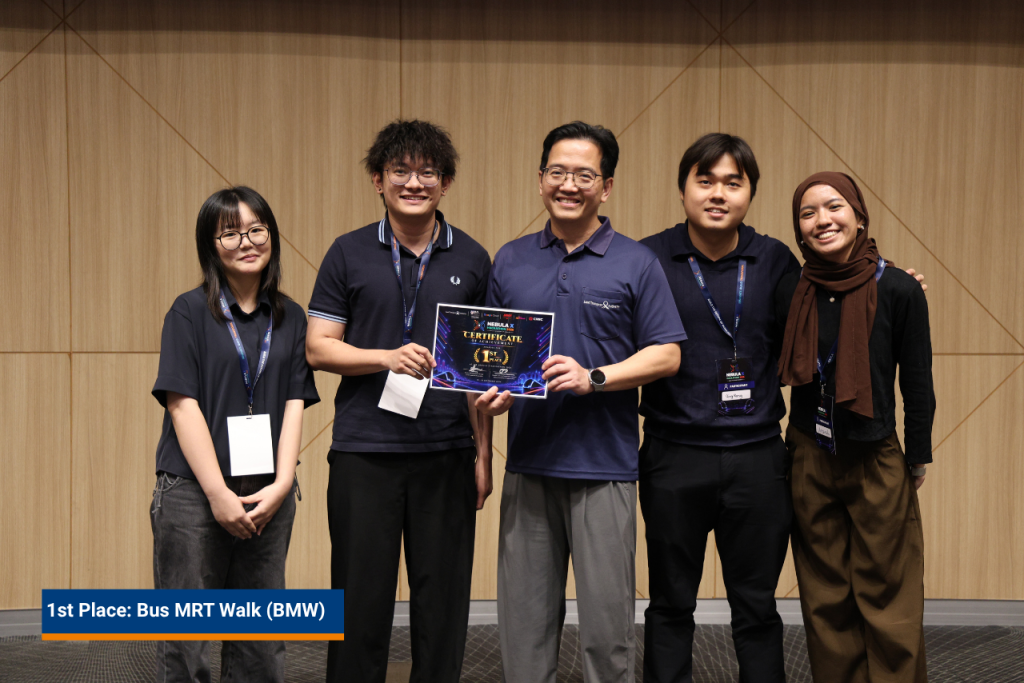
1st Place: Bus MRT Walk (BMW)
The solution uses a unified pipeline to detect faults across key rail components, with downloadable predictions and a digital twin that visualises component health.
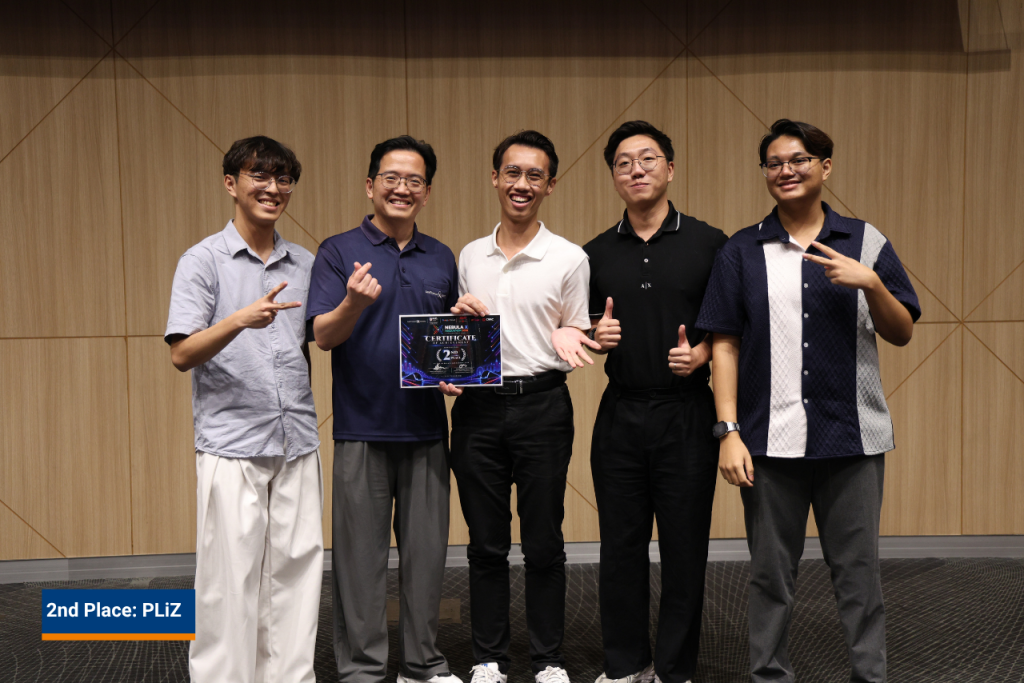
2nd Place: PLiZ
PLiZ is an intelligent railway maintenance platform that balances track requests, deadlines and staff availability to optimise maintenance schedules, with AI-assisted planning and mobile reporting for on-site issues.
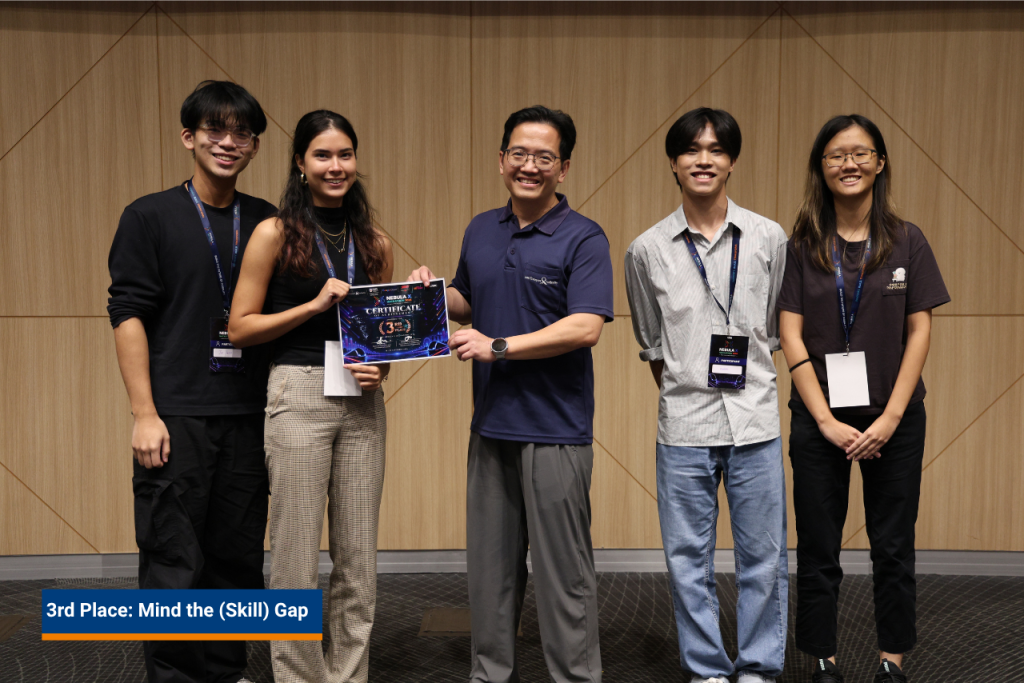
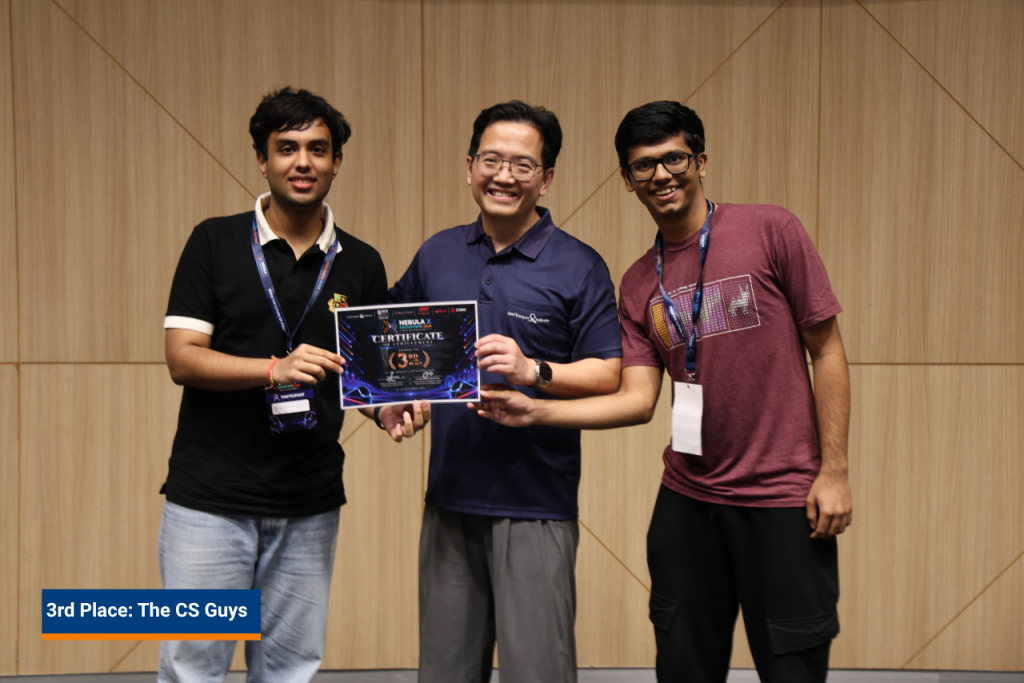
3rd Place: Mind The (Skill) Gap and The CS Guys
Mind The (Skill) Gap combines transport and weather data to provide personalised journey recommendations, proactively suggesting route, mode or departure-time changes while accounting for congestion, accessibility, reliability and network-wide demand.
The CS Guys solution, NightShift, converts railway maintenance demand into optimised access schedules, helping controllers balance timing, capacity and disruptions, with rapid replanning and natural-language decision support.
Building innovation around real transport challenges
NebulaX challenged students to apply creativity, technical skills and human-centred design to problems faced by the transport sector. Participants worked in teams of three to four across three challenge tracks:
Automating maintenance scheduling
Engineering hours to access our railway tracks are precious. Students developed tools that automatically detect conflicts and propose the most optimal schedule.
Supporting commuters with smarter journey planning
Teams created commuter-focused applications that provide tailored travel information to help commuters better plan their journeys.
Detecting maintenance needs early
Participants used AI and machine learning to identify anomalies in train system data and support earlier, more precise maintenance interventions.
Through these tracks, students explored how data, automation and user-centred design could support a smarter, more reliable and more resilient rail network.
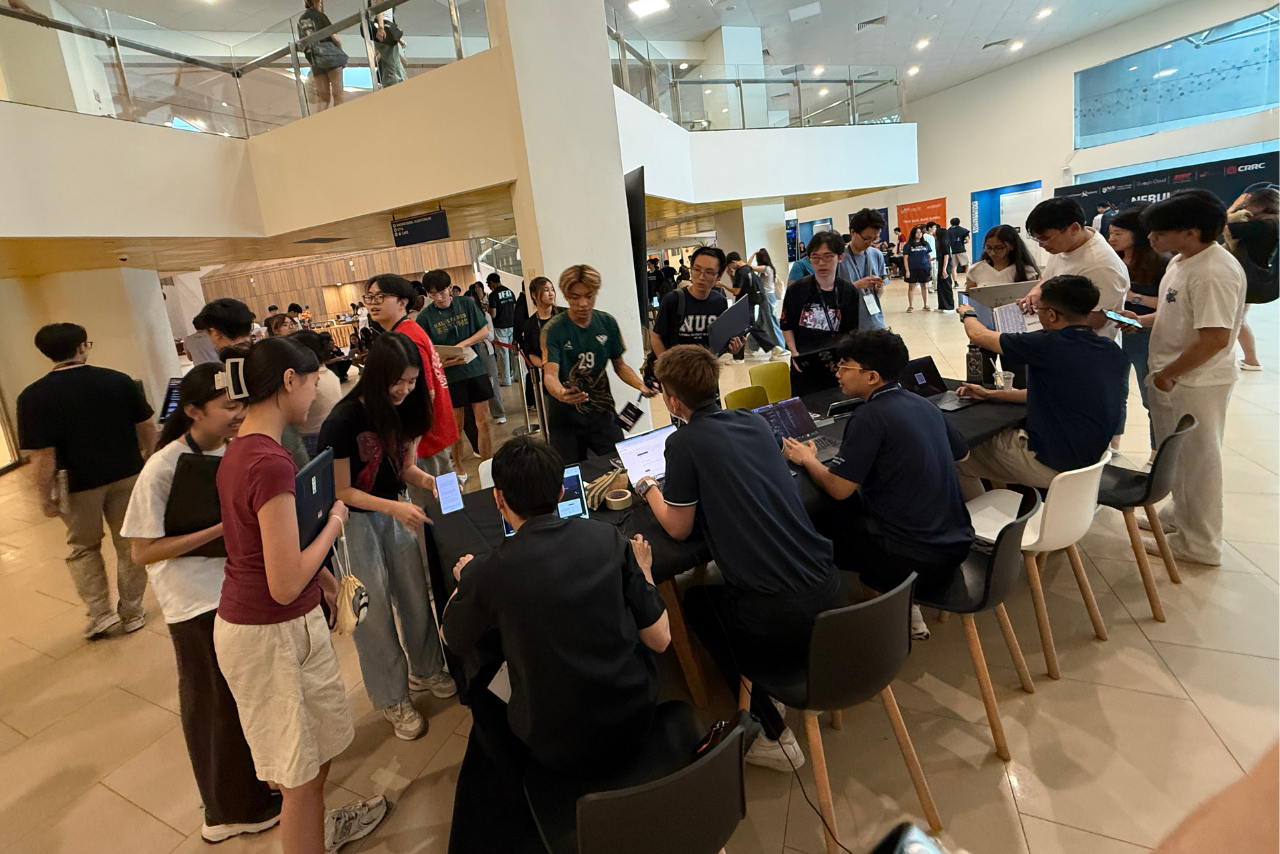
Industry access, expert guidance and real-world exposure
NebulaX gave participants access to industry knowledge that is rarely available in a classroom setting. Students took part in site visits to key transport facilities, including a Cross Island Line tunnel site, the Singapore Rail Test Centre, SMRT’s Depot 4.0 and Innovation Centre, and the Land Transport Operations Centre. These visits offered participants a closer look at underground rail construction, the new CRL train testing, depot automation, predictive maintenance, rail operations management and overall network-wide digitalisation initiatives across Singapore’s transport system.
Participants also attended a Google Cloud AI Workshop, which introduced them to generative AI tools, multimodal models, agent-building platforms and cloud-based resources that could be used to accelerate prototype development during the hackathon.
CDE as a hub for applied innovation
For CDE, the hackathon reflected the College’s focus on experiential learning, interdisciplinary collaboration and design-led problem solving. Beyond hosting the event, CDE contributed academic mentorship, judging expertise and innovation workshops to support students through the development process.
“NebulaX gave students the opportunity to work on complex, real-world challenges at the intersection of engineering, technology and human-centred design,” said Associate Professor Martin Buist, Deputy Dean of Education at NUS CDE. “At CDE, we want our students to learn by doing — to test ideas, work across disciplines and develop solutions that can make a meaningful difference to society. This hackathon is a strong example of how academia, government and industry can come together to nurture future-ready talent.”
By placing students at the centre of real mobility challenges, NebulaX helped build a stronger pipeline of talent for Singapore’s rail sector and demonstrated how collaboration can turn bold ideas into practical solutions for the future of transport.