

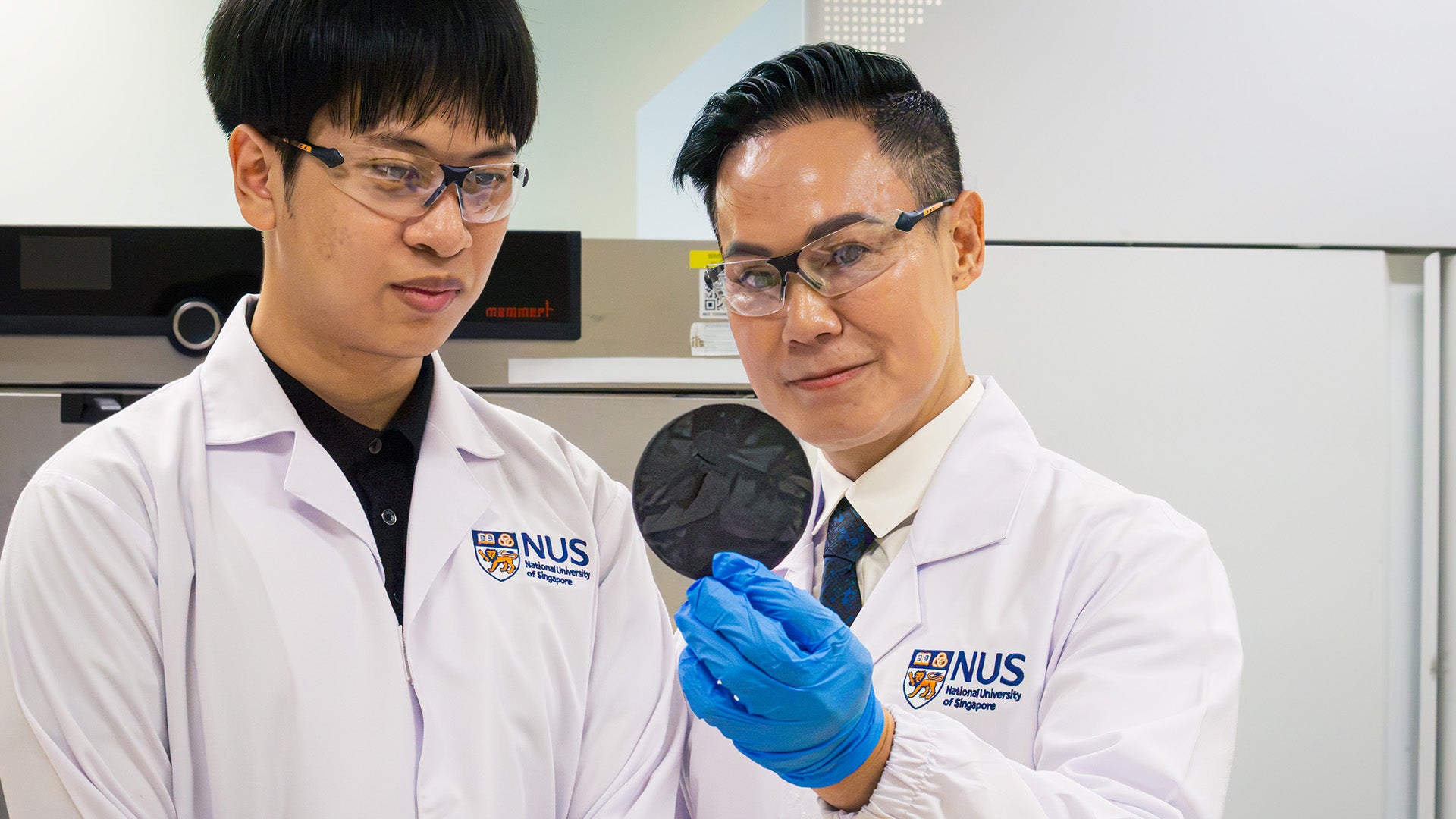
Researchers from CDE have developed a method to turn waste from the tough, lightweight composites used in aircraft and other high-performance structures into aerogels that could be used for thermal insulation, sound absorption and oil spill clean-up.
The study, led by Associate Professor Duong Hai Minh (Department of Mechanical Engineering), was published in the scientific journal Waste Management on 29 June 2026.
Carbon fibre and epoxy composites are widely used in aerospace, wind energy, automotive and marine applications because they are light, strong and resistant to corrosion. However, the epoxy component is a thermoset polymer that, once cured, cannot be melted down and reshaped like some plastics, making these composites difficult to recycle.
Most existing recycling methods focus on recovering the carbon fibres. The epoxy resins are usually destroyed, discarded or treated as a lower-value by-product. Additionally, some methods require high temperatures, strong chemicals or large amounts of energy.
Assoc Prof Duong’s team took a different approach by using both the carbon fibre and epoxy components of the waste. The researchers mechanically processed the composite into a mixture of fine powder and short fibre fragments, combined it with carboxymethyl cellulose, a cellulose-based binder, and freeze-dried the mixture to form an aerogel.
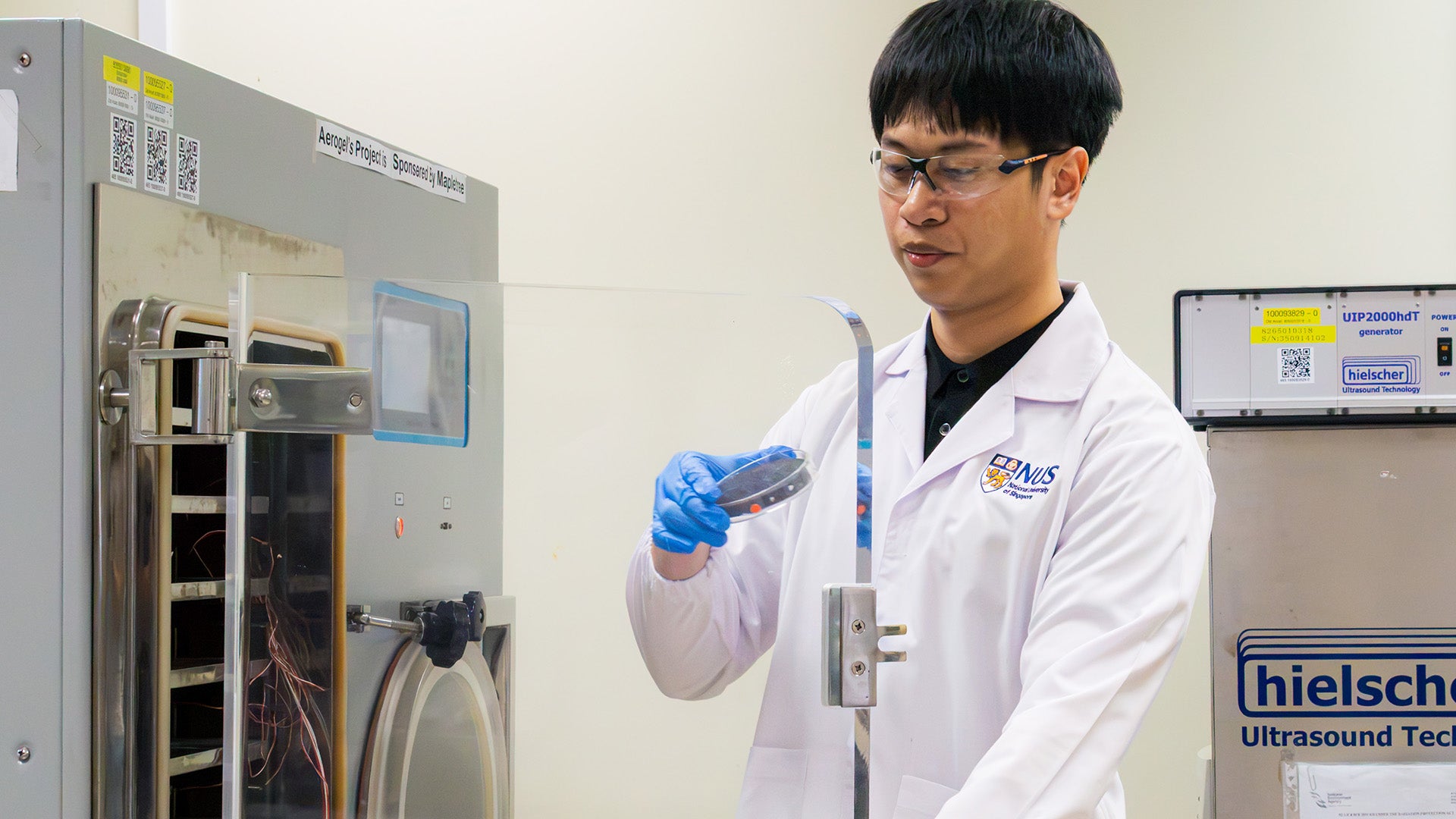
During the freeze-drying process, the processed composite waste forms a light, sponge-like structure filled with tiny, connected pores. Much of this structure is air, which helps slow the movement of heat through the material. In laboratory tests, the aerogels showed low thermal conductivity, suggesting that they could be used as lightweight insulation materials.
Waste with value
“Our goal was to show that carbon fibre composite waste does not have to be treated only as a disposal problem,” said Assoc Prof Duong. “By using the whole material, including both the fibre and epoxy fractions, we can turn this waste stream into functional materials with higher value.”
Beyond thermal insulation, the aerogels also absorbed sound effectively, pointing to their potential use in sound-control materials.
The team also explored their use in environmental clean-up. After being treated to repel water, the aerogels were able to absorb large amounts of oil, suggesting that they could be useful for oil spill clean-up and oil-water separation.
Tests with fibroblast cells also found that the aerogels were non-toxic under the study conditions, supporting further investigation into other potential applications.
The team is now exploring collaborations with partners in the aerospace, advanced materials, manufacturing and waste management sectors. Future work will focus on scaling up the technology and assessing its environmental and economic performance for industrial use.
“Advanced composites have enabled lighter and more efficient structures in many industries,” said Assoc Prof Duong. “The next step is to ensure that these materials can be managed sustainably at the end of their service life.”