

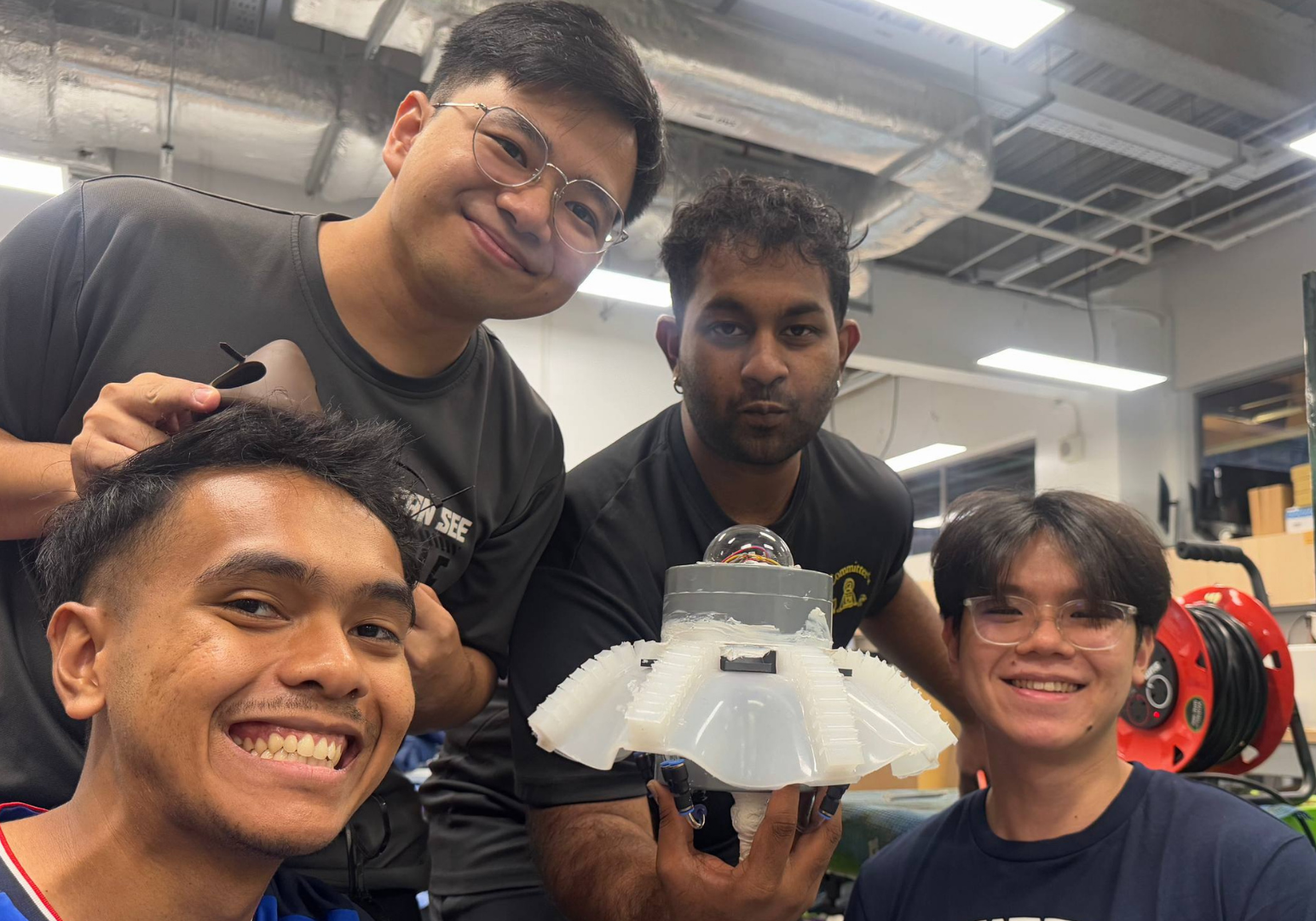
From coral reefs to clinical care to infant feeding, three CDE student projects have emerged as the inaugural winners of the James Dyson Foundation Innovation and Design Prize.
Recognising outstanding projects that combine the best of design and engineering, the prize is open to final-year projects in the NUS Innovation and Design Programme, design thesis projects in NUS Division of Industrial Design, as well as joint iDP–DID studios and projects. Each winning project receives a cash prize of S$1,000.
The winners are:
JellyBot
Developed by Afham Shahril, Darrel Yu, Navin Siva and Wallace Wee (NUS Department of Electrical and Computer Engineering), JellyBot is a jellyfish-inspired underwater robot designed for low-impact coral reef surveillance. Unlike traditional underwater vehicles that rely on noisy propellers, JellyBot uses soft pneumatic silicone actuators to mimic the smooth, pulsatile motion of a jellyfish, enabling gentler and less invasive marine observation.
The team said, “This recognition is a true celebration of our growth ... it is rarely about getting it right the first time; rather, it is a continuous process of learning from past mistakes and relentlessly improving upon them. This award confirms that our persistence in refining those flaws was exactly what was needed to bring our design to life.”
Deloop
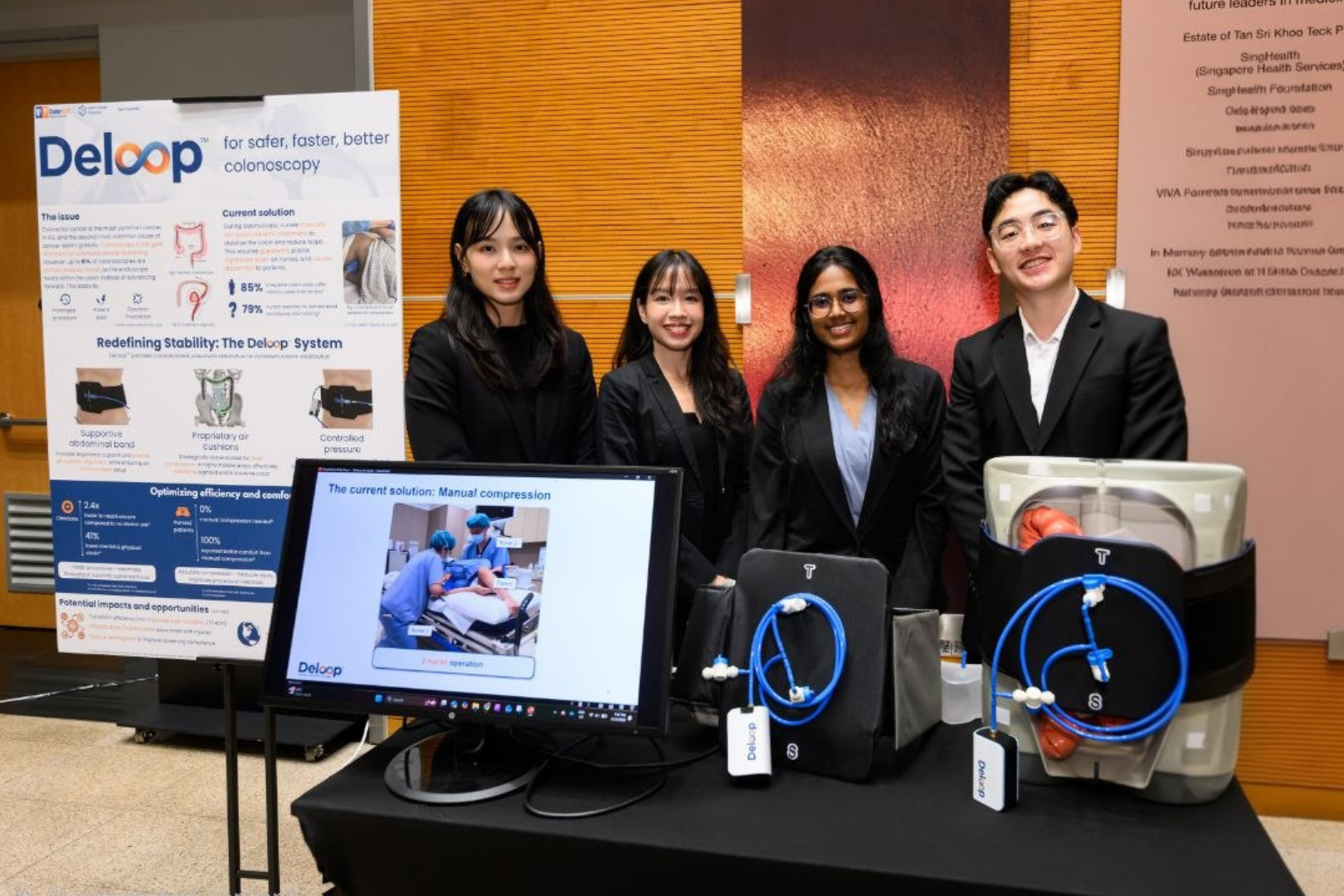
Developed by Deepsri Jayachandran (Biomedical Engineering) and her team, Deloop addresses looping in colonoscopy, a common issue that can cause complications. It uses pressure-adjustable inflatables to apply targeted compression, stabilising the colon and reducing loop formation. In benchtop testing, it achieved a 58% reduction in cecal intubation time and a 41% reduction in clinician task load, showing strong potential for clinical translation.
She said, “[It’s] a reminder that the most meaningful designs begin with the user, not the technology. Through ideation, I learnt to sit with ambiguity longer and resist the urge to converge early into solutions.”
mömigo
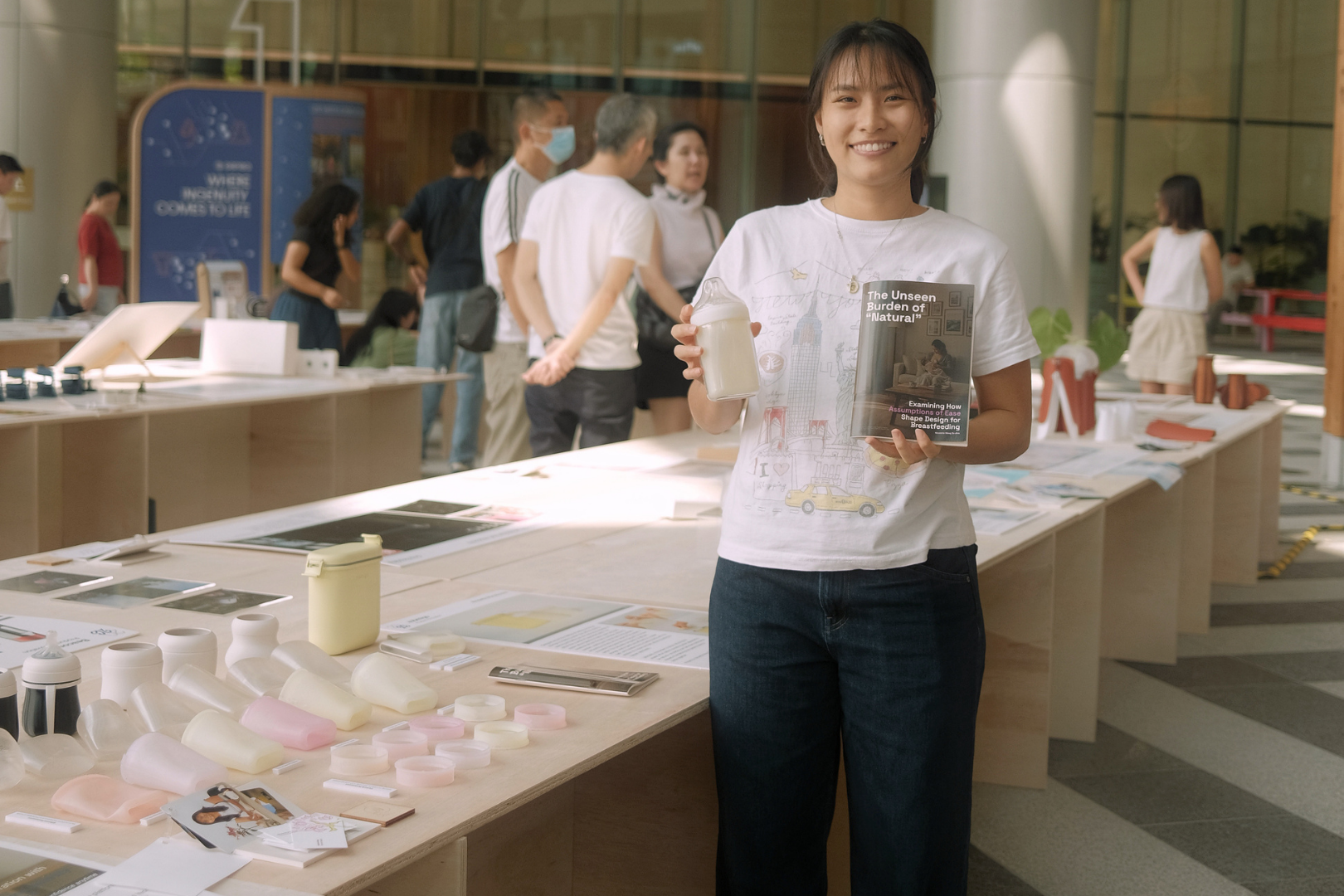
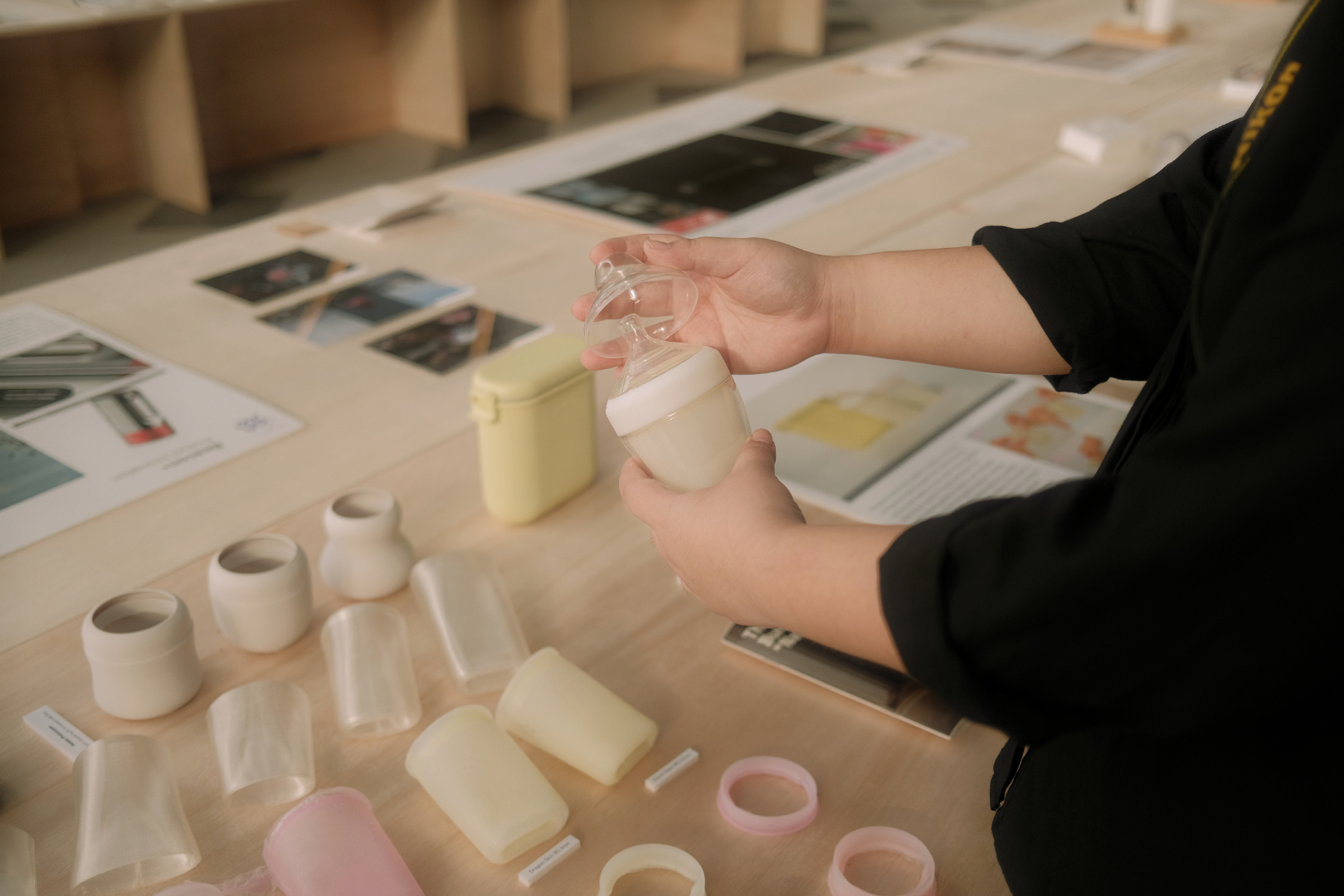
Developed by Nicolette Wong (Industrial Design), mömigo is a feeding system that allows parents to freeze, warm and feed breastmilk from the same container, reducing transfers, washing and mental load. At the heart of the system is a reusable food-grade silicone bag that stores compactly, warms efficiently in a water bath and transforms into a feeding bottle.
She said, “I learnt not to be satisfied with solutions that were merely good enough, but to keep listening, questioning, and refining until I found one that genuinely reflected what people needed. I came to realise that the most meaningful solutions are often those created with compassion, humility, and genuine collaboration. I hope to continue carrying these lessons with me as a designer.”
These projects show how thoughtful, human-centred design and engineering can come together to address real challenges in sustainability, healthcare and daily life.