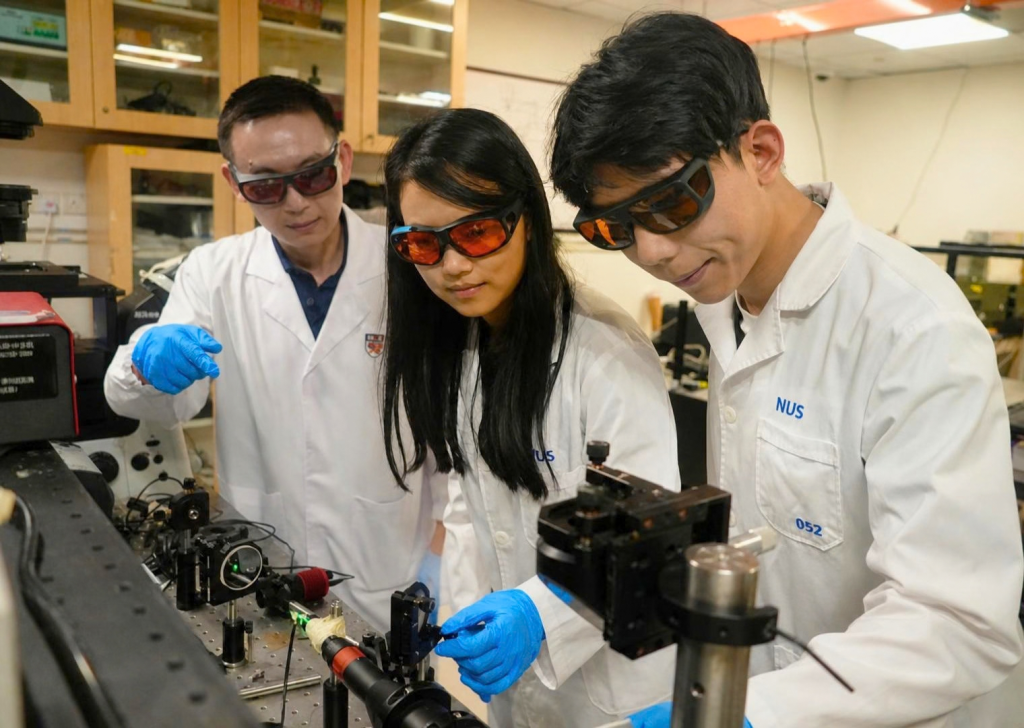


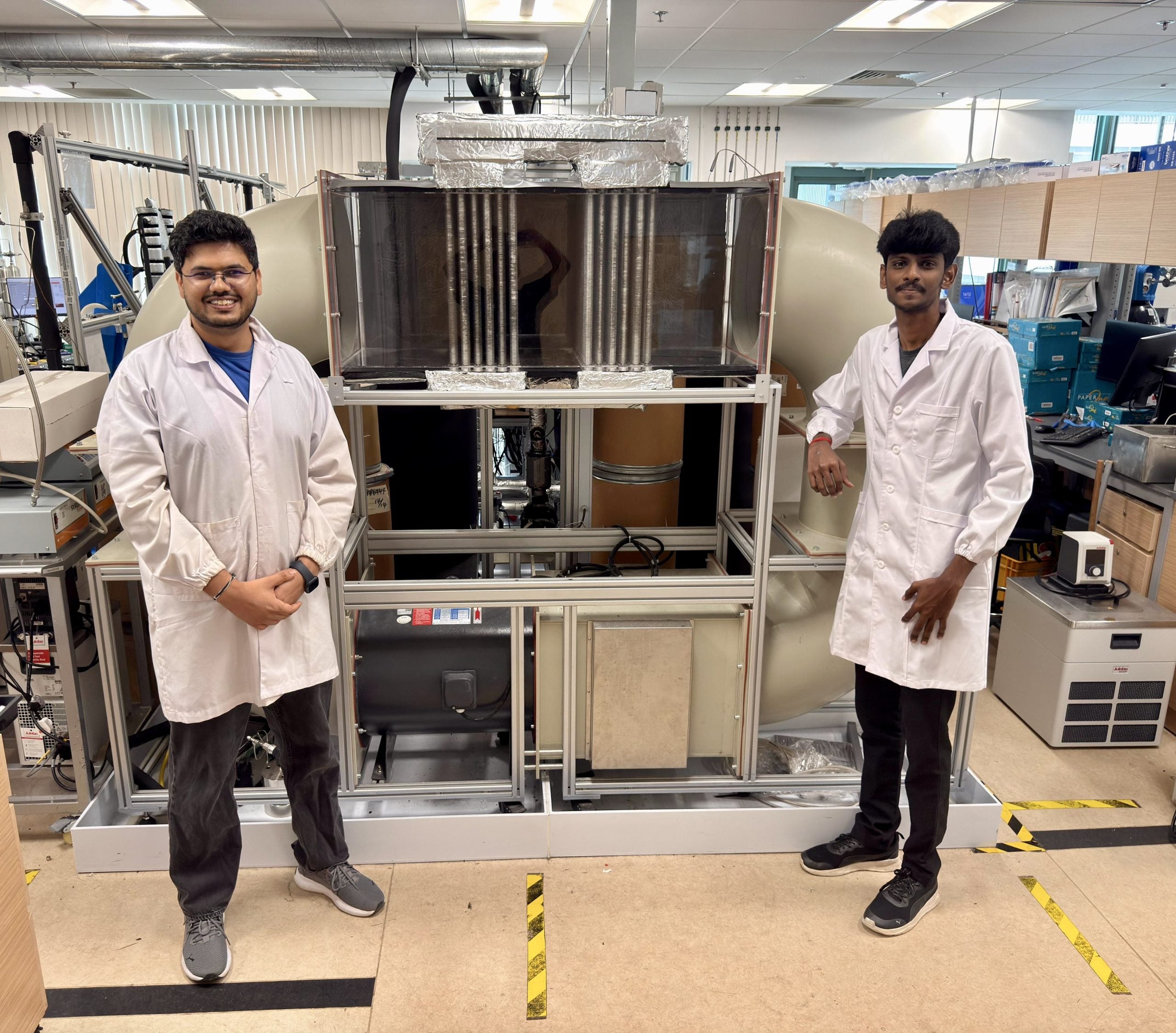
VariFlux, a venture emerging from Professor Praveen Linga’s lab at the National University of Singapore (NUS), has been selected as one of 12 global teams advancing to the grand finals of the 2026 MIT Climate & Energy Prize. Professor Praveen Linga, Provost’s Chair (Department of Chemical and Biomolecular Engineering), leads the venture’s technology development, with the team comprising Research Fellow Vikas Dhamu and first-year PhD student Meyyappan Kannan, both from the Department of Chemical and Biomolecular Engineering. The team is developing advanced coolant technology designed to significantly improve the efficiency of cooling systems used in data centres, district cooling networks and industrial facilities, helping operators cut energy use, operating costs and carbon emissions.
A cooling challenge with growing climate impact
Cooling demand is rising globally, driven by increasing digitalisation and electrification, especially in energy-intensive environments such as data centres. In tropical climates, cooling can consume up to 40% of a data centre’s total energy use, so improving cooling efficiency directly cuts costs and emissions.
At the heart of VariFlux’s approach is its patent-pending coolant and allied technology that can carry about five times more heat than conventional options. When chilled, the coolant forms microscale “cold-energy pockets”. Then, as it absorbs heat, it warms and undergoes an ice-like melting transition that absorbs additional energy. This approach can translate into approximately 55% lower flow, 70% lower pumping power, and 22% lower chiller power, while maintaining the same temperature setpoints and uptime with minimal changes to existing cooling loops.
For a 10-megawatt (MW) data centre, deploying VariFlux in the cooling loop could improve power usage effectiveness (PUE) from 1.56 to 1.43, reducing cooling electricity use by about 11 gigawatt-hours (GWh) per year (≈22%). That is over $3 million in annual savings at $0.29/kilowatt-hour (kWh), and reduces approximately 8% of total site CO2 emissions (using an emission factor of 0.6 kgCO2/kWh).
In short, VariFlux delivers three benefits: lower operating costs, lower carbon emissions, and stronger alignment with green data centre and sustainability goals.
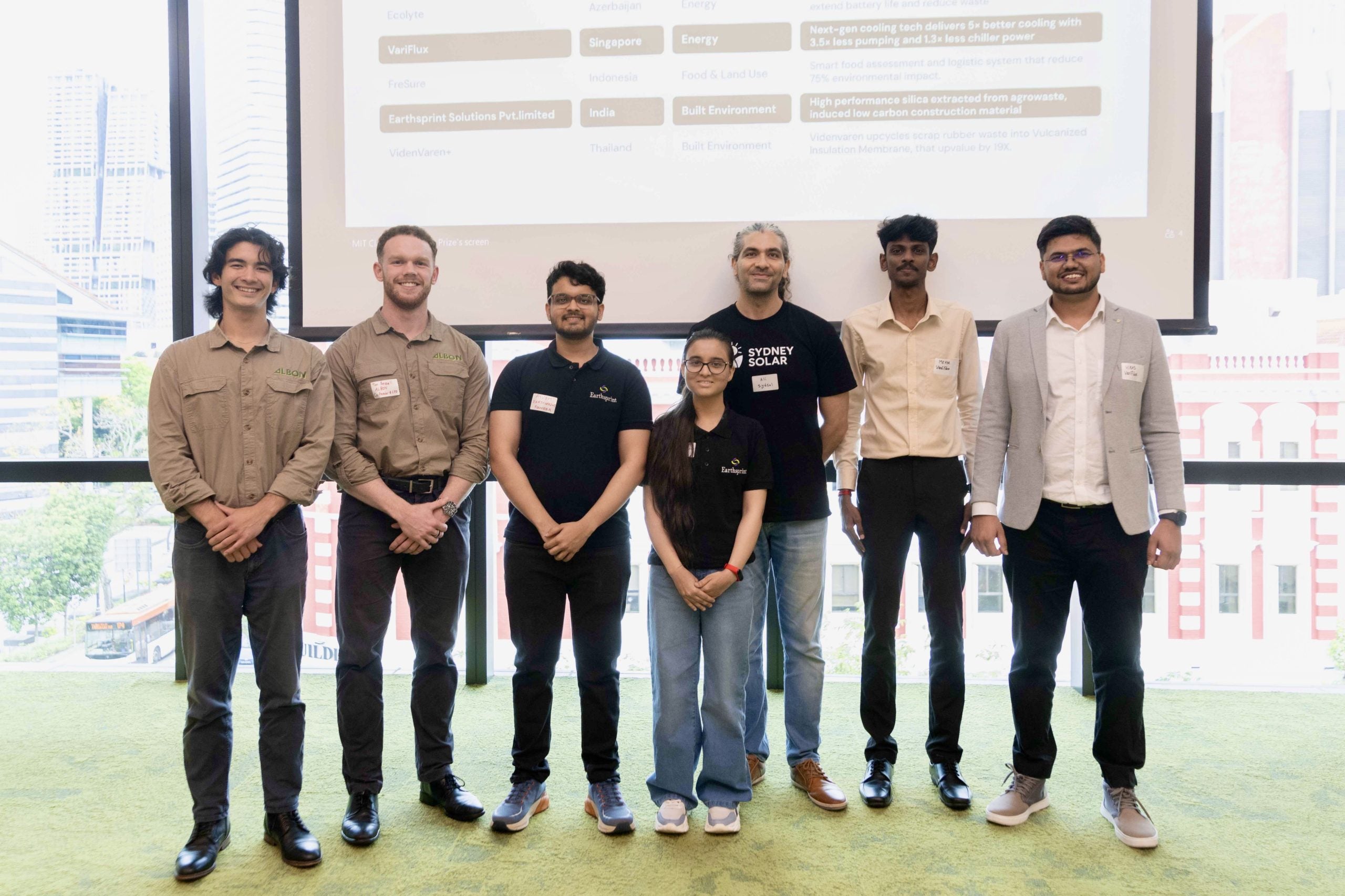
Grand finals at MIT in April 2026
The MIT Climate & Energy Prize drew more than 200 applications this year. VariFlux (represented by Vikas and Meyyappan) progressed through the initial selection and went on to pitch alongside 163 startups in the virtual quarterfinals. After progressing through multiple rounds including the Singapore semifinals, the VariFlux team secured a spot among the final 12 teams. The finalists will compete live at The Engine, MIT (Boston) on 16–17 April 2026, where they will pitch for the US$100,000 grand prize.
However, success goes beyond winning the prize for the VariFlux team: the event is also an opportunity to connect with partners, mentors, and industry stakeholders worldwide who can provide valuable input, validation, and help accelerate adoption.
Future plans for VariFlux
The team aims to move VariFlux from lab validation to commercial demonstration to make cooling far more energy-efficient and climate-friendly.
“Cooling already accounted for 30% of Singapore’s electricity in 2019 and is projected to rise by about 66% by 2030 without major intervention,” Vikas explained. “According to IMDA, Singapore has more than 1.4 gigawatts (GW) of installed capacity, and this figure is continuing to grow. If VariFlux technology were applied to a 1.4 GW Data centre, CO2 emissions could potentially be reduced by about 1 million tonnes of carbon dioxide per year, which is about 16% of Singapore’s estimated cooling-related emissions in 2023.”