
RESEARCH NEWS

CDE faculty honoured at President’s Science & Technology Awards 2025
Prof Lim Chwee Teck receives the President’s Science Award, whilst Assistant Professors Andy Tay and Wang Xinchao are recognised with the Young Scientist Award.
Ice mixed with amino acids stores methane in minutes
NUS researchers developed a reusable, biodegradable ice material that captures methane rapidly, paving the way for safer and cleaner storage of natural gas and biomethane.

Industry Day highlights bold partnerships and future-ready talent
Annual showcase at CDE brings together academia, industry and government to tackle urgent challenges in sustainability, AI and innovation.

Charting a path to control microplastic pollution
Symposium brings together leading researchers to advance knowledge, share tools, and spark collaborations on a growing environmental challenge.
Balancing clean energy transitions with river ecosystem protection
A new model shows how substituting high-impact hydropower projects with solar, wind and storage can preserve vital sediment flows while keeping energy systems affordable.

Building cities that live well
Third NUS Cities Symposium explores health, resilience and the science of urban life.

The multiplier effect of combining green roofs and solar panels
Study shows how co-locating systems boosts solar energy output, supports plant growth, and reduces indoor temperatures.
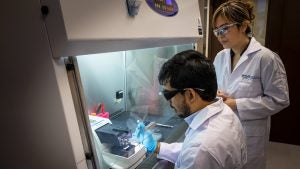
Bioengineered lymph nodes offer window into human immunity
Hydrogel-based approach keeps human lymph node tissue alive, enabling more accurate studies of immune responses to cancer and vaccine development.

CDE projects join weather and climate research alliance
Researchers to develop AI-driven forecasting tools and actionable tropical weather models under new national Weather Science Research Programme.
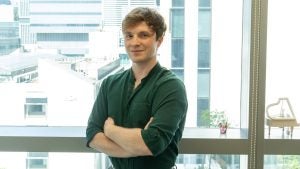
Graphene sets new electronic benchmark with dual breakthroughs
NUS and collaborators achieve record graphene mobility using twist-angle and proximity screening, surpassing GaAs benchmarks.

CDE Faculty awarded 10th NRF Investigatorship
Three CDE faculty members have now been formally awarded the 10th NRF Investigatorship for their high-impact, high-risk research.
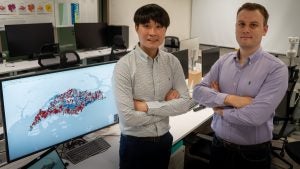
AI model maps building emissions to support fairer climate policies
Open-source approach uses publicly available data and machine learning to identify carbon hotspots and guide targeted urban decarbonisation.