


RESEARCH NEWS
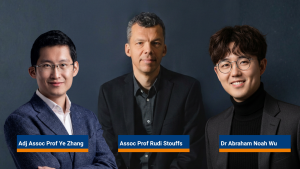
NUS CDE researchers develop AI framework to complete patchy US flood maps
New deep learning framework fills gaps in official flood maps, providing a more complete and accurate picture of flood risk in the United States.
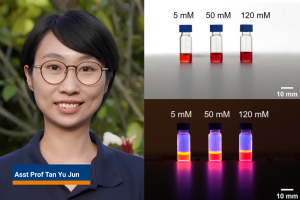
NUS CDE researchers push flexible display brightness to new records
By developing a new electrolyte combined with a redesigned electrode architecture, NUS CDE researchers successfully tripled the brightness of electrochemiluminescent (ECL) devices.
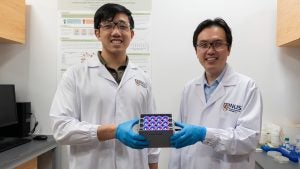
NUS CDE researchers achieve breakthrough in engineering colour-sensing yeast
Researchers engineer baker’s yeast to sense and respond to different colours of light, enabling new ways to control cellular behaviour with red and blue light.
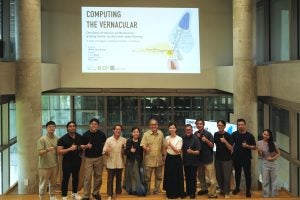
NUS CDE researchers decode the ‘DNA’ of Singapore’s shophouses with AI
NUS CDE researchers developed an AI-based framework that traces how Singapore’s shophouse styles evolved, offering new insights for heritage conservation.
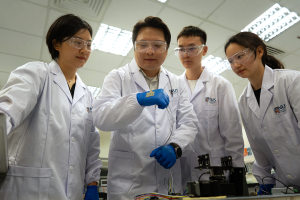
NUS CDE researchers develop self-repairing, recyclable substrate for durable soft sensors
Made from two naturally occurring molecules, the material keeps metal conductors attached during movement and enables sensor components to be recovered and recycled after use.
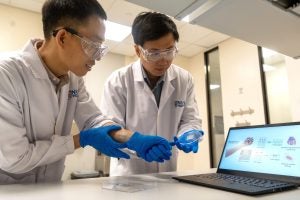
NUS CDE researchers merge multiple physiological signals into a single patch for simpler health monitoring
By capturing multiple body signals through one channel, the device could support more comfortable and efficient continuous health monitoring beyond clinical settings.
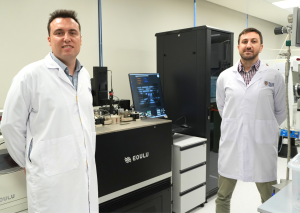
NUS CDE researchers develop compact, power-saving switches for 5G and future 6G chips
NUS CDE researchers integrated 2D materials on gallium nitride microchips to develop high-frequency switches for 5G and 6G telecommunication.
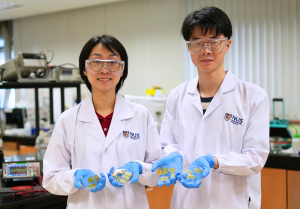
NUS CDE researchers develop electronic skin that senses and self-heals under water
By combining sensing, damage detection and self-repair in one device, the system extends the working life of underwater machines used in diving and marine robotics.
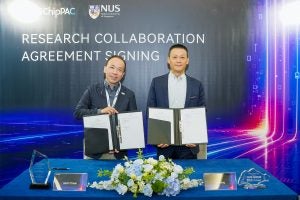
SHINE at CDE and STATS ChipPAC sign Research Collaboration Agreement on photonic packaging technologies
The agreement aims to improve manufacturing yield, scalability and talent development in Singapore’s semiconductor ecosystem.

CDE Innovation and Research Award and NUS Outstanding Undergraduate Researcher Prize Winners
Eight CDE research projects were recognised at the university level, including one receiving the top-ranked Distinguished Undergraduate Researcher Prize in the Group category.
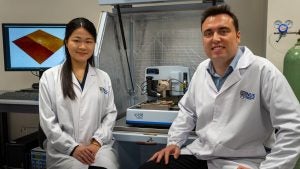
NUS CDE researchers reveal key design rule for atom-thin electronics
Study shows that tiny gaps inside ultra-thin devices can strongly influence unwanted electrical leakage, offering practical guidance for building smaller and more reliable electronic components.
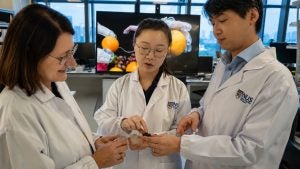
Soft sensor developed by NUS CDE researchers turns touch into robotic action without electronics
A fully mechanical sensor converts applied force directly into fluidic actuation, giving soft robots the ability to sense and respond without the need for electronic processing or external power.