
RESEARCH NEWS
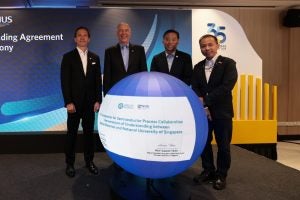
NUS CDE deepens semiconductor AI push through industry collaboration and talent development
An MOU with Applied Materials and a new postgraduate specialisation highlight CDE’s contributions across research, impact and education.
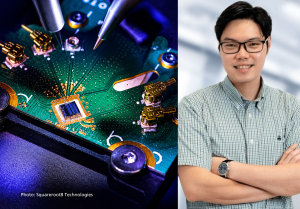
NUS CDE researchers develop self-testing quantum chip for digital security
A silicon photonic chip generates certified random numbers while verifying its own measurement hardware, removing a long-standing trust issue.
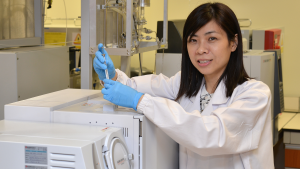
NUS CDE’s Prof Ho Ghim Wei receives Distinguished Woman Chemist award
Award from Singapore National Institute of Chemistry recognises her contributions across a research programme spanning chemistry, materials science and engineering.
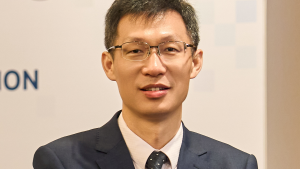
NUS CDE’s Assoc Prof Zhang Huangwei receives international combustion science award
Hiroshi Tsuji Early Career Researcher Award recognises contributions to cleaner energy systems, hydrogen technologies and combustion safety.
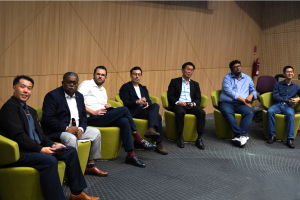
Ecosperity panel spotlights collaboration on low-carbon materials in the built environment
Leaders from academia, industry and sustainability advocacy examined how stronger alignment can support the adoption of low-carbon materials across the region.
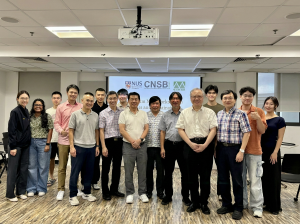
Musim Mas Workshop brings global experts together on biomass and sustainability
Hosted at NUS CDE, the workshop brought together researchers across disciplines and borders to explore sustainable biomass solutions.
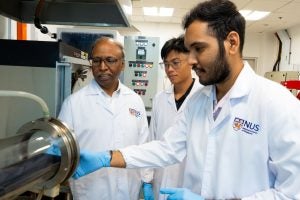
NUS CDE researchers develop safer all-solid-state sodium battery with low-cost 2D material
By overcoming key safety and durability barriers, research led by Assoc Prof Palani Balaya advances sodium batteries as a practical alternative to lithium for large-scale storage.
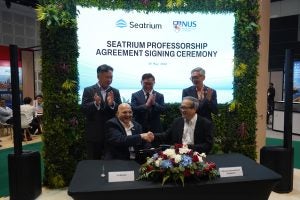
Seatrium deepens support for NUS CDE Professorship to drive offshore and energy innovation
Renewed commitment will advance research, talent development and industry collaboration in offshore infrastructure, sustainability and emerging engineering solutions.
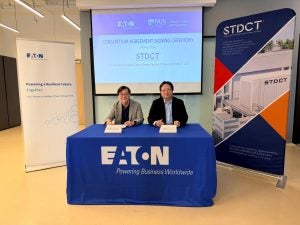
STDCT 2.0 signs MOU with Eaton to validate tropicalised data centre power architectures
This renewed partnership with STDCT 2.0 hosted at NUS CDE aims to advance integrated power solutions for sustainable, AI-ready tropical data centres.
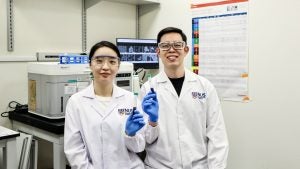
DNA ‘barcode’ platform developed by NUS CDE researchers speeds search for precision cancer nanoparticles
A new high-throughput screening platform rapidly identifies gold nanoparticles that can deliver therapies directly to mitochondria, the energy centres inside cancer cells.
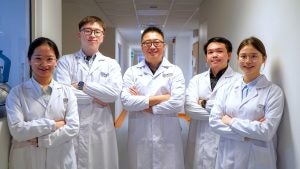
Eyes that photosynthesise: NUS CDE scientists plant a cure for dry eye disease
Inspired by how plants harness sunlight, NUS CDE researchers have developed a non-invasive, light-activated treatment for dry eye disease.
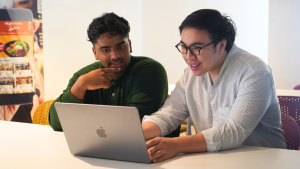
LearnKata founders build AI platform to make learning more structured and meaningful
NUS CDE student Ryan Loh along with Alfred Ben built LearnKata to help students learn with more structure, clarity and confidence, leading to 40,000 users worldwide.