

Pre-University Engagement


MOE Engineering & Tech Programme Scholarship (ETPS) Workshop
Get ready to dive into the future of technology and innovation!
The College of Design and Engineering (CDE) at the National University of Singapore (NUS) proudly presents an exclusive, hands-on workshop for ETPS scholars from January 4 to 8, 2027.
Designed to inspire the next generation of engineering and technology leaders, this workshop will explore three interconnected themes: Robotics & Autonomous Systems, Data Centre & Sustainability and Energy & Sustainability.
Over the five days, scholars will experience immersive learning across engineering and design fields. Participants will join interactive lectures, hands-on workshops, guided tours, and lab sessions that blend theory with real-world application. Scholars will then put their knowledge to the test, collaborating on impactful projects that aim to solve real-life challenges.
The workshop will culminate in an exciting final challenge, where the each interconnected groups will demonstrate their solutions to a panel of judges.
Themes
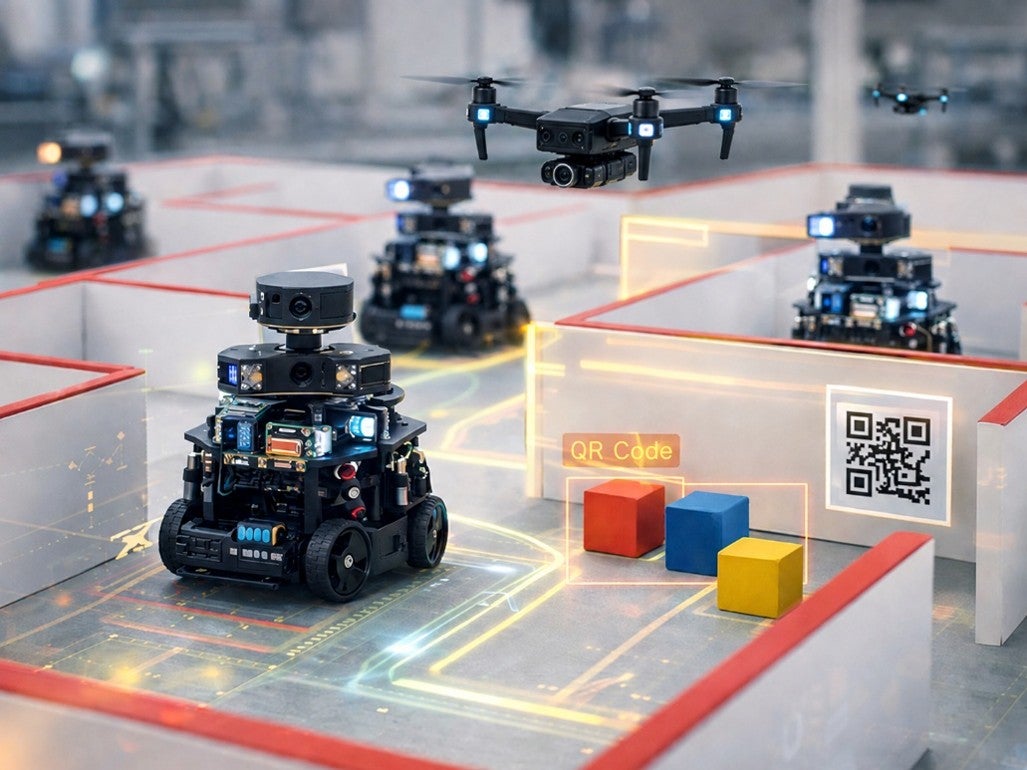
Robotics & Autonomous Systems
Enabling scholars to develop and programme autonomous systems for navigation, monitoring and other real-world applications in a smart city.
For more information, click here.
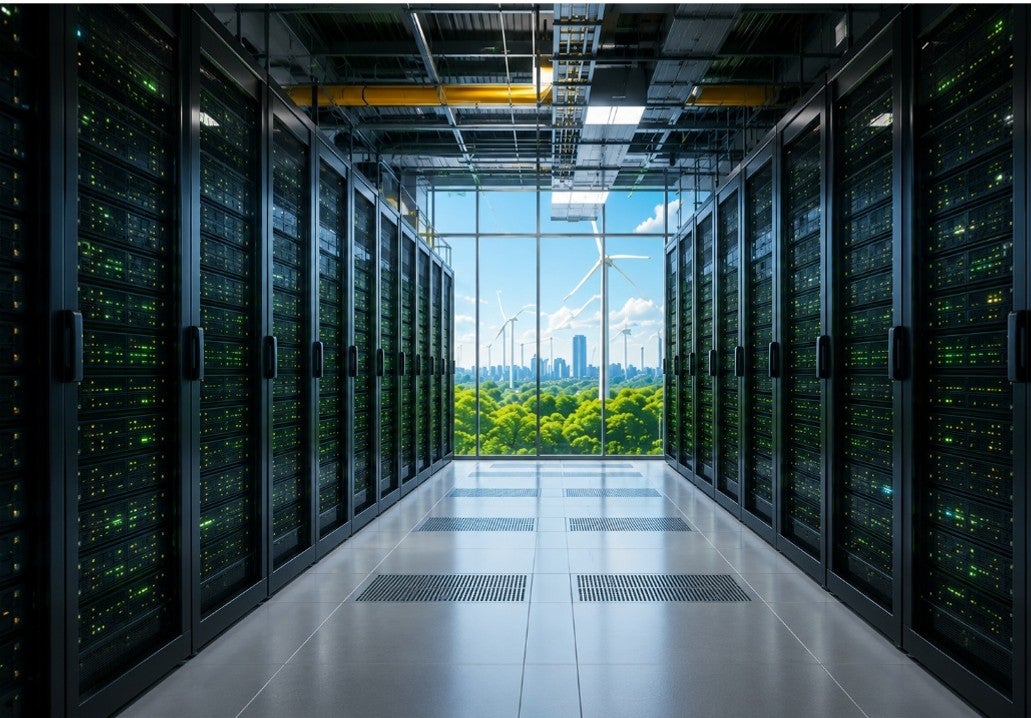
Data Centres & Sustainability
Enabling scholars to reimagine sustainable data centres by integrating innovative design, sustainable materials and intelligent monitoring systems.
For more information, click here.
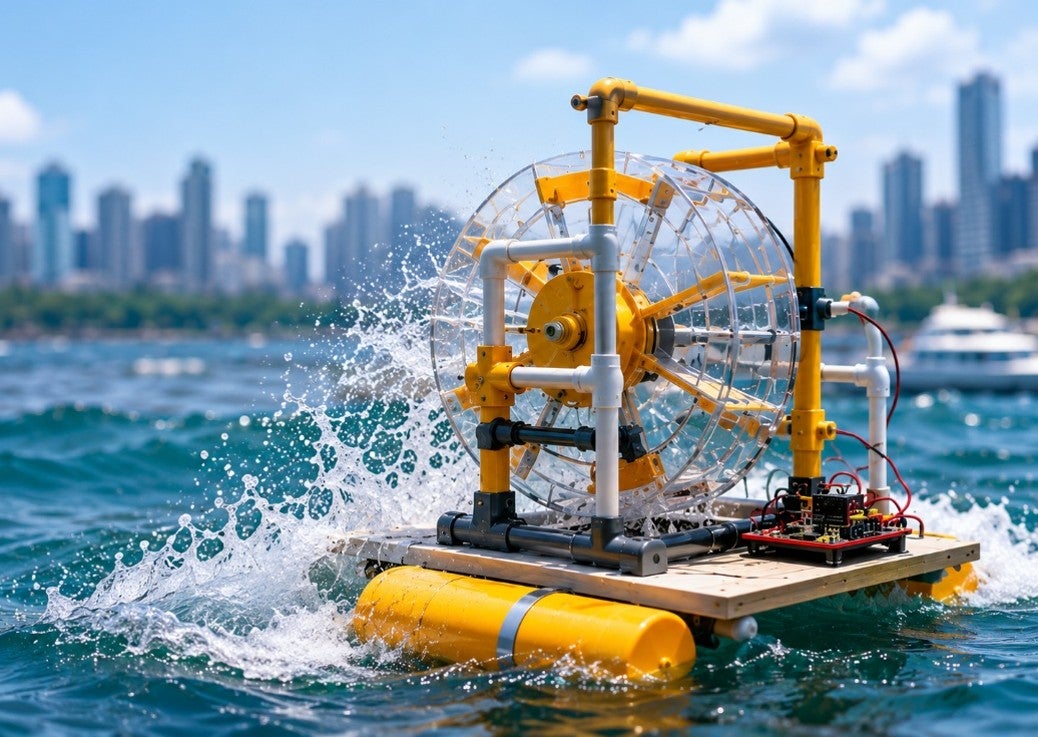
Energy &
Sustainability
Enabling scholars to explore renewable energy technologies and develop innovative solutions to support a more sustainable future.
For more information, click here.
Workshop Schedule
Robotics & Autonomous Systems
The objective of this track is to introduce scholars to how AI, computer vision and embedded systems come together to create intelligent autonomous robots. Through hands-on activities, scholars will design, programme and test robotic systems capable of sensing their surroundings, navigating independently and performing inspection and monitoring tasks within a simulated environment.
Students are expected to work together to prepare the deliverables for day 5:
- Develop and programme an autonomous robot capable of navigating a designated environment.
- Integrate sensors and AI vision to perform inspection and monitoring tasks.
- Demonstrate the robot’s autonomous navigation and mission execution.
- Contribute to a 10-minute integrated group presentation and 2-minute video.
4 January 2027
| Day | Time | Programme | Venue | Instructors |
| 1 | 9am - 9.50am | Welcome Speech, Introduction to CDE | LT7A | |
| 9.50am - 10am | Introduction to CDE, Second Major in Innovation and Design Programme (iDP) | LT7A | ||
| 10am - 11am | Overall Challenge Briefing, Team Allocation and Track Briefings | LT7A | ||
| 11am - 12pm |
Lecture 1: How AI is Shaping Our World? Explore how AI is transforming healthcare, manufacturing, transportation, smart cities and everyday life. |
LT7A | A/Prof Mehul Motani | |
| 12pm - 1pm |
Networking Lunch and Cross-Track Team Bonding |
EA Atrium Level 1 | ||
| 1pm - 2pm |
Lecture 2: Beyond the Algorithm: What Really Powers AI? Understand how AI depends on data centres, computing infrastructure and electricity. Explore why AI consumes significant energy and the challenges of cooling modern data centres. |
LT7A | Dr Xu Yuecong | |
| 2pm - 3pm | Lecture 3: Engineering a Sustainable AI Future ____________________________________________ Explore how renewable energy, sustainable data centres and autonomous systems work together to reduce AI's environmental impact and power the intelligent cities of tomorrow. |
LT7A | Prof Lee Poh Seng | |
| 3pm - 3.45pm | Tea Break | EA Atrium Level 1 | ||
| 4pm - 5.30pm | Meet Your Robot ____________________________________________ Introduction to the robotics platform, hardware components and sensors. Scholars will assemble and familiarise themselves with the robot and discuss possible autonomous inspection strategies. |
The Lodge | Dr Lai Yan Kai |
5 January 2027
| Day | Time | Programme | Venue | Instructors |
| 2 | 8.30am - 9am | Light Breakfast | Outside The Lodge | |
| 9am - 12pm |
Workshop 1: Training an Object Identification Model _________________________________________ Learn how YOLOv26 uses convolutional neural networks and pre-trained models to identify objects. Students will also explore the complete model-training process, from collecting and labelling image datasets to training and testing an object-identification model. |
The Lodge | Dr Lai Yan Kai | |
| 12pm - 1pm |
Lunch |
Outside The Lodge | ||
| 1pm - 4.30pm |
Workshop 2: Robot SLAM and Navigation with ROS _________________________________________ Explore the kinematic model of a differential-drive robot and learn how the Robot Operating System (ROS) supports mapping, localisation and autonomous navigation. Students will use SLAM to create a map before programming the robot to navigate independently within a known environment. |
The Lodge | Dr Lai Yan Kai | |
| 4.30pm - 5.30pm | Connect & Reflect: Cross-Track Sharing and Integration | The Lodge |
6 January 2027
| Day | Time | Programme | Venue | Instructors |
| 3 | 8.30am - 9am | Light Breakfast | Outside The Lodge | |
| 9am - 10am |
Workshop 2: Robot SLAM and Navigation with ROS _________________________________________ Explore the kinematic model of a differential-drive robot and learn how the Robot Operating System (ROS) supports mapping, localisation and autonomous navigation. Students will use SLAM to create a map before programming the robot to navigate independently within a known environment. |
The Lodge | Dr Lai Yan Kai | |
| 10am - 12.30pm | Learning Journey at DSTA | DSTA | ||
| 12.30pm - 1.30pm | Lunch | Outside The Lodge | ||
| 1.30pm - 4.30pm |
Workshop 3: UAV Fundamentals and Flight Control Explore the fundamentals of multirotor UAV systems, including their key components, flight principles and feedback-control mechanisms. Students will also be introduced to PX4, QGroundControl, UAV state estimation, flight modes and essential safety procedures. Through hands-on activities, students will inspect the UAV’s components, connect it to QGroundControl, calibrate its sensors and perform system checks. They will then practise basic flight operations, including arming and disarming, take-off, hovering, position control and landing, while observing how onboard sensors and feedback control help stabilise the UAV. |
The Lodge | Dr Lin Feng | |
| 4.30pm - 5.30pm | Connect & Reflect: Cross-Track Sharing and Integration | The Lodge |
7 January 2027
| Day | Time | Programme | Venue | Instructors |
| 4 | 8.30am - 9am | Light Breakfast | EA Atrium Level 1 | |
| 9am - 12pm |
Workshop 3: UAV Fundamentals and Flight Control Explore the fundamentals of multirotor UAV systems, including their key components, flight principles and feedback-control mechanisms. Students will also be introduced to PX4, QGroundControl, UAV state estimation, flight modes and essential safety procedures. Through hands-on activities, students will inspect the UAV’s components, connect it to QGroundControl, calibrate its sensors and perform system checks. They will then practise basic flight operations, including arming and disarming, take-off, hovering, position control and landing, while observing how onboard sensors and feedback control help stabilise the UAV. |
The Lodge | Dr Lin Feng | |
| 12pm - 1pm | Lunch | Outside The Lodge | ||
| 1pm - 4.30pm |
Workshop 4: UAV Autonomous Missions and Perception Explore how UAVs operate autonomously by integrating perception, localisation, position estimation, navigation, planning and flight control. Students will learn about waypoint navigation, offboard control and onboard target detection using AprilTags. Through hands-on activities, students will prepare the UAV for autonomous operation and use a Python-based ground-control programme to command it to take off, navigate through predefined waypoints and land independently. They will also use an onboard camera to detect an AprilTag and complete an autonomous mission, from take-off and target identification to returning and landing safely. |
The Lodge | Dr Lin Feng | |
| 4.30pm - 5.30pm | Connect & Reflect: Cross-Track Sharing and Integration | The Lodge |
8 January 2027
| Day | Time | Programme | Venue | Instructors |
| 5 | 9am - 9.30am | Light Breakfast | Outside The Lodge | |
| 9.30am - 11am | Final Testing & Optimisation | The Lodge | ||
| 11am - 12pm | Cross-Track Integration Session | The Lodge | ||
| 12pm - 1pm | Lunch | Outside The Lodge | ||
| 1pm - 2.30pm | Ecosystem Rehearsal and Final Integration | The Lodge | ||
| 2.30pm - 5.30pm |
AI Sustainable Ecosystem Grand Showcase Prize Presentation and Closing Ceremony |
The Lodge |
Data Centres & Sustainability
The objective of this track is to help scholars understand the role of data centres in supporting artificial intelligence and digital technologies, as well as the sustainability challenges arising from their high energy use and heat generation. Through engineering design activities, hands-on workshops and learning journeys, scholars will explore sustainable infrastructure, cooling technologies, environmental monitoring and energy-efficient data-centre design.
Students will work together to prepare the following deliverables for Day 5:
- Design and build a miniature sustainable data centre.
- Incorporate cooling strategies and environmental monitoring systems into the model.
- Test and optimise the design to improve its cooling and energy performance.
- Contribute to a 10-minute integrated group presentation and 2-minute video.
4 January 2027
| Day | Time | Programme | Venue | Instructors |
| 1 | 9am - 9.50am | Welcome Speech, Introduction to CDE | LT7A | |
| 9.50am - 10am | Introduction to CDE, Second Major in Innovation and Design Programme (iDP) | LT7A | ||
| 10am - 11am | Overall Challenge Briefing, Team Allocation and Track Briefings | LT7A | ||
| 11am - 12pm |
Lecture 1: How AI is Shaping Our World? Explore how AI is transforming healthcare, manufacturing, transportation, smart cities and everyday life. |
LT7A | A/Prof Mehul Motani | |
| 12pm - 1pm |
Networking Lunch and Cross-Track Team Bonding |
EA Atrium Level 1 | ||
| 1pm - 2pm |
Lecture 2: Beyond the Algorithm: What Really Powers AI? Understand how AI depends on data centres, computing infrastructure and electricity. Explore why AI consumes significant energy and the challenges of cooling modern data centres. |
LT7A | Dr Xu Yuecong | |
| 2pm - 3pm | Lecture 3: Engineering a Sustainable AI Future ____________________________________________ Explore how renewable energy, sustainable data centres and autonomous systems work together to reduce AI's environmental impact and power the intelligent cities of tomorrow. |
LT7A | Prof Lee Poh Seng | |
| 3pm - 3.45pm | Tea Break | EA Atrium Level 1 | ||
| 4pm - 5.30pm | Understanding Your Data Centre Challenge ____________________________________________ Introduction to the miniature data-centre model, cooling concepts, monitoring sensors and sustainable design considerations. |
E7 Seminar Room 4 | Dr Daniel Sng |
5 January 2027
| Day | Time | Programme | Venue | Instructors |
| 2 | 8.30am - 9am | Light Breakfast | E7 Level 3 | |
| 9am - 12pm |
Workshop 1: Beyond the Box – Reimagining the Sustainable Data Centre _________________________________________ Explore how architecture can transform conventional data centres into more sustainable spaces. Through a design challenge and hands-on prototyping, students will develop alternative data-centre concepts that integrate energy, cooling, materials, people and the environment. |
E7 Seminar Room 4 | A/Prof Christo Meyer | |
| 12pm - 1pm |
Lunch |
E7 Level 3 | ||
| 1pm - 4.30pm |
Workshop 2: Environmental impacts of Data Centres _________________________________________
Explore how data centres affect the environment through their energy consumption and cooling requirements. Through interactive discussions and online assessment tools, they will examine potential solutions, consider the challenges and trade-offs involved, and gain an introduction to Environmental Impact Assessment (EIA) and Life Cycle Assessment (LCA). |
E7 Seminar Room 4 | A/Prof Kua Harn Wei | |
| 4.30pm - 5.30pm | Connect & Reflect: Cross-Track Sharing and Integration | The Lodge |
6 January 2027
| Day | Time | Programme | Venue | Instructors |
| 3 | 8,30am - 9am | Light Breakfast | EA Atrium | |
| 9am - 11am |
Sustainable Tropical Data Centre Testbed (STDCT) Learning Journey Students will visit a working data-centre testbed to see how its equipment, cooling systems and energy-efficient technologies operate under tropical conditions, and learn about their real-world applications. |
LT7A STDCT, 2 Estate Office Drive, Singapore 117587 |
||
| 11am - 12.30pm |
Lecture 3: Cooling the Digital World – Introduction to Data Centre Cooling _________________________________________ Learn why data centres generate significant heat and require continuous cooling. Students will explore airflow management, hot and cold aisles, different cooling technologies, energy efficiency and the challenges of cooling high-performance AI systems. |
E7 Seminar Room 4 | Dr Daniel Sng | |
| 12.30pm - 1.30pm | Lunch | E7 Level 3 | ||
| 1.30pm - 4.30pm |
Workshop 3: Cooling the Digital World – Introduction to Data Centre Cooling _________________________________________ Students will design a mock-up data-centre layout, arrange server racks to manage airflow and identify issues such as hot-air recirculation. They will then select an appropriate cooling technology and explain their choice. |
E7 Seminar Room 4 | Dr Daniel Sng | |
| 4.30pm - 5.30pm | Connect & Reflect: Cross-Track Sharing and Integration | The Lodge |
7 January 2027
| Day | Time | Programme | Venue | Instructors |
| 4 | 8.30am - 9am | Light Breakfast | E7 Level 3 | |
| 9.30am - 10.30am |
Lecture 4: Performance Monitoring of Data Centres Using Sensors Students will learn how temperature, airflow and electrical-power sensors are used to monitor data-centre performance. Students will explore sensor placement, data analysis and simplified Power Usage Effectiveness (PUE). |
E7 Seminar Room 4 | A/Prof Md Raisul Islam | |
| 10.30pm - 12pm |
Workshop 4: Performance Monitoring of Data Centres Using Sensors Students will install sensors, measure temperature, airflow and electrical power under different operating conditions, and analyse the data to evaluate cooling and energy performance. |
E7 Seminar Room 4 | A/Prof Md Raisul Islam | |
| 12pm - 1pm |
Lunch |
E7 Level 3 | ||
| 1pm - 4.30pm |
Free and Easy Group Discussions Testing and Commissioning |
E7 Seminar Room 4 | ||
| 4.30pm - 5.30pm | Connect & Reflect: Cross-Track Sharing and Integration | The Lodge |
8 January 2027
| Day | Time | Programme | Venue | Instructors |
| 5 | 9am - 9.30am | Light Breakfast | E7 Level 3 | |
| 9.30am - 11am | Final Testing & Optimisation | E7 Seminar Room 4 | ||
| 11am - 12pm | Cross-Track Integration Session | The Lodge | ||
| 12pm - 1pm | Lunch | Outside The Lodge | ||
| 1pm - 2.30pm | Ecosystem Rehearsal and Final Integration | The Lodge | ||
| 2.30pm - 5.30pm |
AI Sustainable Ecosystem Grand Showcase Prize Presentation and Closing Ceremony |
The Lodge | ||
| 5.30pm onwards | Tea Reception (Free-and-easy) | EA Atrium Level 1 |
Energy & Sustainability
The objective of this track is to help students understand how wave and tidal energy can be harnessed to generate clean electricity. Through lectures, demonstrations and hands-on activities, students will explore marine-energy conversion, computational fluid dynamics (CFD), low-carbon concrete and 3D-printing technologies for sustainable marine infrastructure.
Students will work together to prepare the following deliverables for Day 5:
- Design and build a working wave or tidal energy harvester.
- Develop a sustainable support structure for the marine-energy device.
- Test and optimise the prototype to improve its stability and energy output.
- Contribute to a 10-minute integrated group presentation and 2-minute video.
4 January 2027
| Day | Time | Programme | Venue | Instructors |
| 1 | 9am - 9.50am | Welcome Speech, Introduction to CDE | LT7A | |
| 9.50am - 10am | Introduction to CDE, Second Major in Innovation and Design Programme (iDP) | LT7A | ||
| 10am - 11am | Overall Challenge Briefing, Team Allocation and Track Briefings | LT7A | ||
| 11am - 12pm |
Lecture 1: How AI is Shaping Our World? Explore how AI is transforming healthcare, manufacturing, transportation, smart cities and everyday life. |
LT7A | A/Prof Mehul Motani | |
| 12pm - 1pm |
Networking Lunch and Cross-Track Team Bonding |
EA Atrium Level 1 | ||
| 1pm - 2pm |
Lecture 2: Beyond the Algorithm: What Really Powers AI? Understand how AI depends on data centres, computing infrastructure and electricity. Explore why AI consumes significant energy and the challenges of cooling modern data centres. |
LT7A | Dr Xu Yuecong | |
| 2pm - 3pm | Lecture 3: Engineering a Sustainable AI Future ____________________________________________ Explore how renewable energy, sustainable data centres and autonomous systems work together to reduce AI's environmental impact and power the intelligent cities of tomorrow. |
LT7A | Prof Lee Poh Seng | |
| 3pm - 3.45pm | Tea Break | EA Atrium Level 1 | ||
| 4pm - 5.30pm |
Overview of the Tidal Wave Energy Challenge Introduction to the Track 3 overall challenge, including the fundamentals of renewable energy, the key components of a wave or tidal energy harvester, and the process of converting water movement into electrical power. The session will also introduce the upcoming workshops, project activities and expected final deliverables |
SDE3 Barrel Room | Dr Gary Lei |
5 January 2027
| Day | Time | Programme | Venue | Instructors |
| 2 | 8.30am - 9am | Light Breakfast | SDE3 Barrel Room | |
| 9am - 12pm |
Workshop 1: Sustainable and Underwater 3D-Printed Structures for Marine Energy Harvesting _________________________________________ Explore how low-carbon concrete and 3D-printing technologies can support more sustainable marine-energy infrastructure. Students will learn about the challenges of constructing underwater structures and observe a demonstration of concrete extrusion and printing. Working in teams, students will design and fabricate a modular foundation, protective housing or reef-inspired support for a marine-energy device. They will test their designs in water, assess their stability and material efficiency, and refine them for integration with their wave or tidal energy harvester. |
SDE3 Barrel Room | A/Prof Du Hongjian | |
| 12pm - 1pm |
Lunch |
SDE3 Barrel Room | ||
| 1pm - 4.30pm |
Workshop 1: Sustainable and Underwater 3D-Printed Structures for Marine Energy Harvesting _________________________________________ Explore how low-carbon concrete and 3D-printing technologies can support more sustainable marine-energy infrastructure. Students will learn about the challenges of constructing underwater structures and observe a demonstration of concrete extrusion and printing. Working in teams, students will design and fabricate a modular foundation, protective housing or reef-inspired support for a marine-energy device. They will test their designs in water, assess their stability and material efficiency, and refine them for integration with their wave or tidal energy harvester. |
SDE3 Barrel Room | A/Prof Du Hongjian | |
| 4.30pm - 5.30pm | Connect & Reflect: Cross-Track Sharing and Integration | The Lodge |
6 January 2027
| Day | Time | Programme | Venue | Instructors |
| 3 | 8.30am - 9am | Light Breakfast | SDE3 Barrel Room | |
| 9am - 12pm |
Lecture 2: CFD for Sustainable Energy Discover how engineers use Computational Fluid Dynamics (CFD) to study water flow and improve the design of wave- and tidal-energy systems. Students will learn how CFD simulations are developed and how to interpret velocity, pressure and vortex visualisations. Through a prepared simulation demonstration and case study, students will explore how device geometry and flow conditions affect performance and loading, and understand why digital predictions must be validated through physical testing in a hydraulic laboratory. |
SDE3 Barrel Room | Dr Chew Lup Wai | |
| 12pm - 1pm |
Lunch |
SDE3 Barrel Room | ||
| 1pm - 3.30pm |
Workshop 3: Harnessing Ocean Energy: Build and Test a Wave/Tidal Energy Harvester Discover how waves and tidal currents can be converted into clean electrical energy. Students will compare different marine-energy technologies before working in teams to assemble a modular energy harvester comprising a micro-generator, mechanical transmission and electrical circuit. |
SDE3 Barrel Room | Dr Gary Lei | |
| 3.30pm - 4.30pm |
Learning Journey at Hydraulics and Coastal Resilience Lab |
Hydraulics and Coastal Resilience Lab | Dr Gary Lei | |
| 4.30pm - 5.30pm | Connect & Reflect: Cross-Track Sharing and Integration | SDE3 Barrel Room |
7 January 2027
| Day | Time | Programme | Venue | Instructors |
| 4 | 8.30am - 9am | Light Breakfast | SDE3 Barrel Room | |
| 9am - 12pm |
Workshop 3: Harnessing Ocean Energy: Build and Test a Wave/Tidal Energy Harvester Students will test their prototypes under controlled wave or current conditions in the NUS Hydraulics Laboratory. They will measure voltage and current, calculate electrical power and investigate how changing one design parameter affects energy output. Teams will refine their prototypes, connect the generated power to an LED or model load, and summarise their findings for the final integrated presentation. |
SDE3 Barrel Room | Dr Gary Lei | |
| 12pm - 1pm |
Lunch |
SDE3 Barrel Room | ||
| 1pm - 4.30pm |
Workshop 3: Harnessing Ocean Energy: Build and Test a Wave/Tidal Energy Harvester Students will test their prototypes under controlled wave or current conditions in the NUS Hydraulics Laboratory. They will measure voltage and current, calculate electrical power and investigate how changing one design parameter affects energy output. Teams will refine their prototypes, connect the generated power to an LED or model load, and summarise their findings for the final integrated presentation. |
SDE3 Barrel Room | Dr Gary Lei | |
| 4.30pm - 5.30pm |
Connect & Reflect: Cross-Track Sharing and Integration |
SDE3 Barrel Room |
8 January 2027
| Day | Time | Programme | Venue | Instructors |
| 5 | 9am - 9.30am | Light Breakfast | SDE3 Barrel Room | |
| 9.30am - 11am | Final Testing & Optimisation | SDE3 Barrel Room | ||
| 11am - 12pm | Cross-Track Integration Session | The Lodge | ||
| 12pm - 1pm | Lunch | Outside The Lodge | ||
| 1pm - 2.30pm | Ecosystem Rehearsal and Final Integration | The Lodge | ||
| 2.30pm - 5.30pm |
AI Sustainable Ecosystem Grand Showcase Prize Presentation and Closing Ceremony |
The Lodge | ||
| 5.30pm onwards | Tea Reception (Free-and-easy) | EA Atrium Level 1 |