
INDUSTRY & INNOVATION
CDE students sweep Singapore honours at James Dyson Award 2026
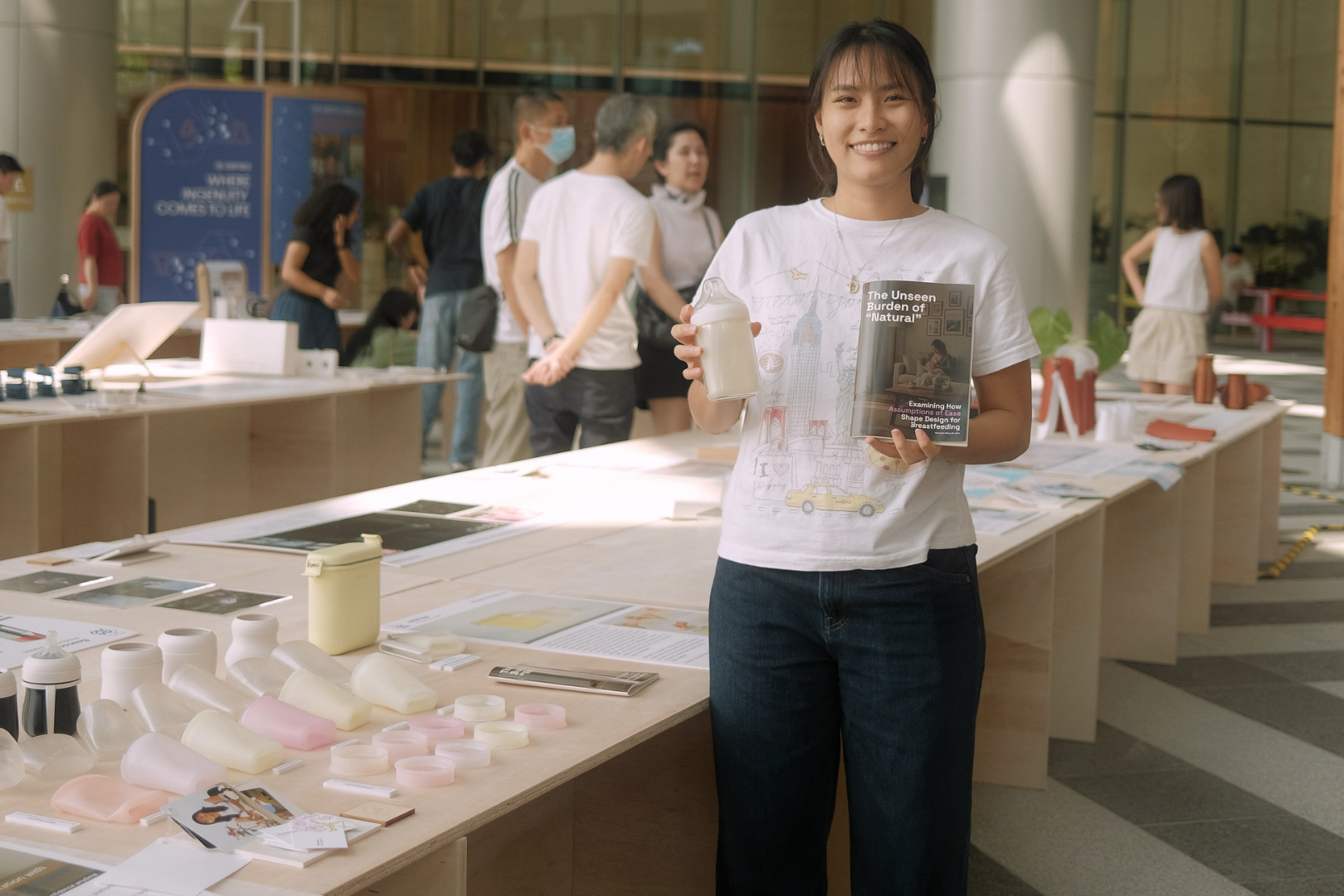
The James Dyson Award is an international design and engineering competition that challenges students and recent graduates to develop solutions to real-world problems. This year, CDE students were recognised for innovations spanning maternal care, inclusive communication and marine conservation.
Read more here.
NebulaX Hackathon puts students on track to shape the future of rail
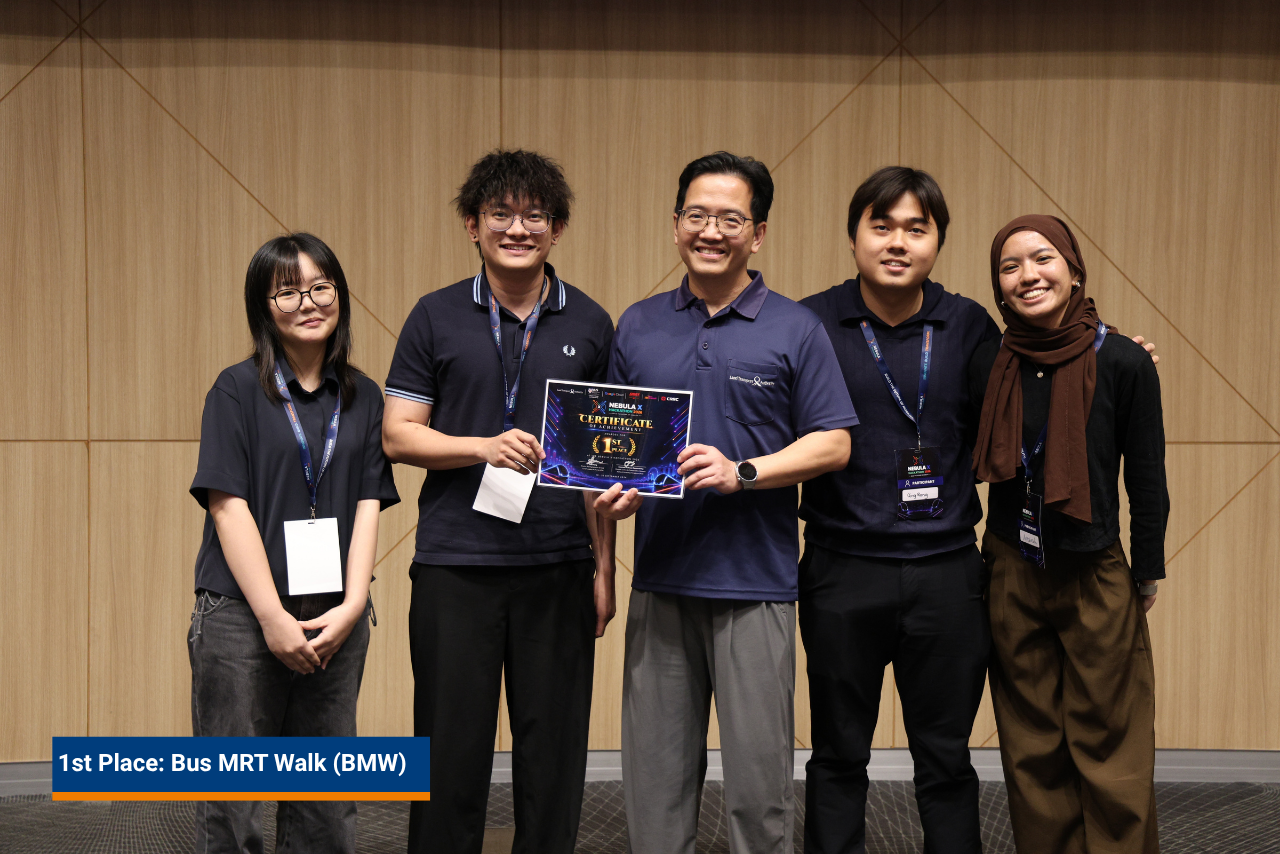
As Singapore continues to strengthen the reliability, resilience and intelligence of its rail network, the next generation of engineers, designers and innovators will play an important role in shaping the future of mobility.
The College of Design and Engineering (CDE) at the National University of Singapore (NUS) hosted the inaugural NebulaX Hackathon, a three-day student innovation challenge organised by the Land Transport Authority (LTA), with support from Google Cloud, SMRT, SBS Transit and CRRC Qingdao Sifang Co. Ltd.
Read more here.
Building the next generation of semiconductor talent in collaboration with Applied Materials and Micron
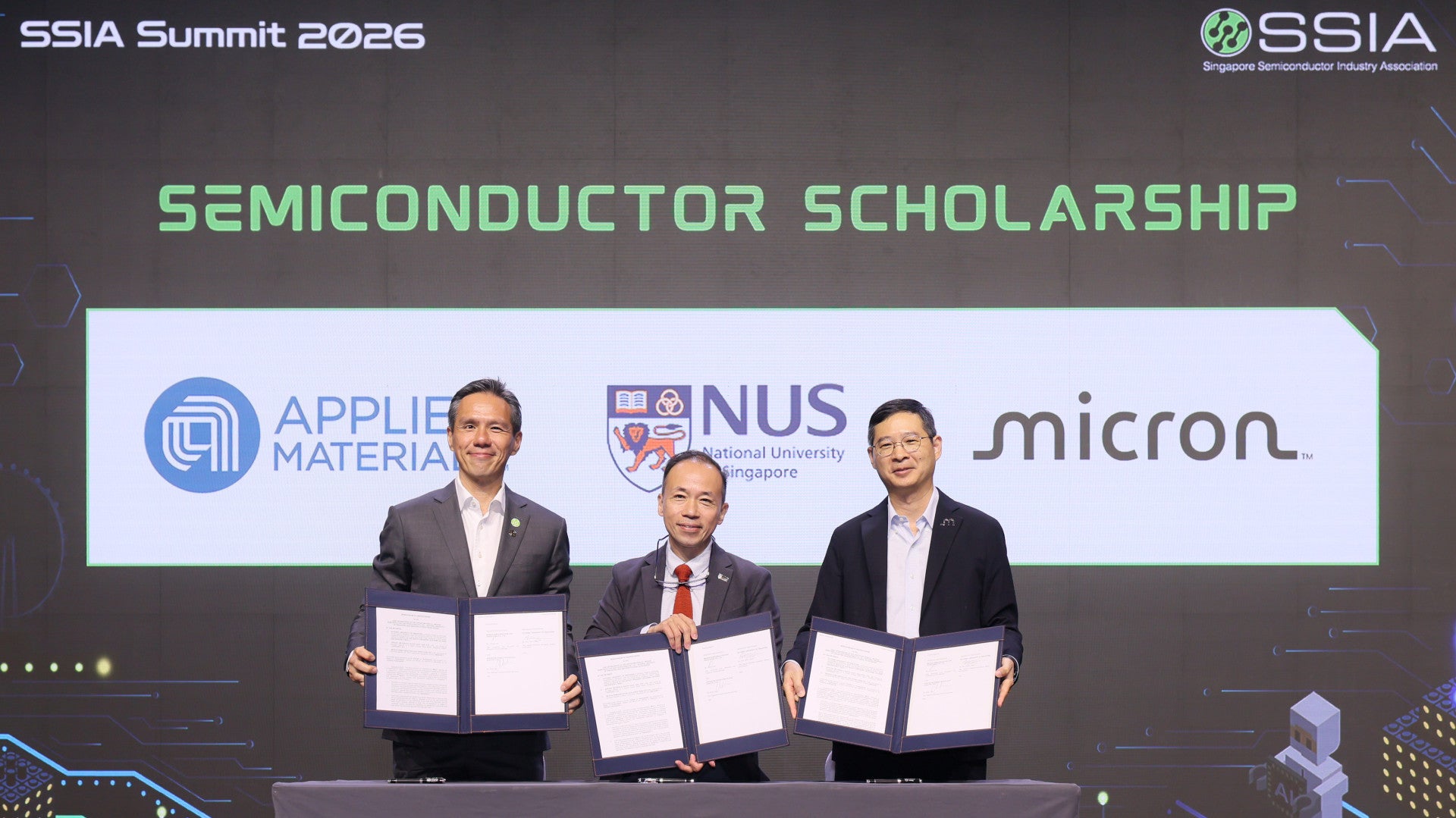
At the Singapore Semiconductor Industry Association Summit 2026, NUS signed a Memorandum of Understanding (MOU) with Applied Materials and Micron to strengthen the pipeline of industry-ready professionals through CDE’s Master of Science in Semiconductor Technology & Operations (MSc STO) programme. Under the partnership, outstanding MSc STO students will be considered for scholarships and industry internships, with potential employment opportunities upon graduation.
The MSc STO programme is a multidisciplinary coursework programme hosted by the Department of Electrical and Computer Engineering, in collaboration with the Department of Materials Science and Engineering and the Department of Industrial Systems Engineering and Management. The programme is further enriched by NUS’ major semiconductor research initiatives, including the Singapore Hybrid-Integrated Next-Generation µ-Electronics (SHINE) Centre, which provides students with exposure to cutting-edge research and industry-relevant technologies.
Offered on both a full-time and part-time basis, the MSc STO programme equips STEM graduates and working professionals with comprehensive expertise across the semiconductor value chain, from materials and devices to manufacturing, packaging, supply chain management and strategic decision-making. Students can also pursue specialised industry pathways, including AI training combined with experiential learning. Graduates are prepared for diverse engineering and management roles across foundries, equipment suppliers, and government agencies. Through formal training and cross-disciplinary perspectives, the curriculum fosters critical thinking, technical expertise, and an awareness of industrial impacts on society.
"By combining rigorous postgraduate education with industry internships and expert mentorship, this partnership will accelerate the development of highly skilled industry-ready talent," said Professor Aaron Thean, Deputy President (Academic Affairs) and Provost at NUS. "It will build talent capacities needed to power the next phase of semiconductor innovation and manufacturing, strengthening Singapore's position as a global semiconductor hub."
Read more here(opens in new tab).
City Syntax Lab and spinoff Urbanflow selected for Google DeepMind AI for the Planet Accelerator
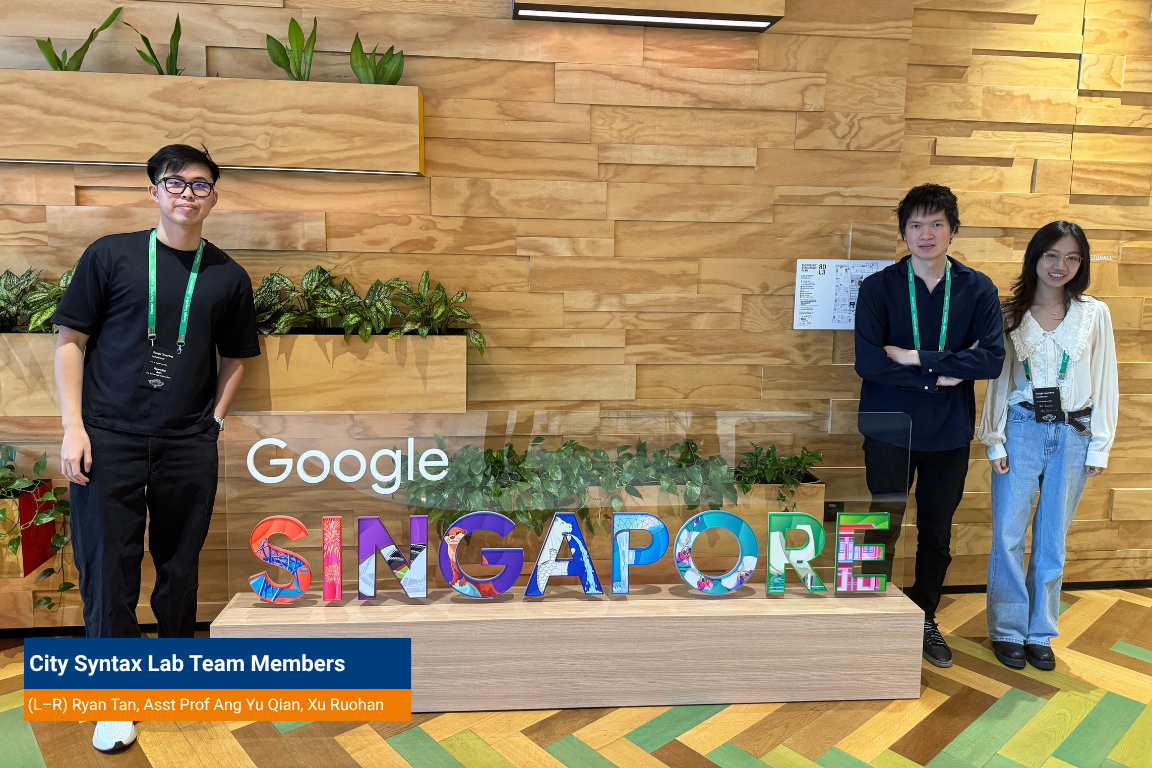
CDE’s City Syntax Lab and its spin-off, Urbanflow, have been selected for the inaugural Google DeepMind Accelerator: AI for the Planet, APAC cohort. The team is one of only 16 APAC teams chosen for the programme.
City Syntax Lab is an interdisciplinary research group in the NUS Department of the Built Environment. It works at the intersection of urban science, AI and the built environment. It examines cities as dynamic systems in which buildings, technologies and policies converge, developing data-driven tools to better understand how urban environments function — from energy use and carbon emissions to liveability.
Read more here.
From CDE to deep tech: Jax Lee’s journey in entrepreneurship

Jax’s (Chemical Engineering ’09) entrepreneurial journey began during his NUS Overseas Colleges internship at a tech start-up in Silicon Valley, and has since taken him through pivots, market discovery and the challenge of building a business from the ground up. His advice to students and aspiring founders is simple: ask questions, tap university networks, and use your time in school to understand how different parts of a business work.
Read more here.
ConcreteAI among five finalists at inaugural APAC Pitch Day
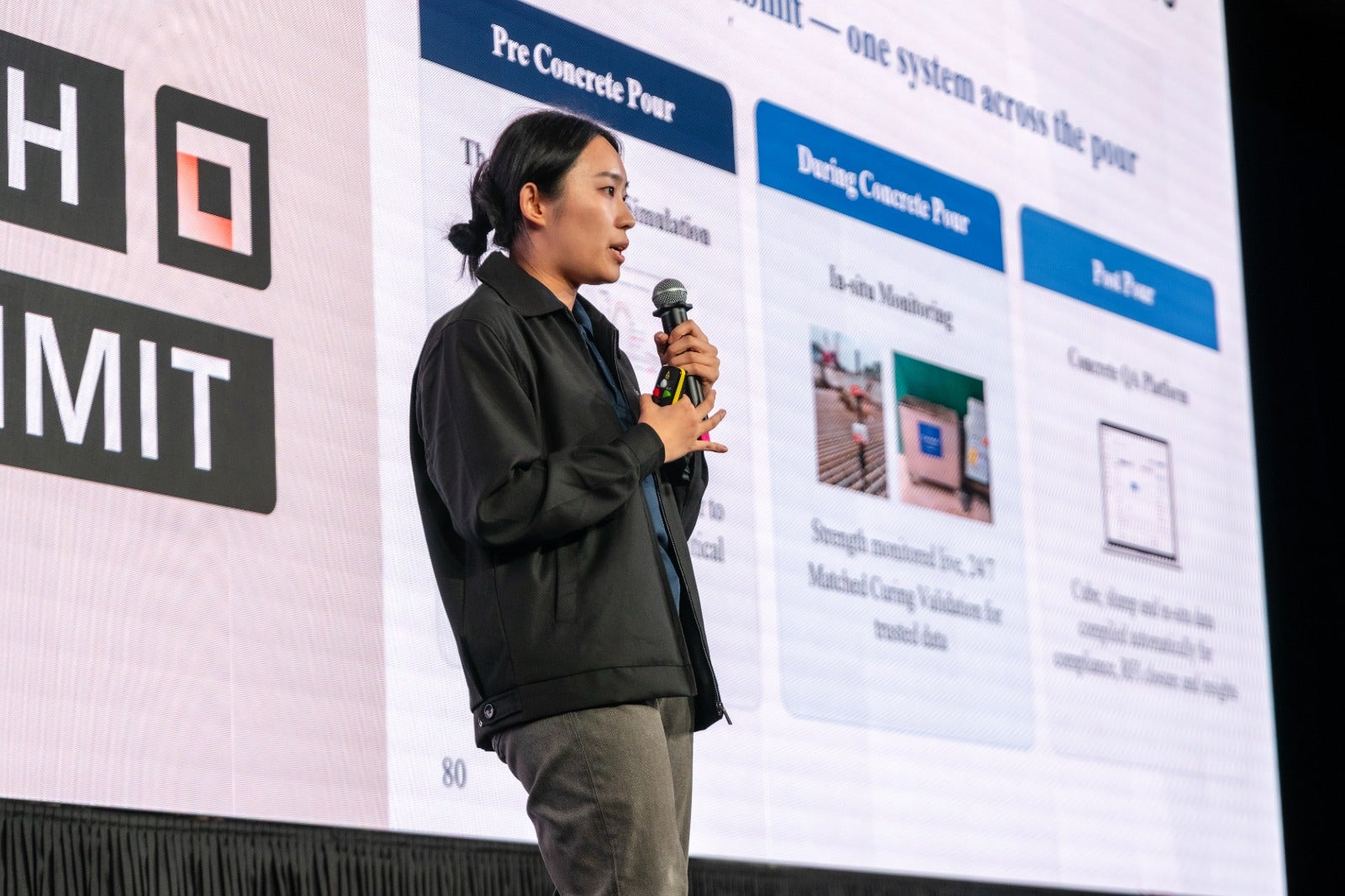
At the inaugural Asia-Pacific (APAC) Pitch Day of the Construction Startup Competition, held during ConTech Summit at International Built Environment Week (IBEW)(opens in new tab) 2026, ConcreteAI(opens in new tab) emerged as one of the five APAC finalists.
“The competition gave us a broader view of the global construction and concrete landscape,” shared Qingyang Chang (Civil Engineering, ’21), co-founder of ConcreteAI. “Hearing from founders and industry leaders across different markets deepened our understanding of the challenges, priorities and opportunities shaping the industry and helped us see where ConcreteAI can create value as we grow beyond Singapore.”
The team was selected from over 243 APAC applicants in a wider global competition that drew nearly 800 submissions. Launched in 2017, the competition has attracted startups from more than 80 countries and grown into a global platform for emerging construction technology ventures.
ConcreteAI presented its solution using Internet of Things (IoT) sensors to track in-situ concrete strength and temperature in real time, helping construction teams cut casting-cycle waiting times by over 30% and reduce reliance on traditional cube testing. As Qingyang shared, “Our pitch focused on providing real-time concrete performance insights to construction sites to improve productivity, quality and sustainability.”
Founded by Chang Qingyang, Xi Yi Ooi (Computer Engineering ’21), Isaac Siow (Civil Engineering ’21), and Yun Han Lim (Materials Science and Engineering ’21), ConcreteAI is a spin-off that began as a CDE4301A Ideas to Startup final-year project in 2021.
Today, backed up by NUS Graduate Research Innovation Programme (GRIP)(opens in new tab), Enterprise Singapore and other investors, the startup helps builders, contractors and precast manufacturers make faster, more informed decisions by providing live visibility into the concrete curing process, improving productivity, quality and sustainability on site. Looking ahead, Qingyang shared, “We’ll build on this momentum by strengthening our foundation in Singapore and exploring opportunities in other regions.”
Find out more about ConcreteAI: https://www.concreteai.io/(opens in new tab)
Hivebotics secures US$6 million to scale autonomous cleaning robots
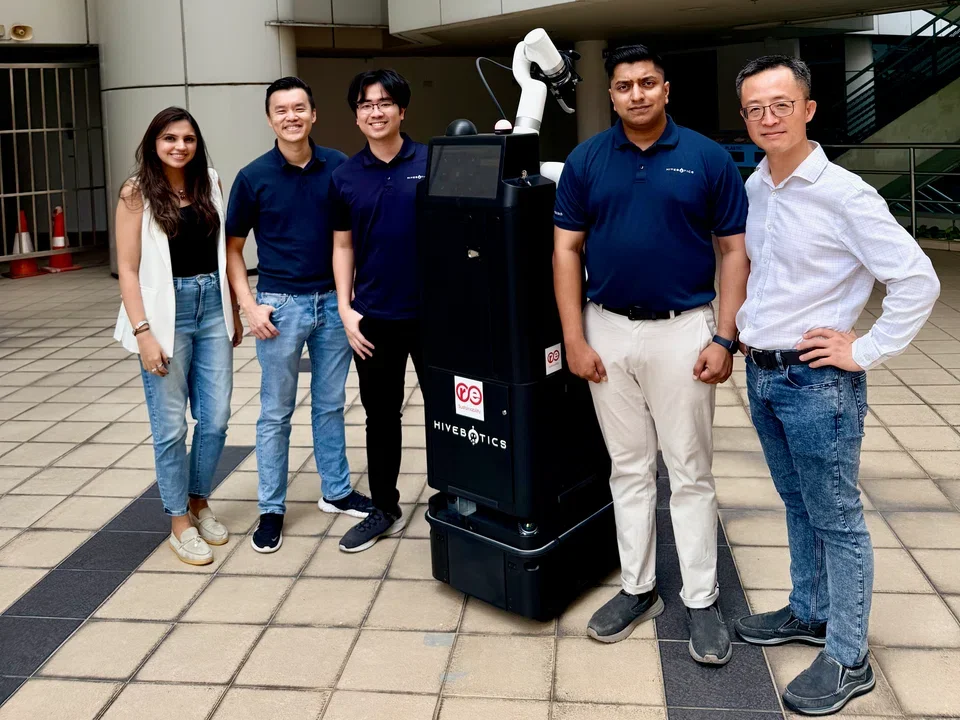
Robotics startup Hivebotics, co-founded by Rishab Patwari (Computer Engineering, Class of 2023) and Tuan Dung Nguyen (Mechanical Engineering, Class of 2023), has successfully secured US$6 million in Series A funding.
It plans to use the capital to begin volume production of its autonomous restroom-cleaning robot, Abluo, and expand its operations globally. The funding comes as the sector faces significant pressure from rising wages, persistent labour shortages, and stricter public hygiene standards.
The concept for Abluo originated from a direct industry need. During the COVID-19 pandemic, a cleaning company operator struggled to cope. Recognising that current solutions were ineffective, especially in cramped restrooms, the co-founders spent days cleaning toilets and concocting cleaning solvents.
While Abluo is the company's market entry, its long-term strategy is more ambitious.
“Cleaning is just one of the pillars,” said Rishab. “Our vision is to be the autonomous facilities management provider of the world.” He explained that the company’s five-to-10-year plan involves creating an ecosystem of integrated robots that could manage entire buildings from a remote command centre. "We may not only be building our own robots, but we will be collaborating with other robotics companies to integrate with our ecosystem," he added.
Hivebotics was developed within the entrepreneurial ecosystem at NUS, where the founders participated in CDE's Innovation and Design Programme (iDP), the EDIC Entrepreneur Fellowship, NUS Overseas Colleges (NOC), and the NUS Graduate Research Innovation Programme (GRIP).
Read more here(opens in new tab).
See the start of Hivebotics here(opens in new tab).
EdgeConneX joins STDCT 2.0 to advance the future of tropical data centres

EdgeConneX has joined the Sustainable Tropical Data Centre Testbed (STDCT) 2.0 Consortium as its new anchor partner.
Professor PS Lee, Head of NUS Mechanical Engineering and STDCT Programme Director, shared, “As compute demand surges, the strain on digital infrastructure is intensifying. This strain is often felt hardest in tropical regions like Singapore, where high heat and humidity push conventional cooling and operational systems to their limits. EdgeConneX's expertise in hyperscale and AI data centre deployment will be instrumental in shaping the next phase of research at STDCT. We greatly appreciate the strong support for the programme, and we look forward to our future collaborations.”
STDCT 2.0 is bringing together industry leaders and academia to future-proof the tropical data centre sector.
STDCT 2.0 welcomes Yokogawa to advance sustainable AI data centres
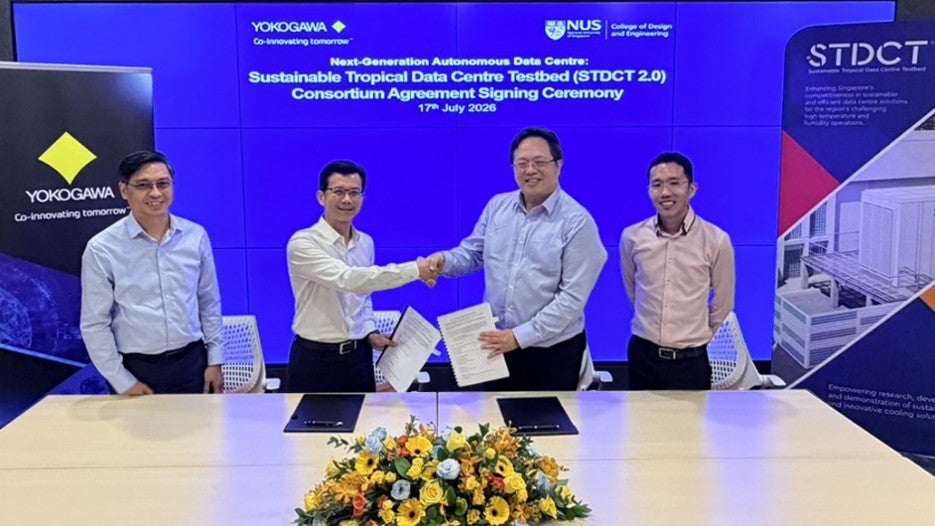
“As rack densities rise and infrastructure becomes increasingly complex, improving individual components will no longer be enough, we need to optimise the data centre as an integrated system spanning computing, power, cooling, controls and operations.” – Prof Lee Poh Seng, Programme Director of STDCT 2.0 and Head of Mechanical Engineering
The growth of AI drives demand for increasingly powerful data centres, and finding ways to operate them sustainably in tropical climates is becoming ever more important.
The Sustainable Tropical Data Centre Testbed Phase 2.0 (STDCT 2.0), hosted at CDE, is bringing academia and industry together to tackle this challenge — developing and testing technologies that can reduce energy and water consumption while supporting the increasingly dense computing demands of AI.
The consortium has now welcomed Yokogawa Engineering Asia Pte Ltd. as its latest partner.
Yokogawa brings decades of expertise in industrial automation, energy management and autonomous operations to STDCT 2.0. Working with the consortium, the company will explore digital solutions to improve operational efficiency, asset reliability and energy optimisation in next-generation data centres, alongside opportunities for joint research into emerging challenges.
As a live testbed operating under Singapore’s demanding tropical conditions, STDCT 2.0 provides a platform for researchers and industry partners to develop, integrate and validate technologies that could help shape more sustainable and resilient digital infrastructure in Singapore and beyond.
Prof Lee said, “Yokogawa’s deep expertise in measurement, industrial automation and autonomous operations adds an important capability to this effort. Through this partnership, we hope to develop and demonstrate new approaches that make AI data centres not only more energy- and resource-efficient, but also more intelligent, resilient and scalable for deployment in Singapore and other tropical markets.”