

ALUMNI NEWS
NUS Civil Engineering Class of 1986 celebrates 40 years of friendship

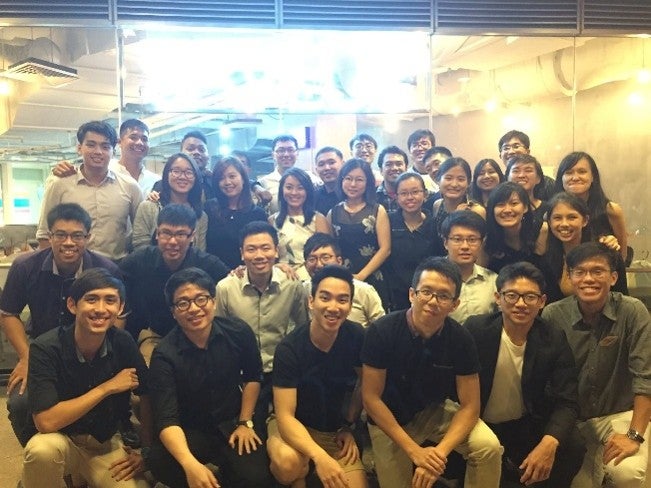
Alumni from the Civil Engineering Class of 1986 reunited for a 40th anniversary dinner at Tower Club Singapore on 10 October.
The gathering brought former classmates together to reminisce about their university days, catch up on their lives since graduation and celebrate four decades of enduring friendships. Filled with warm conversations, laughter and shared memories, the evening provided an opportunity to reconnect and strengthen ties within the CEE alumni community.
The reunion was organised by alumni Lee Aik Seng, Tan Chin Pin and Yip Hoong Mun, whose efforts brought classmates and their spouses together for the milestone celebration.
Marking 40 years since graduation, the event highlighted the lasting friendships formed at NUS and the strong connections that continue to bring CDE alumni together across generations.
NUS Civil Engineering Class of 2016 reunites to celebrate a decade of friendship
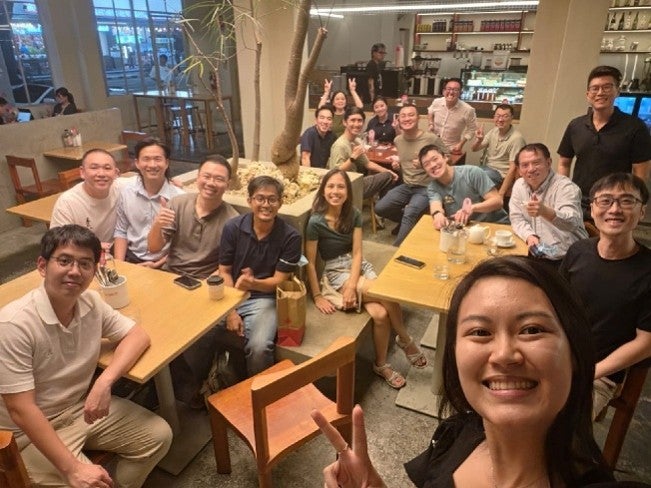
Close to 20 alumni from CDE's Civil Engineering Class of 2016 gathered on 9 October for a 10-year reunion dinner, reconnecting with former coursemates and celebrating friendships forged during their university years.
The evening was filled with lively conversations and shared memories as alumni caught up on their career journeys, personal milestones and family life. Despite a last-minute change of venue from a planned pizza and darts gathering to a cosy café, the relaxed setting provided an opportunity for everyone to reconnect and reminisce.
Asst Prof Chew Soon Hoe, Deputy Head (External Relations and Development, Civil and Environmental Engineering), also joined the gathering, strengthening connections between the alumni community and the Department.
The reunion was made possible through the efforts of alumni Yow See Wei, who coordinated the gathering and reached out to former classmates, Nee Yihan, who designed the event poster and registration form, and Cuthbert Yeo, who suggested the dining venue.
A decade after graduation, the gathering highlighted the enduring friendships and strong sense of community among CDE alumni, with participants looking forward to more opportunities to reconnect in the years ahead.
From engineering to entrepreneurship: CDE alumnus Saif Mahmud’s journey with NiaHealth
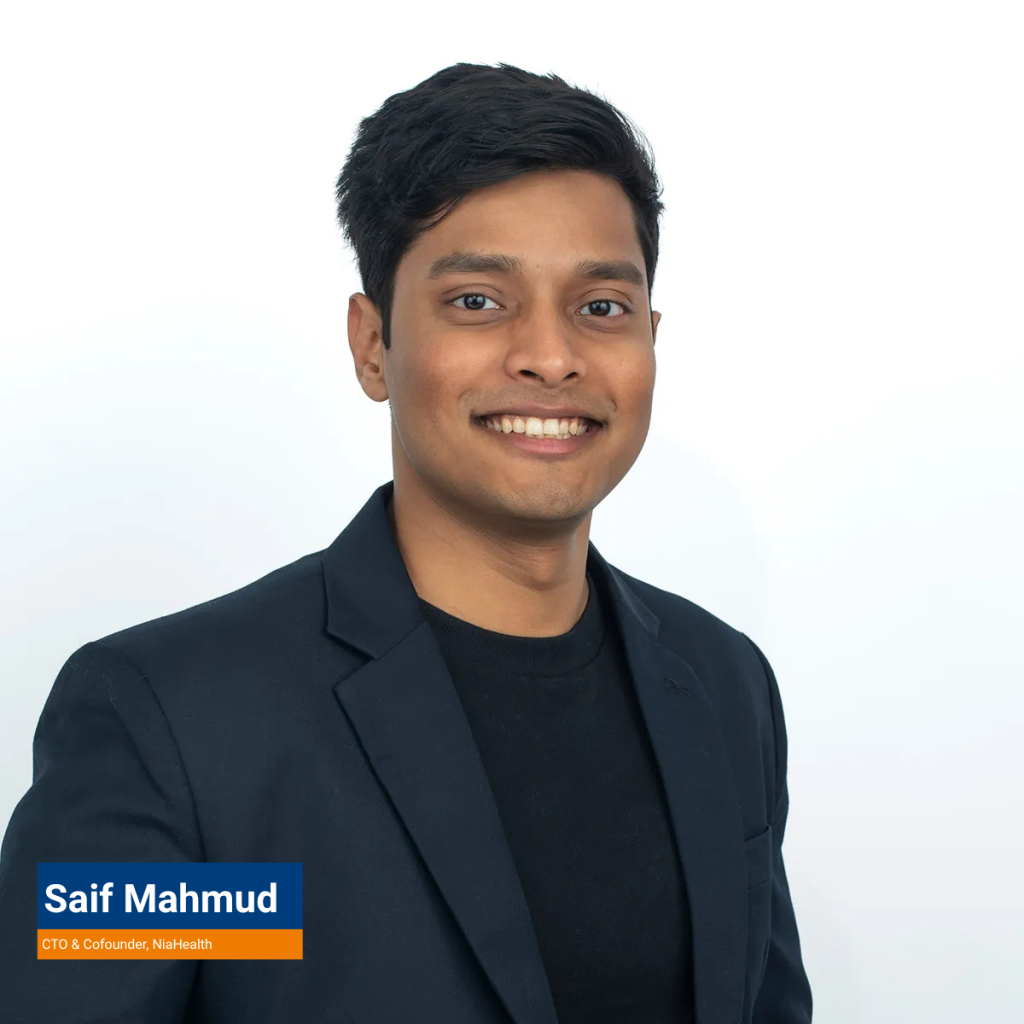
"We can do hard things if we put our minds together to it." — Saif Mahmud (Computer Engineering ’21)
For CDE Computer Engineering alumnus Saif Mahmud, that lesson began with a first-year group project: build a robot capable of solving a maze in just 12 weeks. Late nights, failed attempts and constant problem-solving eventually paid off, giving him the confidence to tackle complex, unfamiliar challenges.
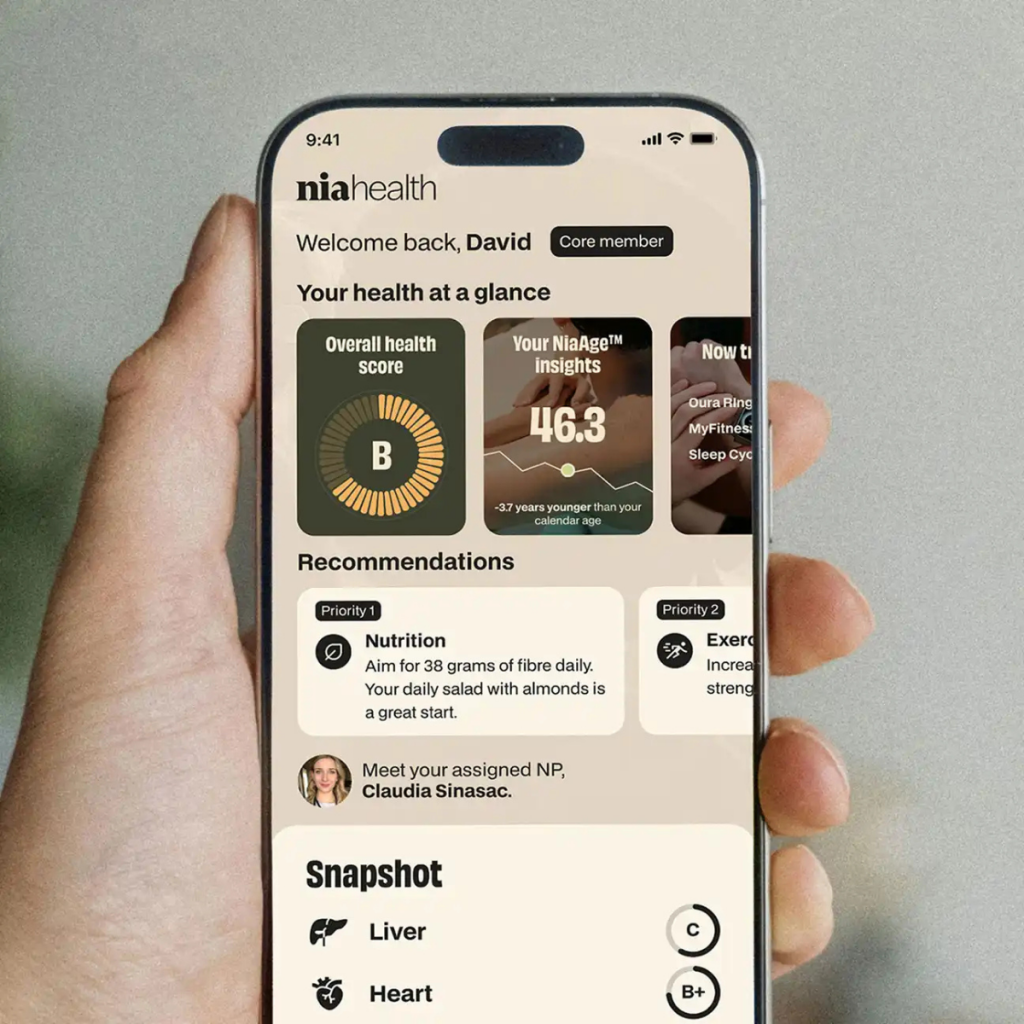
Today, Saif is Co-Founder and CTO of Canada-based NiaHealth, a startup working to help people live healthier for longer through proactive healthcare.
The mission is personal: after losing several family members to strokes, heart attacks and cancer, Saif began questioning whether earlier warning signs could have made a difference. NiaHealth brings together biomarkers, lifestyle, wearables, family history and clinician-led guidance to help people better understand their health risks and take action earlier. Rather than replacing conventional healthcare, the company aims to complement it.
In approximately three years, NiaHealth has helped around 10,000 people and raised about $6 million in pre-seed and seed funding. According to Saif, around 70% of users discovered a previously unknown risk through their blood tests. Reflecting on his time at CDE, Saif credits interdisciplinary teamwork and hands-on projects with preparing him for entrepreneurship, where solutions rarely come from one discipline alone.
His advice to aspiring founders? Start building, speak to users and keep iterating. And while at CDE, make full use of the opportunity to exchange ideas with classmates, professors and students across faculties.
Saif's journey reflects the entrepreneurial spirit that CDE continues to foster, where ideas developed through experimentation and interdisciplinary collaboration can grow into real-world solutions.
CDE alumnus Xue Wen Tan on navigating AI innovation and the importance of human judgement
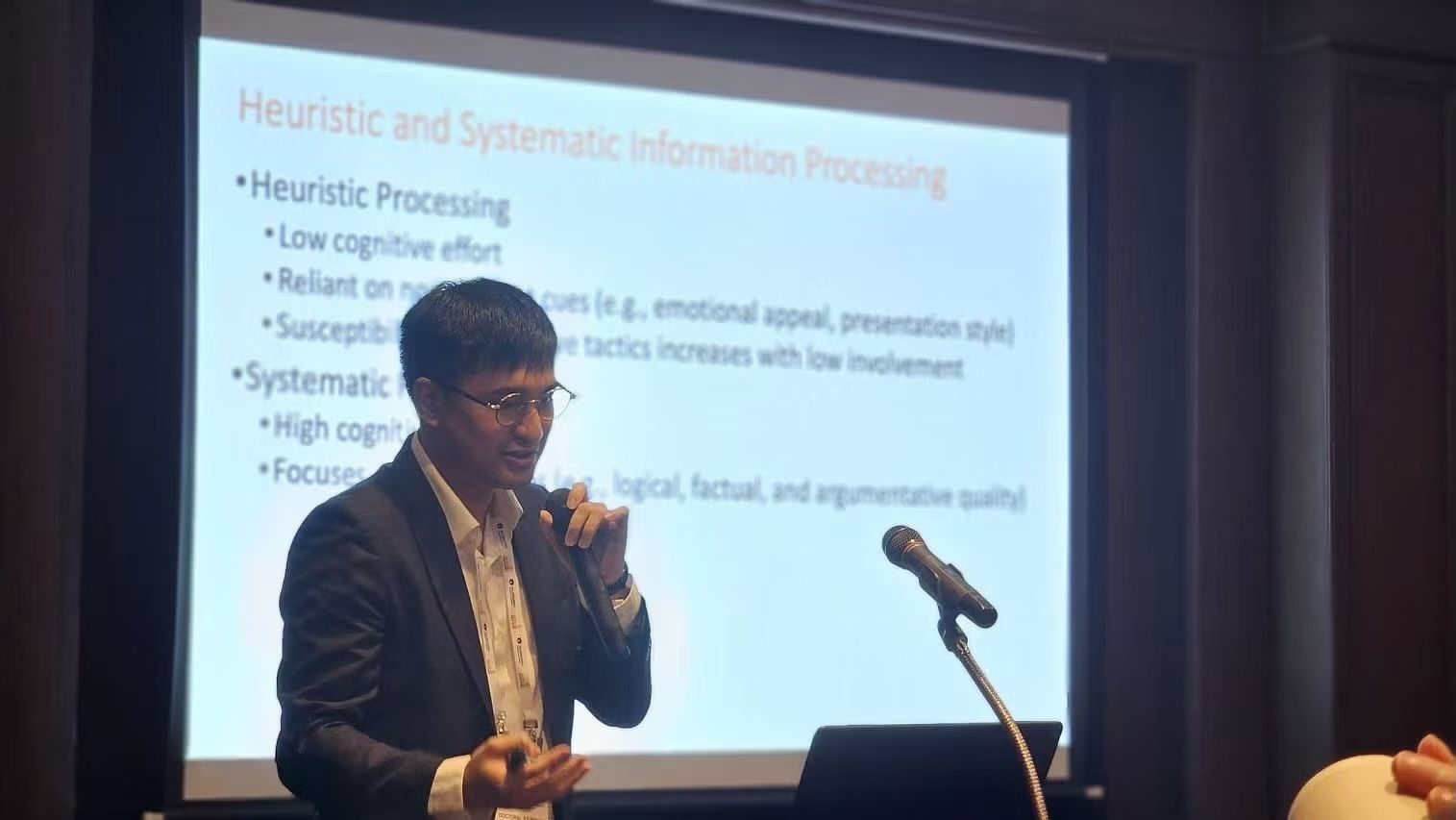
Two years into his PhD, Mr Xue Wen Tan (Electrical Engineering ’19, PhD ’25) found himself having to rethink his research when the rise of large language models changed the field of natural language processing. Rather than dwell on the setback, Xue Wen pivoted to explore how generative AI could help combat scams by generating realistic scam messages to train people to recognise fraud.
Today, as an AI scientist at Singapore’s Infocomm Media Development Authority (IMDA), he contributes to projects exploring how AI and autonomous technologies can be deployed safely in the real world, including how humans and robots can coexist in shared spaces.
His experiences have also shaped his views on the role of AI in our lives. While recognising its potential to transform how we work and learn, he believes human judgement remains essential, from evaluating the reliability of information to thinking independently rather than relying too heavily on AI-generated answers.
Xue Wen’s most immediate concern may be closer to home. He laughs as he recounts confiscating his parents’ phones after they became addicted to streams of AI-generated videos.
“It’s not that they don’t want to control themselves,” he says. “It’s the algorithm. It’s too good.” He hopes to see regulation in the future. “All these videos have no mental vitamins; they cause your brain to rot. It’s something I worry about.”
IEEE-HKN NUS Alumni sharing session 2026

The IEEE-Eta Kappa Nu (IEEE-HKN) Lambda Omega Chapter organised an alumni sharing session, bringing together current Electrical and Computer Engineering students and seniors from diverse academic and professional backgrounds. The session provided students with an opportunity to learn from the speakers’ experiences at NUS, explore different pathways beyond university, and gain practical insights into career and personal development.
The session featured four invited speakers — Owen Leong Song Zhu, Benita Wong Zi Xin, Suveen Ellawela and Shreya Pande — whose journeys span areas including integrated circuit design, software engineering, artificial intelligence and robotics, entrepreneurship, and postgraduate research.
During the individual sharing sessions, the speakers reflected on their experiences at NUS and the different paths they pursued during and after their undergraduate studies. Drawing from their own academic, internship, research and professional experiences, they shared practical perspectives on exploring career interests, transitioning from university to the workplace, pursuing further studies, and making the most of opportunities available during university.
The individual sharing sessions were followed by a panel discussion and Q&A, where students had the opportunity to engage directly with the speakers and seek their perspectives on topics related to academics, internships, career planning, postgraduate studies and professional development. The discussion also allowed the speakers to share different perspectives based on their respective experiences and career paths.
Food and refreshments were provided throughout the evening, creating a relaxed setting for students to continue their conversations and interact with the speakers beyond the formal sharing sessions. This provided an opportunity for more informal exchanges and helped foster stronger connections between current students, seniors and alumni within the IEEE-HKN community.
The alumni sharing session provided students with valuable exposure to the diverse pathways available beyond their undergraduate studies while strengthening connections across different generations of the IEEE-HKN NUS community. Through initiatives such as these, the Chapter hopes to continue providing platforms for students to learn from the experiences of their seniors, broaden their perspectives, and build a supportive professional and alumni network.
CDE alumna Jane Hia reflects on 17 years of building Kith Café

Entrepreneurship often involves not only building something new, but also adapting, learning and finding new ways to create impact.
Jane Hia (Industrial Design ’07) began that journey with Kith Café, which she founded in 2009 after an exchange programme in Milan helped shape her interest in food and design. Her design background influenced everything from Kith’s open layouts to its modular furniture, while the realities of running a café pushed her to pick up an entirely new set of skills, from pricing and payroll to operations and logistics.
Over the years, Kith grew steadily to 12 outlets and a team of more than 80 full-time staff and about 100 part-timers. But like many businesses in the sector, it was eventually hit by rising manpower and ingredient costs, weaker consumer spending and shifting footfall patterns, leading to the closure of its final cafés earlier this year.
Today, Jane is drawing on what she learned from 17 years of building Kith to help other F&B operators navigate similar challenges. From operations and manpower planning to cost structures and workflows, she is now helping businesses make more grounded and sustainable decisions.
Jane said, “Hope is a double-edged sword. People hang on, thinking things will turn around. If the maths doesn’t change, there is no turnaround. I may have closed one chapter, but I still want to use what I’ve learnt to help others in the industry.”
ISEM alumni reconnect and explore career opportunities in an evolving world

On 17 October, Industrial Systems Engineering and Management (ISEM) alumni and guests came together for an engaging afternoon of insights, conversations and connections at our annual ISEM Alumni Event: Ride the Next Wave – Empowering Yourself Through Choices.
The event kicked off with a keynote by Mr Norman Lee, Founder & Managing Director of Actsys Process Management Consultants, who shared his journey from engineer to corporate leader and entrepreneur. His story offered valuable perspectives on staying adaptable, reinventing ourselves and continuing to create opportunities at every stage of our careers.
The keynote was followed by a panel discussion featuring distinguished guests from corporate leadership, engineering, technology, government, academia and research. The panel explored career choices, AI, leadership, lifelong learning and the human skills that will continue to matter in an evolving world. The event was also a meaningful opportunity to recognise and celebrate the contributions of the previous ISEM Alumni EXCO term. The department presented them with certificates and gifts in appreciation of their time, dedication and efforts in supporting and strengthening ISEM's alumni community.
Beyond the discussions, the afternoon was a chance for ISEM alumni to reconnect, exchange ideas across industries, and discover new possibilities together. The department is grateful to all speakers, panellists, alumni, guests, and the ISEM Alumni EXCO for making the event a successful one.
From CDE to entrepreneurship: Invigilo AI co-founder Vishnu Saran shares lessons from his startup journey
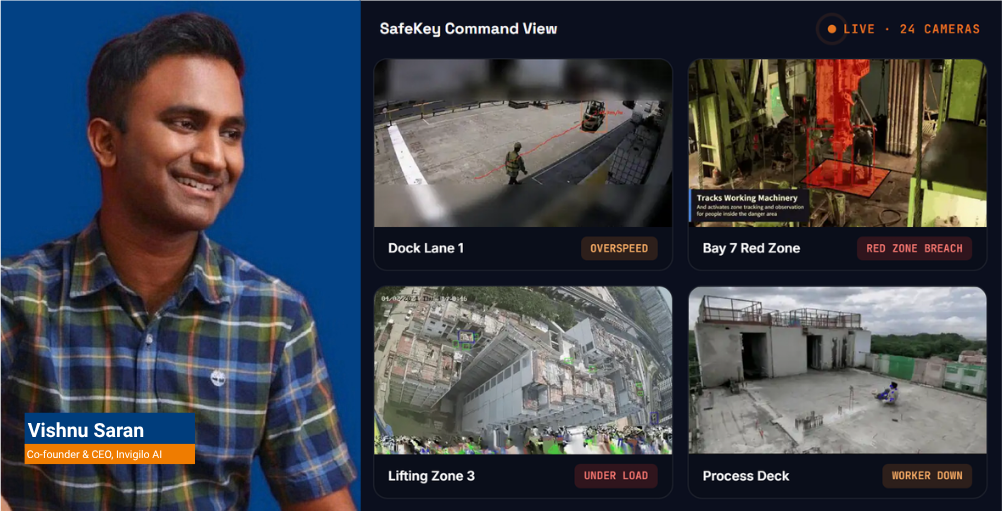
“Being a student is when you can get away with anything, so why not try everything?” — Vishnu Saran (Materials Science and Engineering ’19)
For CDE alumnus Vishnu Saran, co-founder and CEO of Invigilo AI, entrepreneurship is a long-term commitment that calls for persistence, a clear understanding of the market, and knowing what you are ultimately working towards.
Founded in Singapore, Invigilo uses AI-powered video analytics to make high-risk workplaces safer. Its technology works with existing site cameras to continuously detect workplace safety risks and alert teams in real time, helping address the blind spots and lack of visibility that can contribute to accidents in industries such as construction, oil and gas, manufacturing, mining and logistics.
For Vishnu, building Invigilo has also brought lessons that go beyond technology. One of the most important is understanding why customers actually want your product.
“Understanding your key demand drivers, like why people want to buy your product, is very important from day one,” he said. Whether that demand comes from regulation, a gap in existing solutions or another market need, his advice is to identify it early and double down on it.
He also encourages aspiring entrepreneurs to learn from those who have already taken the plunge, noting that reaching out to entrepreneurs and learning from their perspectives can help those starting their own journey.
And before committing to a venture, Vishnu suggests taking the long view: “Always ask yourself, do you see yourself doing this for the next seven to ten years?”
That spirit of learning, connection and turning ideas into real-world impact was at the heart of CDE Innovation Day on 21 October 2026. The event brought together students, researchers, founders, industry partners and others interested in innovation and entrepreneurship — creating opportunities to exchange ideas, build connections and learn from those who have taken the entrepreneurial path.
Coolah named among ACTION HackathOn’s Top 5, heads to COP31
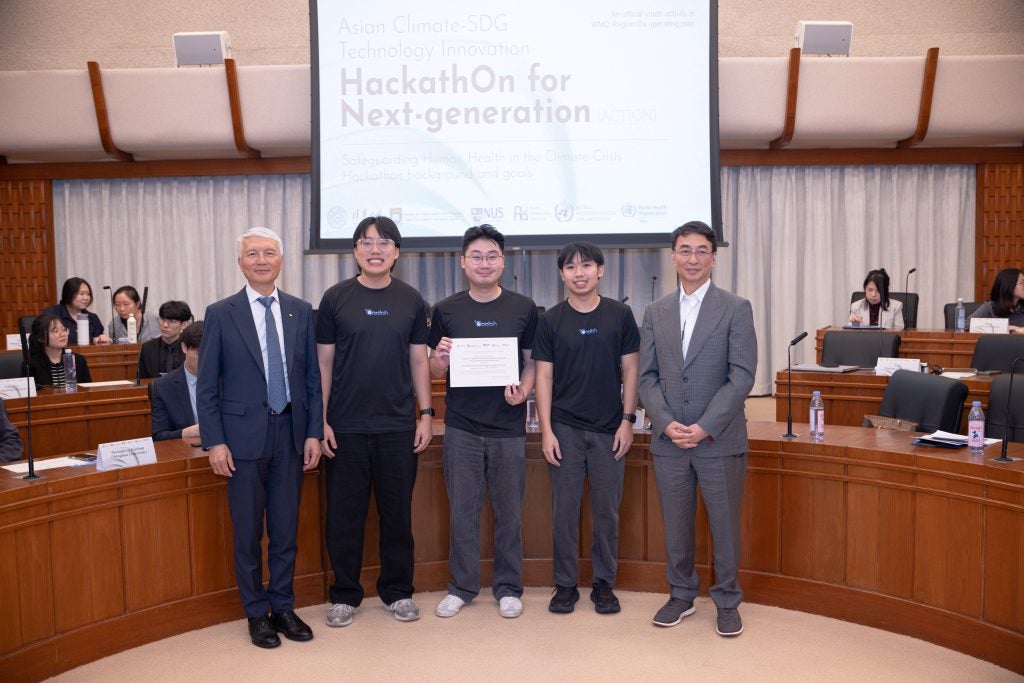
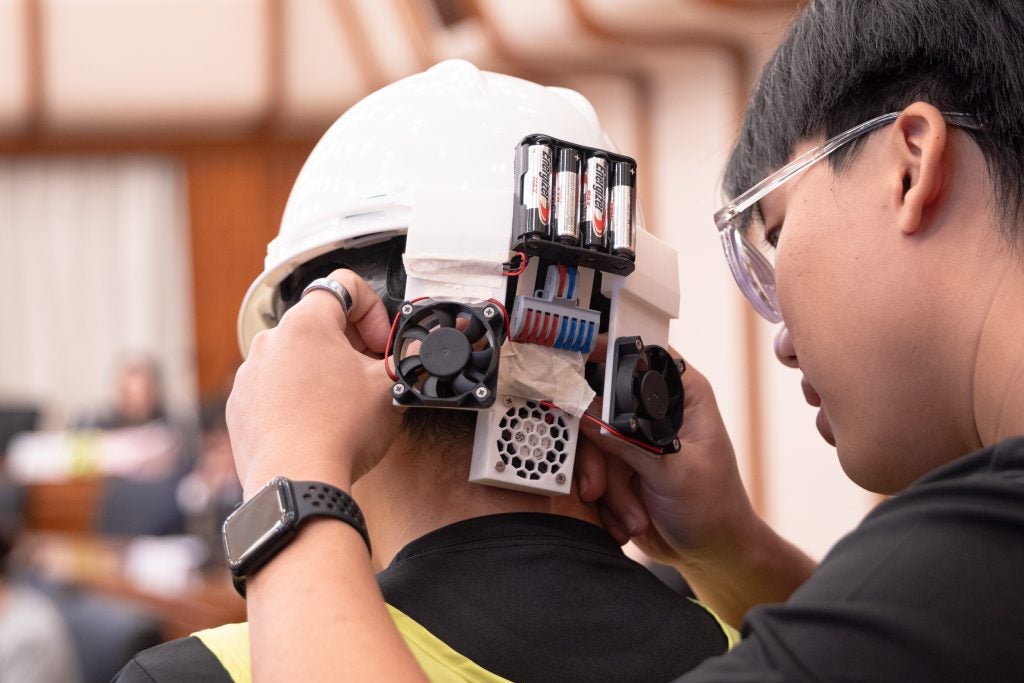
A cooling solution developed by NUS Mechanical Engineering alumni for outdoor workers is gaining momentum, with another win taking the team to the global climate stage.
Coolah was named one of five winning teams at the 2026 Asian Climate-SDG Technology Innovation HackathOn for Next-generation (ACTION), selected from 76 proposals submitted by teams across Asia. The win has earned the team an opportunity to travel to Türkiye to showcase its technology at the 31st United Nations Climate Change Conference (COP31).
It is the latest milestone for Coolah following its earlier success at Boeing BUILD. The team has continued to improve its cooling technology since then, while keeping its focus on a problem that hits close to home – heat stress among migrant construction workers and others who spend long hours working outdoors in Singapore.
The ACTION HackathOn, themed “Safeguarding Human Health in the Climate Crisis”, challenged young people across Asia to develop solutions to health problems linked to climate change.
The competition was jointly organised by Tsinghua University, The University of Hong Kong, the National University of Singapore and the Asian Universities Alliance, with support from the World Meteorological Organization, the WHO Representative Office in China, the International Competence Development Committee and Envision Group.
Read more here.