
A cooling solution developed by NUS Mechanical Engineering alumni for outdoor workers is gaining momentum, with another win taking the team to the global climate stage.
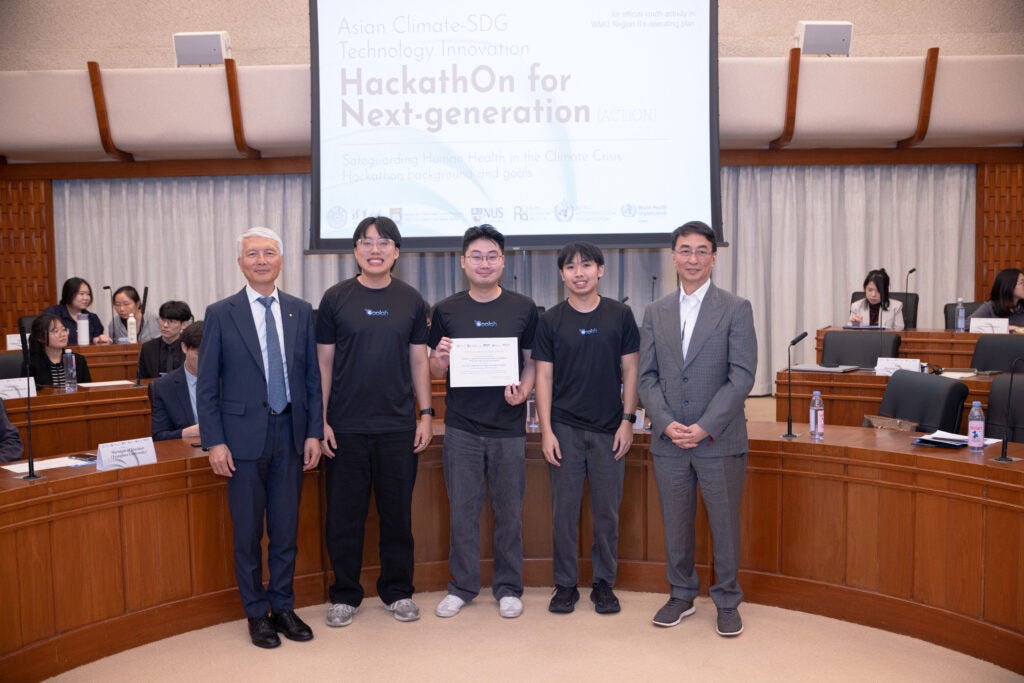
Coolah was named one of five winning teams at the 2026 Asian Climate-SDG Technology Innovation HackathOn for Next-generation (ACTION), selected from 76 proposals submitted by teams across Asia.
The win has earned the team an opportunity to travel to Türkiye to showcase its technology at the 31st United Nations Climate Change Conference (COP31).
It is the latest milestone for Coolah following its earlier success at Boeing BUILD. The team has continued to improve its cooling technology since then, while keeping its focus on a problem that hits close to home – heat stress among migrant construction workers and others who spend long hours working outdoors in Singapore.
The ACTION HackathOn, themed “Safeguarding Human Health in the Climate Crisis”, challenged young people across Asia to develop solutions to health problems linked to climate change.
The competition was jointly organised by Tsinghua University, The University of Hong Kong, the National University of Singapore and the Asian Universities Alliance, with support from the World Meteorological Organization, the WHO Representative Office in China, the International Competence Development Committee and Envision Group.
After several rounds of review, mentoring and online evaluation, 15 teams were shortlisted for the Hong Kong Roadshow on 21 September.
There, the teams presented their projects to a panel of experts from industry, academia and international organisations. The judges looked at technical innovation, health impact, practical feasibility, implementation readiness, scalability and presentation.
Five teams were eventually selected as winners.
“To be named one of the top five teams across Asia and to be heading to COP31 is beyond what we imagined when we started as three people frustrated that no cooling solution worked for outdoor workers in this tropical heat,” said Coolah team member Wilson Yeo Si Kai, currently a PhD student in Materials Science and Engineering and an Associate Scientist at Temasek Laboratories, NUS.
Engineering for the heat
At the heart of Coolah is a practical engineering problem: how can workers stay cool for longer while carrying out physically demanding work outdoors?
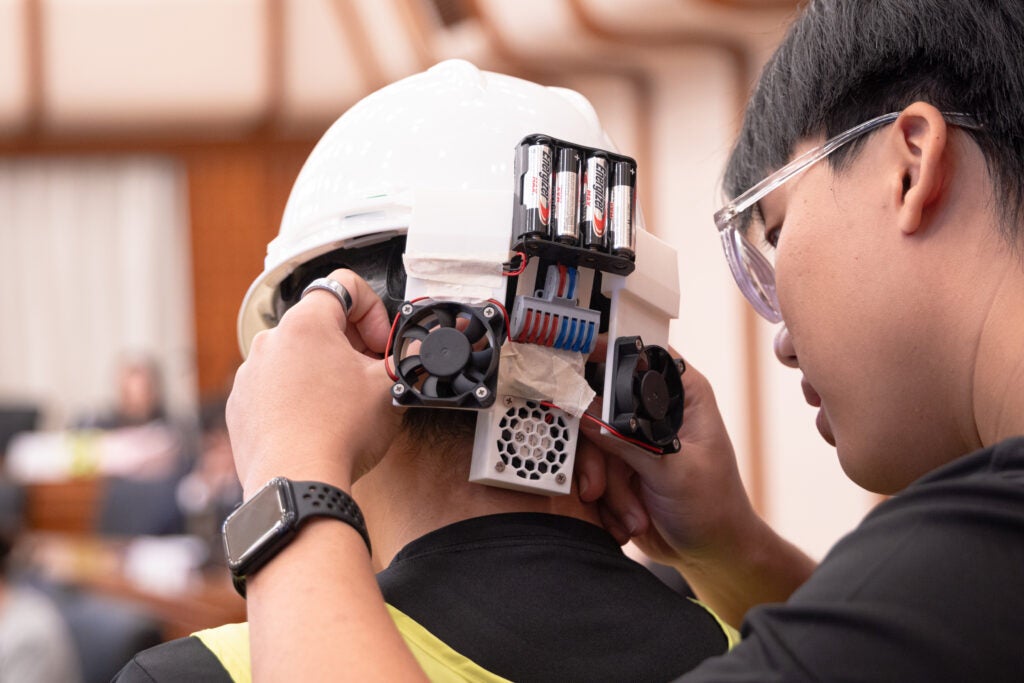
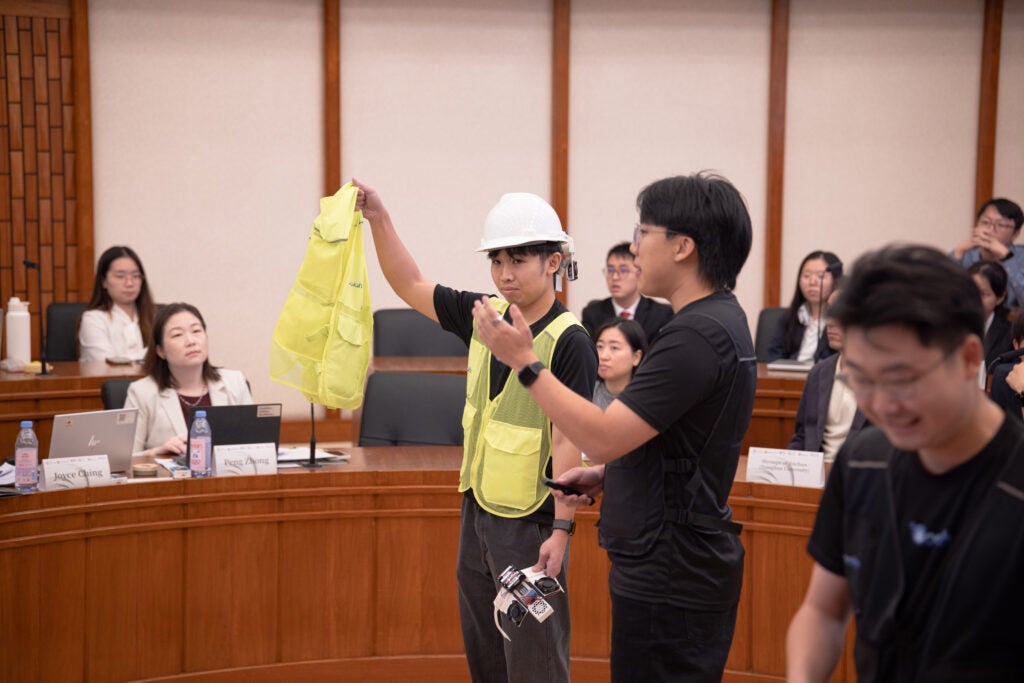
The team is tackling this through two wearable cooling products – the CoolVest and the CoolHelmet Attachment.
The CoolVest incorporates long-lasting phase change material (PCM) cooling into a standard safety vest. PCM absorbs and stores heat as it changes from one physical state to another, helping to manage temperature without conventional refrigeration.
The CoolHelmet Attachment, meanwhile, is a clip-on cooling unit designed for hard hats.
Since Boeing BUILD, the team has continued working on both the material and product design. It has optimised its PCM cooling formulation, redesigned the CoolVest and continued developing the CoolHelmet Attachment.
These improvements are part of a wider push to take Coolah beyond a promising prototype and towards something that can eventually be used in the field.
“Since Boeing BUILD we’ve kept refining, improving our cooling material and redesigning our products, and this recognition pushes us to keep going,” said Wilson.
The ACTION win gives that work a bigger stage. At COP31, Coolah will have the opportunity to present its solution to international experts, practitioners and peers working on climate action and global health.
But even as its reach grows beyond Singapore, the team remains focused on the workers who inspired the project in the first place.
Putting Coolah to the test
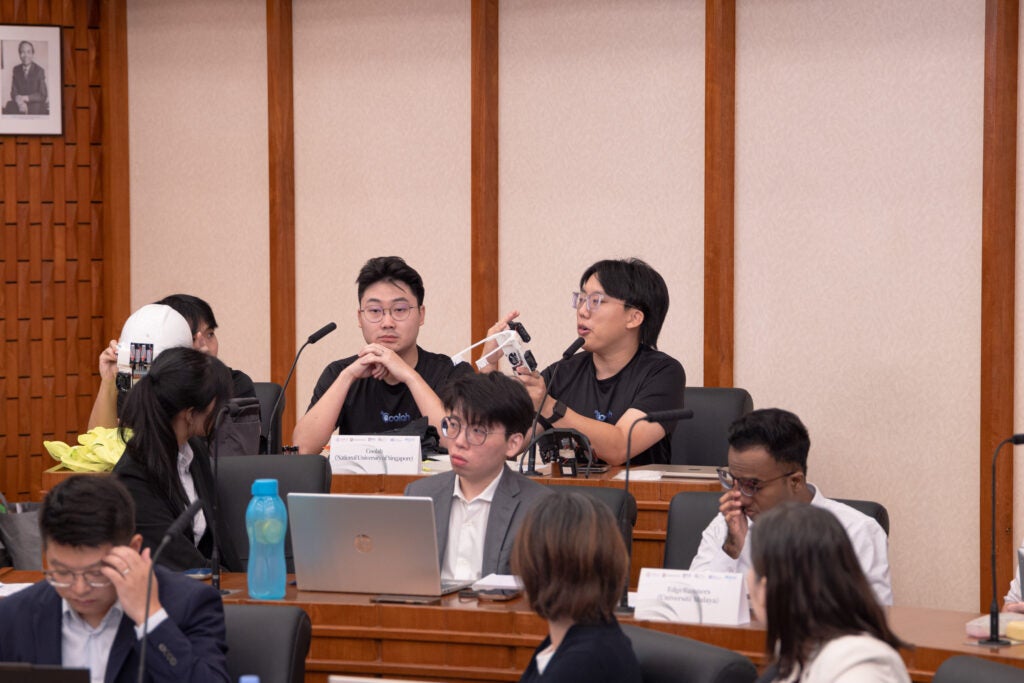
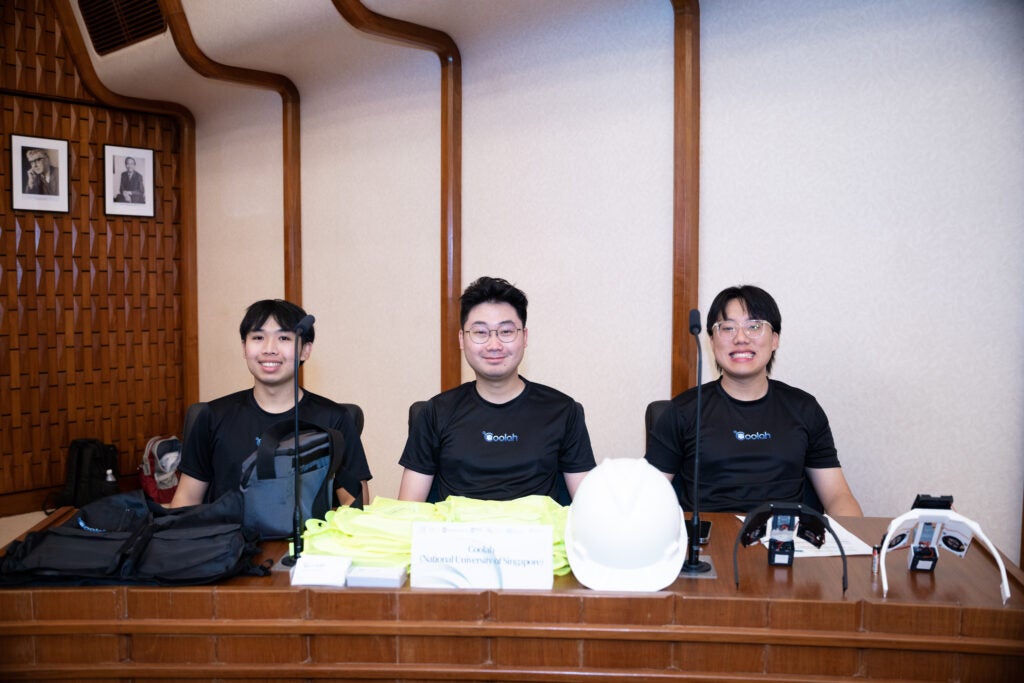
The next step is to build more evidence around how the technology performs in real-world use.
Coolah plans to seek partners for a larger validation trial to strengthen the health evidence behind its technology. The team is also working towards its first pilot with a construction or aviation employer in Singapore.
There is another milestone before then. Coolah has been selected as a finalist for CDE Innovation Day and will present at the finals in October. Its innovation journey will also be featured on Innovate@CDE.
For Wilson and his teammates, a strong idea needs to be backed by real validation and a clear path to the people it is meant to serve. The growing recognition may be opening doors, but getting the technology into use remains the bigger goal.
“The awards are encouragement – deployment is the mission,” said Wilson.