



RESEARCH
Researchers reveal how stiffer ovarian tissue can impair egg development
As ovaries age, the tissue surrounding developing eggs becomes stiffer, changing the environment in which they mature. How this physical change affects egg development and quality has remained poorly understood.
Researchers at CDE and the Department of Biological Sciences, NUS Faculty of Science have now shown how a stiffer environment disrupts the fine cellular connections between eggs and the cells that nourish them. In laboratory experiments using tissue from preclinical models that were cultured in stiff materials, they targeted a signalling pathway in these cells and partly restored egg maturation, even while the surrounding environment remained stiff.
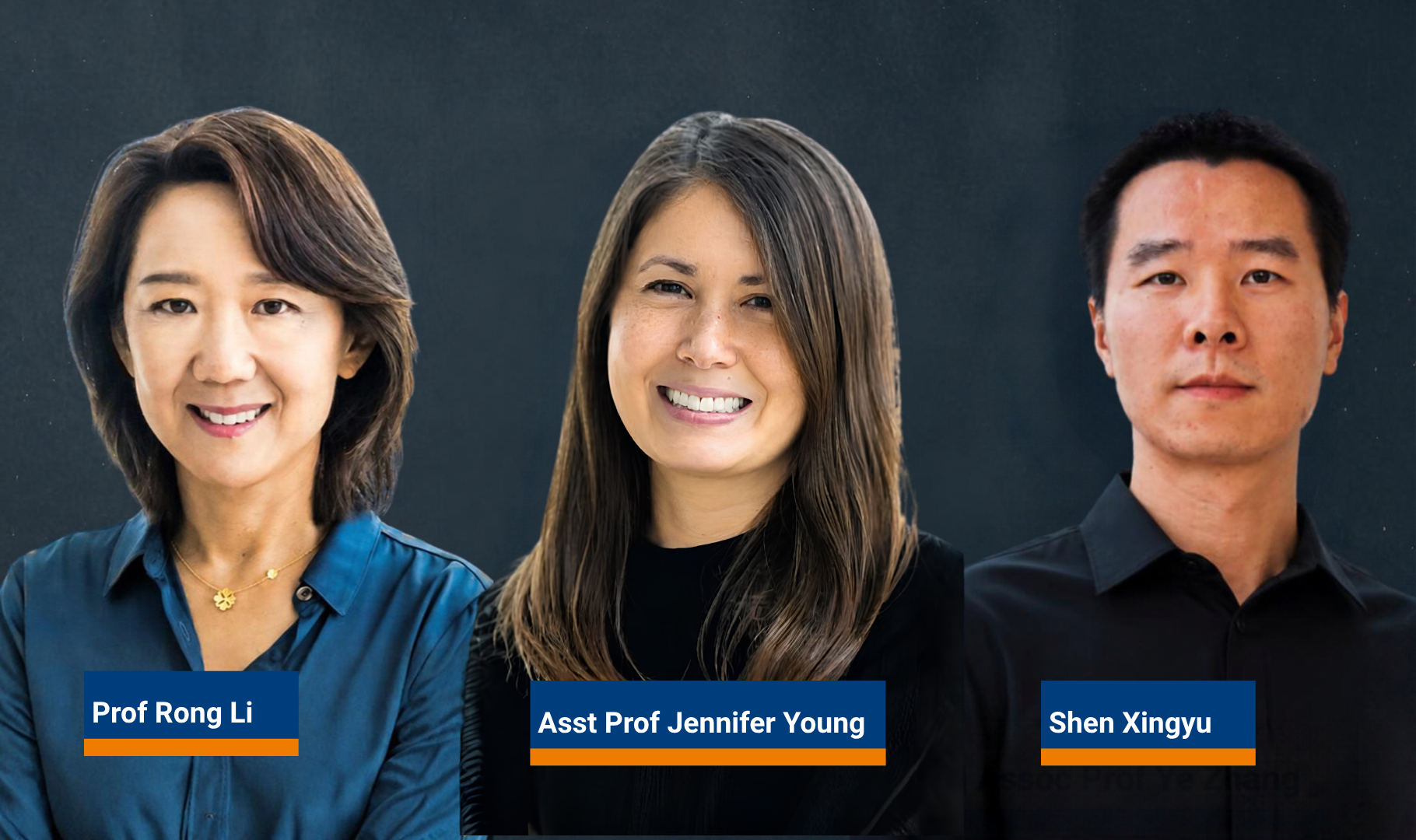
The study was led by Assistant Professor Jennifer Young and Professor Rong Li from the Department of Biological Sciences at NUS. The work was carried out together with the Mechanobiology Institute (MBI), where Prof Li is the director and Asst Prof Young is a Principal Investigator. The findings were published in Aging Cell on 13 August 2026.
“Our findings suggest that some of the effects of ovarian tissue stiffening on egg development may be targetable,” said Asst Prof Young. “This gives researchers promise for developing treatments to preserve egg quality and reduce fertility loss linked to ageing or the build-up of stiff tissue in the ovary.”
Read more here.
CoolNUS-BEAM turns NUS campus into living lab for urban cooling

As temperatures rise, new approaches are needed to keep our buildings and the spaces around them cool. Through the CoolNUS-BEAM initiative, co-led by Assistant Professor Yu Qian Ang and Assistant Professor Lup Wai Chew, researchers are turning the NUS campus into a living laboratory for heat resilience, testing how measures such as special paints and coatings, greenery and improved ventilation can help mitigate urban heat.
One promising result: applying a solar-reflective coating (cool paint) to a CDE building lowered its surface temperature by up to 7.1°C, while reducing cooling energy demand by around 7%.
The team’s research was featured recently in Lianhe Zaobao(opens in new tab).
Using data from weather stations, thermal cameras and mobile monitoring systems, the researchers have mapped NUS into 11 distinct local climate zones, allowing cooling strategies to be tailored to differences in building morphology, greenery and airflow.
The team is also integrating these observations into digital and climate twin models to better understand and predict microclimate conditions, with findings that could help inform heat adaptation strategies beyond the campus and across Singapore.
“Our role is to complement Singapore’s national strategies for climate and heat resilience through research that is grounded in science and supported by empirical data,” said Asst Prof Ang.
The CoolNUS-BEAM Project was initiated by NUS President, Professor Tan Eng Chye, and is funded by the NUS President’s Office. The researchers work closely with the University Campus Infrastructure(opens in new tab) office to translate their findings into interventions and measures that will make the campus sustainable and thermally comfortable for researchers, students and staff alike.
Researchers awarded funding to scale up low-carbon technologies
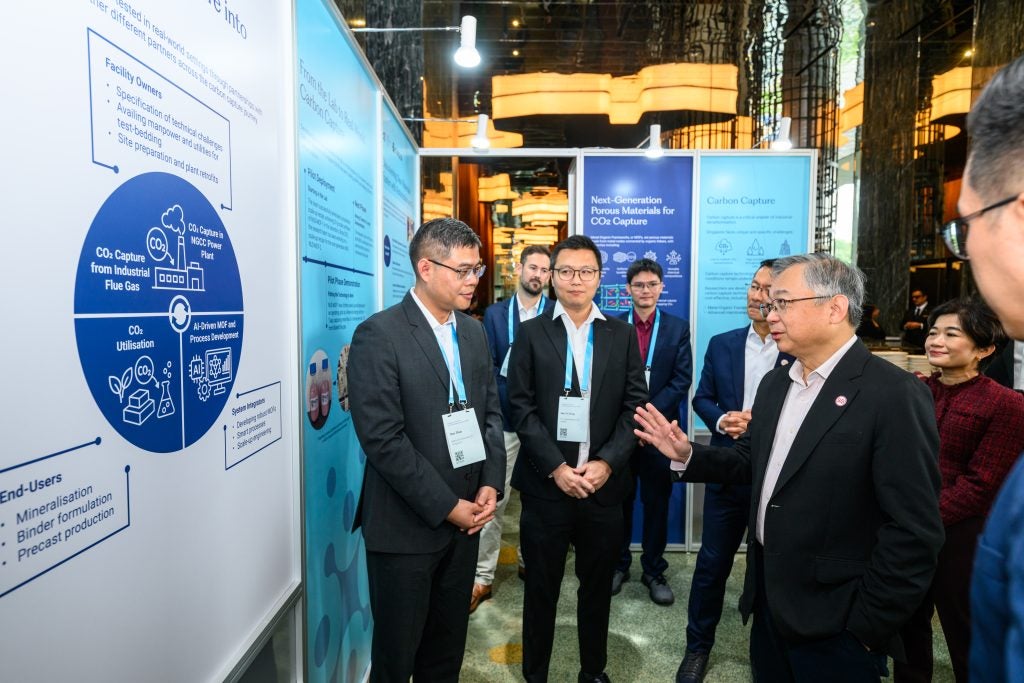
Three CDE researchers have been awarded funding to scale up promising low-carbon technologies, helping bring innovations in carbon capture and hydrogen production closer to industrial application.
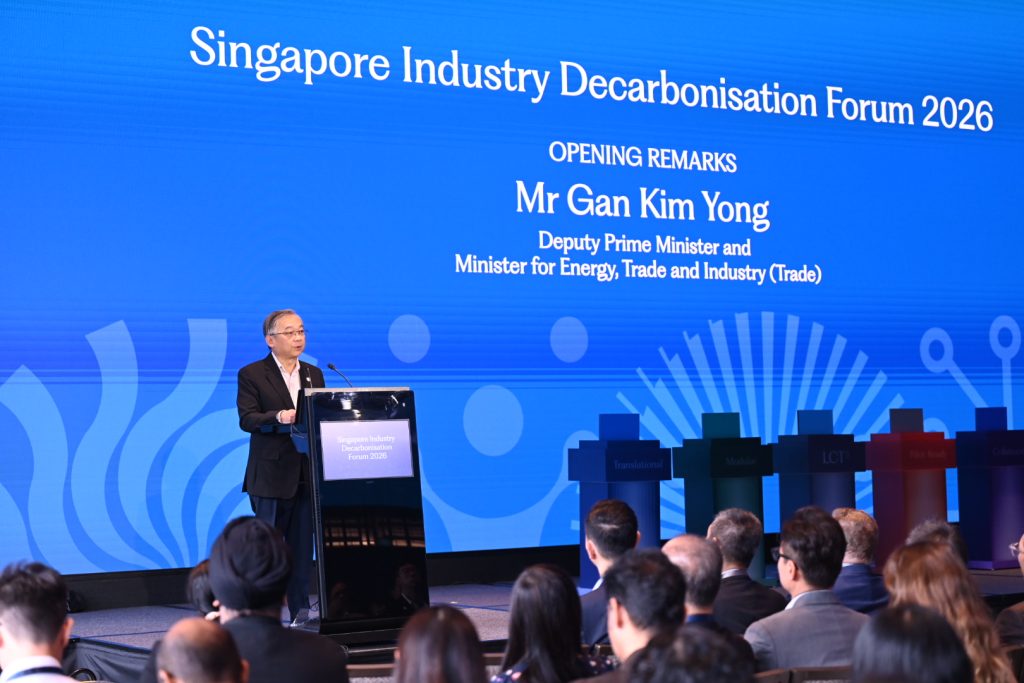
Professor Zhao Dan, Associate Professor Sibudjing Kawi and Associate Professor Zhang Sui are leading three of five projects awarded a combined S$65 million under the Low Carbon Energy Research (LCER) Scale-Up Grant, announced at the Singapore Industry Decarbonisation Forum on 23 October 2026.
- Prof Zhao Dan is scaling up carbon capture technology using advanced porous materials, with planned demonstrations capturing up to five tonnes of CO₂ daily and exploring ways to use captured carbon in concrete production.
- Assoc Prof Sibudjing Kawi is developing a pilot-scale reactor that converts methane into hydrogen and valuable carbon nanotubes, with the aim of producing 100 kg of hydrogen daily for electricity generation.
- Assoc Prof Zhang Sui is advancing hollow-fibre membranes for carbon capture, with a new pilot designed to test their performance and durability under real-world industrial conditions.
Building on promising results from earlier research and demonstrations, the funding will support work with industry partners to test the technologies at larger scales and assess their potential for wider industrial use.
The awards were announced alongside a new S$143 million Industry Decarbonisation Funding Initiative, part of Singapore's broader efforts to accelerate the development and commercialisation of low-carbon technologies for industrial applications.
Read more here(opens in new tab).
Learning from the Colombian earthquake to build safer, more resilient infrastructure

When a major earthquake strikes, the damage left behind can provide important real-world lessons for designing safer, more resilient buildings and infrastructure.
Following the magnitude 7.4 earthquake that struck western Colombia on 10 August, earthquake engineering expert Associate Professor Chian Siau Chen joined a multidisciplinary reconnaissance mission to the country organised by the UK-based Earthquake Engineering Field Investigation Team (EEFIT). The team set out to investigate how buildings and infrastructure performed, how local ground conditions influenced the damage, and what could be learned to strengthen resilience to future earthquakes.
Over 12 days in September, the team travelled from Quibdó in western Colombia to Cali in the country's southwest, examining damaged buildings and infrastructure and comparing what they observed on the ground with recorded earthquake data and existing damage and risk estimates.
As a geotechnical engineering specialist, Assoc Prof Chian focused on earthquake-induced failures and the factors behind them, including the performance of building foundations, slope stability, soil conditions, ground motion and site topography.
The team observed how construction practices, design deficiencies, material quality, building maintenance, and local ground conditions contributed significantly to the damage, as well as how the positioning of neighbouring buildings influenced their resilience.
Founded in 1982, EEFIT is a joint venture between industry and universities that brings together experts to investigate the impacts of major earthquakes and improve understanding of their effects on the built environment and communities.
For Assoc Prof Chian, such reconnaissance missions offer something that engineering models alone cannot: the opportunity to see first-hand how ground, buildings and infrastructure behave during an actual earthquake.
"One of the most valuable aspects of these missions is that they allow us to learn directly from the performance of infrastructure and communities during real earthquakes," he said. "The observations provide a bridge between what we predict through analysis and design and what actually happens in the field."
Assoc Prof Chian's involvement with EEFIT began during his PhD at the University of Cambridge. Since his first reconnaissance mission following the 2009 Padang earthquake in Indonesia, he has participated in or contributed remotely to investigations following major earthquakes in Japan, Ecuador, Morocco and Afghanistan.
By documenting both structural failures and successes, these missions provide critical insights to guide safer construction, enhance disaster preparedness, and build more resilient communities.
Beyond sensing: The future of intelligent smart textiles

Smart textiles are becoming capable of doing more than simply sensing what our bodies are doing.
Assistant Professor Irmandy Wicaksono, who directs the Soft Technologies Lab at the Department of Design, says the next step could be clothing that responds to the wearer, providing support, stimulation or feedback when and where it is needed.
“I’m intrigued by moving beyond electronic applications to mechanical or fluidic applications,” he told the Journal of Medical Internet Research (JMIR), suggesting, for example, that yarn could be programmed to shrink or expand.
One possibility, he suggests, is smart trousers that could sense muscle condition and activity in real time, then apply precise compression or stimulation in response.
This vision is explored more broadly in a recent paper published in npj Flexible Electronics, with Asst Prof Wicaksono and his co-authors examining how advances in materials, knitting, computation and AI could transform electronic textiles into “intelligent, responsive systems that actively support human performance, rehabilitation, and interaction”.
Read more here.
A touchscreen you can wear, woven directly into the fabric of your clothes

Researchers led by Assistant Professor Tural Khudiyev have developed the world's first touchscreen built into a garment, opening up possibilities for clothing that can display information, respond to touch and connect to digital devices.
The device is based on a new type of electronic fibre that can both display images and sense touch. By integrating 54 of these fibres into a sleeve, the researchers created a working touchscreen capable of displaying photos and videos, responding to finger presses and running applications including a calculator, compass and voice-controlled functions.
The garment remains flexible, breathable and washable, with its display and touch functions showing little change even after 50 machine washes.
At the heart of the technology is a graphical user interface (GUI), the kind of visual, interactive system familiar from smartphones and computers, built directly into textile fibres.
“What made this possible was our ability to construct the GUI system from electronic building blocks in fibre form — similar to traditional yarn, but with the sophisticated electronic functionality built directly into the fibres,” said Asst Prof Khudiyev.
The technology could open the way to new generations of smart clothing, particularly in healthcare, with garments able to monitor physiological signals and allow wearers to interact directly with their health data.
The team is now working towards higher-resolution displays, more advanced sensing capabilities and integrated AI, bringing us closer to clothing that can respond intelligently to both the wearer and their surroundings.
Read more here.
Imaging method maps individual reactions to guide better catalyst design

A new imaging technique developed by a team led by Assistant Professor Mao Xianwen could help researchers design more efficient catalysts for hydrogen production and other important chemical processes.
Called DELINE, the technique overcomes a longstanding challenge in understanding how catalysts work, allowing scientists to track individual reaction events across a catalyst's surface and reveal differences in activity that conventional measurements cannot detect.
Catalysts play a key role in chemical processes ranging from fuel and medicine production to pollution control. But conventional measurements tend to average activity across many particles, concealing important differences in how individual regions behave.
DELINE uses fluorescent signals to make otherwise invisible reactions detectable, allowing researchers to map activity across a catalyst's surface and examine how different regions respond to changing conditions.
“Knowing which parts of a catalyst are active is only the starting point. We also need to understand how their behaviour changes under different operating conditions,” said Asst Prof Mao. “Ultimately, our goal is to connect what happens on a catalyst’s surface with the choices researchers make when designing a material.”
Published in Nature Catalysis and featured on the cover of its September 2026 issue, the research opens up new possibilities for studying catalytic reactions. The team is now exploring ways to extend DELINE to other processes, including nitrogen fixation and chemical reactions within operating batteries.
Read more here.
Major Grants Awarded
Major grants (start date in October 2026) with total project value > $1M.
| Hosting Unit | Project Title | Funding Programme (Source of Funding) |
Principal Investigator | Co-Investigator |
|
CEE |
Spectral and Environmental Network for Tropical INtegrated Examination and Live monitoring (SENTINEL) | Coastal Protection and Flood Management Research Programme (CFRP) – 2026
/ NRF |
Gin Yew-Hoong, Karina | Law Wing Keung, Adrian (Coastal Protection & FLD RSLNCE INST SG); Pavel Tkalich (Tropical Marine Science Institute); Maxine Allayne Darlene Mowe (Biological Sciences) |
|
CFI;TMSI |
Visual And Smart Ecohydrodynamics with Robotics (VASE–R): AI‑Assisted Monitoring of Flow, Vegetation, Bed Morphology, and Attenuation Capability and Uniformity | Coastal Protection and Flood Management Research Programme (CFRP) – 2026
/ NRF |
Lei Jiarui, Gary | Mandar Anil Chitre; Tang Hao (Geography) |
|
CEE |
Structural Performance Assessment Tool for Reinforced Concrete Buildings | Housing and Development Board (HDB) | Pang Sze Dai | |
|
ChBE |
Achieving Systematic Generalization via Cross-Domain Foundation Models for Theragnostic Inhibitor Discovery | NRF AI-for-Science (AI4S) Catalytic Grant – 2025
/ NRF |
Liu Bin; Bian Yatao (Computer Science) | |
|
CEE |
Real-time monitoring of spatial distribution of nearshore hydrodynamics through multi-modal sensor fusion | Coastal Protection and Flood Management Research Programme (CFRP) – 2026
/ NRF |
Law Wing Keung, Adrian |