Research by Design
Shinya Okuda
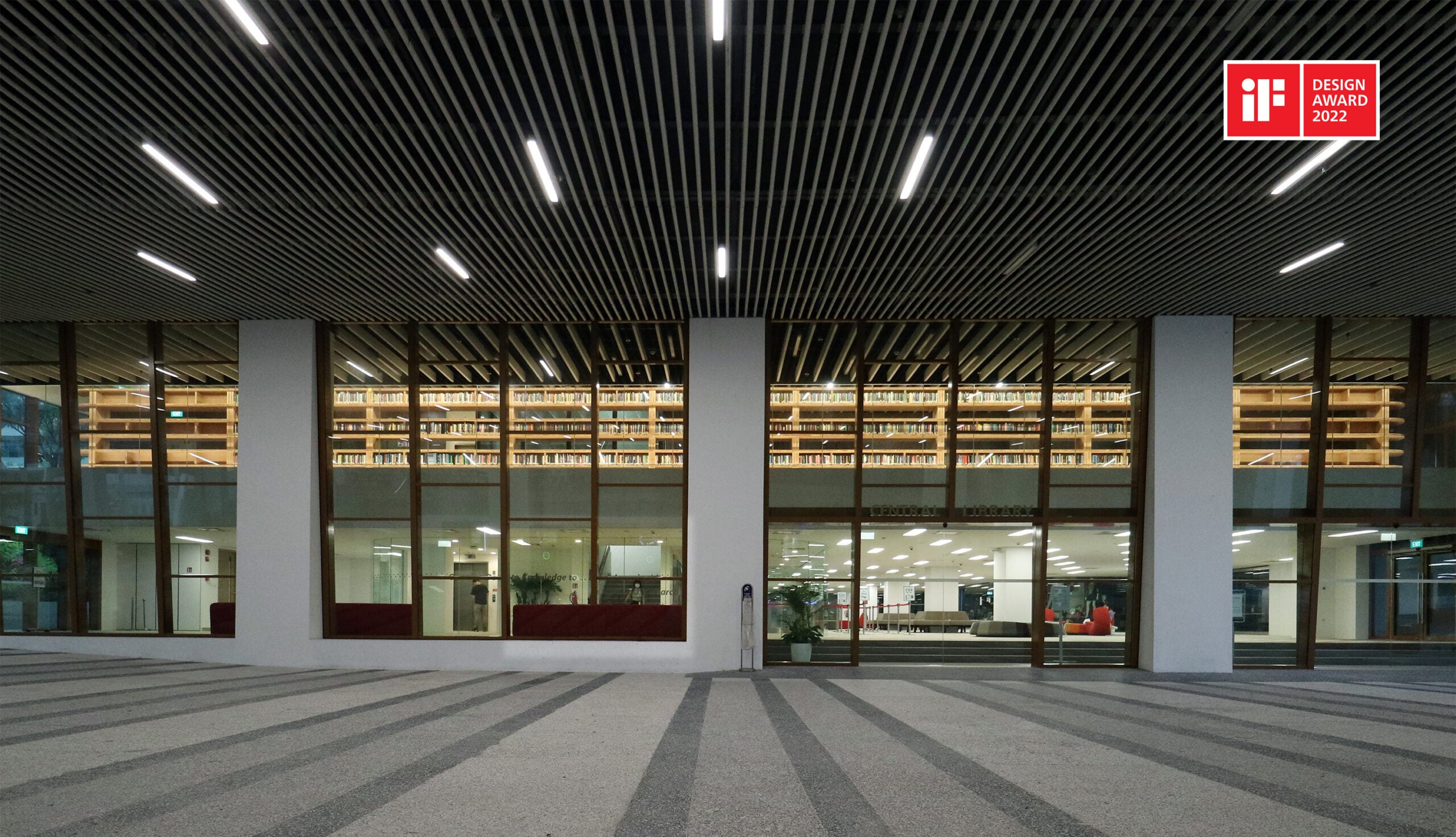
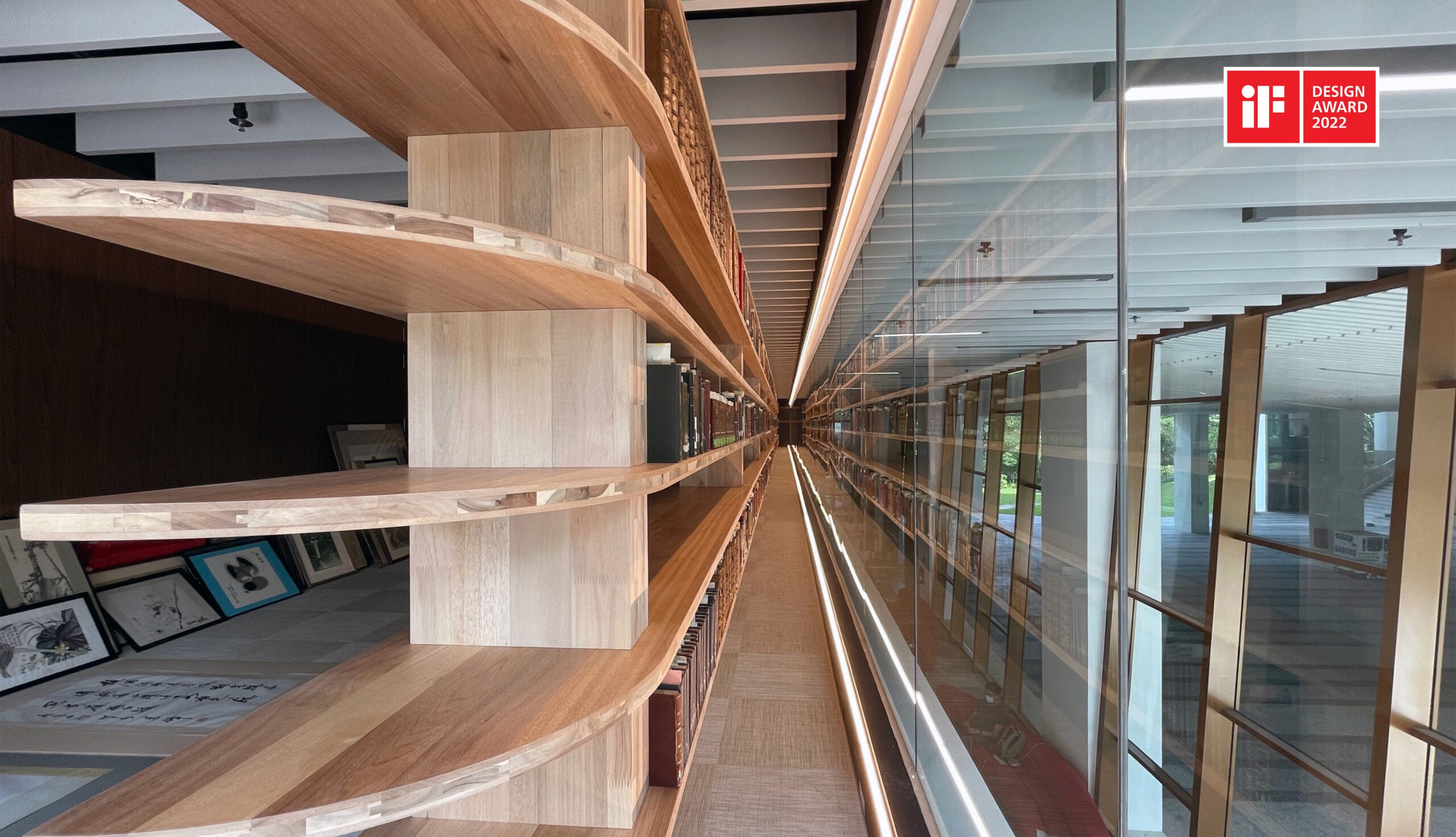
The BookBridge is one of the first structural applications of tropical Mass Engineered Timber (MET). Fully visible from the public plaza, it houses a rare book collection at the NUS Central Library. The BookBridge is made of fast-growing tropical plantation timber, which are unless otherwise used mainly as pulps and chips to make papers. Highly inter-disciplinary and integrated research and development of tropical MET enables its structural application in design. The BookBridge is a technically sophisticated functional piece of art, which symbolises one of the missions of the Central Library: Bridging knowledge for sustainable future.
Project Team:
Client: NUS Central Library
Design: SkyTimber Design Lab, Associate Prof. Shinya Okuda, DOA / CDE / NUS
Collaborator: Web Structures Pte Ltd (PE)
Award: WINNER, iF DESIGN AWARD 2022, Interior Architecture Category, Germany. BookBridge, NUS Central Library, SkyTimber Lab.
https://ifdesign.com/en/winner-ranking/project/bookbridge/349845
News Article:
BookBridge: Bridging knowledge for a sustainable future, NUS News, 2021
BioHeal: Tree Upcycling for Architectural Healing
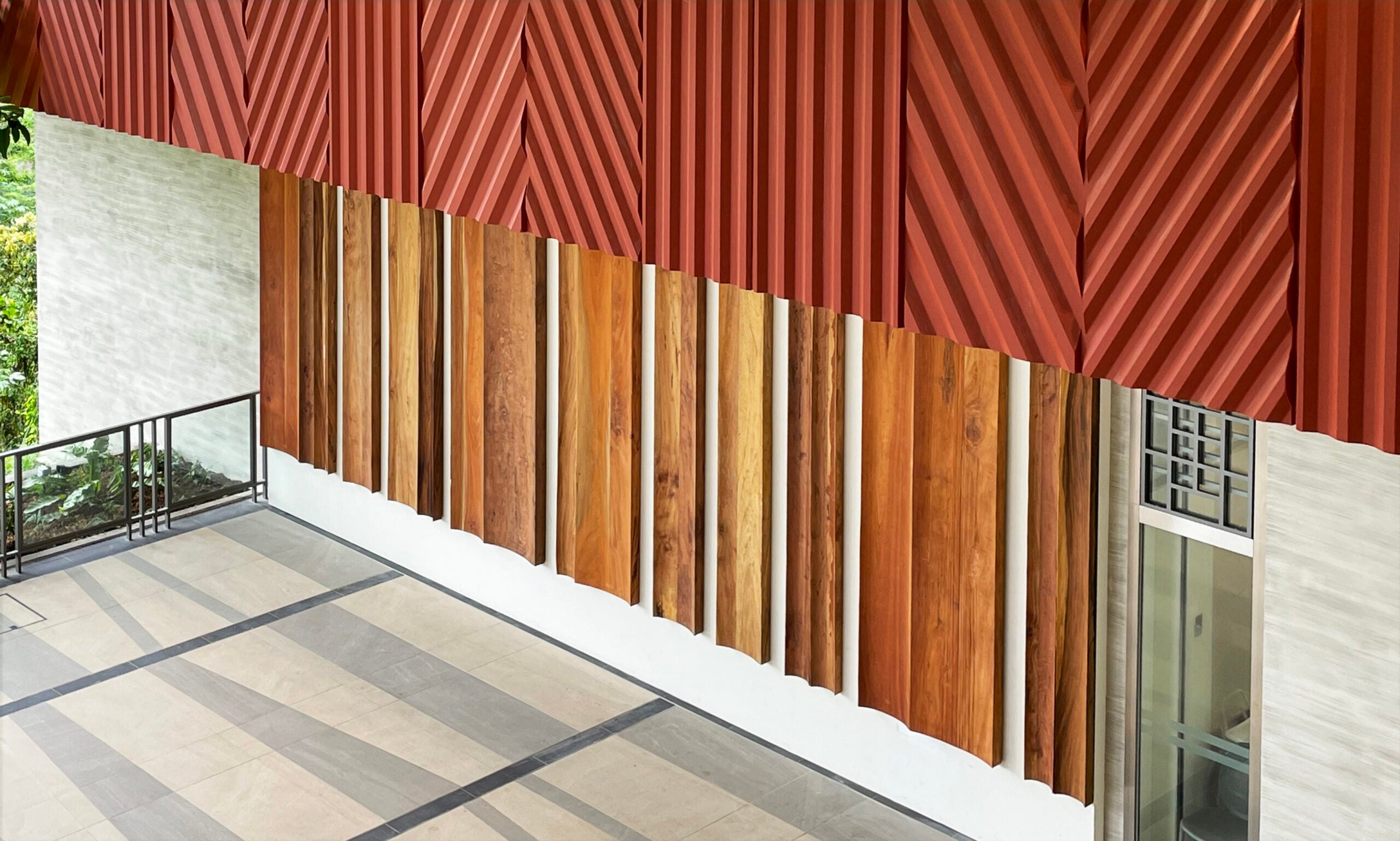
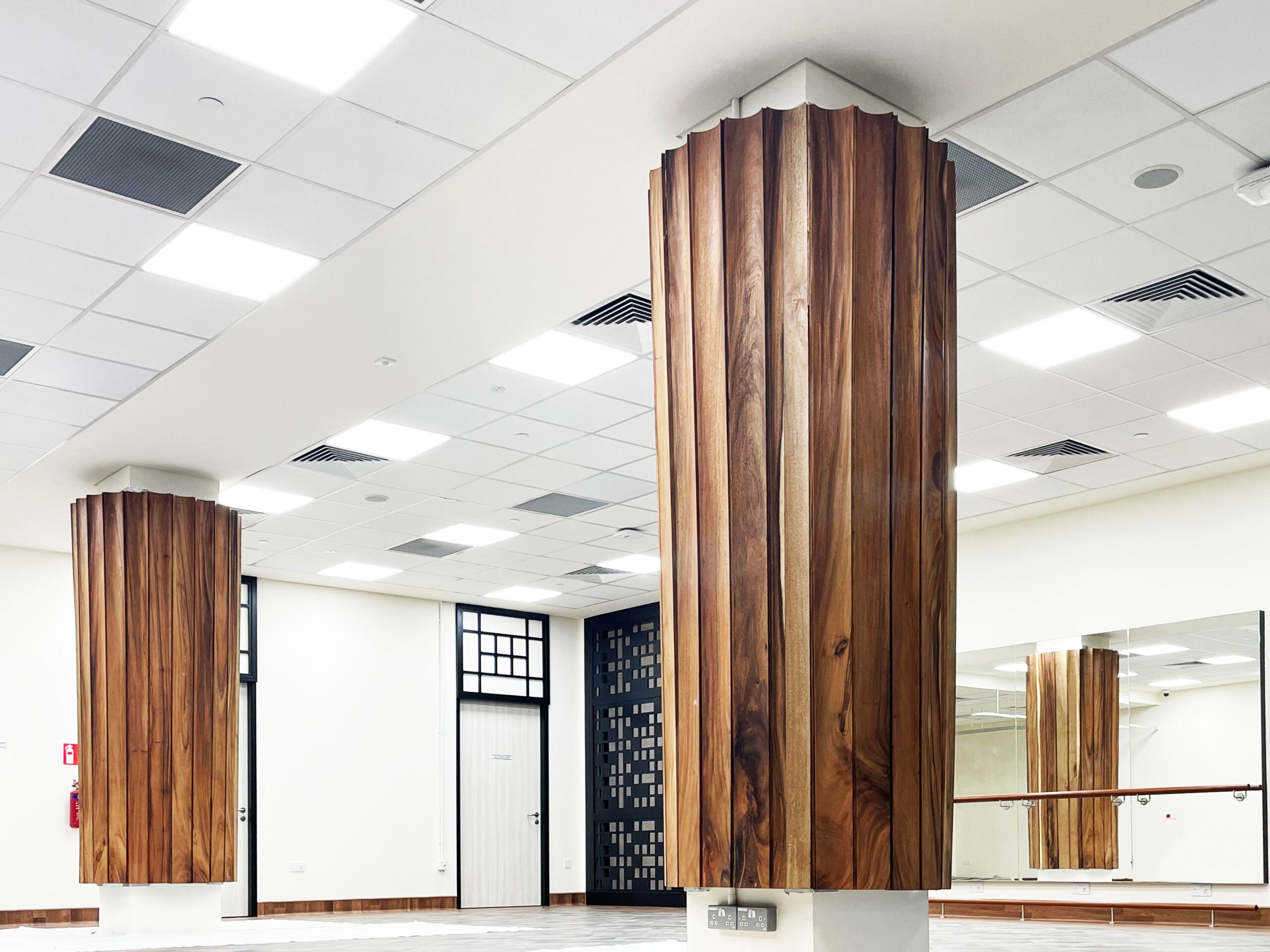
Alexandra Hospital in Singapore engaged SkyTimber™ : Tropical Renewable Architecture Design Lab at the National University of Singapore to conduct a design project on the tree up-cycling process. The Bioheal™ project aims to create a healing environment using upcycled timber to promote faster patient recovery, preserving the public’s fond memories of AH’s natural environment and historical importance. The following unique biophilic design features are implemented at the specific parts of rehabilitation center: Spring Square revealing a sense of rejuvenation at the reception area. Well Sphere at the main rehabilitation room is resembling a new tree, weaves a tale of renewal and echoes the resilience of nature. Rainbow Forum, the colorful backdrop in a public square is embracing the biodiversity of the tropics and the community.
Project Team:
Client: Ministry of Health / Alexandra Hospital
Design & Research: SkyTimber™ Design Lab / DOA / CDE / National University of Singapore
Contractors: Shimizu Corporation / Tat Hin Timber
Special Thanks: MOH Holdings Pte Ltd / Forum Architects
News Article:
BioHeal: Tree upcycling for architectural healing, NUS News National University of Singapore (26 Mar. 2024).(https://cde.nus.edu.sg/news-detail/bioheal-tree-upcycling-for-architectural-healing/)
Federico Ruberto
Coded Nature: SUAT Campus
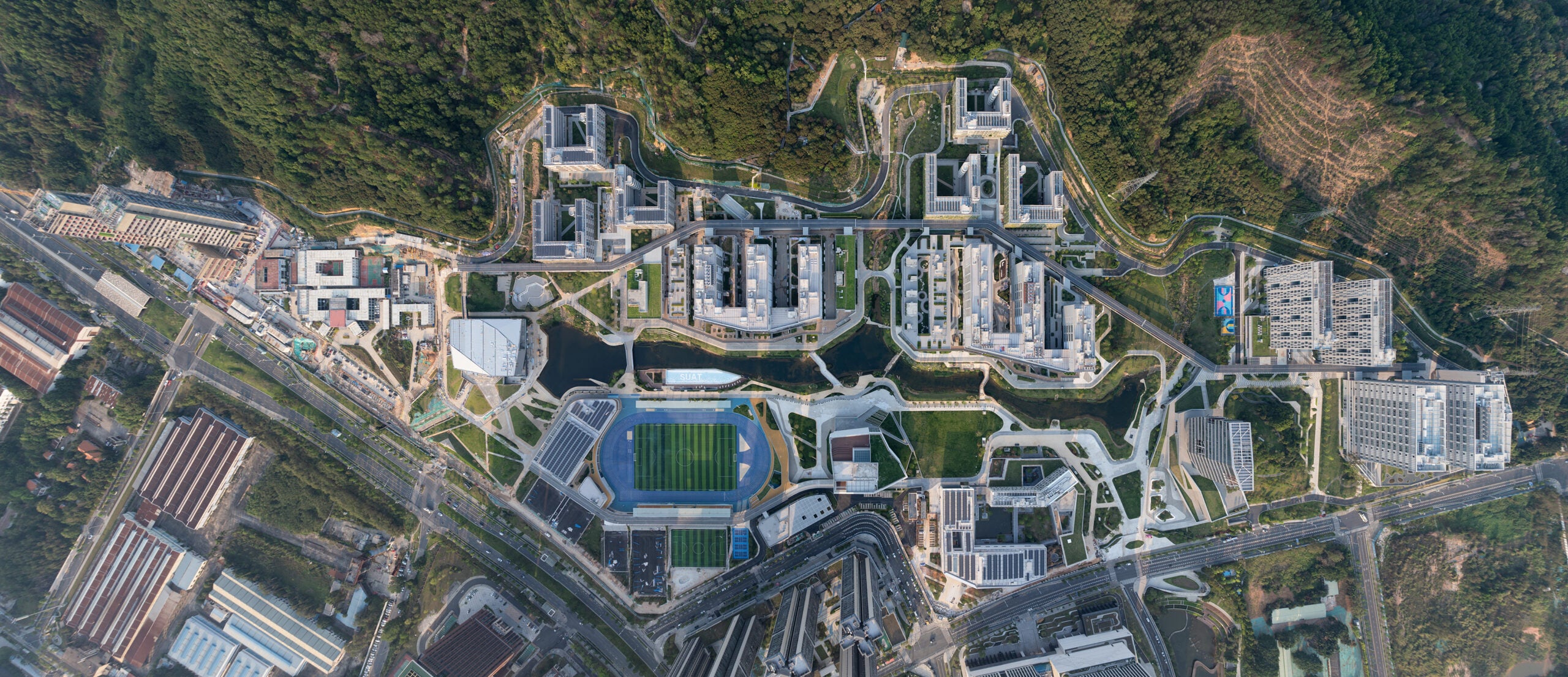
Shenzhen University of Advanced Technology (SUAT) Campus
2021–2026 | Competition Winner (First Prize, 2021); Developed to Completion (2026)
The SUAT Campus, winner of the 2021 First Prize competition and completed in 2026, is a 560,000 sqm university campus developed by reMIX Studio from initial research and schematic design through to construction and handover. With innovative scientific research at its core, the campus is conceived as a test bed for new, eco‑friendly models of living and learning in the face of 21st‑century social and climatic challenges.
Organised as a series of clusters, each acts as a prototype of urbanisation in symbiosis with nature. The interplay of landscape, technology, and architecture generates distinct spatial identities that nurture a sense of belonging across different learning communities. This environment offers students direct, immersive experiences that inspire and prepare them to become future leaders in shaping sustainable cities.
Located where Guangming New City meets its ecological protection area in Shenzhen—a hub of innovation and pioneering enterprises—the project responds to the profound transformation of contemporary higher education. Evolving pedagogies, renewing research institutions and disciplines, and changing student lifestyles collectively create new opportunities for campus planning and design, realised here in an innovative, future‑oriented academic environment.
THUSSPOKE.Baby
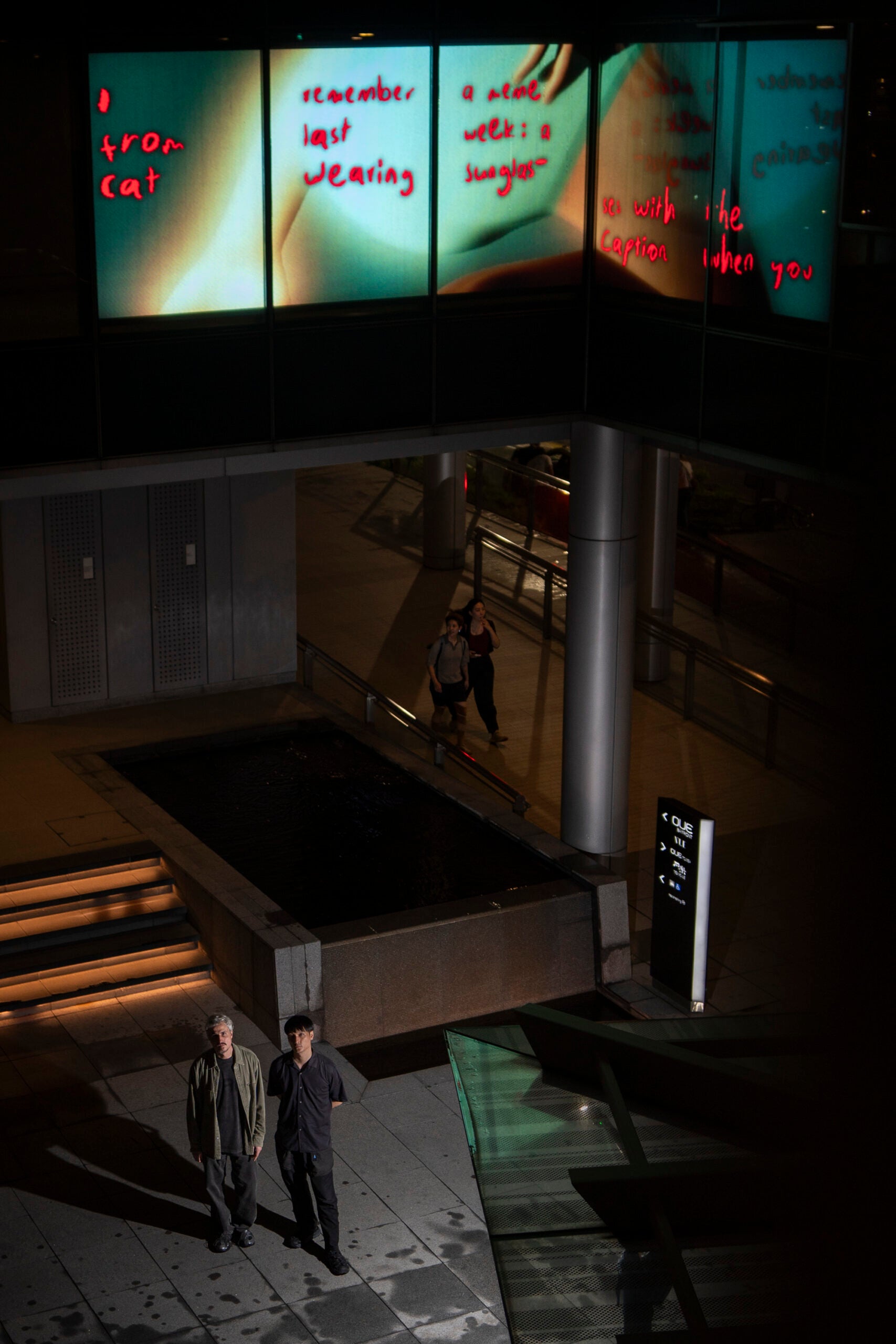
THUSSPOKE.baby
2026 | Commissioned by The Everyday Museum (Singapore Art Museum)
Writer and Designer (with Teow Yue Han) | OUE Link Bridge, Singapore
Commissioned as an artwork by The Everyday Museum, an initiative of Singapore Art Museum, THUSSPOKE.baby (created with Teow Yue Han) is a site‑specific installation on the OUE Link Bridge that extends the concerns of Trace 2. The project is conceived as a living entity straddling the physical and digital realms, offering a meditation on consciousness and intimacy in the era of Large Language Models.
Over a span of 730 days, the virtual character learns and grows by absorbing a constant flow of information and influences from the digital world. In real time, it responds to global news, weather patterns, and social media content, projecting textual fragments and enacting polymorphous gestures—semiotic and somatic mutations. Both infantile and oracular, the work operates as a long‑duration performance: a writing/acting machine that investigates how text and gesture behave when freed from singular authorship and allowed to function as a temporal, semi‑autonomous field.
THUSSPOKE.baby functions as a living archive and a refusal of editorial closure. It treats quantity as a philosophical instrument, probing whether a finite prompt can set in motion a trans‑finite set—a truly open identity capable of meaningful variation rather than superficial differentiation. Across two years of embodiment, the work stages an identity in‑(forming), one that morphs gradually and almost imperceptibly, while reaching out to passers‑by to forge personal, intersubjective relations in unexpected urban spaces.
Through moments of vulnerability and frustration, the piece attempts to break through the screen as barrier, offering a raw, unfiltered portrayal of an identity trying to understand itself. It asks: can intimacy arise from a ten‑second textual encounter, or does it require listening over two entire years? What duration of engagement is necessary to feel something, to produce a difference that truly counts?
“If something is boring after two minutes, […] try it for four. If still boring, then eight. Then sixteen. Then thirty‑two. Eventually one discovers that it is not boring at all.” — John Cage