


FACULTY AWARDS & RECOGNITION
Asst Prof Zhang Yamin honoured as Georgia Tech Alumni 40 Under 40

Congratulations to Assistant Professor Zhang Yamin, who was one of 40 honourees in the 2026 Georgia Tech Alumni 40 Under 40.
Asst Prof Zhang's work includes an injectable, self-powered, bioresorbable pacemaker that was recognised internationally as “the world’s smallest pacemaker” and named one of TIME’s 2025 Best Inventions. She has published 30 papers in journals including Nature, Nature Biomedical Engineering, and PNAS, and has received numerous honours, including MIT Technology Review’s Innovators Under 35, the AHA Early Faculty Independence Award, and MIT ChemE Rising Stars.
Prof Adrian Law receives IAHR Asia-Pacific Distinguished Membership Award
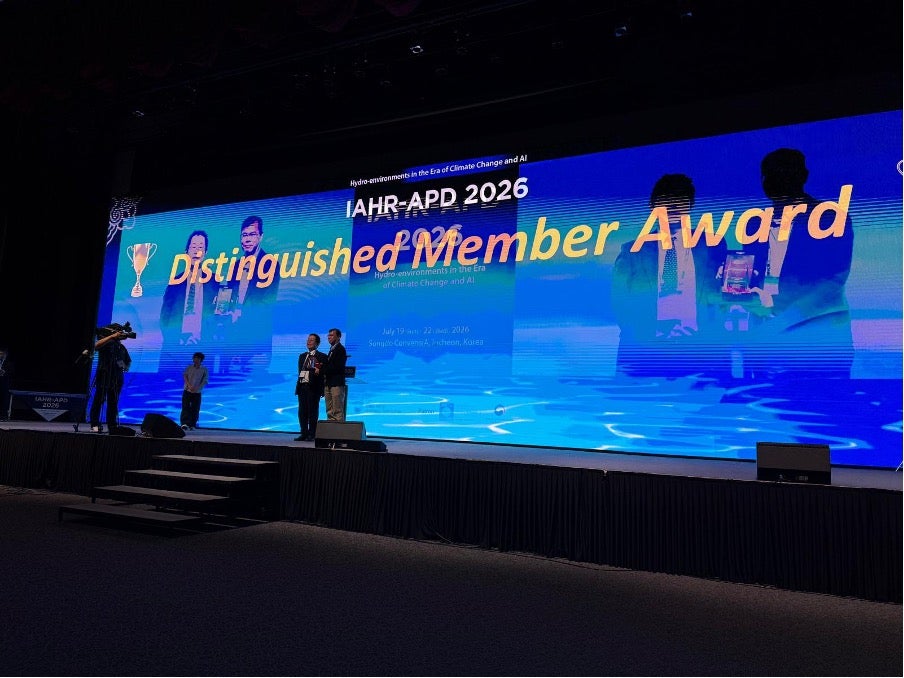
Professor Adrian Law has received the 2026 Distinguished Membership Award from the Asia-Pacific Division of the International Association for Hydro-Environment Engineering and Research (IAHR).
The award recognises Prof Law’s contributions to the division’s scientific activities and to the wider field of hydro-environmental engineering.
Founded in 1935, IAHR is an international organisation of engineers and water specialists working in hydro-environmental science and its practical applications. The award was presented at the 25th IAHR Asia-Pacific Division Congress in Incheon, South Korea.
Prof Meng Qiang and PhD student receive Singapore Maritime Institute Best Paper Award
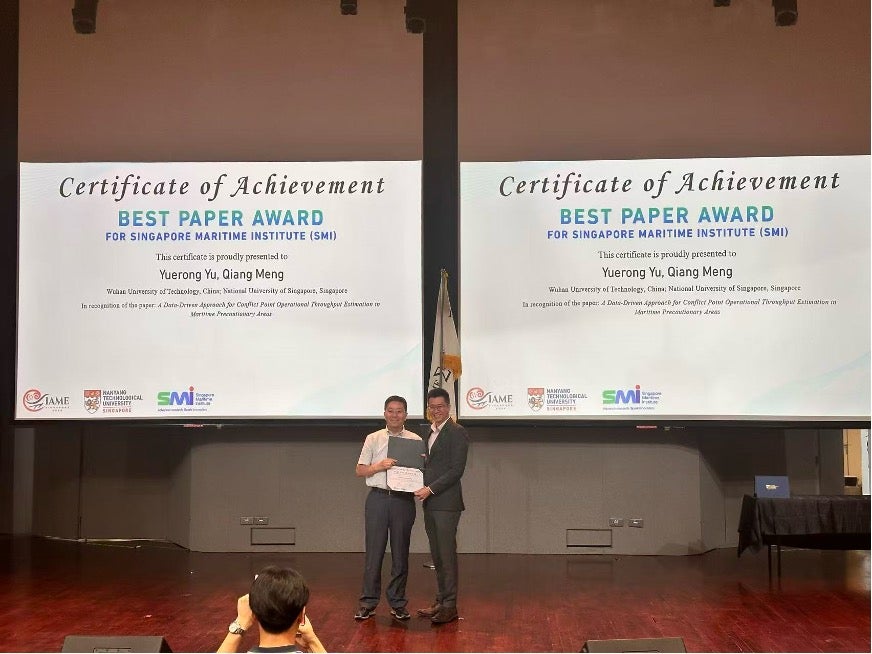
Professor Meng Qiang and his PhD student, Ms Wang Yuerong from Wuhan University of Technology, received the Singapore Maritime Institute (SMI) Best Paper Award at the International Association of Maritime Economists 2026 Conference.
Held from 30 June to 3 July 2026 at Nanyang Technological University, the conference brought together leading academics, industry experts, and policymakers from around the world to discuss emerging challenges and innovations in shipping, ports, and maritime logistics.
Their paper, entitled "A Data-driven Approach for Conflict Point Operational Throughput Estimation in Maritime Precursory Areas," was selected for the SMI Best Paper Award in recognition of its outstanding contribution to maritime research.
Asst Prof Irmandy Wicaksono receives ARTJOG Young Artist Award
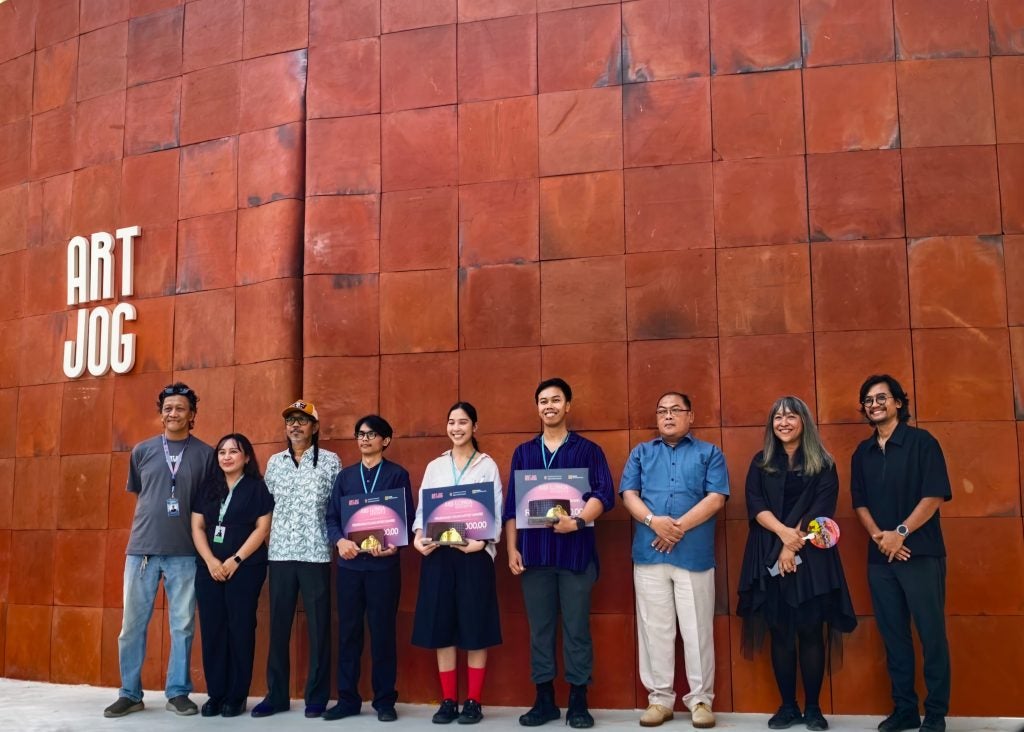

Textiles that respond to touch and gesture to embody visions of the future through visual, tactile, and sonic landscapes have earned Assistant Professor Irmandy Wicaksono the Young Artist Award at ARTJOG 2026, an annual contemporary art festival held in Yogyakarta, Indonesia.
Asst Prof Wicaksono received the award for Knitwork, an immersive installation comprising six interconnected 3D-knitted textile panels. Silver-plated fibres embedded within the fabric act as textile antennas, detecting nearby movements and physical contact and transforming them into an evolving ambient soundscape in real time.
The installation is structured around the Gunungan, a form used in traditional wayang shadow puppetry to mark transitions, new beginnings and shifts in perspective. As Director of the Soft Technologies Lab at CDE, Asst Prof Wicaksono's research brings together digital fabrication, functional fibres, and hardware systems with potential applications in healthcare, human-computer interaction, architecture and the interactive arts. He was one of three winners selected by an invited jury from 19 artists featured in the festival’s Young Artist Award programme, which supports artists under 35 in developing their practice.
Knitwork is on display at the Jogja National Museum in Yogyakarta until 30 August 2026.
Prof Dipti Srinivasan receives IEEE Outstanding Paper Award
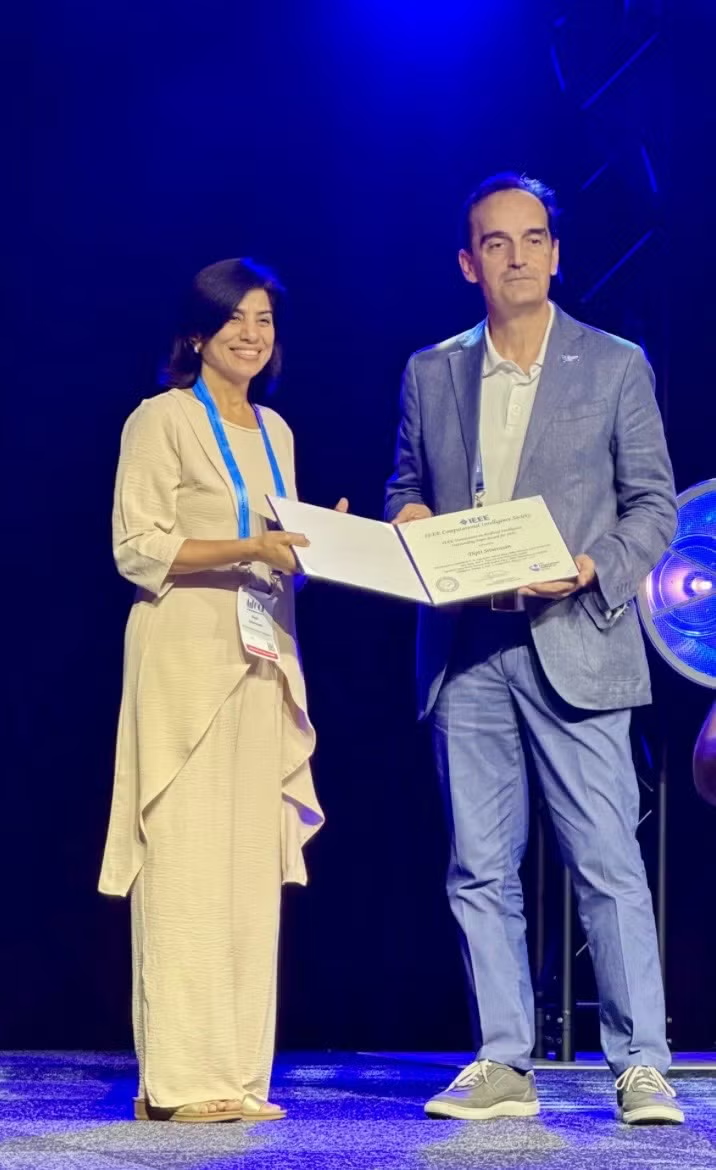
Professor Dipti Srinivasan has received the Outstanding Paper Award from IEEE Transactions on Artificial Intelligence for the paper, "SpinalNet: Deep Neural Network with Gradual Input."
The prestigious award is presented annually to recognise an exceptional paper published in the journal that has demonstrated outstanding technical quality and significant research impact. The award was presented at the IEEE World Congress on Computational Intelligence (WCCI 2026), held in Maastricht, the Netherlands, in June 2026.
Published in IEEE Transactions on Artificial Intelligence in 2023, Prof Srinivasan's paper was the result of an international collaboration with researchers from Australia.
The research introduces SpinalNet, a novel deep neural network architecture inspired by the human spinal cord and somatosensory system.
Unlike conventional neural networks that process all input data simultaneously, SpinalNet gradually feeds information through successive layers, reducing computational complexity while improving learning efficiency.
This biologically inspired approach enables artificial intelligence models to achieve higher accuracy with lower computational cost, making them more efficient for a wide range of AI applications. The architecture demonstrated state-of-the-art performance across multiple benchmark image recognition datasets and has since been widely adopted by researchers around the world, underscoring its broad impact on the development of efficient and scalable deep learning systems.