NUS 120 Sculpture for Outdoor Installation at U-Town
Project Overview
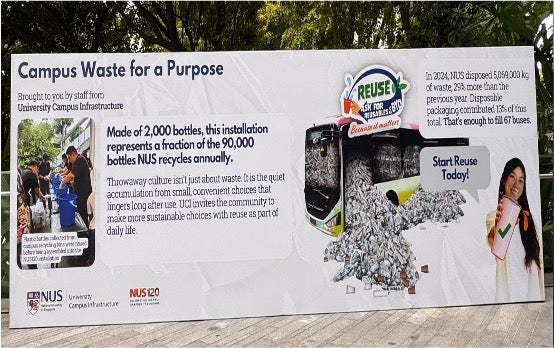
The Central Workshop (CW) was commissioned by University Campus Infrastructure (UCI) to design and fabricate a “NUS 120” sculpture for outdoor installation at U-Town. The project was initiated from AI-generated concept artwork provided by the end user, with a core requirement that the sculpture be primarily constructed using reclaimed or used PET water bottles. CW developed the concept into a structurally sound, innovative, and sustainable physical installation suitable for outdoor deployment.
Concept Development
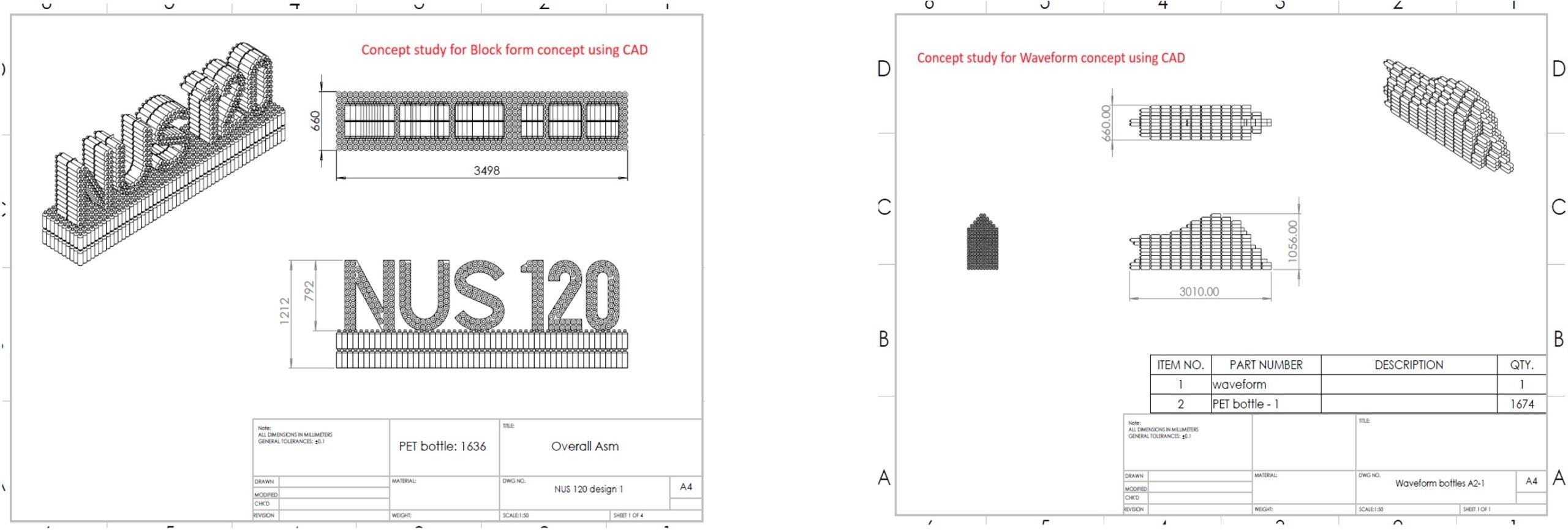
At the concept stage, two design options, a block form and a waveform form, were proposed by the end user. CW performed a detailed feasibility and design analysis, considering material usage and spatial constraints. The analysis concluded that the waveform option would require a substantially larger footprint and significantly higher bottle count to achieve a visual outcome consistent with the concept artwork.
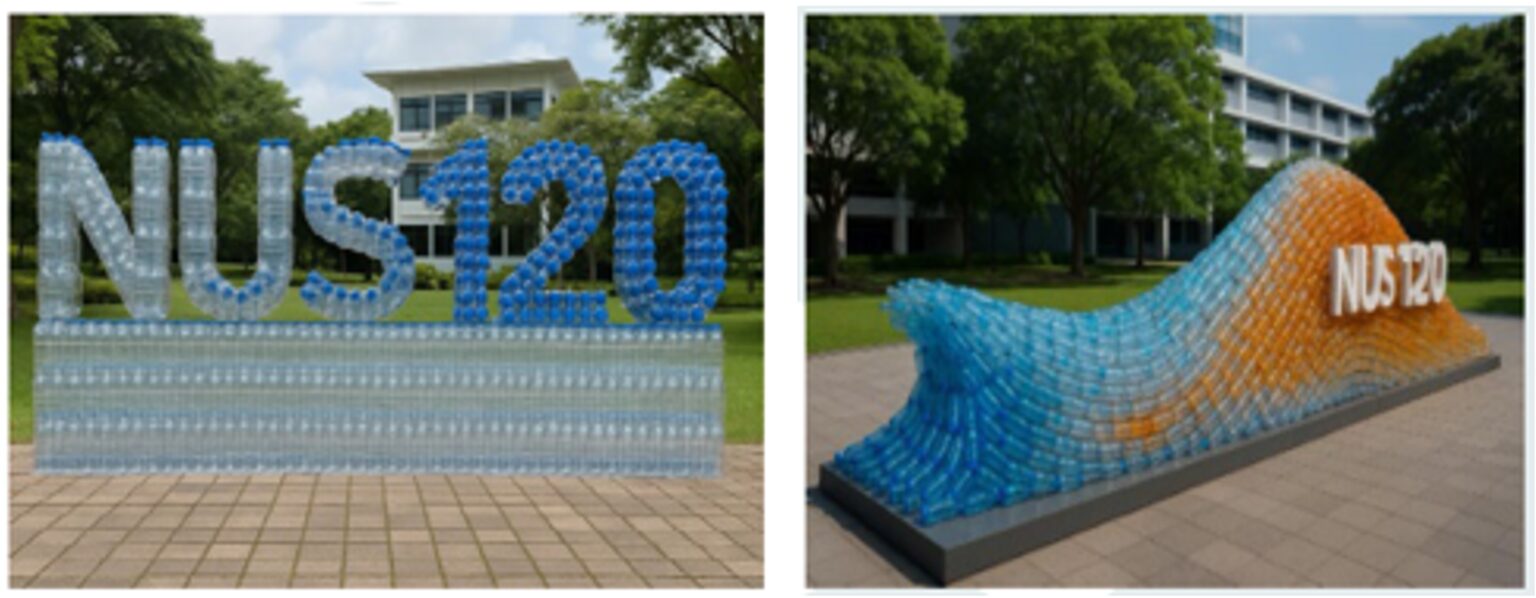
Based on the design study findings and alignment with the end user’s objectives, the block-form concept was jointly selected. CW then developed the detailed design, addressing the following key technical considerations:
- Configuration of reclaimed PET bottles to accurately form the “NUS 120” lettering and supporting base
- Design of the internal framing system to ensure structural integrity
- Stabilization and ballast methods suitable for outdoor deployment
- Bonding and joining methods to achieve secure and durable bottle assemblies
- Modularization strategy to support transportation, handling and on-site assembly
- Implementation of a non-permanent coloring solution to facilitate disassembly and material recovery at end of life
Final Design
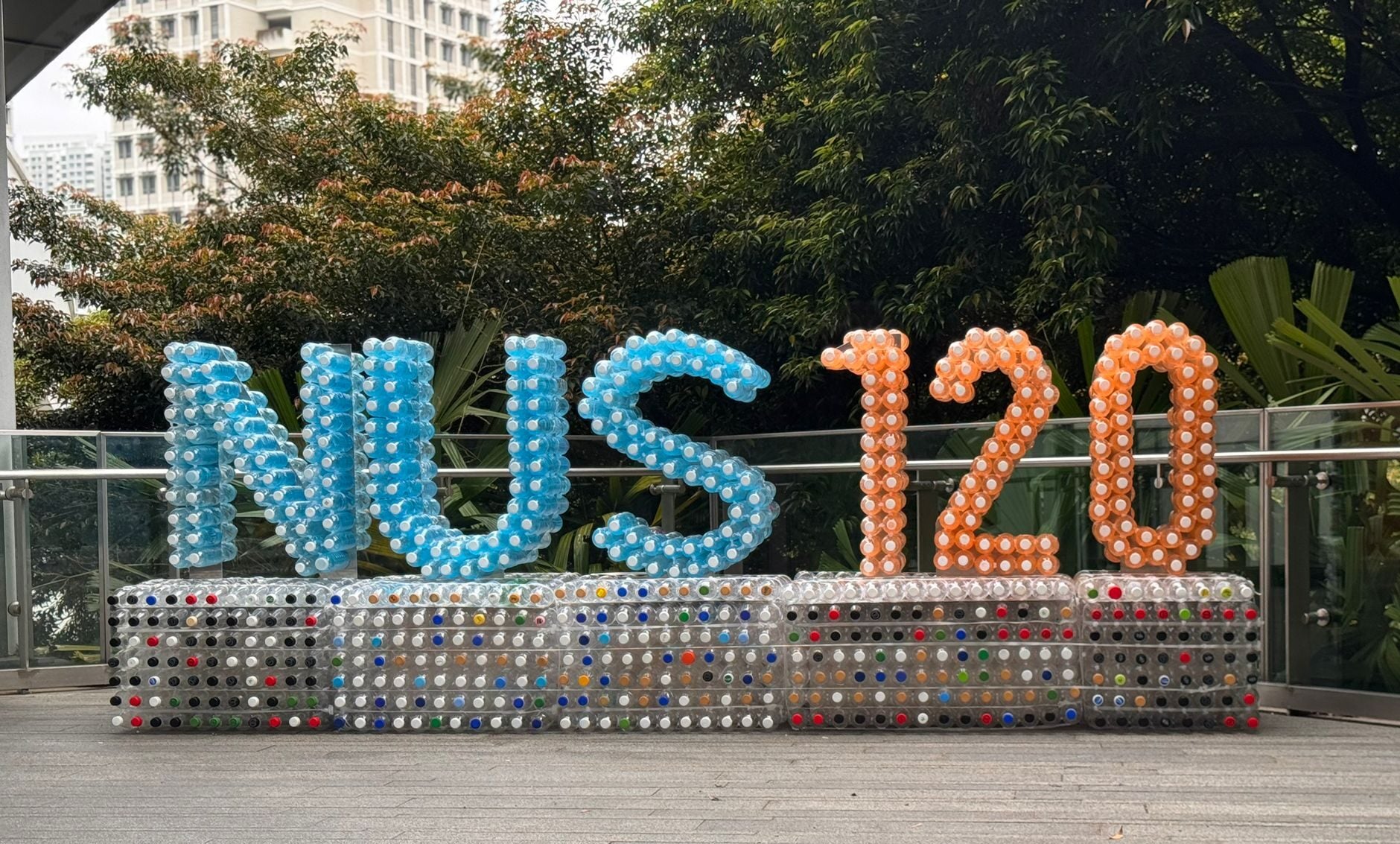
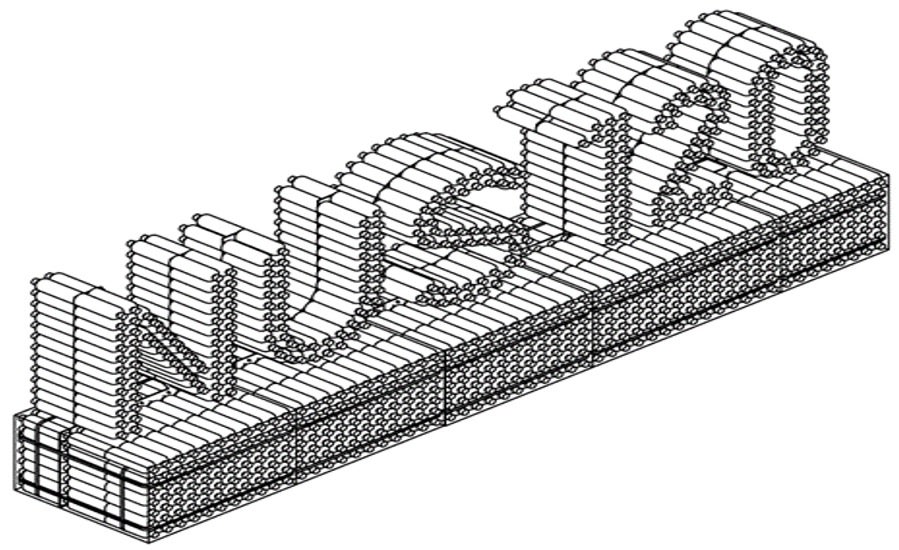
The completed sculpture measures approximately 3.5m in length, 1.2m in height and 0.65m in width when fully assembled. The overall structure is divided into five main sub-assemblies representing “N”, “U”, “S”, “12”, and “0”. Each sub-assembly is further composed of five primary components:
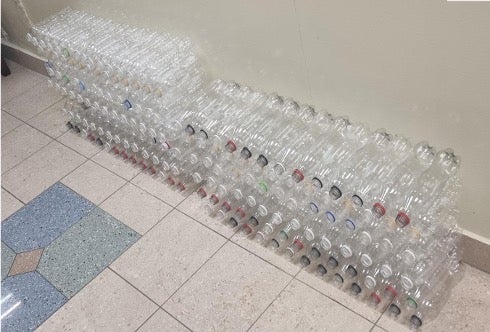
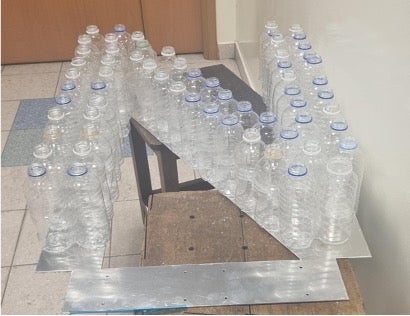
- Letter structure – reclaimed PET bottles bonded to an internal aluminum framework that defines the letter form and provides structural integrity
- Base (front bottom) – bottles bonded to an aluminum internal frame
- Base (front top) – bottles bonded directly to an aluminum plate
- Base (rear section) – providing additional structural support
- Internal ballast – 5-litre water-filled jerry cans used to weigh down and stabilize the sculpture
Bottle bonding is achieved using a combination of hot glue and silicone sealant. Polypropylene (PP) strapping bands are incorporated to reinforce the bottle assemblies and to securely join individual sub-assemblies into the final structure.
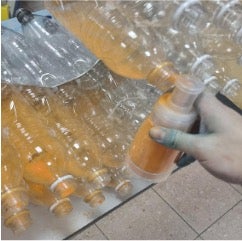
In consideration of sustainability and end-of-life requirements, CW developed an innovative, non-permanent coloring method. Color is applied by dusting the interior of the bottles with Holi powder, a non-toxic colored powder commonly used in cultural festivals and color-run events. This approach allows the bottles to be easily cleaned with water, facilitating future reuse or recycling.
Fabrication Process
Reclaimed PET water bottles were supplied by the end user, while CW provided all additional materials and fabrication labor. The internal structural components were fabricated using AL5052 aluminum sheets, with CNC routing used for letter profiles and shearing and drilling applied for base components.
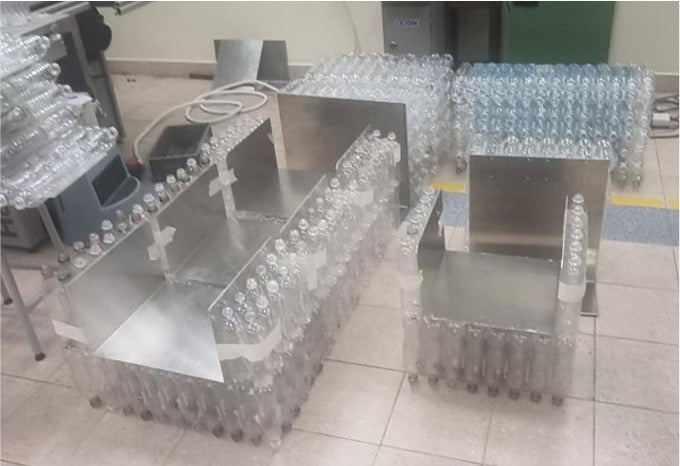
For the base assemblies, bottle bonding was carried out in smaller sub-configurations prior to final attachment to the aluminum support frames. For the letter components, bottles were bonded directly onto aluminum templates to ensure accuracy and consistency. The application of Holi powder coloring was performed using a handheld powder applicator to achieve even distribution within the bottles.
Summary
This project demonstrates an innovative translation of end-user–generated AI concept art into a full-scale, physically robust outdoor sculpture. CW introduced practical design adaptations - such as modular construction, internal aluminum framing and integrated ballast systems - to ensure structural stability while preserving the visual intent of the original concept.
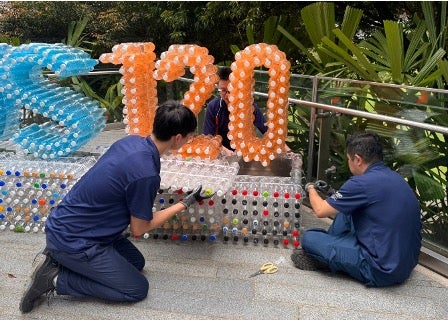
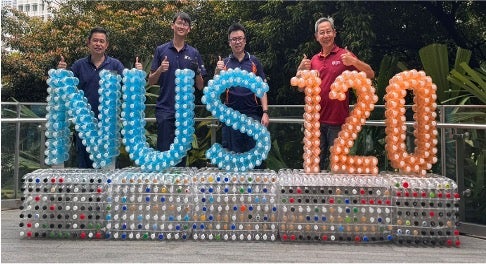

Sustainability was a key driver throughout the design and fabrication process. The use of reclaimed PET water bottles as the primary material directly supports waste reduction and material reuse. Additionally, CW developed a non-permanent coloring method using non-toxic Holi powder, allowing the sculpture to be easily cleaned, disassembled, and repurposed at the end of its service life. Material choices, bonding methods, and modular sub-assemblies were all intentionally designed to facilitate future reuse, recycling, or reconfiguration, reinforcing the project’s commitment to circular design principles.