
CDE Trailblazer Honor Grant and Award
The CDE Trailblazer Honor Grant and Award recognise outstanding undergraduate students who embody pioneering excellence in problem-solving and project execution, empowering them to leave a lasting impact on their field. They must also demonstrate exceptional qualities of creativity, leadership, courage, and resilience, as reflected in their project execution, preferably resulting in distinctive accomplishments or measurable impact.
Students who wish to be considered for the grant and/or award must work on a self-initiated final year project (with up to 5 members in the project group) under CDE3301 Ideas to Proof-of-Concept, CDE4301 Innovation & Design Capstone or CDE4301A Ideas to Start-up that addresses significant gaps or challenges in the industry. The project must not be a continuation of an existing project led by a faculty member at NUS or a project proposed by an external organisation.
The grant and award are made possible by the generous support from NUS alumna Ms Serena Teo who established the CDE Trailblazer Honor Fund.

Inspiring the next generation: alumnus gift champions innovation and student trailblazers (opens in new tab)
Through a generous gift from NUS alumna Ms Serena Teo, the CDE Trailblazer Honor Fund seeks to encourage and inspire students to become innovative change-makers in addressing real-world challenges. This initiative provides students with opportunities to lead bold, self-initiated final year projects that demand creativity, resilience, and leadership. Outstanding students under this initiative will be awarded a prize for their ability to push boundaries and deliver impactful solutions, and to offset expenses incurred during their innovation journeys.
The grant provides additional support for project expenses beyond standard material and prototyping costs, which may include but not limited to overseas travel for project presentations or on-site studies and other activities that may enhance the project's scope and impact.
Students who qualify for the grant will be invited to present a pitch to an evaluation panel who will assess the potential impact of their project. The pitch will be conducted in the first semester of CDE3301/CDE4301/CDE4301A. Students are expected to address the following in their pitch:
- Problem of interest that their project aims to tackle (and why it is a worthwhile problem to address)
- Proposed solution to the problem (and why it could be an innovative solution)
- Project execution plan (i.e. how the proposed solution would be prototyped, tested, and validated), including the proposed budget for the project
- Potential project outcomes (e.g. technology readiness level, industry adoption or implementation, creation of start-ups, etc.)
Grant recipients in AY2026/2027
Find My Way
CDE4301A Ideas to Start-up
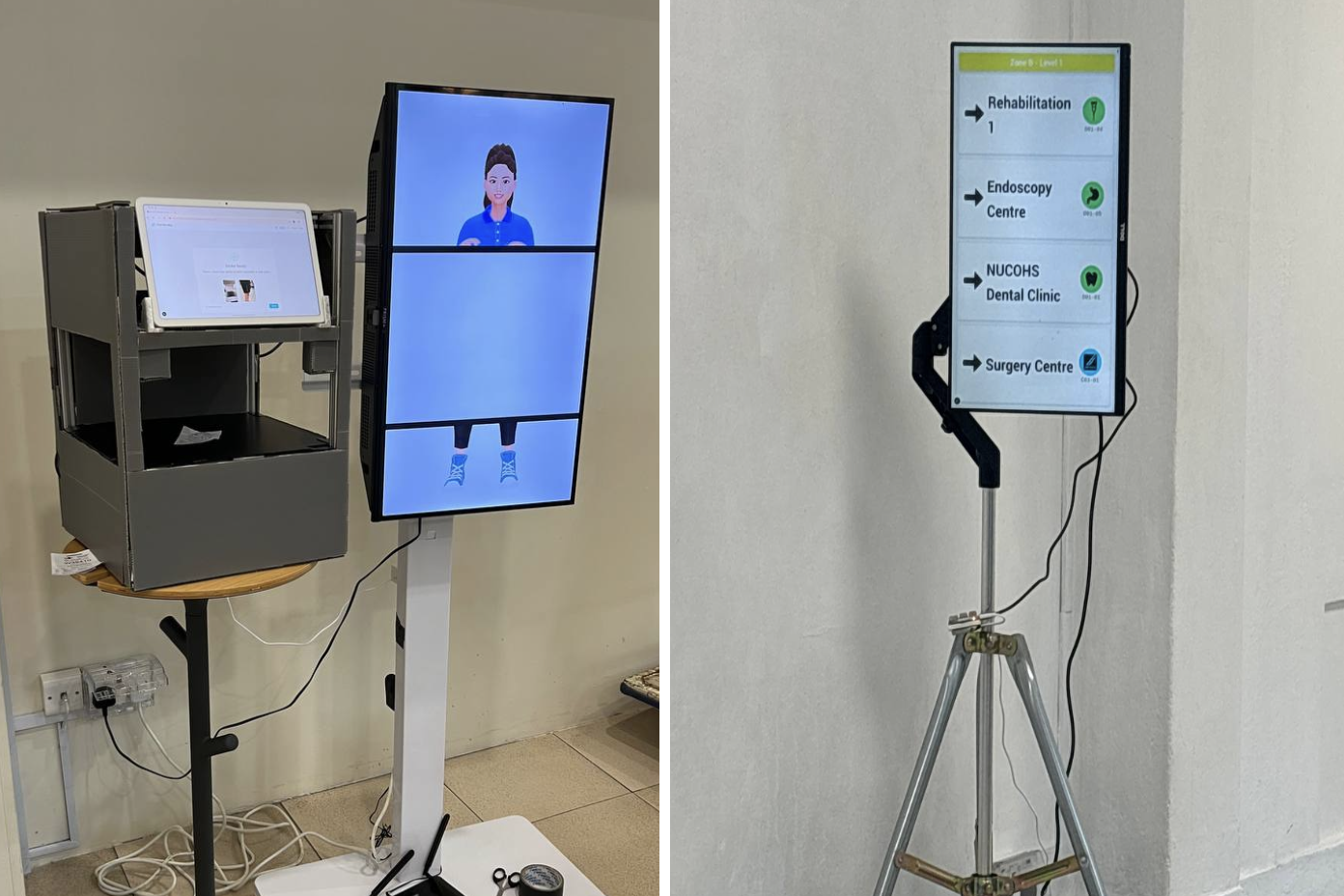
Find My Way is a smart indoor navigation system designed for complex spaces such as airports, hospitals and shopping malls. It transforms traditional physical signs into connected digital signboards that provide clear, real-time directions at key decision points. Visitors can search for a destination or scan a boarding pass, appointment slip or QR code to receive personalised guidance without downloading an app. When not displaying directions, the screens can show venue information, operational updates and targeted advertisements. By improving wayfinding, reducing staff workload and creating new media opportunities, Find My Way aims to make venues more accessible, efficient and responsive.

HydraCool
CDE4301A Ideas to Start-up
Solar panels routinely exceed 70°C, triggering severe thermal degradation that cuts power generation by 10%–18% and drains operator revenues. HydraCool solves this challenge with an autonomous, passive hydrogel composite film that can be applied onto photovoltaic modules. Leveraging atmospheric moisture harvesting, the material absorbs night-time humidity and releases evaporative cooling during peak midday heat, requiring zero pumps, piping, or parasitic electricity. This can drop module operating temperatures by 10°C–30°C, recovering 6%–15% in energy yield. Advancing from lab validation, HydraCool is executing outdoor testing to improve cooling capacity and material lifespan.
PacKIND
CDE4301A Ideas to Start-up
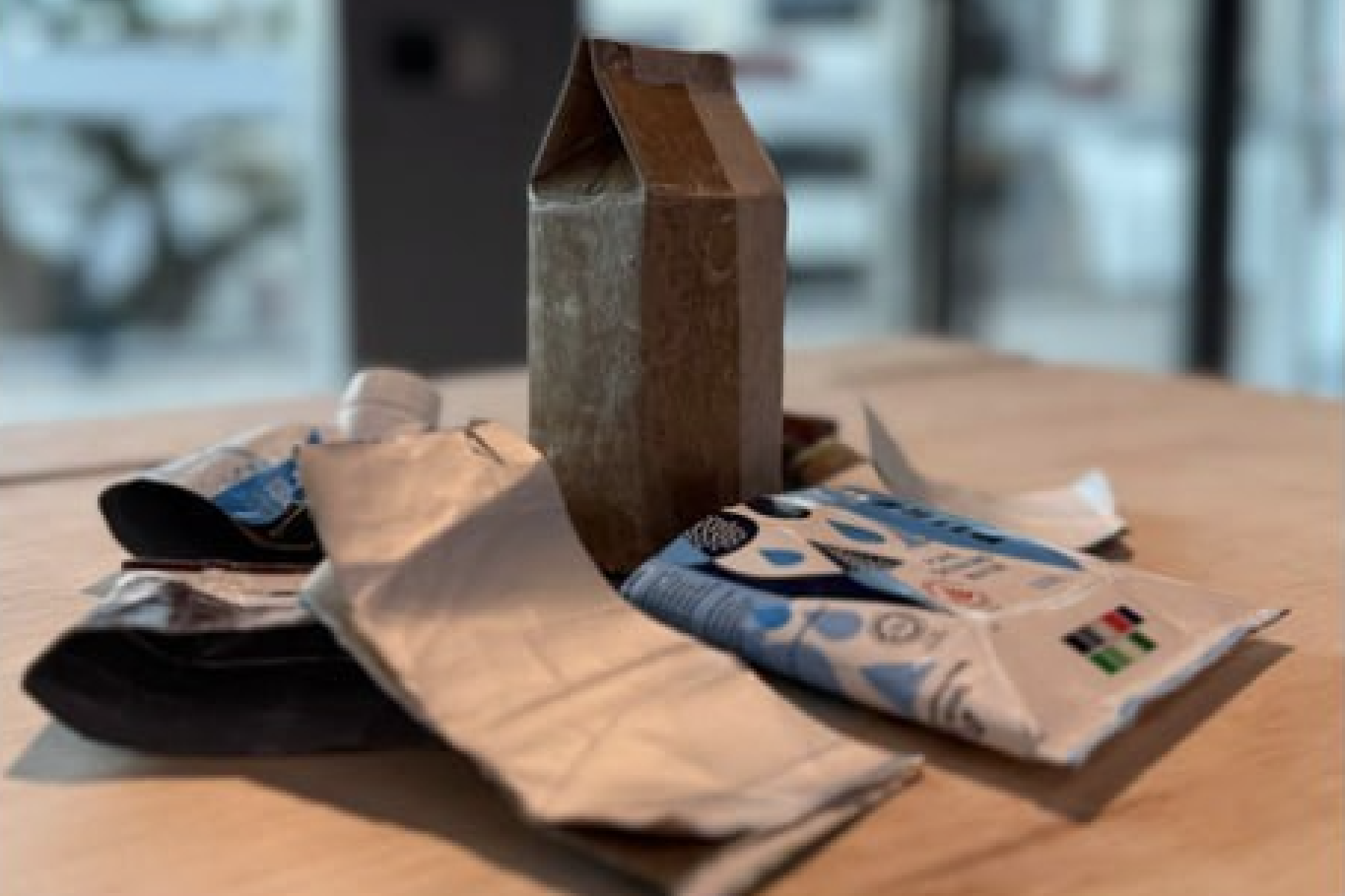
PacKIND aims to make multilayer beverage cartons fully recyclable by redesigning the adhesive bonding their layers. Conventional beverage cartons consist of paper, plastic and aluminium, which are difficult to separate during recycling, limiting material recovery. Our innovative adhesive system maintains packaging performance during use while enabling controlled layer separation at end-of-life. Through laboratory-scale validation, we have successfully achieved 91% material recovery, demonstrating the potential to recover all three materials as separate recycling streams and increase recoverable material value by 44%. By integrating with existing recycling infrastructure, PacKIND aims to reduce packaging waste and advance a circular economy for beverage packaging.
The award recognises the accomplishments of students who work on self-initiated projects, regardless whether they are recipients of the grant.
An evaluation panel will select the recipient(s) of this award at the end of Semester 2 of each academic year, starting from AY2026/2027, on the basis of distinctive outcomes or measurable impact in their project. Recipients of the award will be given a cash prize.