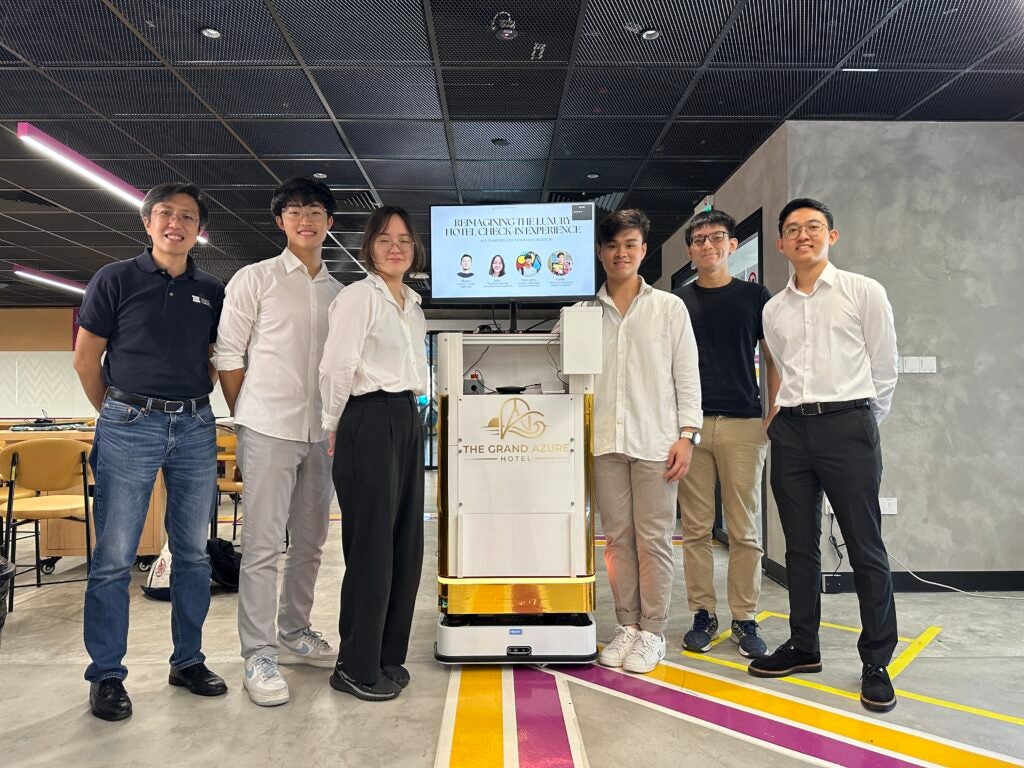
ELEVIA: AI-powered concierge that redefines your luxury hotel check-in experience
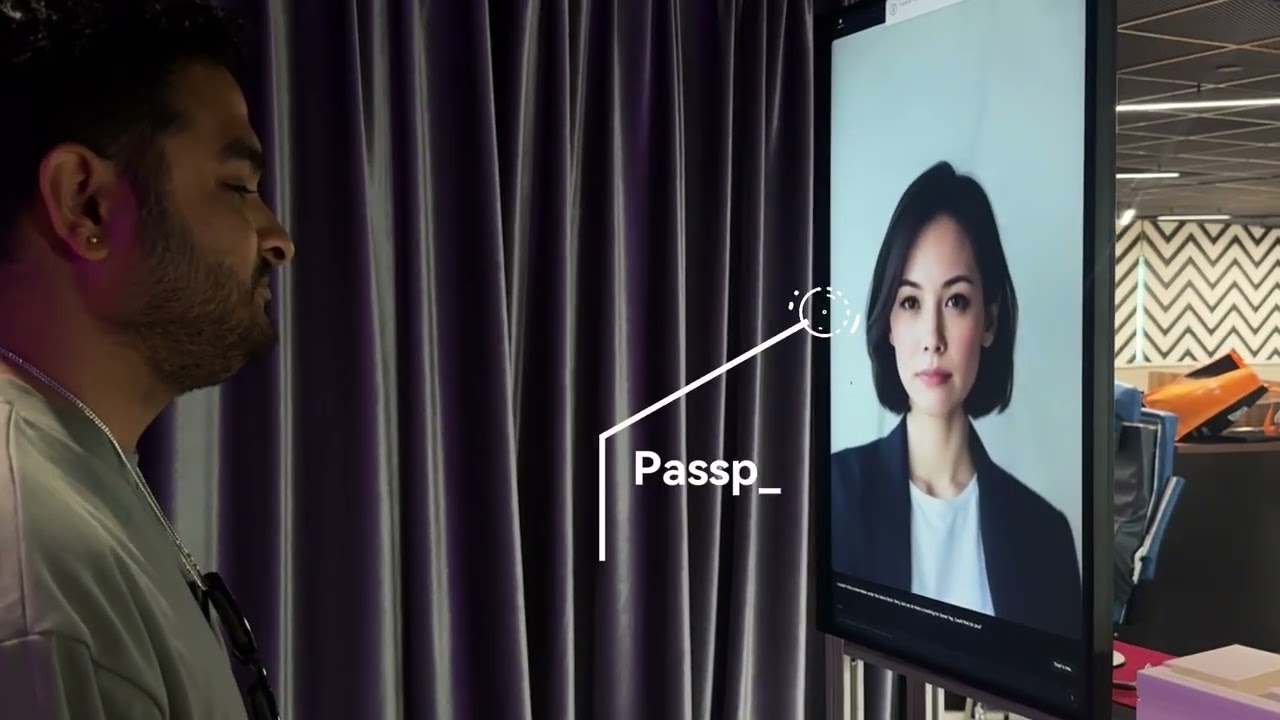
The first moments of a hotel stay often shape a guest’s overall experience. Long queues at reception and luggage handling can create friction in what should be a seamless welcome. Exploring how technology can transform this moment into a smooth and personalised arrival journey, this project designed an AI-powered autonomous hospitality robot to enhance the luxury hotel check-in experience. The robot recognises guests when they arrive, verifies their identity securely, handles the digital check-in process, transports luggage, and escorts guests directly to their rooms.
This project addresses a growing challenge in luxury hospitality. Guests increasingly expect frictionless efficiency such as instant check-in and minimal waiting time. At the same time, luxury experiences still depend on warmth, reassurance, and personalised attention. Hotels must therefore balance operational efficiency with emotional connection. Rather than replacing human hospitality, the project team's robotic solution is designed to support it by combining automation with thoughtful experience design. Guests interact with the robot conversationally as it guides them through the arrival process, answers questions, and offers recommendations throughout the journey to their room. By having the robot handle operational tasks such as check-in and luggage transport, hotel staff can focus on delivering higher-value interactions and personalised service.
One key insight from testing was that luxury is not defined by technology alone. Guests valued clarity, reassurance, and intuitive interaction more than complex features. The project team also found that conversational tone and interaction design played a significant role in building trust between guests and the system.
The project journey also reshaped the team’s perspective on innovation. While they initially focused on technical automation, the team realised that designing for luxury required a deeper understanding of guest psychology and service experience. This led them to shift from purely engineering solutions to experience-driven prototyping. Their robotic solution demonstrates how artificial intelligence, robotics, and service design can work together to create more seamless hospitality experiences while preserving the human touch that defines luxury.
This project was part of the Stanford Global Engineering Design Innovation (GEDI) programme in AY2025/2026.
Project Team
Students:
- Jolie Koh Yi Ting (Biomedical Engineering, Class of 2026)
- Nor Muhammad Ilham Bin Ridzuan (Industrial and Systems Engineering, Class of 2026)
- Lim Soong En (Computer Engineering, Class of 2026)
- Tey Jin Ren Gavin (Mechanical Engineering, Class of 2026)
Supervisors:
- Dr Elliot Law (elliot.law@nus.edu.sg)
- Mr Royston Shieh (shiehtw@nus.edu.sg)