


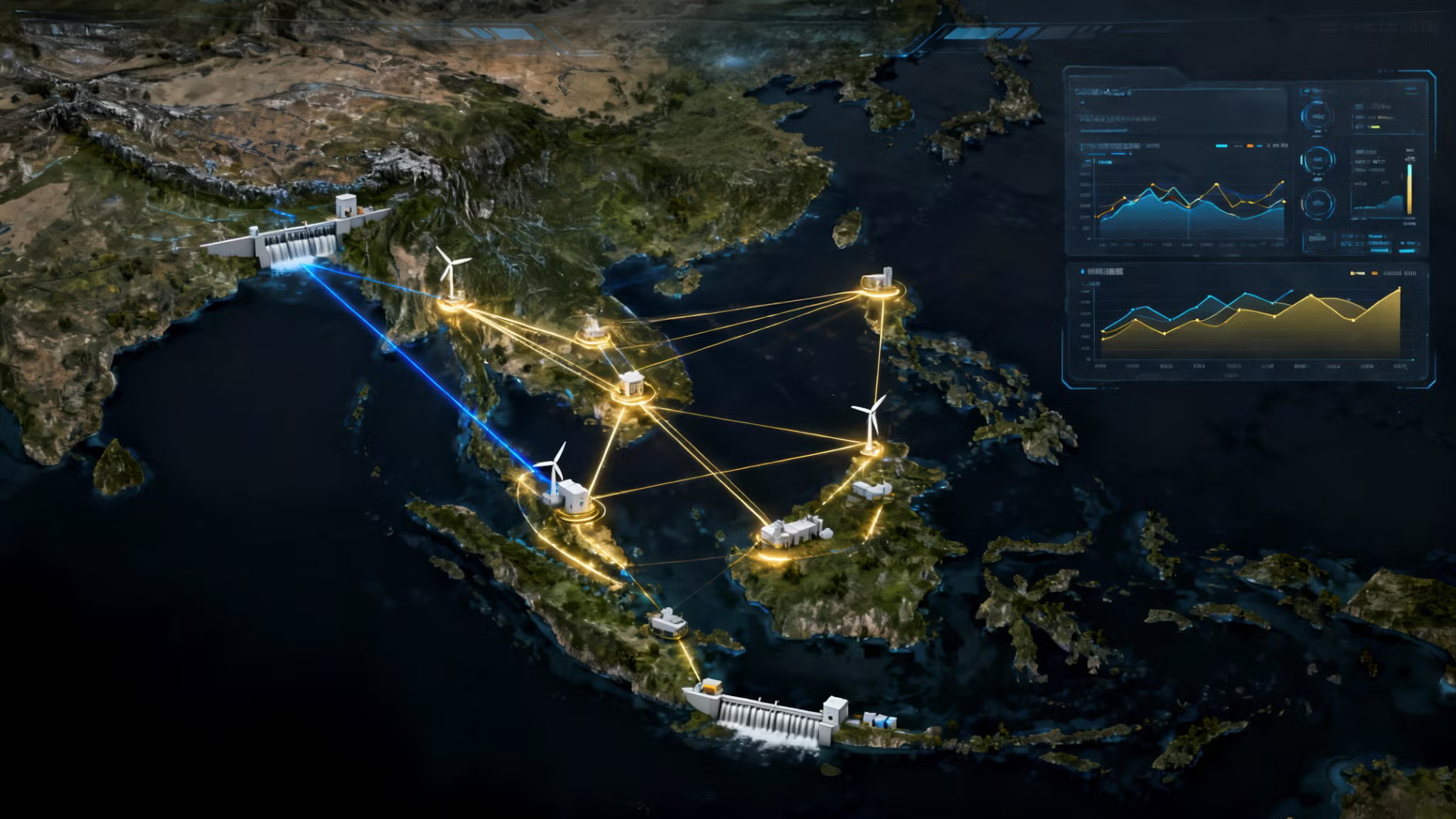
Graphic images in this article were generated using AI and intended only as a visualisation of general concepts or ideas related to the research.
New modelling shows that linking ASEAN’s power grids could accelerate the region’s path to net zero, cutting costs and easing the burden of a just energy transition.
Across Southeast Asia, the appetite for electricity is increasingly voracious. By 2050, consumption is expected to more than triple from 2018 levels as populations grow and economies industrialise further. However, the region still generates most of its power from fossil fuels, giving it one of the fastest-rising emissions trajectories in the world. Hydropower from the Mekong Basin remains the region’s dominant source of renewable energy, while the vast solar and wind potential across its member states is still largely untapped.
Each ASEAN country has pledged to cut emissions under the Paris Agreement, but the question remains: how can a diverse region of ten countries with uneven resources and infrastructure decarbonise both effectively and affordably?
That inquiry underpins a new study led by Dr Su Bin, Senior Research Fellow from the Energy Studies Institute and the Department of Industrial Systems Engineering and Management at the College of Design and Engineering, National University of Singapore, conducted in collaboration with ExxonMobil. The study builds an integrated model of ASEAN’s power sector to test how different strategies, from “go it alone” national plans to fully connected regional grids, might influence the journey to net zero. The findings paint a clear picture where greater cross-border cooperation could make the energy transition faster, fairer and far less costly.
For the full article, visit https://cde.nus.edu.sg/powering-a-shared-energy-future/ or download the PDF below:
Issue 07 – Powering a shared energy future
Discover more in CDE’s research newsletter https://cde.nus.edu.sg/cde-research-dec2025/