Pre-University Engagement
Experience CDE 2025
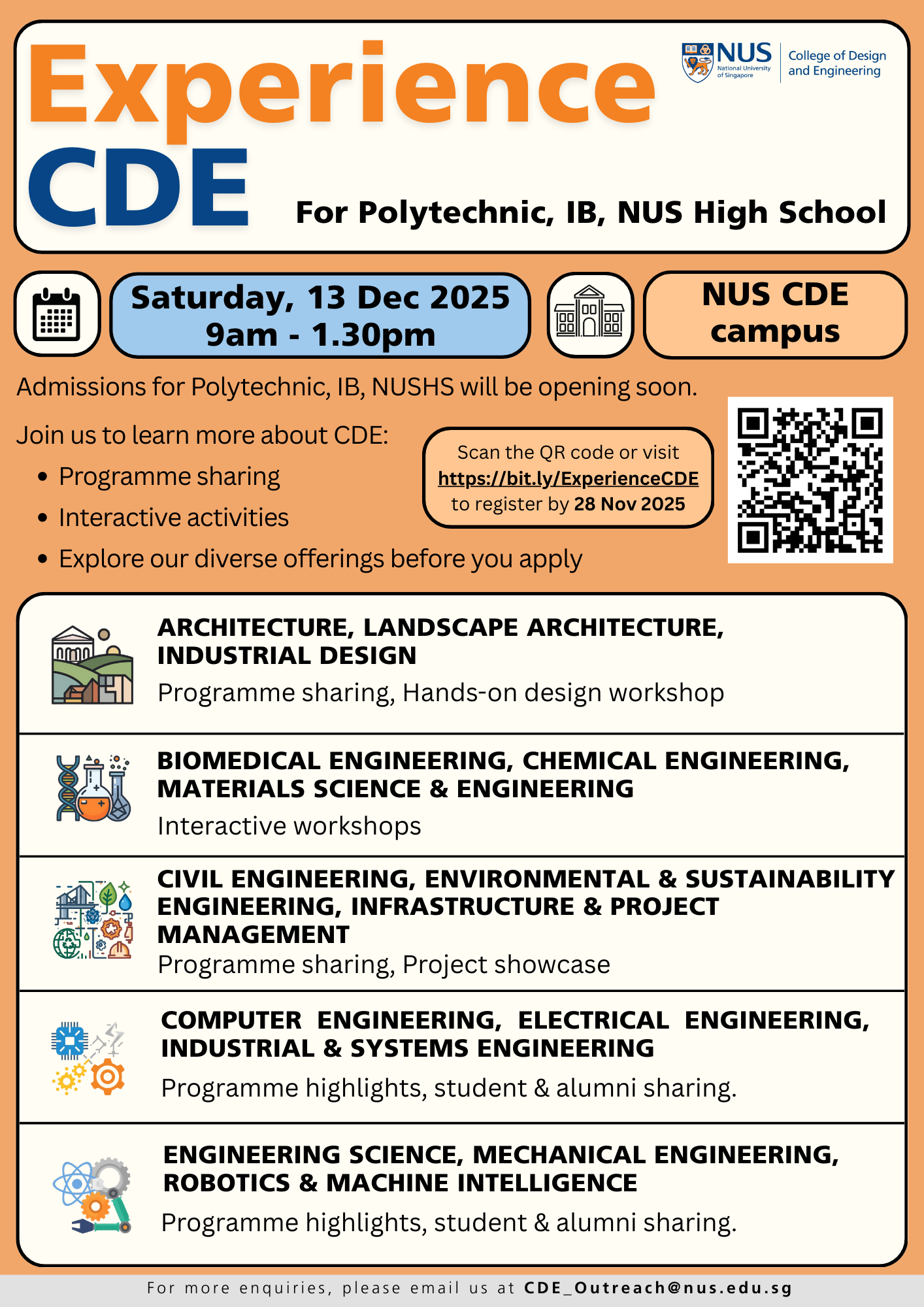
Experience College of Design and Engineering (CDE) 2025 is a half-day event specially curated for Polytechnic, IB, and NUSHS students who are keen to explore and find out more about our 15 undergraduate programmes in CDE.
📅 Saturday, 13 December 2025
🕙 9.00am – 1.30pm
📍 NUS CDE, SDE3, Level 4, LT421
👉 Registration is free, but slots are limited. Sign up here by 28 November 2025, 11.59pm to secure your place!
| Applicant Group | Academic Year 2026/27 Application Period |
| Polytechnic Diplomas from Singapore |
17 December 2025 to 4 February 2026 |
| NUS High School Diploma | 17 December 2025 to 2 January 2026 |
| International Baccalaureate (IB) Diploma | 17 December 2025 to 23 February 2026 |
For more updates, please visit Office of Admissions website here.
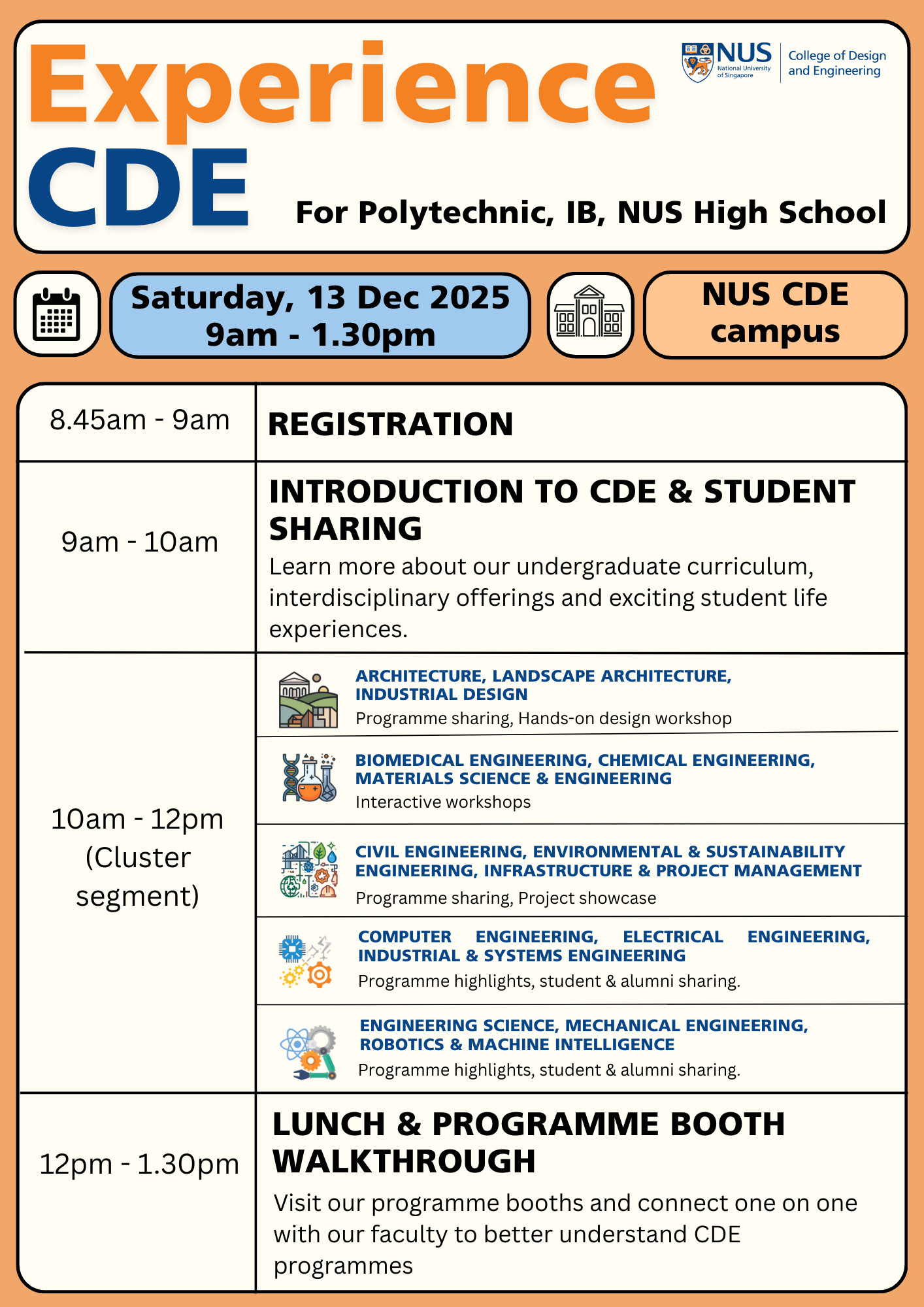
Programme schedule
[Re]District: Designing with Upcycled Materials
Instructors:
| Programme | Faculty |
| Architecture | Ar. Christo Meyer ARB RIBA |
| Landscape Architecture | Dr. Maxime Decaudin |
| Industrial Design | A/Prof. R Brian Stone |
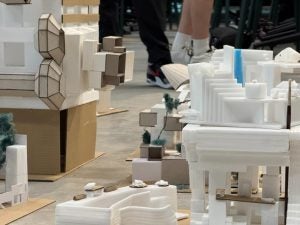
[Re]District is a collaborative, hands-on design workshop where participants will imagine the city of tomorrow through the act of kitbashing (reassembling fragments of existing work into new and unexpected futures).
Working in interdisciplinary teams, participants will explore how discarded materials can give rise to new ideas, forms, and narratives about the urban environment.
Each team will develop a speculative “district” within a shared urban landscape, responding to one of five overarching themes. Together, these districts will form a collective city model as an evolving and imperfect reflection of our shared imaginations, concerns, and hopes for what lies ahead.
This workshop invites participants to think differently about design, to see value in the overlooked, and to collaborate across scales and disciplines from the architectural to the ecological to the object-based.
Workshop Format:
Introduction within Groups (5 mins): Students join groups as assigned and workshop facilitators highlight prompts.
Design Production (50 mins): Teams use upcycled materials, including architectural models (AKI), landscape drawings (BLA), and industrial design lab offcuts (DID), to collaboratively construct their district. Each group should work intuitively, combining fragments through kitbashing and collage to generate new forms, typologies, and narratives.
City Assembly & Sharing (20 mins): Teams gather their districts into a single collective urban model, reflecting the intersections between disciplines and themes. A short group reflection concludes the session (1 min elevator pitch format by representative).
Workshops
Biomedical Engineering
| Workshop | Inside the Health and Biomedical Sector: A Biomedical Engineering Journey |
| Instructor | Dr. Mark Chong |
| Overview | Participants will explore the interdisciplinary field of Biomedical Engineering (BME) through guided discussions and hands-on interaction. A case study will serve as a central narrative to highlight the roles of engineers, clinicians, researchers, and innovators in healthcare. Through this lens, students will gain insight into the diverse career pathways available to biomedical engineers and the broader health and biomedical sector. |
| Activities |
A clinical case study will be presented to provide context for discussion. Activities include:
|
Chemical Engineering
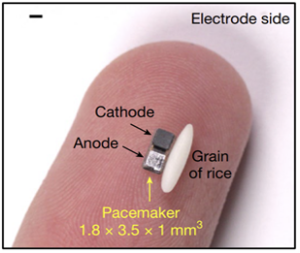
| Workshop | Demonstrating a miniaturized and bioresorbable pacemaker alternating heartbeats |
| Instructor | Asst. Prof. Yamin Zhang & Chen Longfei |
| Overview | As one of the most vital organs in all living creatures, the nonstop beating of heart pumps out bloods that carries the energy to power up the entire human body. The rhythms of heartbeat are regular, but diseases or bad habits could make these rhythms chaotic, and that's where artificial pacemakers come into play. These devices are electronic, delivering a small but vital current to heart (or any types of muscles) and stimulate them to force them move. Usually powered up by batteries, conventional pacemakers are either bulky, or sometimes risky and complicated to be properly installed onto the heart. Now, with better understand of electrochemistry, biodegradable and bioresorbable chemistries, as well as a bit of device fabrication knowledge, we can make the pacemakers extremely small, powerful, and much less harmful. In this workshop, you will be exposed to the whole workflow of these pacemakers. From making the electronic parts, assembling them together, to testing them out on some demonstrative tissues. Meanwhile, you'll have a taste on the chemical dynamics and kinetics buried behind such tiny devices, and see how engineers design them to fit in regulations using novel ideas and engineering knowledge |
| Activities |
The workshop will demonstrate and allow hands-on experience including: The workshop will cover topics including: |
| Images |
|
Materials Science & Engineering
| Workshop | The Materials Science in Conditioner |
| Instructor | A/Prof. Ng Wei Beng & Harini |
| Overview | To explore the materials chemistry behind conditioner formulation, focusing on surface chemistry, including hydrophilic and hydrophobic interactions, micelle formation, and their effects on hair. The workshop aims to connect theoretical principles of surface chemistry with practical applications in creating haircare products that achieve desired conditioning properties. |
| Activities |
1. Understanding Surface Chemistry
2. Understanding Electrostatics
3. Understanding Colloid Science
4. Hands-On Testing Skills
|
Project Showcase
Civil Engineering
| Project | Description | Image |
| Guardians of the Coast | Learn about coastal protection by designing nature-based solutions and slope breakers, then testing your creations in mini wave tanks. | 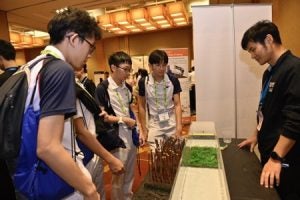 |
| Augmented Reality | Experience VR games designed for the construction field, featuring multiple missions and varying difficulty levels. | 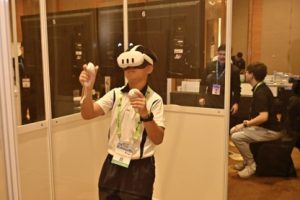 |
| Drones: Eyes in the Sky | Damage isn’t always easy to spot, it can occur in tight corners, confined spaces, or high places. That’s where drones come in, acting as our eyes in the sky. | 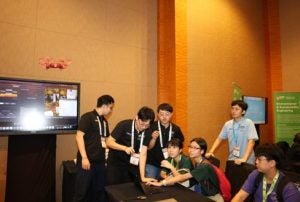 |
Environmental & Sustainability Engineering
| Project | Description | Image |
| The F1 Challenge | Desalinated water is one of Singapore’s Four National Taps. Desalination plants monitor desalinated water quality by measuring conductivity. Now, you get to use conductivity to create power! Your challenge is to build the fastest CEE Formula One (F1) car by choosing a solution with the optimal conductivity to power it. | 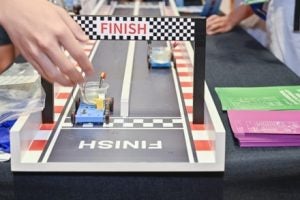 |
| Electrochemical Technologies for Industrial Wastewater Treatment | Electrochemical technologies use electricity to create powerful oxidants directly in the water. These oxidants attack and break down toxic, bio recalcitrant pollutants into harmless compounds such as carbon dioxide and water. |
 |
Infrastructure & Project Management
| Project | Description | Image |
| Digital twin for cities | Discover Singapore’s full interactive digital twin, as well as a crowdsourced digital twin platform built at NUS by students for the campus community. | 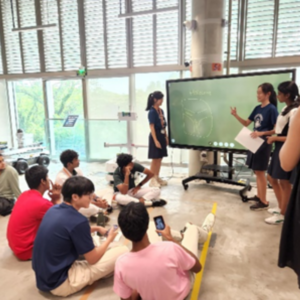 |
| Ocean carbon capture with novel sustainable biochar concrete and 3D printing | Discover a groundbreaking “blue-grey” carbon capture approach where biochar-enhanced concrete pulls carbon dioxide from seawater. By combining 3D printing with advanced material mixes, we transform CO₂ into calcium carbonate that strengthens concrete. | 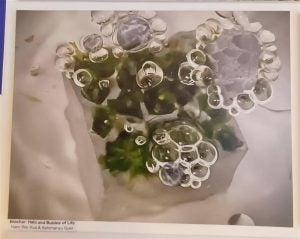 |
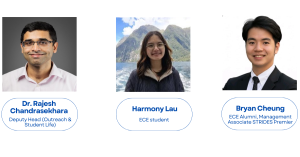
Computer & Electrical Engineering Programme Sharing
Industrial & Systems Engineering Programme Sharing
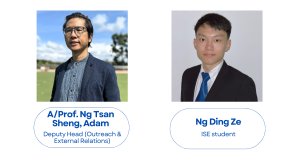
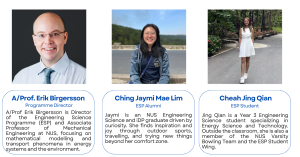
Engineering Science
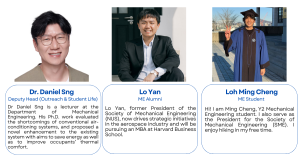
Mechanical Engineering
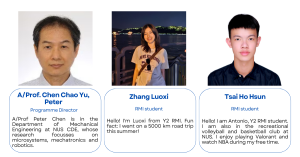
Robotics & Machine Intelligence
VENUE
CDE Campus
WORKSHOPS IS OPEN FOR
Polytechnic Diploma, International Baccalaureate and NUS High School students
FOR MORE INFORMATION, PLEASE CONTACT
Ms Genia Ong
Tel: +65 6516 8852
Email: geniaong@nus.edu.sg