

INDUSTRY & INNOVATION
NUS and Sembcorp partner to advance low‑carbon, water‑efficient data centre cooling
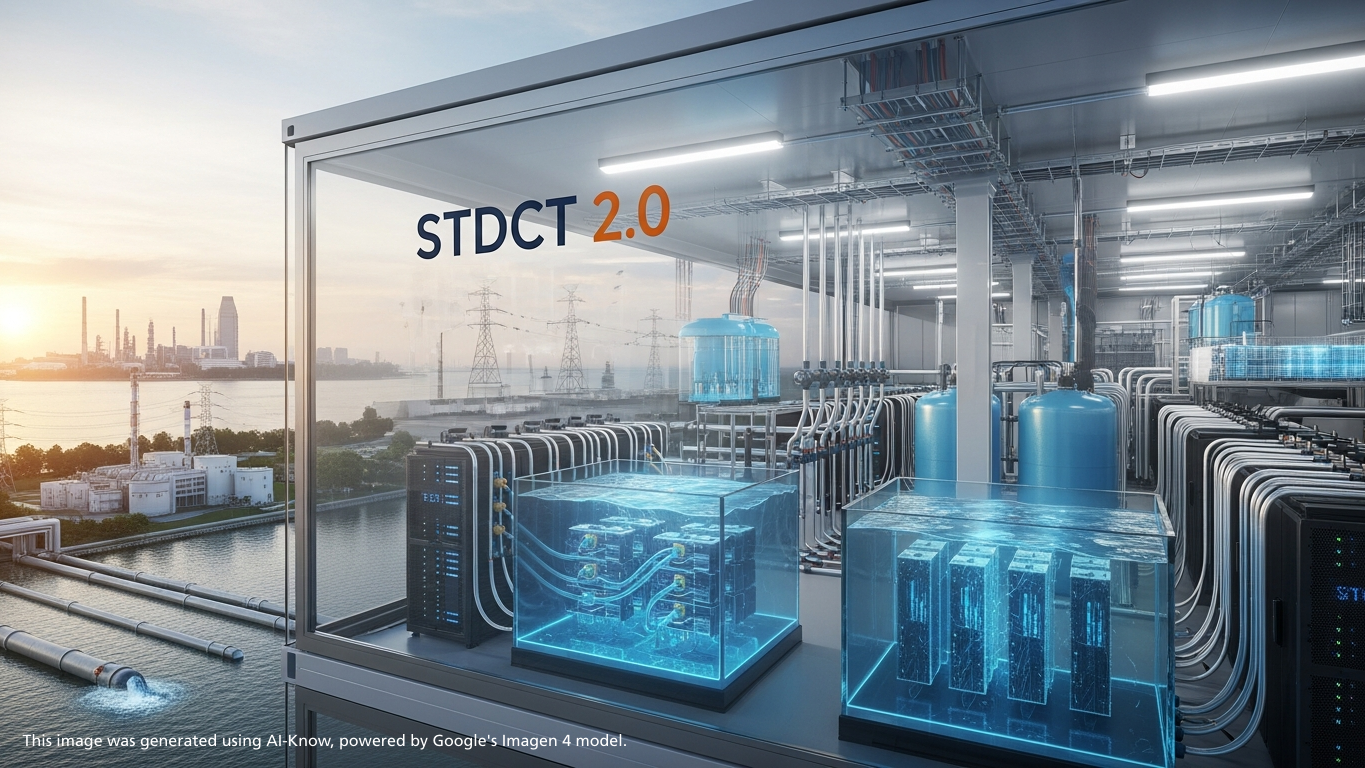
As Singapore ramps up initiatives like the Data Centre–Call for Application (DC‑CFA2), a new wave of collaboration is accelerating the push for energy‑ and water‑efficient, low‑carbon data centre solutions.
An important step forward is our memorandum of understanding (MoU) with Sembcorp Industries Ltd, signed under the Sustainable Tropical Data Centre Testbed (STDCT) Phase 2.0 initiative. As AI drives higher rack densities, the challenge is no longer simply adding more power or more cooling; it is about designing an integrated system where energy, water, cooling, controls and digital intelligence work together.
Under this collaboration, areas being explored include:
- Developing a centralised cooling plant that can utilise recycled and/or seawater to achieve optimal, cost-effective Water Usage Effectiveness (WUE)
- Evaluating the feasibility of using the most suitable heat source from Sembcorp’s existing assets to produce chilled water via absorption chillers
- Assessing cooling technologies to meet data centre requirements, including varying cooling needs across different operations and rack densities
The CDE team is led by Professor Lee Poh Seng, Head of the Department of Mechanical Engineering & Executive Director of the Energy Studies Institute (ESI); with contributions from Professor Akshay Kumar Rathore, Associate Professor Sanjib Kumar Panda from the Department of Electrical and Computer Engineering and Professor Md Raisul Islam from the Department of Mechanical Engineering. This partnership strengthens a broader initiative with JTC Corporation to develop Jurong Island as a living platform for testbedding next‑generation, low‑carbon, AI‑ready infrastructure, supporting its refresh and green‑transition agenda.
With Sembcorp’s capabilities in integrated energy, utilities and decarbonisation pathways, we can move beyond concepts into system‑level engineering validation—advancing research in digital twins, multi‑energy grids, and water‑ and energy‑efficient cooling technologies for Singapore’s sustainable data centre future.
Partnership with Schneider Electric to power low-carbon data centre solutions
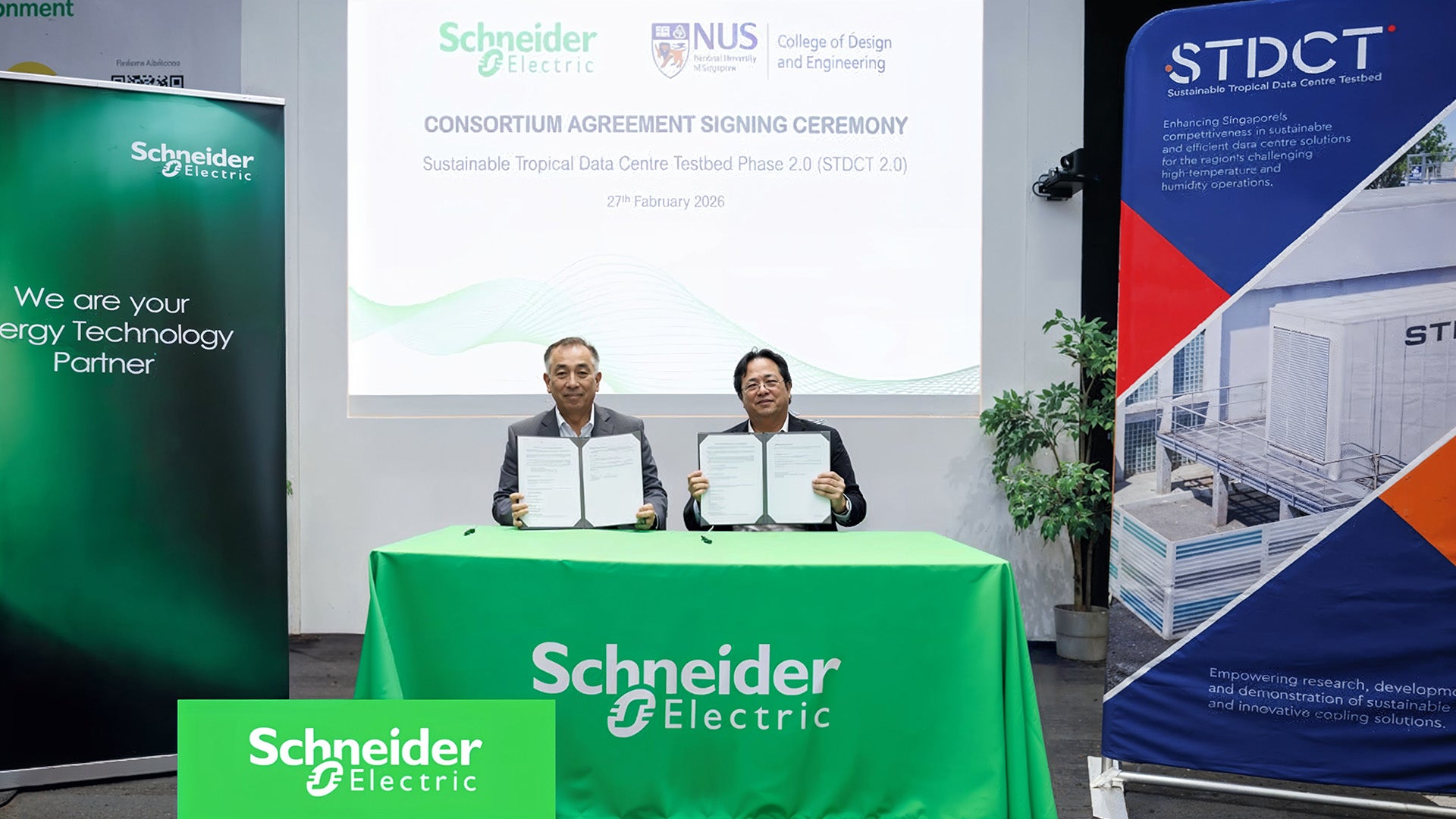
NUS College of Design and Engineering’s Sustainable Tropical Data Centre Testbed Phase 2 (STDCT 2.0) has partnered with Schneider Electric Singapore to support research and development in sustainable data centre operations.
As part of the collaboration, Schneider Electric will contribute approximately S$5 million worth of solutions, including cooling systems and prefabricated data hall infrastructure, to support STDCT 2.0. Located on Jurong Island, STDCT 2.0 is a five-year, multi-megawatt, AI-ready testbed designed to test and validate low-carbon data centre solutions under real operating conditions. Schneider Electric is the initiative’s first Platinum Sponsor.
Led by Professor Lee Poh Seng, Head of the Department of Mechanical Engineering and Programme Director of STDCT 2.0, it provides a platform to design, test and validate next-generation data centre technologies for tropical environments. He noted that the partnership reflects NUS' commitment to shaping the next generation of sustainable data centre infrastructure, going beyond efficiency standards to validate AI-ready, low-carbon tropical data centre solutions and support industry adoption.
The collaboration also includes joint research and knowledge exchange through seminars, conferences and engagements with staff and students.
This development comes as Singapore raises sustainability and efficiency requirements under its second Data Centre Call for Application (DC-CFA2). Yoon Kim, Cluster President for Singapore and Brunei, Schneider Electric, highlighted the role of advanced cooling technologies and intelligent energy management systems in improving energy and thermal performance while reducing carbon emissions.
Team UroClear secures top prize at Duke-NUS Health Innovator Showcase
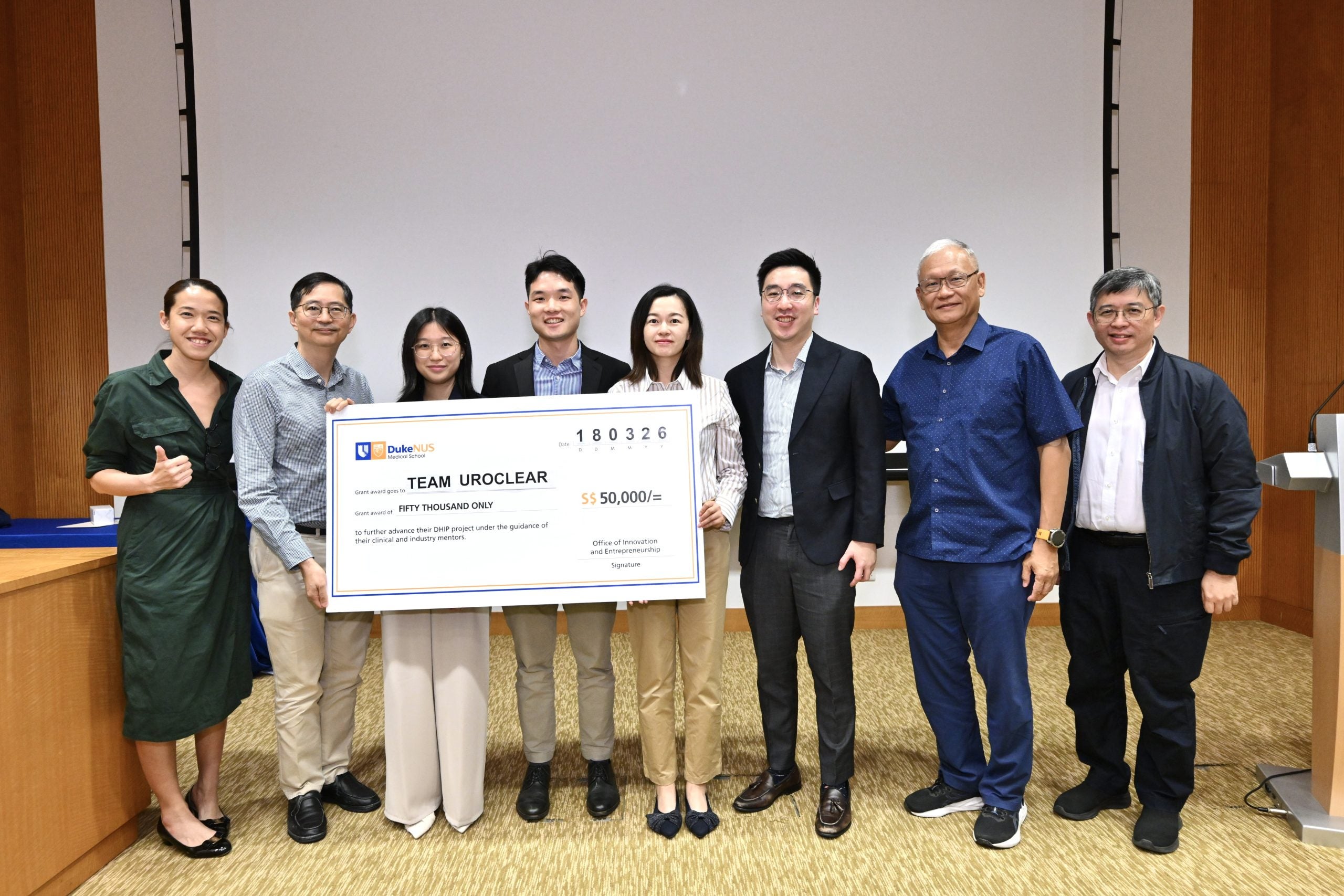
Comprising final-year student Jie Min Ooi from the Department of Biomedical Engineering (with a Second Major in the Innovation and Design Programme), third-year student Danny Lo from Duke-NUS, and MBA student Zhao Zhang from NUS Business School, the team developed BiPass, an irrigation-driven continuous suction device that flushes out kidney stone fragments more quickly and thoroughly, potentially reducing repeat or invasive procedures.
D-HIP is a nine-month flagship programme that brings together multidisciplinary teams of medical, engineering, and business students to identify gaps in patient care and address them through research, design, and commercialisation. It then pairs them with mentors to translate real-world clinical needs into working prototypes and viable business concepts.
We would also like to congratulate fellow final-year students Zing Jen Chew, Amelia Ong and Deepsri Jayachandran from Biomedical Engineering, as well as Kyra Gore from Mechanical Engineering, for participating in Dazzle Day. Their work reflects the spirit of D-HIP in translating ideas into action, and we look forward to seeing their continued contributions in future endeavours.
Read more here.
CDE drives new standards for healthier, energy-efficient buildings
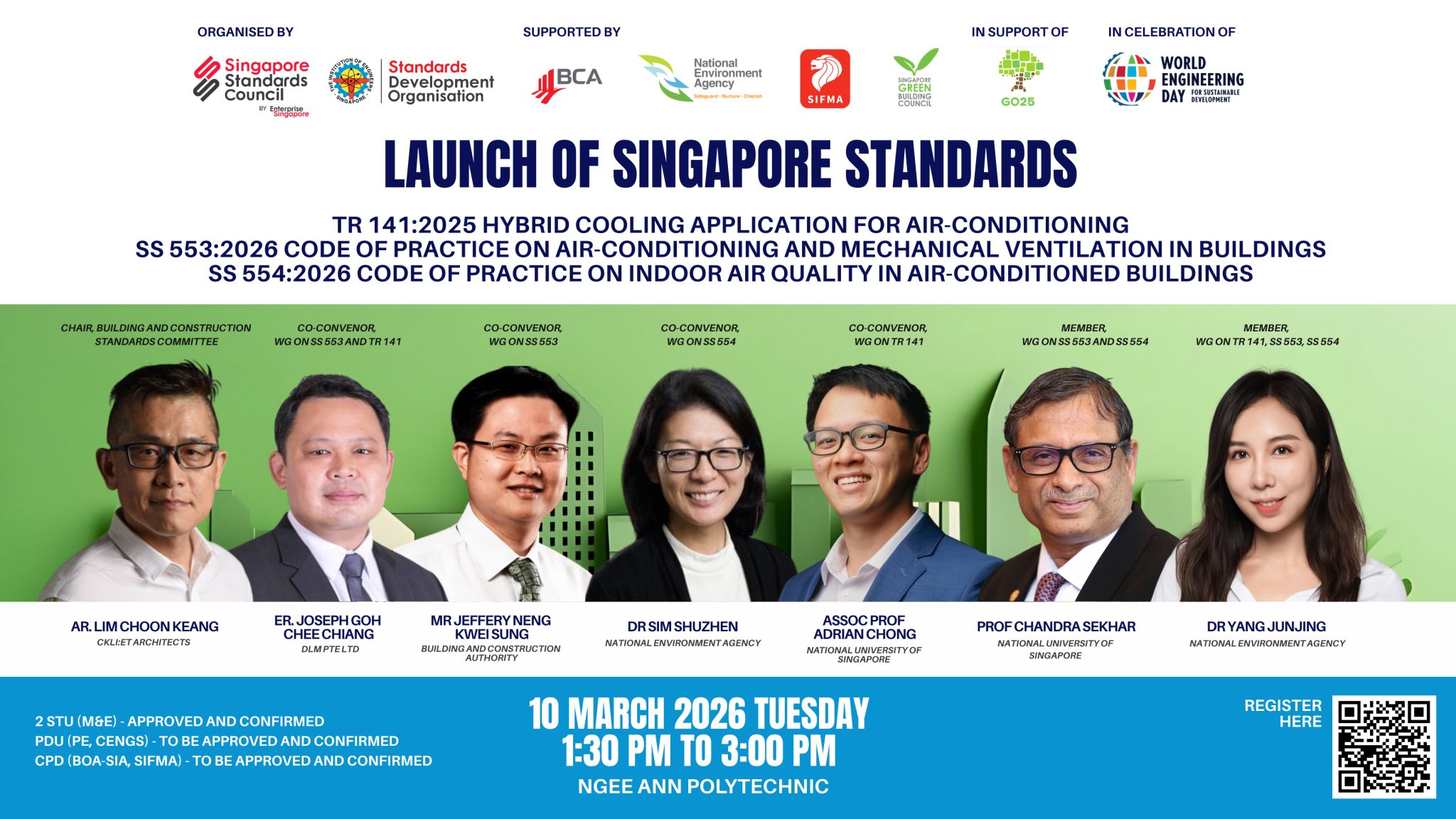
As Singapore responds to rising temperatures, growing energy demands and higher expectations for healthy indoor spaces, CDE faculty have played key roles in three new national standards aimed at strengthening the performance and resilience of air-conditioned buildings.
The standards were launched on 10 March at an event marking World Engineering Day, hosted by The Institution of Engineers, Singapore (IES) – Standards Development Organisation (IES-SDO), in collaboration with the Singapore Standards Council.
Among the CDE faculty involved were Professor Chandra Sekhar (Department of the Built Environment), who served on two working groups that updated Singapore’s codes of practice for air-conditioning and ventilation, and indoor air quality; and Associate Professor Adrian Chong (Department of the Built Environment), who served as Co-Convenor of the working group that developed Singapore’s new Technical Reference on hybrid cooling.
Read more here.
VariFlux is one of 12 global teams in the 2026 MIT Climate & Energy Prize finals
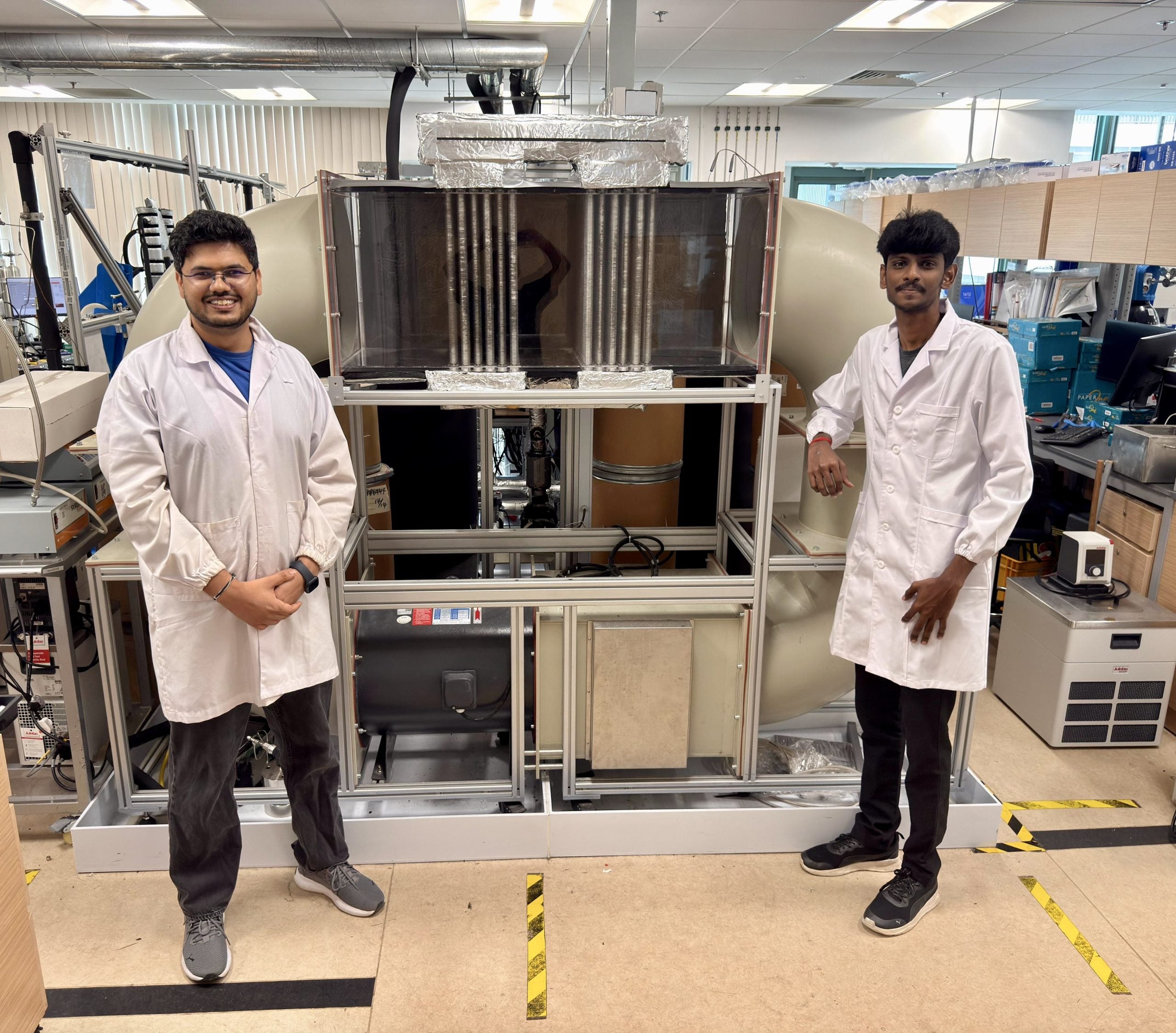
Team VariFlux (represented by Vikas Dhamu and Meyyappan Kannan) is one of 12 global teams advancing to the grand finals of the 2026 MIT Climate and Energy Prize. Professor Praveen Linga, Provost Chair (Department of Chemical and Biomolecular Engineering), led the team comprising Research Fellow Vikas Dhamu and first-year PhD student Meyyappan Kannan, both from the Department of Chemical and Biomolecular Engineering, in developing the technology.
VariFlux is developing a patent-pending advanced coolant that can carry about five times more heat than conventional options, boosting cooling efficiency for data centres, district cooling networks and industrial facilities.
The MIT Climate & Energy Prize drew over 200 applications this year. After multiple rounds, VariFlux is now among the final 12 teams and will compete live at The Engine, MIT (Boston) on 16–17 April 2026 for the US$100,000 grand prize.
Read more here.
NUS CDE startups win big at the EMC Global Summit
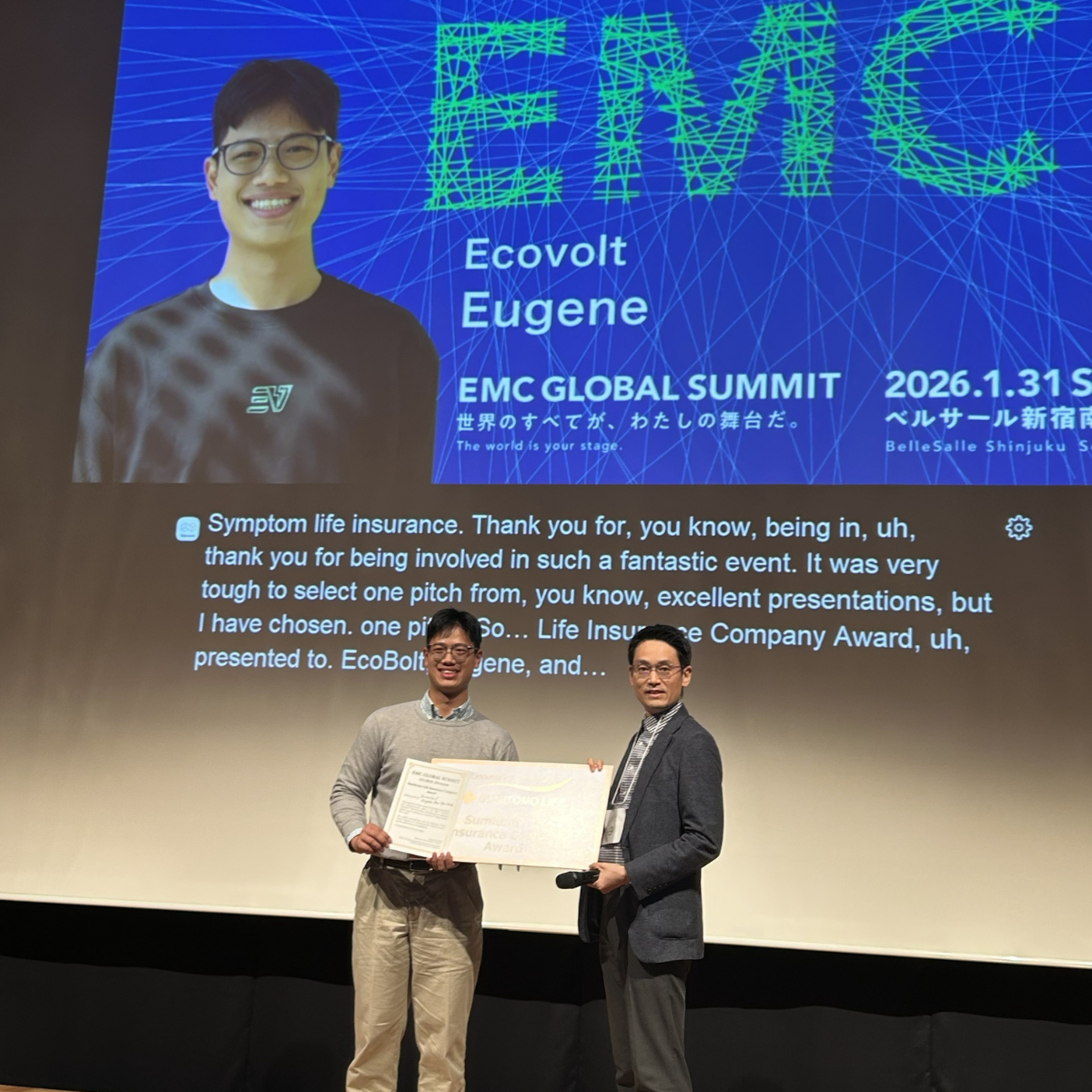
Ecovolt clinched the Sumitomo Life Insurance Award at the EMC Global Summit 2025. Founded by current NUS student Raphael Chew (Business Administration) from NUS Business School and recent graduates Joseph Ho (Electrical Engineering, Second Major in Innovation & Design), as well as Eugene Chia (Computer Science), and Glenn Quah (Information Systems) from NUS Computing, Ecovolt is building an AI-native platform that helps buildings monitor and cut energy use in real time, and has achieved close to 28% average energy reduction across client sites—preventing 100+ tonnes of CO₂ in three months and reducing facilities man-hours by up to 70%. It is now scaling deployments to 20+ organisations in Singapore and exploring opportunities with Singlife and Japanese firms in Southeast Asia.
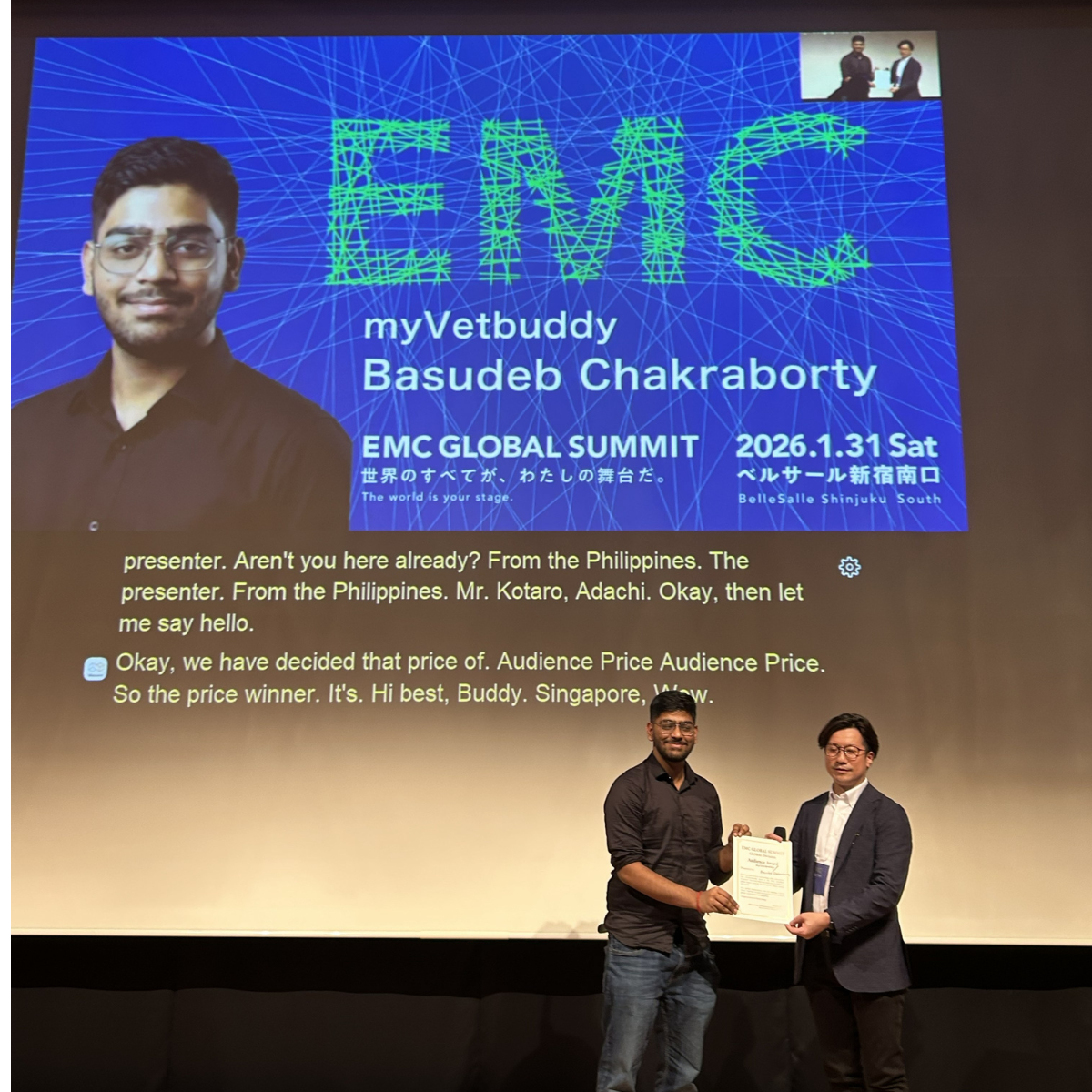
Fellow NUS CDE startup and iDP project myVetBuddy won the Audience Award. Started by Basudeb Chakraborty (Computer Engineering), and included Aryan Singh (Electrical Engineering) as well as Chan Jia Min (Life Sciences) from the Department of Biological Sciences, myVetBuddy is an AI-powered veterinary assistant that automates documentation and supports clinical decisions, with the goal of becoming Asia’s first agentic veterinary EHR. The team is working with clinics to expand it into a fuller clinic operating system and expects connections from the Summit to support longer-term growth.
Read more here.
Building the future of tropical data centres: cooler, cleaner, and talent-ready

On 16 March, the Air-Conditioning, Heating, and Refrigeration Institute's (AHRI) ASEAN office signed a Memorandum of Understanding (MOU) with the College of Design and Engineering at the National University of Singapore through NUS Mechanical Engineering, to strengthen collaboration in advancing data centre certification, sustainable cooling, and talent development across the region.
The key areas of collaboration are:
- Standards & certification: Exploring how AHRI standards and certification programmes can support heating, ventilation, air conditioning and refrigeration (HVACR) related data centre standards in Singapore, with NUS faculty engaging in AHRI technical committees and working groups.
- Curriculum & talent development: Partnering on curriculum input, guest lectures, internships, career fairs, innovation programmes, and student capstone projects to nurture the next generation of HVACR talent.
- Sustainable cooling for the tropics: Supporting Mechanical Engineering’s Sustainable Tropical Data Centre Testbed (STDCT) at Kent Ridge, which targets over 25% energy savings, 30–40% water-use reduction, and lower carbon emissions, while exploring collaboration on STDCT 2.0, a multi-megawatt pilot project with NUS and JTC at Jurong Island.