

Defence Technology Studio
As aerial threats become increasingly diverse and sophisticated, air defence faces growing challenges in detecting, tracking, identifying, and responding to threats quickly and reliably. In this studio, students will explore emerging defence technologies, including radar and sensing, computer vision, artificial intelligence, autonomous systems, and sensor fusion, to develop innovative solutions that enhance situational awareness and protect critical infrastructure and assets. Projects emphasise systems engineering, multidisciplinary integration, and iterative prototyping to develop practical, robust solutions for complex and rapidly evolving defence environments.
Project partner:
- DSO National Laboratories
Project supervisor:
- To be confirmed
Studio timeslot in Semester 2 AY2026/2027:
- Thursday 1 pm to 4 pm
Projects offered for CDE3301 in 2027
1. Small-Target Detection and Tracking Using Low-Cost Visible and Thermal Vision for Day-and-Night Interceptor Operations
Air defence systems detect, track, identify, and respond to aerial threats using sensors such as radar and visible-light or thermal cameras. Interceptor UAVs are one means of responding to these threats, but vision-based interceptors face a key challenge: maintaining reliable observation of small aerial targets from a moving platform.
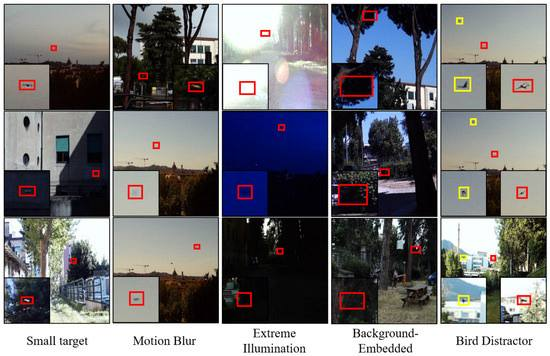
The main problem is that distant targets may occupy only a few image pixels, providing insufficient shape or texture to distinguish them from noise and background clutter. Changing illumination and thermal contrast further reduce visibility across daytime and nighttime conditions, while platform motion, motion blur, and temporary target loss can interrupt tracking.
Low-cost cameras and onboard computers add image-quality and processing constraints, making reliable, real-time detection and tracking more difficult. The research therefore examines how these limitations affect detection reliability, false alarms, tracking continuity, and processing performance. Illustrations should show few-pixel targets, contrasting daytime and nighttime visibility, and targets affected by blur or clutter.
2. Physics-Informed Neural Networks for Online Sensor Calibration in Autonomous UAVs
Autonomous UAVs depend on accurate sensor measurements for stable navigation and reliable flight. However, sensor drift, mechanical vibrations, and changing flight conditions can introduce measurement errors, reducing the reliability of the information used to estimate the UAV’s position, orientation, and motion.
A key challenge is maintaining sensor calibration during normal operation without relying on long observation sequences or dedicated calibration manoeuvres. Limited data and insufficiently informative flight motion can make it difficult to distinguish calibration errors from genuine changes in the UAV’s movement.
Calibration also becomes more difficult when sensor biases and alignment errors vary over time due to vibration, structural deformation, and changing operating conditions. These uncertainties must be addressed within limited onboard computing resources, making calibration accuracy, robustness, numerical stability, and processing latency central concerns.
3. Feasibility and Validation of Modular Propulsion System for Interceptor
Modular propulsion structures face the challenge of maintaining structural integrity under combined pressure, thermal, and dynamic flight loads. Interfaces between modules introduce potential weak points that can limit the strength and reliability of the overall assembly.
These interfaces involve competing requirements for low mass, mechanical stiffness, thermal insulation, and vibration damping. Improving one characteristic may compromise another, making the structural limits of modular assemblies difficult to establish.
The central problem is whether modular propulsion interfaces can withstand interacting loads under extreme flight conditions without failure. Uncertainty in their combined structural and thermal behaviour limits confidence in their feasibility and operating limits.