

Human-Centred Automation and Robotics
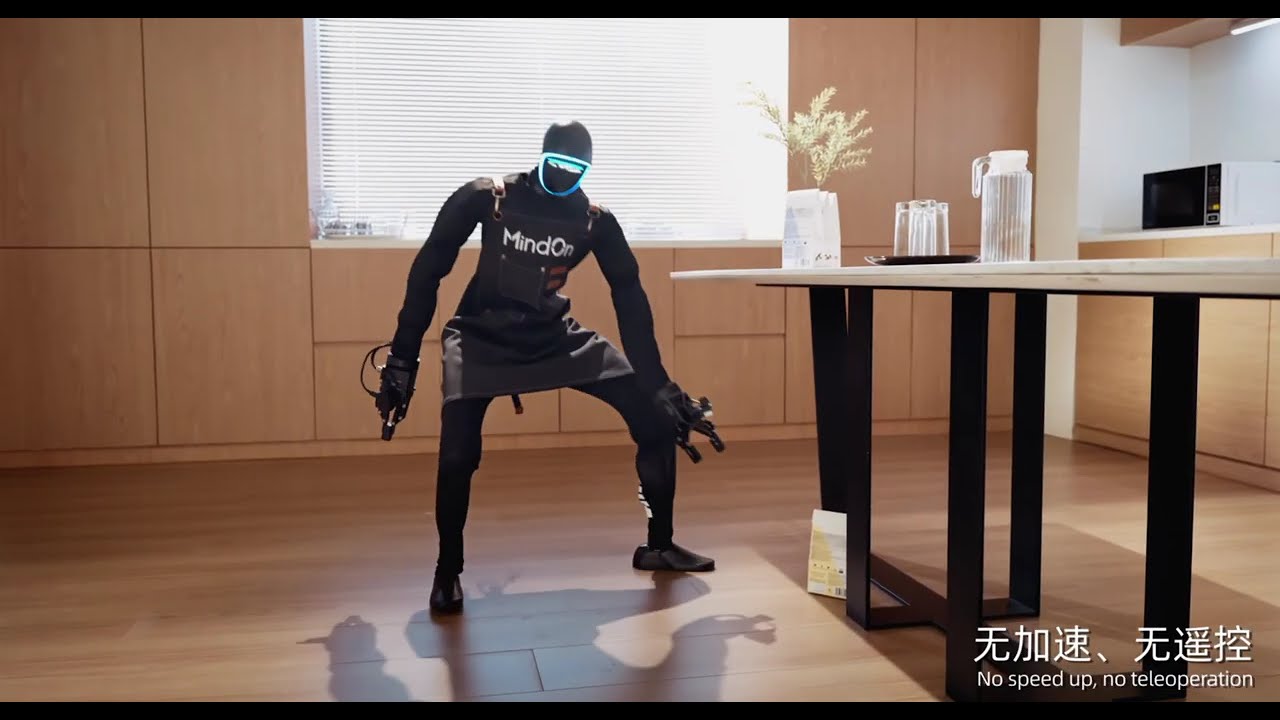
This studio puts students on live deployments of robots that work alongside people, not apart from them: in a hotel banquet hall, a hospital linen room, and a high-volume eye-surgery operating theatre. Working with humanoid robot platforms and robotic arms alongside named industry partners, students tackle what makes human-centered automation hard: perceiving cluttered, variable objects, planning grasps and motions that stay safe and legible to the people nearby, and integrating into workflows that cannot pause for a robot to get it wrong.
Depending on background and interest, a student's focus can range from mechanical hand design and grasp planning, to human-robot interaction and real-time speech, to locomotion and safety-compliant motion planning, to perception and vision-language models. Projects in this studio emphasise system-level thinking, safe human-robot interaction, and iterative prototyping, and are judged by the standard our partners use: does it actually save staff time, safely, in a space full of people?
Project supervisors:
- Mr Chew Wanlong, Nicholas (nickchew@nus.edu.sg)
- Mr Graham Zhu (graham.zhu@nus.edu.sg)
Studio timeslot in Semester 2 AY2026/2027:
- Thursday 1 pm to 4 pm
Projects offered for CDE3301 in 2027
Humanoid-assisted banquet table setup
Project partner: PARKROYAL COLLECTION Pickering, Singapore
PARKROYAL COLLECTION Pickering, Singapore, known for its cascading sky gardens, runs a busy banquet operation in which staff must lay out plates and cutlery for large events under tight turnaround windows between functions.
This project aims to deploy a humanoid robot into the banquet hall to work alongside staff and speed up table setup, without disrupting the pace or feel of a live hospitality venue. Because the task touches nearly every part of humanoid robotics, its focus can flex to each student's skillset:
- Hand and grasp design: end-effectors and grasp strategies that pick up plates, cutlery and glassware reliably and gently.
- Human-centric robot motion: including real-time speech interaction, so the robot can coordinate naturally with banquet staff moving around it.
- Locomotion and motion planning: policies that keep the robot compliant with hotel safety requirements and comfortable to be around when guests are present.
Unlike a fenced-off industrial cell, the robot will work in a functioning hotel, on a schedule the hotel sets, around people who are not robotics engineers. Students will need to design for reliability, handle the inevitable variation in table settings and clutter, and prove their system against a real operational benchmark set by PARKROYAL's banquet team: event turnaround time.

Humanoid robot for sterile surgical garb folding and inspection
Project partners: National University Hospital (NUH)
NUH sterilises and reprocesses large volumes of surgical garb every day. Folding each piece and inspecting it for stains or defects before it returns to circulation is slow, repetitive work that still demands a trained eye.
This project aims to deploy a humanoid robot operating from a fixed station to fold disinfected surgical garb and flag pieces that fail visual inspection. With the robot stationary, the whole challenge lives in perception and grasping. Garb is a deformable object with no fixed shape, so students will build perception systems that track fabric as it is manipulated, distinguish a genuine stain or defect from a shadow or wrinkle, and localise grasp points on a constantly changing surface. On the manipulation side, students will develop grasp and folding policies that pick up, reposition and fold garments cleanly and repeatably, and recover gracefully when a fold goes wrong instead of compounding the error.
This project suits students who want to go deep on robotic perception and the manipulation of deformable objects, one of the genuinely unsolved problems in robotics, rather than breadth across the full robot stack. Success is measured against NUH's own quality bar: a folded garment that would pass a human inspector's check, at a pace worth automating.

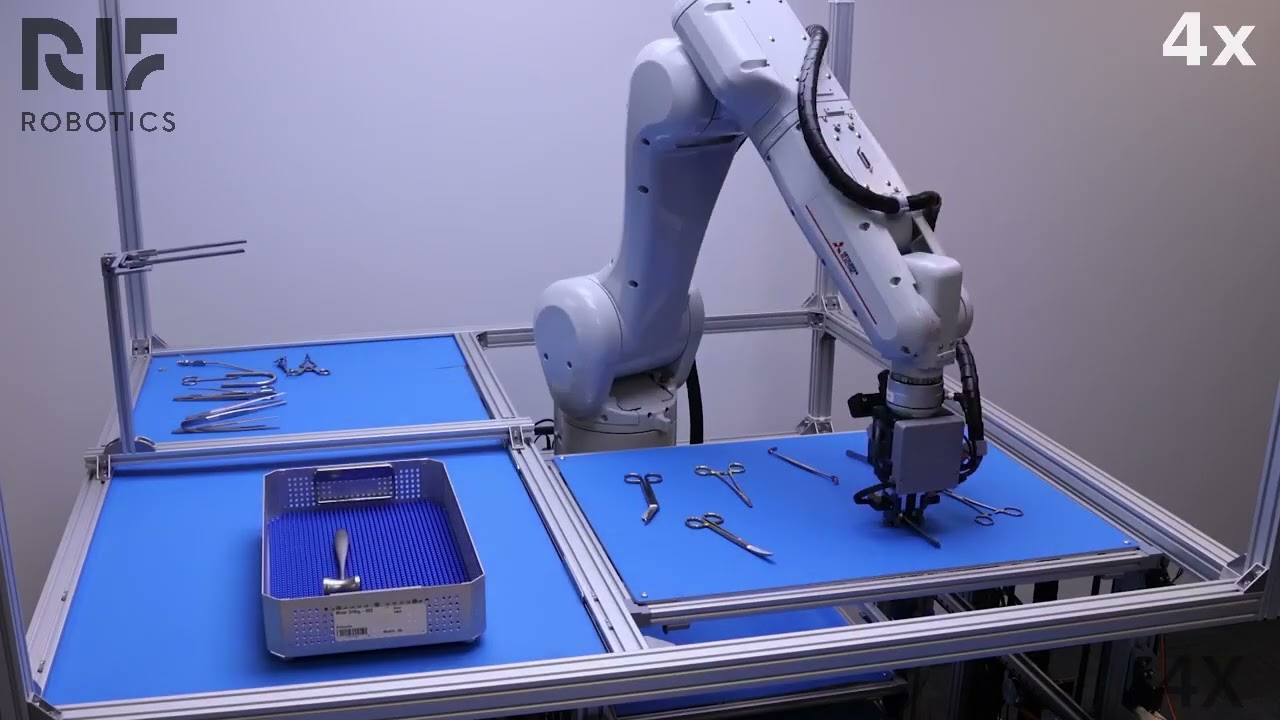
VLM-assisted surgical instrument sorting for faster OT turnover
Project partner: Singapore National Eye Centre (SNEC)
SNEC performs a very high volume of cataract surgeries, where turnover time between cases in the operating theatre (OT) is one of the biggest levers on how many patients can be treated in a day. After each surgery, dozens of small, similar-looking instruments return from disinfection and must be sorted back into their trays before the next case can begin, a task currently done manually by OT nurses.
Continuing an ongoing collaboration with SNEC, this project explores how vision-language models (VLMs) can help OT nurses sort post-disinfected surgical tools quickly and correctly. Rather than training a narrow classifier for a fixed instrument set, students will work with VLMs that recognise and reason about tools from natural descriptions, handle new or reorganised instrument sets without retraining from scratch, and flag uncertain or ambiguous items rather than silently guessing, since a sorting error here has real consequences the next time that tray is opened.
Students joining this project inherit a working baseline from prior work and will push it toward the reliability and speed a real OT can depend on: faster and more accurate sorting, tighter integration with how SNEC nurses actually work, and evaluation against turnover-time targets that matter to a high-volume surgical practice. It suits students most interested in perception, VLMs and applied AI deployment in safety-critical settings, over hardware design.
Pre-requisite: students who embark on this project must have prior knowledge of ROS 2.0 or worked with python SDKs to control robots.
Past projects

GoonPod: low-cost and compact training kit for robotic surgery
This project aims to resolve the limited robotic surgery simulator access, hindering the training progress, by creating low-cost and compact training kit for medical students to increase access and support more effective, scalable training.

KittCat: configurable kitter
KittCat aims to improve the efficiency of the kitting workflow in warehouses by addressing bottlenecks in the insertion of items into soft polyethylene packaging.

Balancing Standard
In this project, we aim to develop a 2-legged balancing robot with a 3-axis gimbal with aiming and firing capabilities.

BoxBunny
We offer accessible boxing training that is both immersive and enriching, featuring an intelligent robot capable of responding to movements for training and sparring, enabling boxers in development to enjoy a progressive and personalised journey towards proficiency in boxing.

Roboscan: surgical tools inspection and sorting system
For hospitals dissatisfied with the inefficiency and risks involved in inspection, identification and sorting of surgical instruments, our product, Roboscan, an integrated system to process surgical tools, offers full automation of processing tools, reducing risk of injury and improving efficiency.
SAM: Species Assessment Mapper
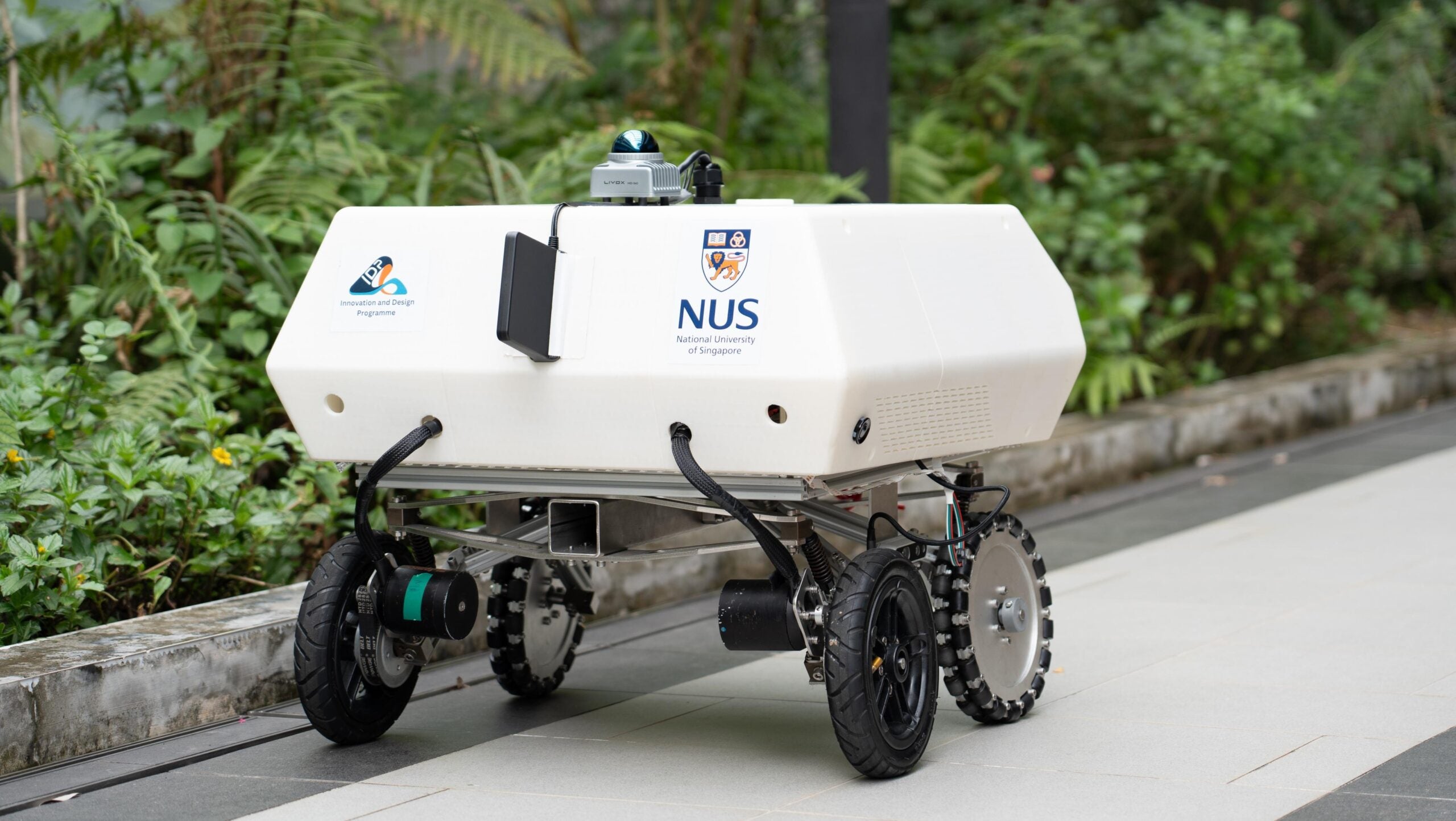
A computer vision and GNSS-powered autonomous navigating robot solution with an accompanying progressive web app to detect and locate invasive species which is a $423 billion per year global problem.