Community Wellbeing: Designing for Independence
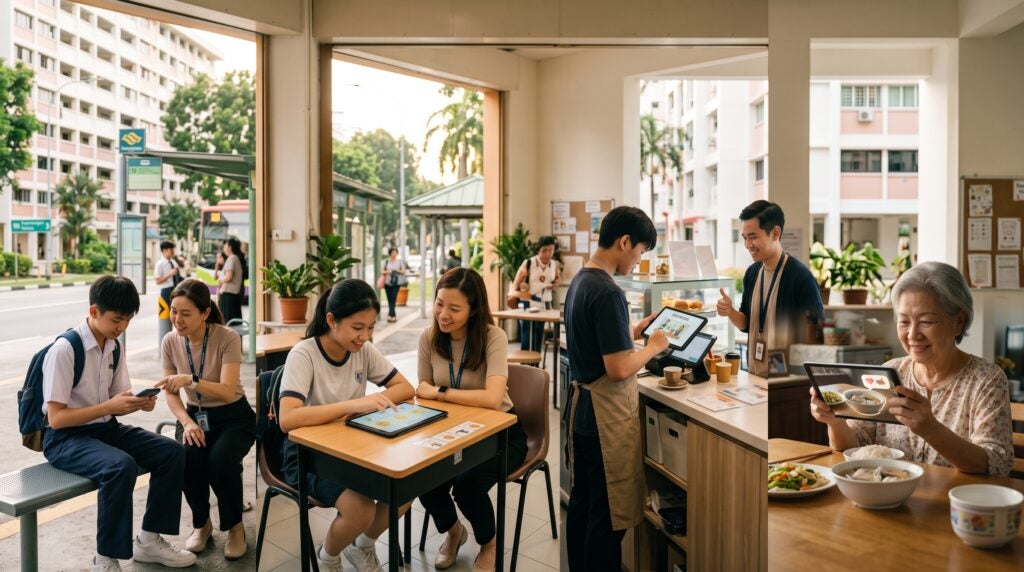
Technology is usually designed for the "average" user. Community Wellbeing: Designing for Independence asks what changes when we design for people whose needs are most often overlooked: youths with special learning needs taking their first steps towards independence, and seniors who want connection, health and dignity as they age.
Students work with two community partners, AWWA and Lions Befrienders, on real problems raised by the people who work with these communities every day. AWWA's special education schools support students with autism spectrum disorder (ASD) and intellectual disabilities as they build the life skills they need for adulthood: travelling on their own, saying what they feel and need, and moving from school to work. Lions Befrienders supports older adults in the community, many of whom face loneliness, health problems and cognitive decline.
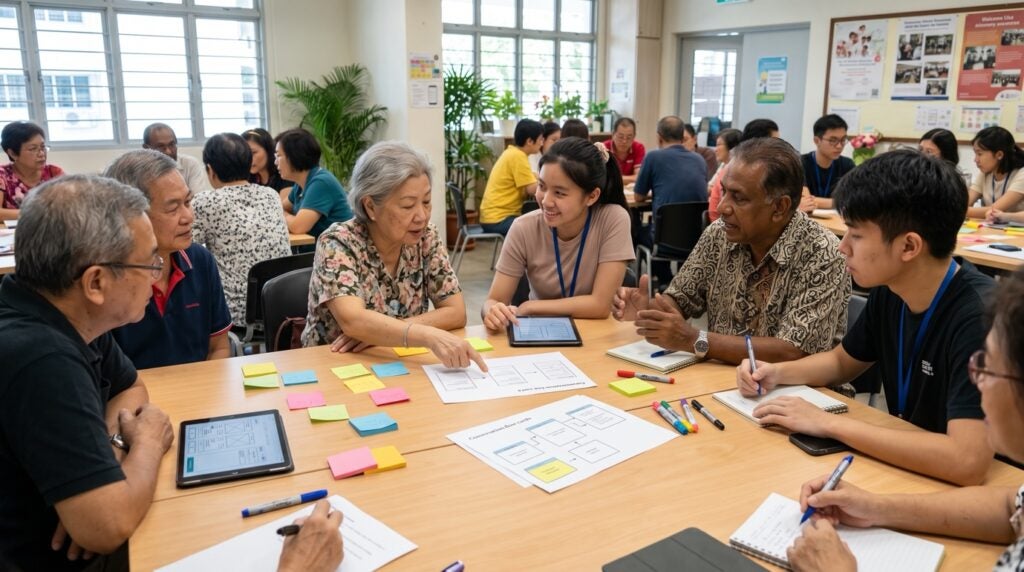
The studio has four projects. Each project starts with a needs analysis alongside educators, therapists, job coaches, caregivers and end users. It then moves through prototyping, user testing and refinement.
Inclusive and accessible design is at the centre of the studio. Students will learn to design for predictability, low sensory load, clear visual and audio cues, and positive reinforcement. They will also work through the ethics of building technology for vulnerable users, including privacy, autonomy and the limits of human-AI interaction.
Each project is kept small enough that teams can deliver a working prototype and see real people use it. Students leave with hands-on experience in user research, interaction design and building a product from start to finish, plus a portfolio piece with real social impact.
Project supervisors:
- A/Prof Lim Li Hong Idris (lhi.lim@nus.edu.sg)
- Dr Kate Sangwon Lee (katelee@nus.edu.sg)
Studio timeslot in Semester 2 AY2026/2027:
- Wednesday 9 am to 12 pm
Projects offered for CDE3301 in 2027
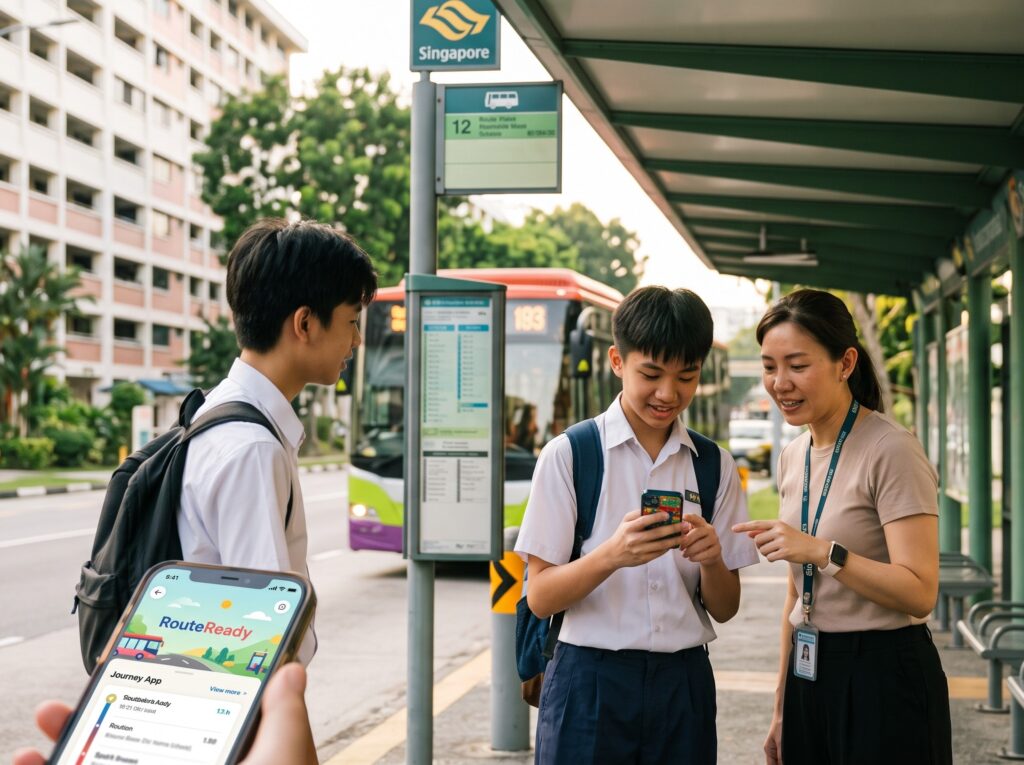
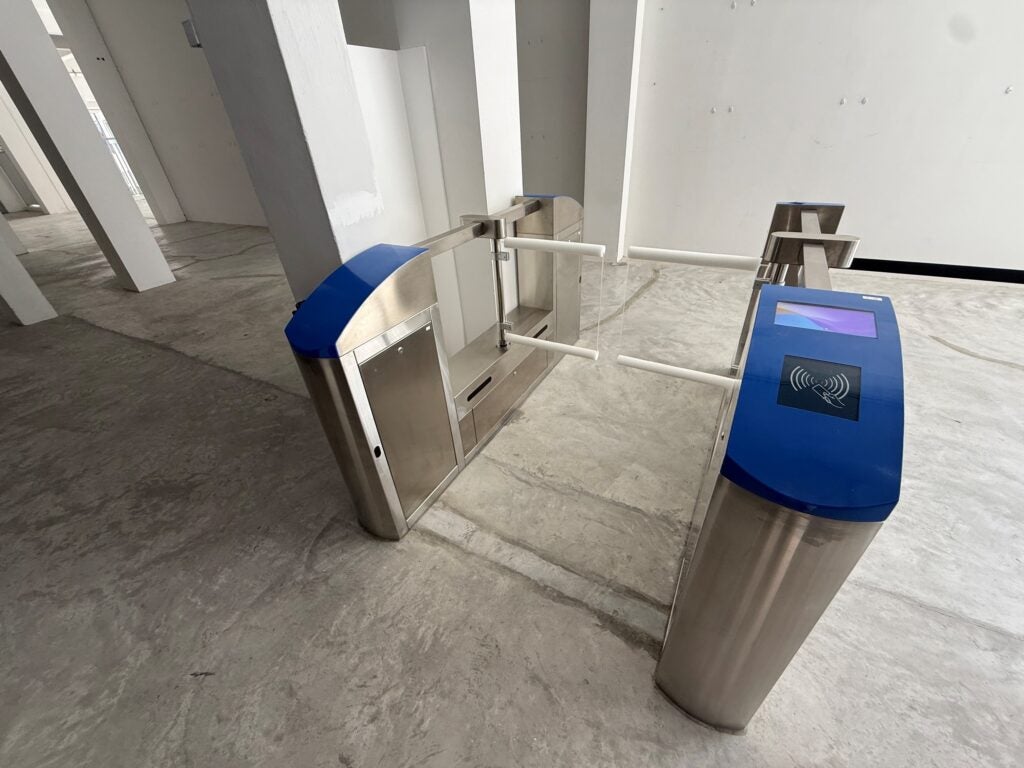
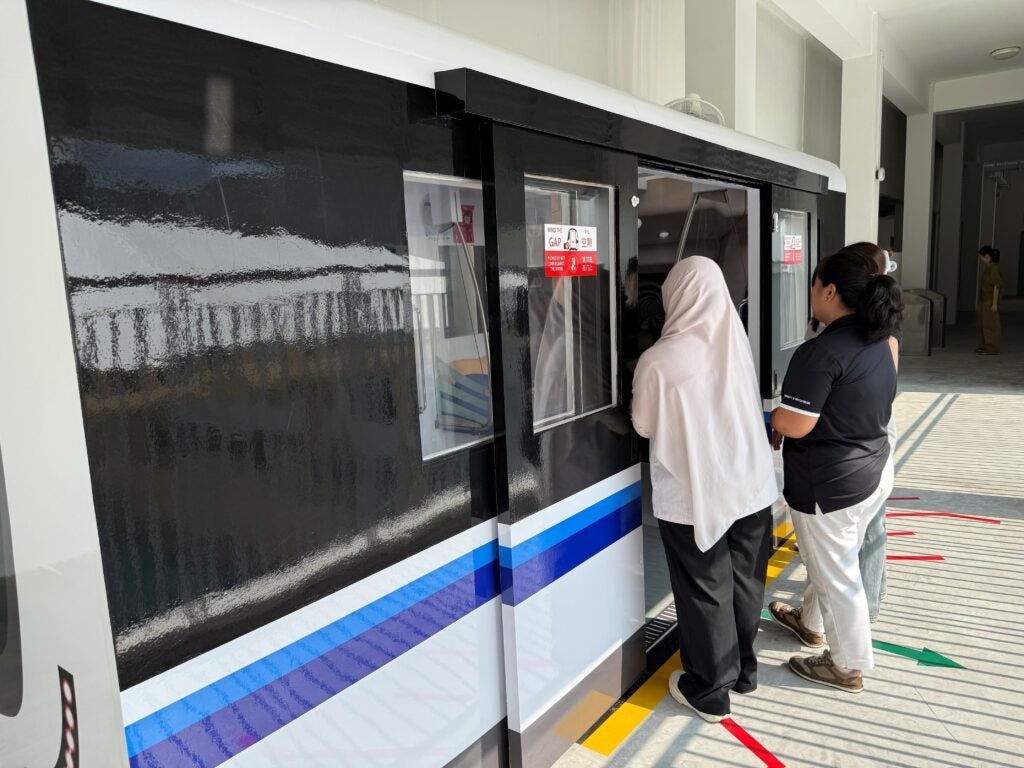
RouteReady: a problem-solving tool for transport navigation life skills in youths with special learning needs
Project partner: AWWA
Travelling on buses and the MRT without help opens the door to school, work, therapy and community life. For many youths with special learning needs, including ASD and intellectual disabilities, it is also one of the most stressful parts of the day. Trains are delayed, full buses skip stops, signs change, crowds surge and announcements are often audio-only. Students who have learnt one fixed route can be overwhelmed when the routine breaks.
The real gap is between knowing the usual route and coping when things go wrong. Practising in the real transport system is costly and risky, because boarding the wrong service or missing a stop has real safety, time and emotional costs. Educators and caregivers also can't go along on repeated practice runs.
Students will design and develop solutions that could simulate realistic bus and MRT journeys in a safe setting where students can practise again and again. Working with AWWA educators, therapists and caregivers, teams will identify the most common and most important scenarios. They will then build an interactive prototype that covers:
- Everyday steps: buying a ticket, finding the platform and getting off at the right stop.
- Disruptions: train delays, diversions, missed stops, crowded carriages and unclear announcements.
The tool will follow design principles that suit students with special needs: predictable interactions, clear visual and audio cues, low sensory overload, step-by-step support and positive reinforcement. Difficulty will adjust to each student's readiness, and a simple progress view will show educators and caregivers which skills each student has mastered.
Teams will test the prototype with students over at least two rounds and improve it between rounds. AWWA will be able to extend the finished tool to new routes and scenarios, helping students travel with more confidence and independence.
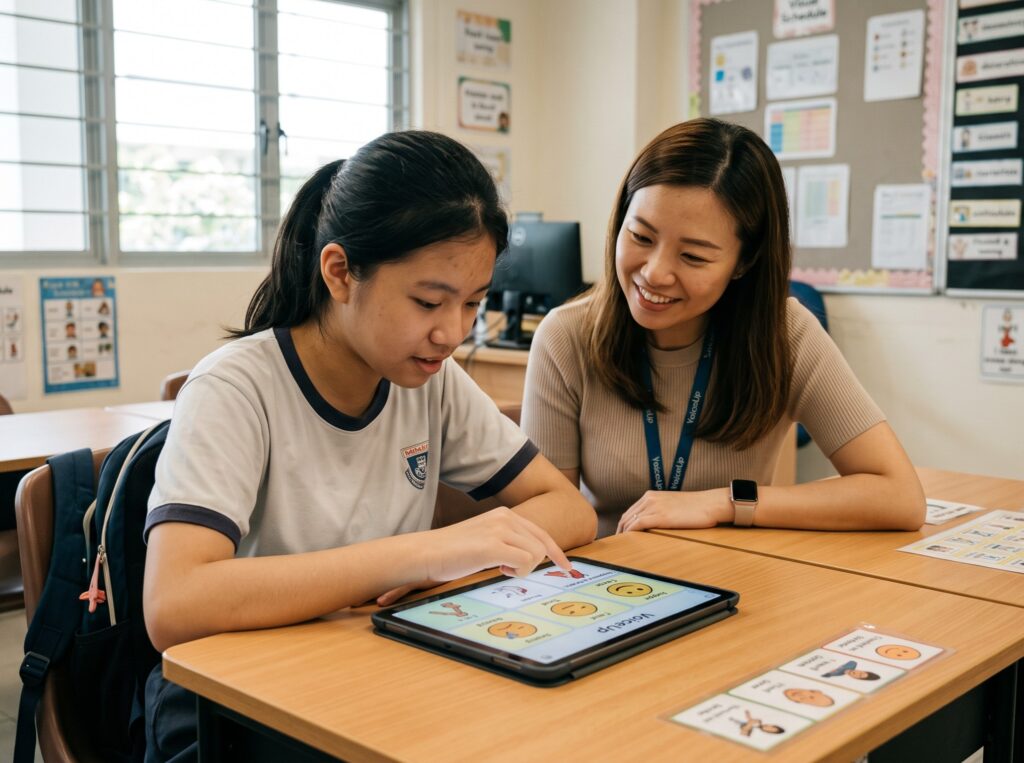
VoiceUp: a tool for emotional expression, language fluency and communication confidence in youths with special learning needs
Project partner: AWWA
Many students in AWWA's special education schools find it hard to put their thoughts, needs and feelings into words. This is about more than vocabulary. Students may struggle to recognise what they are feeling, to find and order the right words under stress, or to read other people's emotional cues. When they can't express a need in time, the frustration can show up as withdrawal, meltdowns or challenging behaviour.
Fluency means being able to recognise an emotion or need and quickly put it into clear words. For these students it matters for wellbeing and safety as much as for literacy. Flashcards, worksheets and static emotion charts struggle to hold attention or build quick recall. Educators and speech therapists also can't always give the one-to-one repetition students need.
Students will design and develop an engaging tool that students can use again and again. Working with AWWA educators, speech and language therapists and caregivers, teams will choose which emotions, needs and everyday scenarios to cover first. They will then build a step-by-step skill pathway:
- Recognising an emotion
- Building vocabulary
- Forming sentences
- Expressing needs in real situations, such as asking for a break, saying they feel unwell or sharing excitement
The tool will use visual, audio and interactive cues, with predictable interactions, low sensory load, step-by-step support and positive reinforcement. Its content will adjust to each student's language and literacy level. A progress view will help educators, therapists and caregivers track growth over time.
Teams will test the prototype with students over at least two rounds. The aim is a tool that helps students name what they feel, say what they need, and rely less on behaviour to be understood.
WorkReady: a school-to-work transition platform for building workplace problem-solving, agency and self-regulated learning in youths with special learning needs
Project partner: AWWA
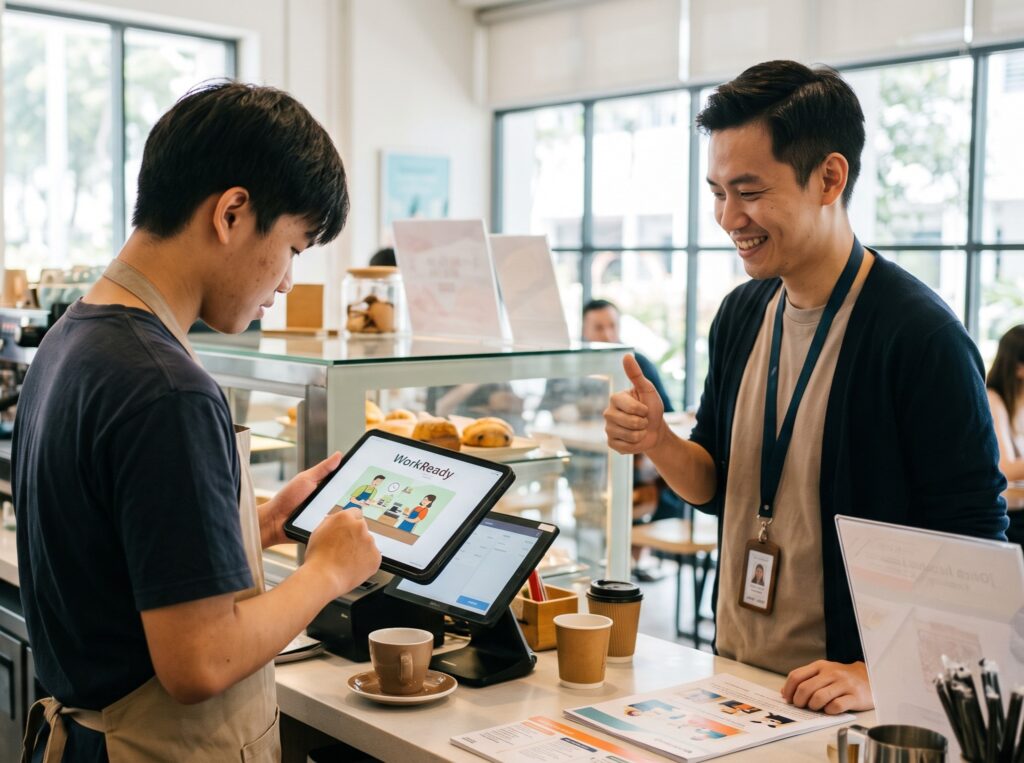
Every job has its plot twists. Build a branching interactive simulation that helps a real student rehearse theirs, so their first day at work goes smoothly.
Picture your first day at a new job. The printer jams, your supervisor's instruction doesn't match what you rehearsed, and a customer asks for something unusual. For AWWA students with special learning needs, surprises like these are what make the move from school to work so daunting. Vocational training usually rehearses one task, one way. Students who have only practised the "happy path" can freeze when things change.
Two abilities make the biggest difference:
- Agency: the confidence to make a decision or ask for help.
- Self-regulated learning: noticing that a strategy isn't working and changing it.
Without them, students stay dependent on a job coach for longer than they need to.
Students will build a branching workplace simulation that works more like an interactive story than a training slideshow. The user takes on a job role and works through a normal task. Then something unexpected happens, such as a changed instruction, broken equipment or an unusual request. They choose a response, see what happens, and answer a friendly reflection prompt: "What worked? What would you try differently?" The design leads with visuals and audio, and uses warm feedback and small wins instead of pass/fail tests. Optional extras, if time allows, include a chatbot reflection buddy, a text-to-speech narrator or a customisable avatar.
The project is a small, carefully built pilot around one job role. It covers one routine task and three to five disruptions, developed with AWWA job coaches and, where possible, the student's future employer. Teams will trial it with the students now moving into work and refine it once. AWWA will keep a reusable template it can adapt for future job roles.
Context-aware AI wellbeing agents for seniors
Project partner: Lions Befrienders
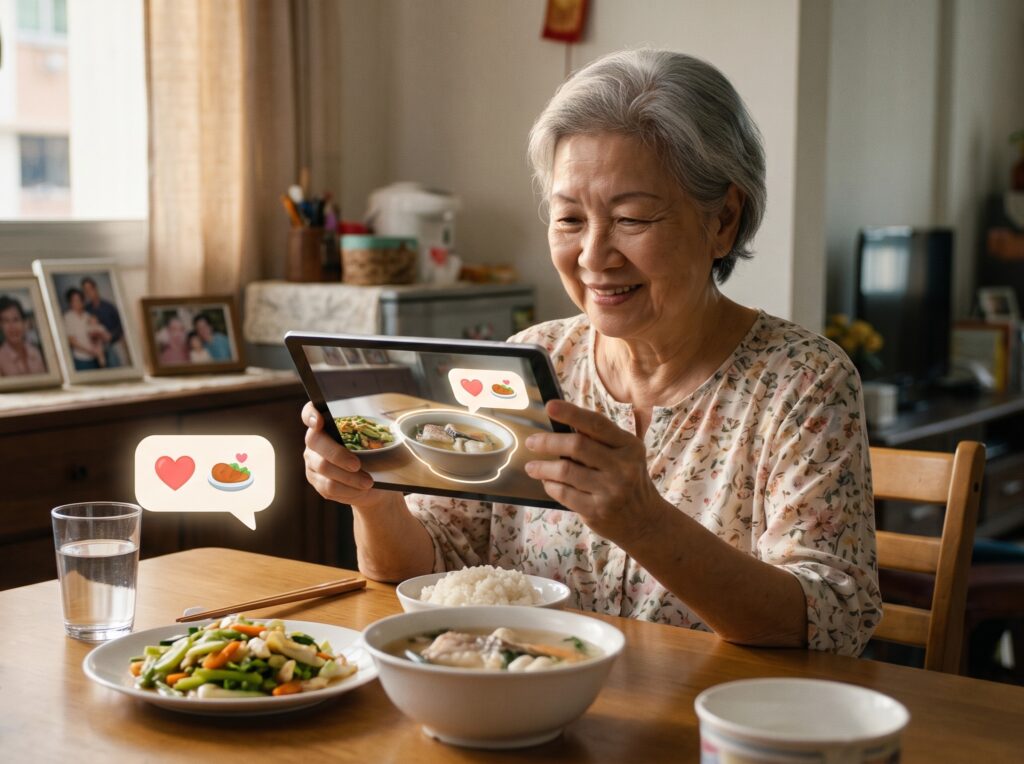
Many seniors in Singapore live with social isolation and health challenges, and AI wellbeing agents are increasingly seen as a source of companionship and support. Yet most of these agents only know what users type. Can an agent that sees more of a senior's world also earn more of their trust?
This project investigates how giving an AI wellbeing agent visual awareness of a user's surroundings affects seniors' trust and their willingness to open up. Picture an agent that recognises the meal on the table or a familiar corner of the living room and responds with empathy, compared with one that relies on text alone.
Students will work across four strands:
- Trust: measure how perceived trust changes when an agent shows visual awareness of a senior's environment, compared with text-only interaction.
- Self-disclosure: examine how context-aware, empathetic feedback shapes how much seniors share about their emotional and physical wellbeing, within a "Multimedia Empathy Journaling" framework.
- Local needs: interview Singaporean seniors to understand local needs, concerns and ethical considerations around AI support for social isolation and health.
- Ethical design: test whether the "AI Opportunity Cards" and "Positive Computing" frameworks keep generative AI agents human-centred and ethically aligned in real-world use.
The project combines multimodal AI prototyping with hands-on user research. Students will gain experience building conversational agents that use vision, running studies with older adults, and working through questions of privacy and consent when a camera enters someone's home.
The outcome is evidence and design guidance on when context-awareness builds trust, and how to design AI companions for seniors that are empathetic, culturally grounded and ethically sound.
Civic AI for multilingual communities: multilingual conversational intake for public assistance and legal aid
Project partners:
- Cornell Tech (Flowstore team)
- Community Legal Clinics / Social Service Touchpoints (Singapore)
- Civic Service Partners (New York)
Public agencies are rapidly deploying conversational AI agents for vital citizen services, from healthcare subsidies to legal aid. However, these systems frequently fail vulnerable populations. In multilingual cities like Singapore and New York, older adults and minority communities often code-switch, rely on local vernaculars, and navigate cultural expectations that standard AI models overlook.
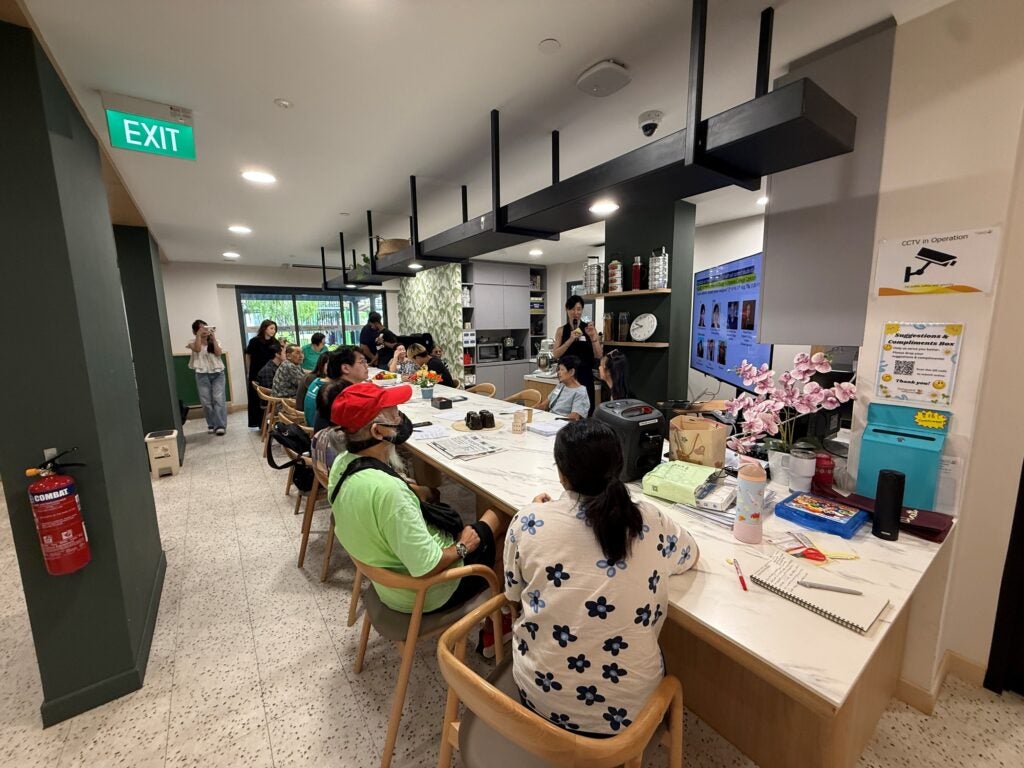
Conducted in direct collaboration with Cornell Tech (led by Prof. Tapan Parikh), this studio investigates how to design, build, and evaluate civic AI agents that preserve dignity and foster public trust. Teams will move through contextual inquiry, conversation prototyping in Cornell Tech's Flowstore, and stress-testing with native speakers. Students will gain hands-on experience in conversation engineering, AI red-teaming, cross-cultural UX evaluation, and public interest technology.
Working with frontline social service navigators and native speakers, teams will identify critical conversational failure modes — including rushed eligibility checks, literal translation errors, and premature conversational dead-ends. Using Cornell Tech's Flowstore platform, students will prototype adaptive conversational agents capable of gracefully navigating Singlish, Mandarin, Malay, and Tamil.
Project teams will evaluate how conversational pacing, cultural framing, and dignified verification loops impact user trust and access to justice. The final deliverable is an open-source, evaluated civic intake workflow tested with community users.