

Hospitality Studio
Designing Technology for Frontline Hospitality
This studio explores how technology can transform frontline hospitality by enhancing service quality, improving operational efficiency, and delivering more personalised guest experiences. Students will investigate real-world challenges faced by hospitality operators through user research and human-centred design, and experiment with technologies such as artificial intelligence (AI), data analytics, and smart monitoring systems to develop and prototype innovative solutions that empower frontline staff, streamline operations, and create more seamless, personalised, and memorable experiences for guests.
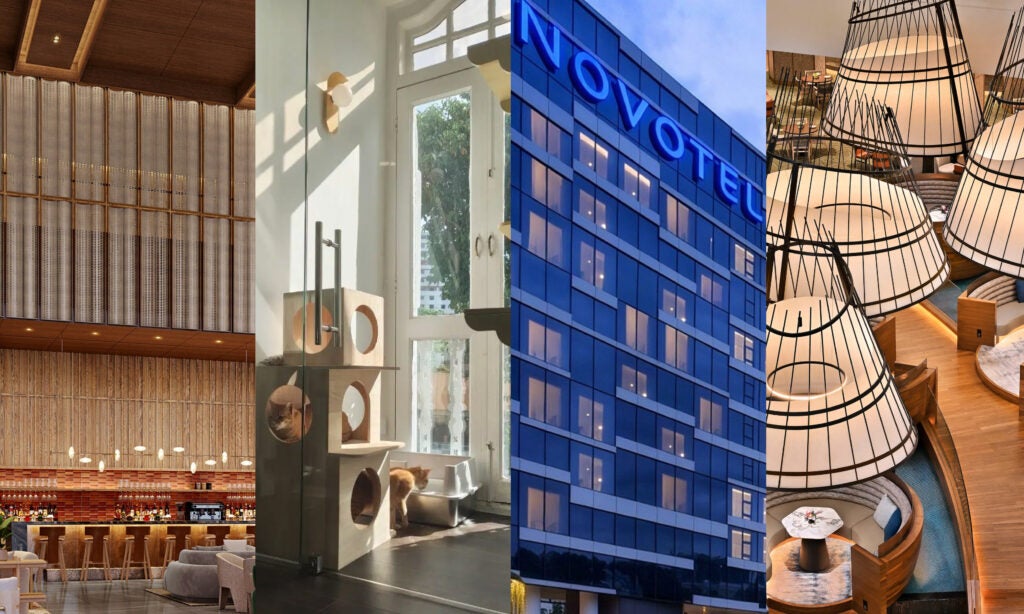
Project partners:
- Pan Pacific Hotels Group
- Novotel Singapore
- Amara Singapore
- The Ascott Limited
- Kuro Cat Hotel
Project supervisors:
- Mr Royston Shieh (shiehtw@nus.edu.sg)
- Ms Choi Mijin (mijinc@nus.edu.sg)
Studio timeslot in Semester 2 AY2026/2027:
- Wednesday 9 am to 12 pm
Projects offered for CDE3301 in 2027
1. The Art of Arrival: Designing Smarter Frontline Hospitality
Luxury service is hard to deliver consistently. How can we design user centric technology to fit frontline staff?
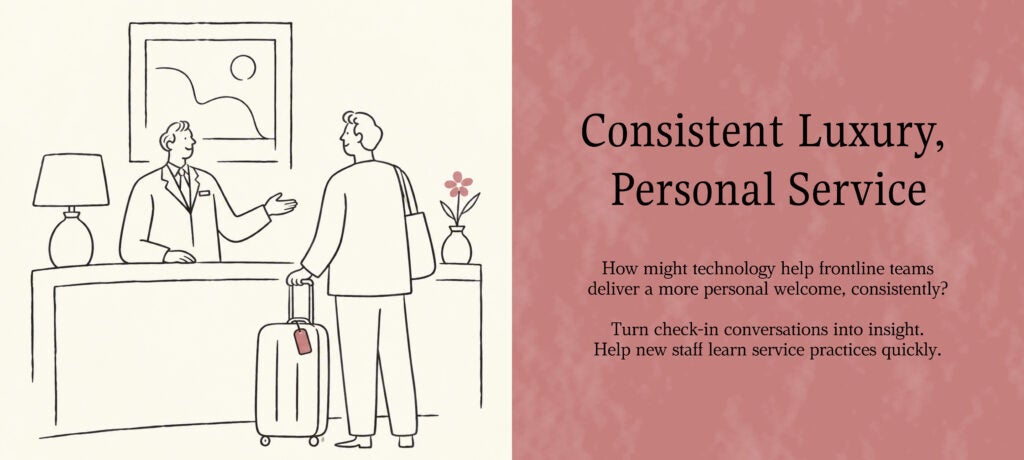
Premium hotels promise a distinctive, personal arrival, but the standard behind it lives in senior staff habits rather than in data. Conversations at check-in are rarely captured, so playbooks improve slowly. How can AI and text analysis turn frontline interactions into insight, and how can the results be designed so new staff pick them up quickly with minimal training?
2. Service in Sync: Connecting People, Information and Technology
Frontline teams lose time and information at the moment of service. How can we design integrated technology deployment to help frontline teams focus?
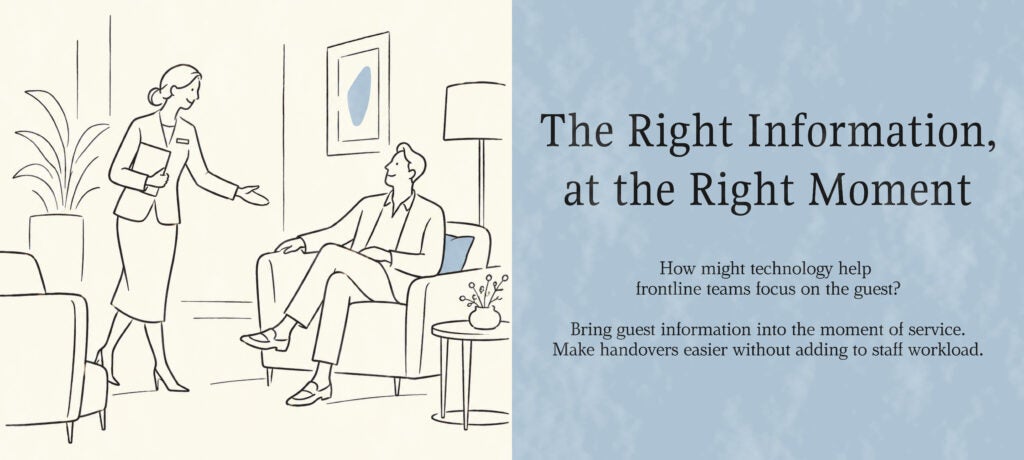
Staff split their attention between operational tasks, handovers across departments and shifts, and guest needs, especially at arrival and departure peaks. Guest data is recorded, but it often is not in front of the person serving the guest. Which technology, deployed in a real operating environment, puts the right information in front of the right employee at the right moment without adding to their workload?
3. Luxury Unleashed: Rethinking the Pet Hospitality Experience
"Luxury" has no shared definition in the fast-growing animal hospitality segment.
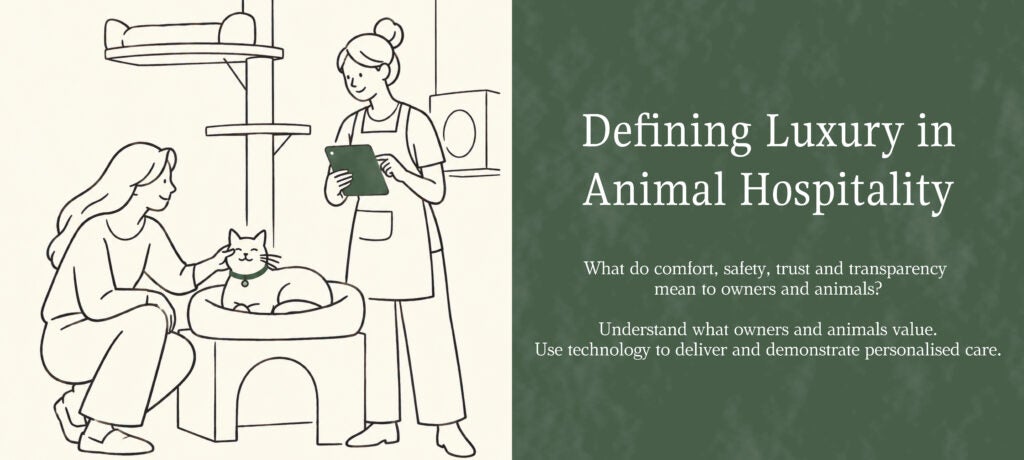
Pet hotels are expanding, but operators lack evidence of what owners and animals actually value, such as comfort, safety, trust and transparency. How can user research define luxury from the perspective of both owner and animal, and how can technology be deployed to deliver and demonstrate it, for example through monitoring, updates and personalised care?
4. Embedding Sustainability into Hotel Experience
Background
Hotels today face a growing expectation from guests to operate sustainably and communicate these efforts transparently. However, guest engagement with sustainability initiatives remains limited. During check‑in, guests already receive a high volume of information — such as room details, facilities, Wi‑Fi access, and breakfast timings — leaving little opportunity for front desk staff to introduce sustainability messaging without adding friction to the experience.
While many hotels rely on in‑room placards, tabletop materials, or television screens to share sustainability information, these static formats are often overlooked and can only convey limited or generic content. As a result, guests remain unaware of the hotel’s sustainability efforts unless they actively seek out this information. This presents an opportunity to rethink how sustainability stories and actions can be communicated in a more engaging, timely, and personalised way — without disrupting the guest journey.
Project aim
To design and prototype a frictionless, guest‑centric sustainability engagement solution that integrates seamlessly into the hotelstay experience without increasing check‑in complexity.
The project aims to:
- Increase guest awareness of hotel sustainability efforts
- Deliver information through intuitive, low‑effort digital or physical touchpoints
- Enable personalised content delivery, allowing guests to explore sustainability topics of interest (e.g. waste reduction, energy efficiency, cultural heritage protection)
Possible project scope
Understand guest journey and operational constraints:
- Map the end‑to‑end hotel guest journey to identify natural, low‑friction touchpoints (e.g. pre‑arrival, mobile check‑in, in‑room, post‑check‑in)
- Identify moments where sustainability engagement can add value rather than distraction
Personalised and context‑aware engagement design:
- Explore ways to tailor sustainability content based on guest preferences or behaviour, length and purpose of stay, and interaction history or opt‑in choices
- Design modular sustainability content aligned to themes such as waste reduction, energy and water conservation, and local culture and heritage protection
Technology and innovation exploration through evaluation of suitable technologies such as AI‑driven recommendation or content personalisation engines, chatbots or conversational interfaces, and in‑room or post‑check‑in digital touchpoints
Learning opportunities for students
Through this project, students can expect to :
- Gain insight into service design in hospitality environments
- Apply user‑centred design, personalisation logic, and content strategy in real service context.