Haptic synchronisation for robotic teleoperation
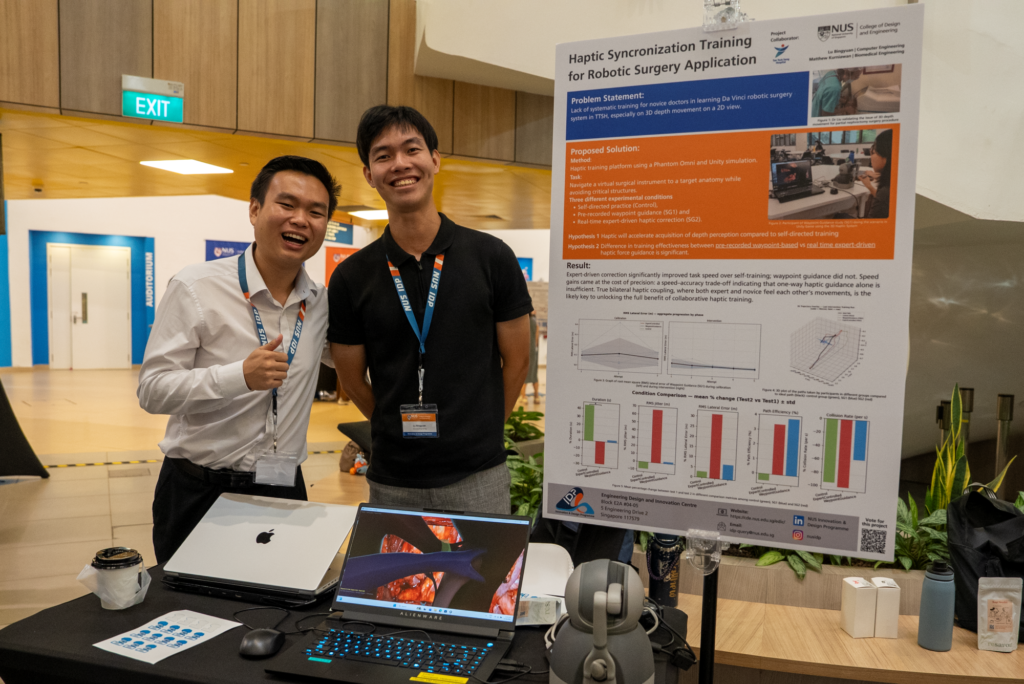
Learning to operate a robotic surgical system requires surgeons to develop precise control of instruments in three-dimensional space while working from a two-dimensional display. However, novice doctors currently lack a systematic training approach for developing this skill on actual robotic surgery systems, particularly for depth perception and movement. This project investigates whether haptic guidance can provide a more effective way of developing these skills.
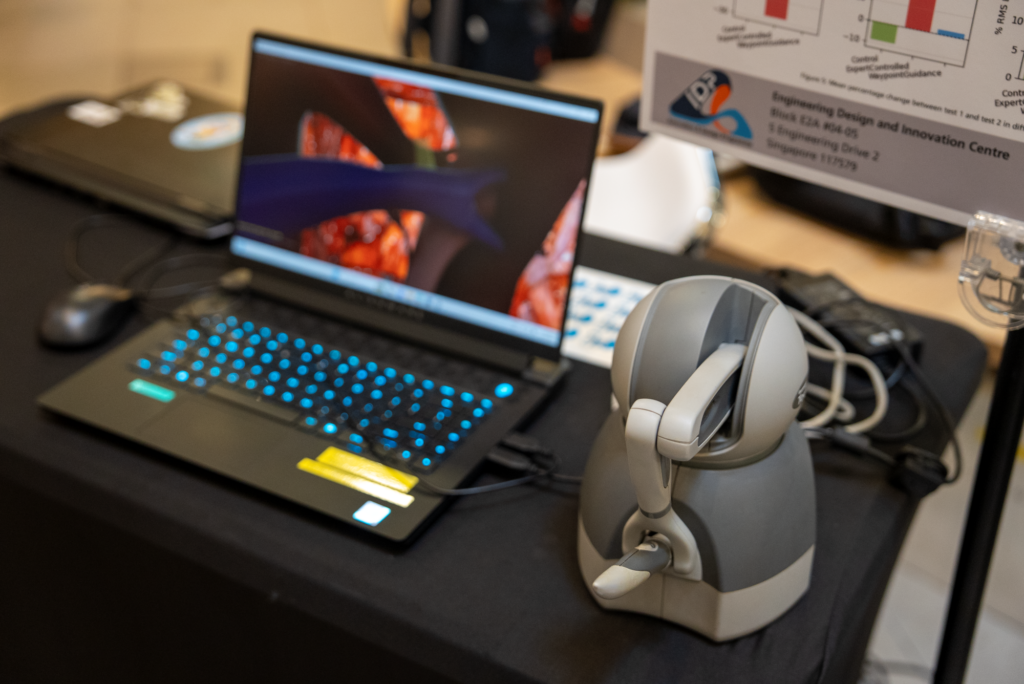
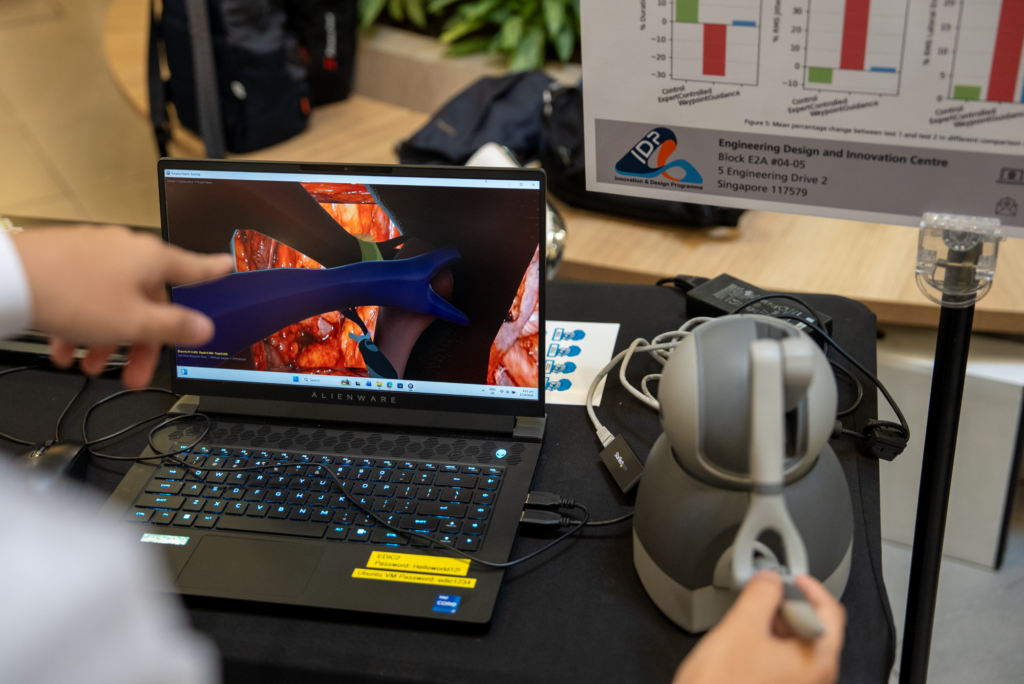
The team developed a haptic training platform using a Phantom Omni device and Unity simulation, in which trainees navigate a virtual surgical instrument towards a target anatomy while avoiding critical structures. Three training approaches were compared: self-directed practice, pre-recorded waypoint guidance and real-time expert-driven haptic correction.
Results showed that real-time expert-driven haptic correction significantly improved task speed compared with self-directed training, while pre-recorded waypoint guidance did not. However, improvements in speed were accompanied by reduced precision, revealing a speed–accuracy trade-off. These findings suggest that one-way haptic guidance alone may be insufficient and point towards bilateral haptic coupling, where expert and trainee can feel each other's movements, as a promising direction for developing more effective collaborative training for robotic surgery.
Project Team
Students:
- Lu Bingyuan (Computer Engineering, Class of 2026)
- Matthew Kurniawan (Biomedical Engineering, Class of 2026)
Supervisor:
- Dr Cai Shaoyu (shao.cai@nus.edu.sg)