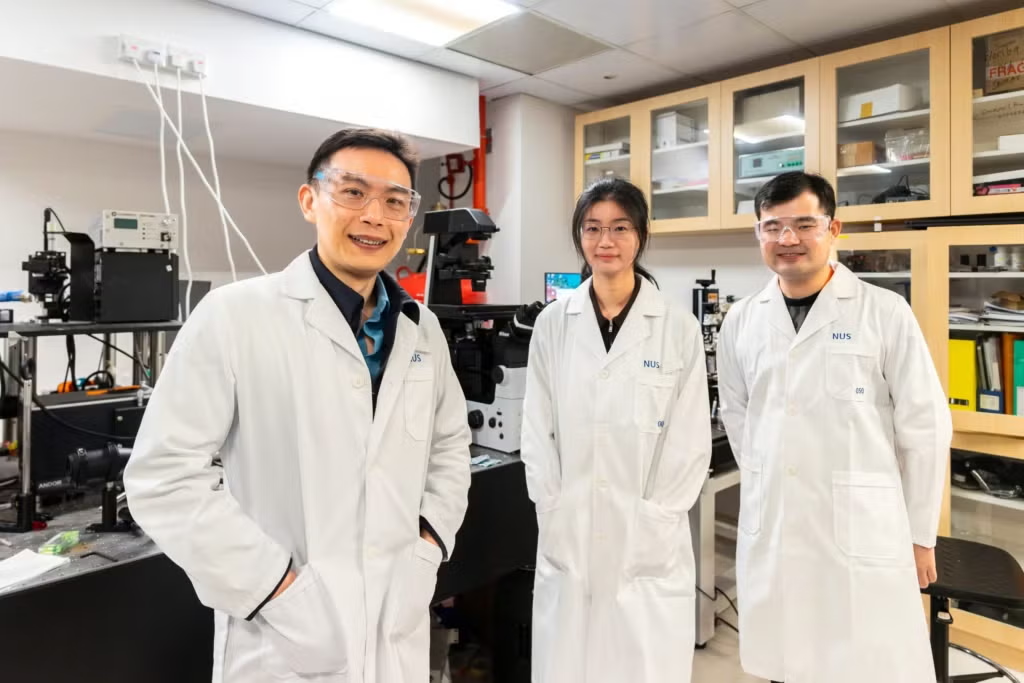

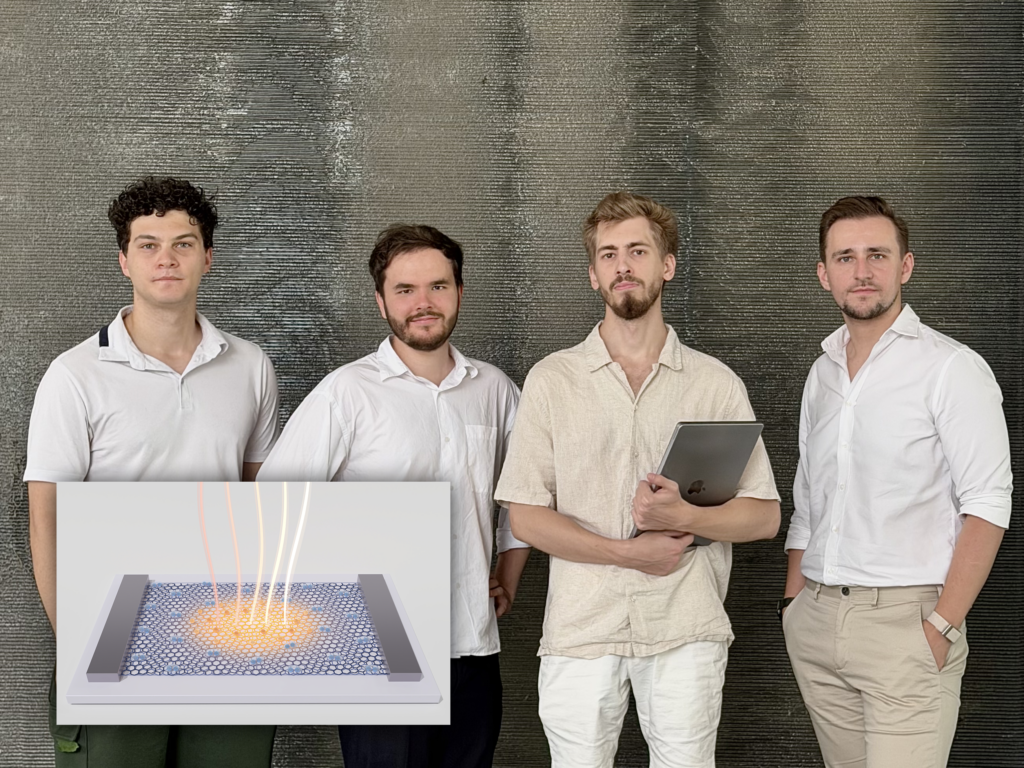
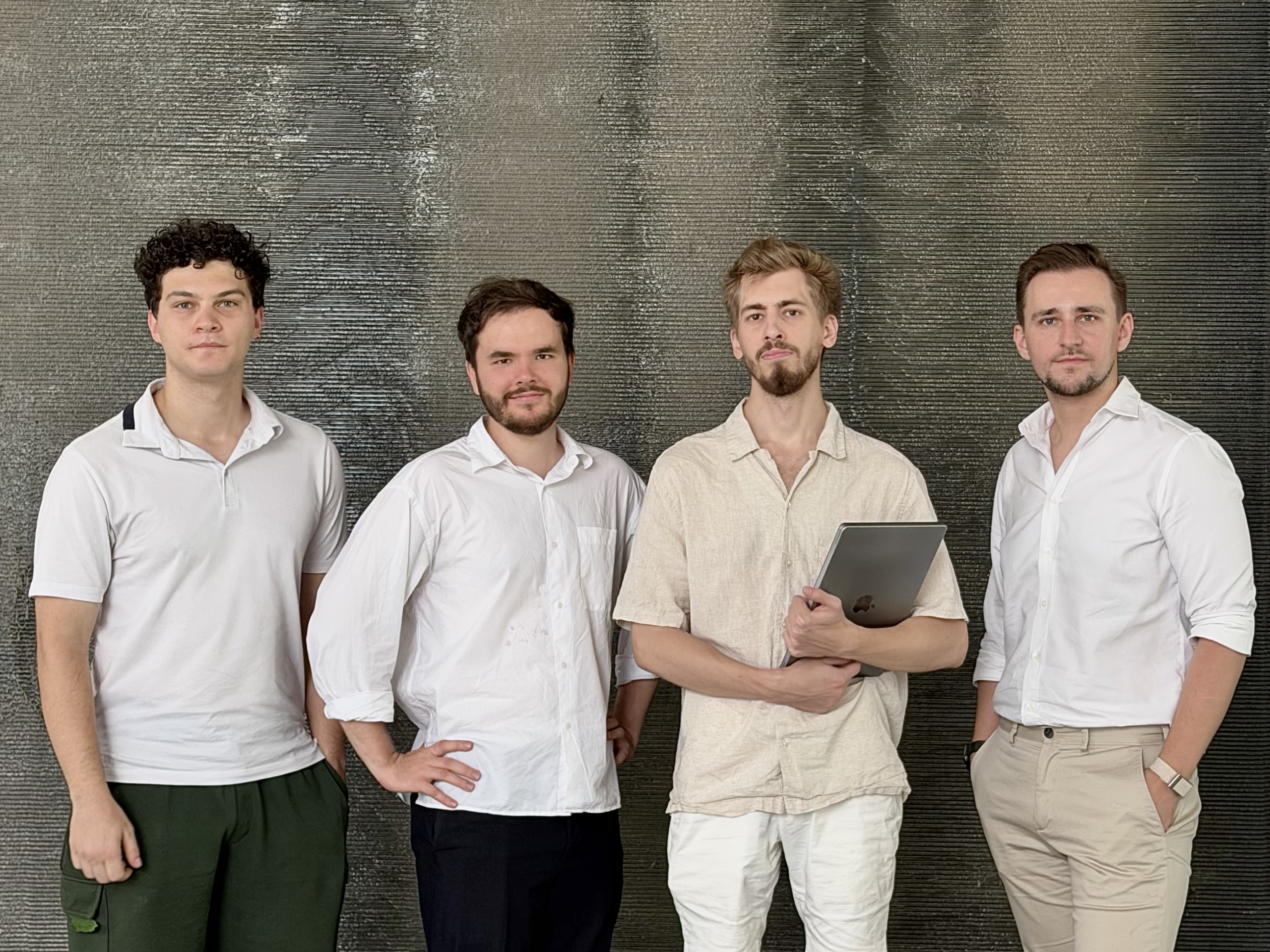
NUS Materials Science and Engineering Assistant Professor Denis Bandurin and his team — Leonid Elesin, Artur Shilov, and Mikhail Kravtsov have shown that superconductors are not the only materials whose phase transitions can be harnessed for ultrasensitive light detection. They found that even low-intensity far-infrared radiation can switch magic-angle twisted bilayer graphene from a correlated insulator into a metal.
The mechanism is simple but powerful: absorbed radiation heats the electrons while the crystal lattice remains cold. Even a slight rise in electronic temperature is enough to “melt” the fragile insulating state and restore metallic conduction.
Phase transitions are a central idea in modern physics. We see them in everyday life when water freezes, wax melts, or vapour condenses into droplets. In quantum materials, however, the transformation can occur without any rearrangement of atoms. Instead, electrons collectively reorganise into a new state, and small changes in temperature, magnetic field, or light can dramatically alter the material’s behaviour.
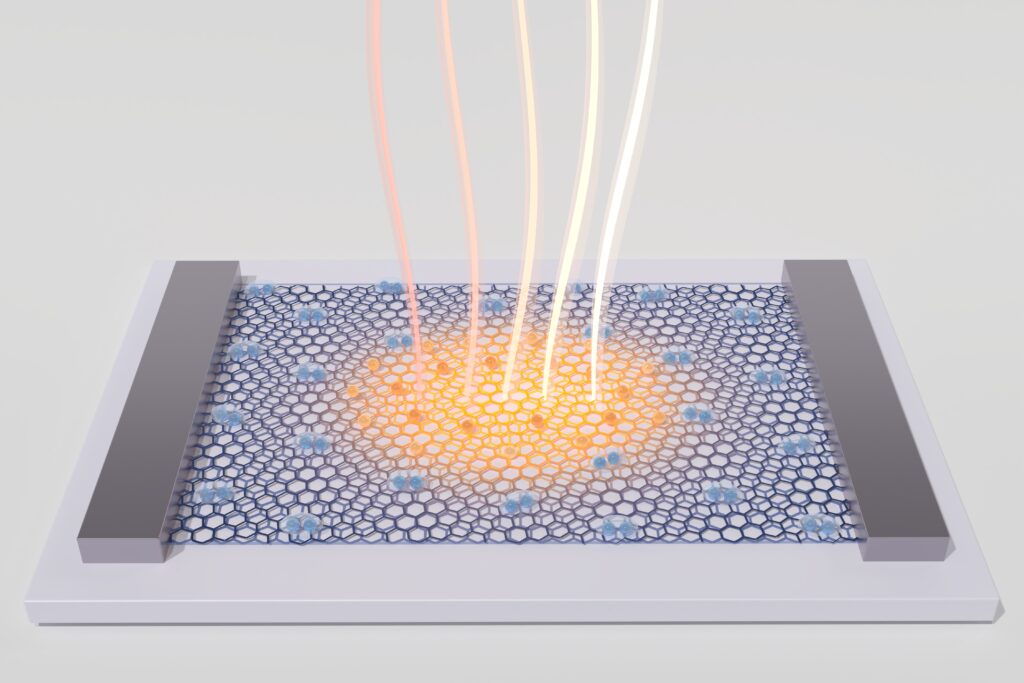
Superconductivity is the best-known example. Near the transition, tiny stimuli can trigger large changes, which is why superconductors are used in some of the world’s most sensitive detectors. The team’s work suggests that magic-angle graphene could offer a new platform for similar sensing, especially in the challenging far-infrared range.
Their findings, published in Nature Communications on 10 August 2026, open a new window into fragile quantum phases and point toward a new class of fast, gate-tunable FIR detectors.
Read more: https://www.nature.com/articles/s41467-026-76389-4