


RESEARCH
Designing better membranes at the nanoscale
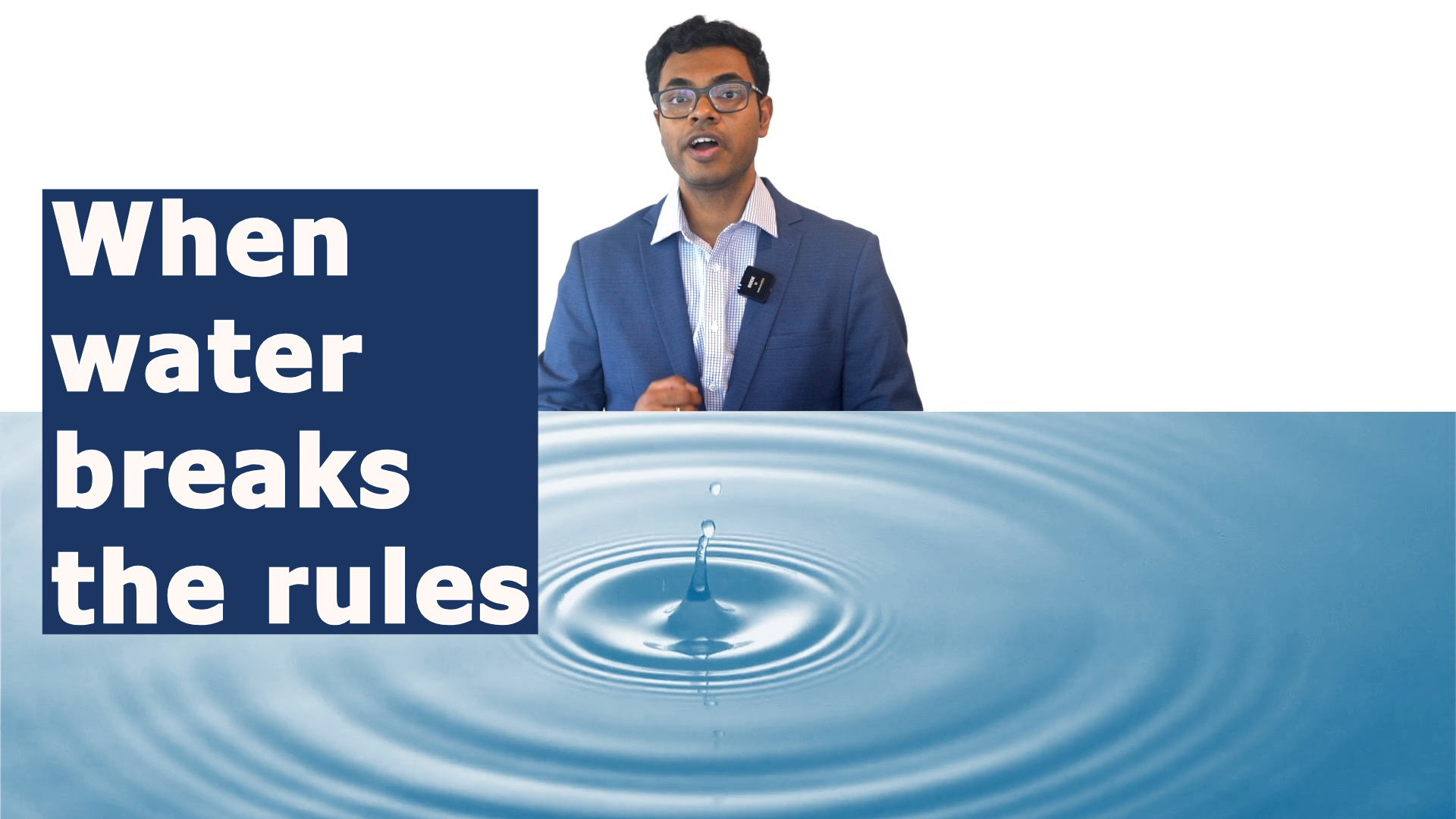
Separating water, salt and chemicals is one of the most energy-intensive processes in industry.
Research led by Assistant Professor Rahul Prassana Misra (Presidential Young Professor) explores how we can do this more efficiently, by understanding how fluids behave at the nanoscale.
Inside nanopores, water and ions no longer follow the rules we are familiar with. By studying these effects using simulations that capture interactions at the atomic level, his work helps uncover new ways to control how molecules move and interact. These insights can be used to design membranes that separate more precisely and require less energy, with applications ranging from seawater desalination to chemical processing.
Watch the video to find out more here.
Quantum will change the way we compute and communicate
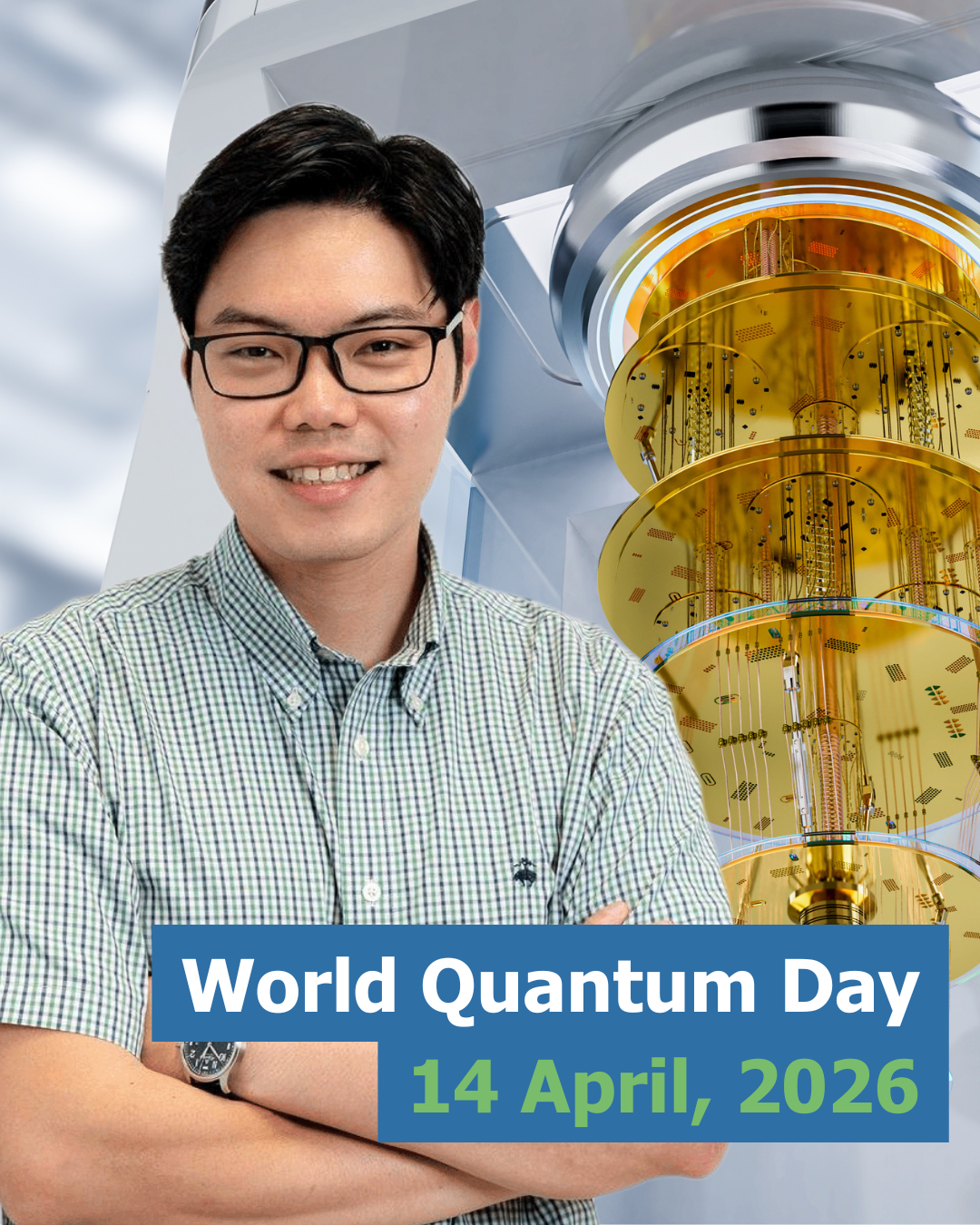
Quantum technologies are set to transform how we compute, communicate, and understand the world, but the field can still feel abstract and out of reach for many.
To mark World Quantum Day on 14 April, CDE News spoke to Associate Professor Charles Lim, a recognised global expert in quantum communication and next-generation secure networks, to break down quantum research, why it matters, and how anyone can begin to engage with it.
"What excites me most about quantum technology is its potential to transform many industries through one fundamental shift in how we handle information," he says.
Read more here.
Dr Zhao Zhenyu publishes book on electrically contactless online impedance measurement
Dr Zhao Zhenyu, together with NTU Associate Professor Kye Yak See, has published a new book titled “Electrically Contactless Online Impedance Measurement: Theory and Applications” with IEEE-Wiley. The hardcover edition is scheduled for release on 15 July 2026.
This book is the first dedicated monograph in the field of electrically contactless online impedance measurement. It consolidates more than a decade of the authors’ research and presents a unified, systematic framework that integrates fundamental theory, measurement methodologies, and practical engineering implementations.
The approach enables reliable in-situ impedance characterisation of energised systems without the need for direct electrical contact.
Biowaste coatings to boost CO2-to-fuel conversion
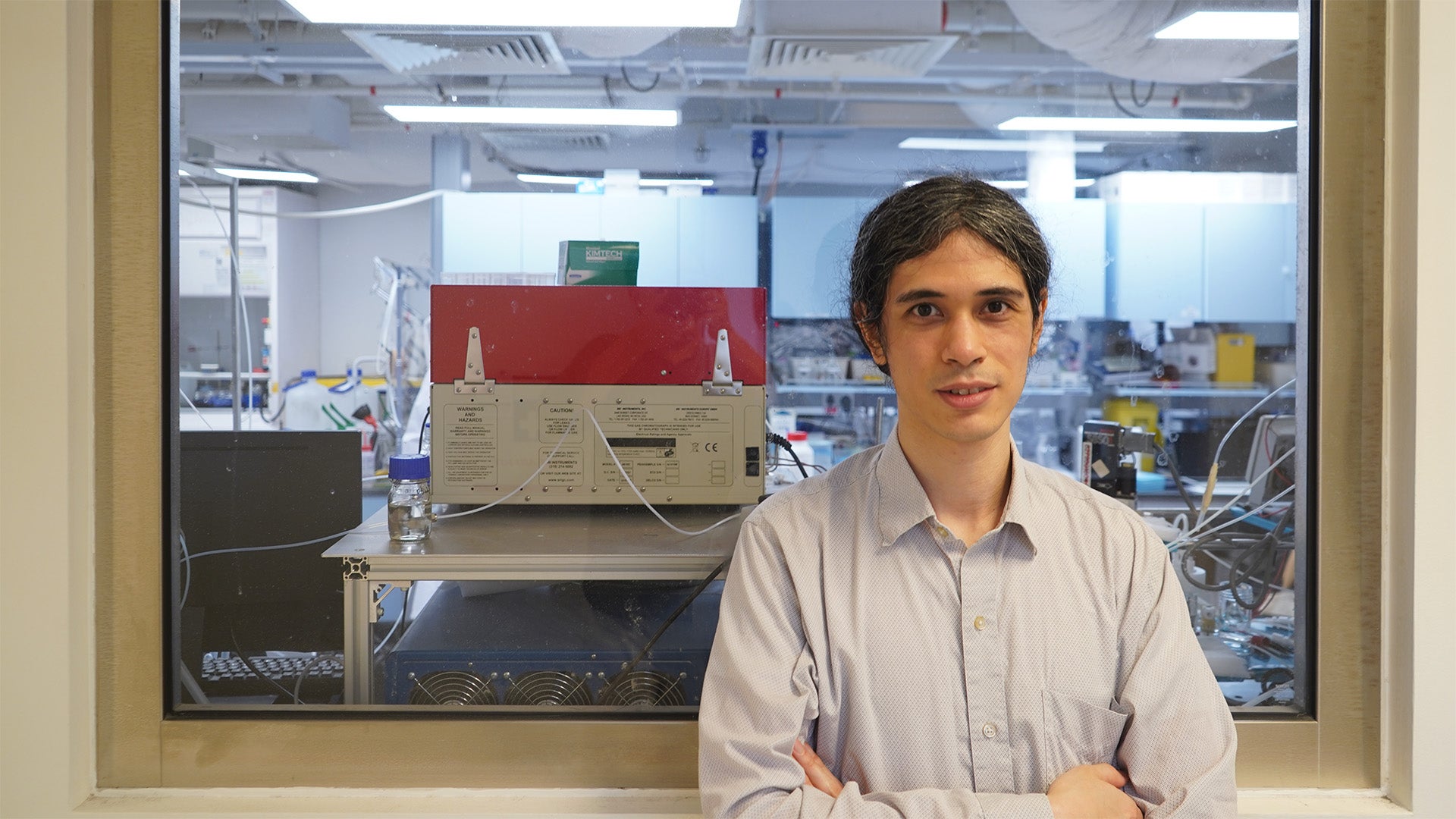
A new catalyst design from Assistant Professor Andrew Barnabas Wong and his team could help cut reliance on oil by turning carbon dioxide into valuable fuels and chemicals more efficiently and sustainably.
By using ultra-thin coatings made from biowaste such as seafood shells and plant matter, the researchers achieved among the highest reported performance for copper-based CO₂ conversion while eliminating the need for costly and harmful “forever chemicals”.
The approach not only improves efficiency at industrially relevant conditions, but could also significantly lower costs, making carbon conversion technologies more viable at scale.
Published in Nature Energy, the work points towards a cleaner, more resilient pathway for producing fuels and chemical feedstocks without petroleum.
Read more here.
Learning from nature to build the next generation of robots
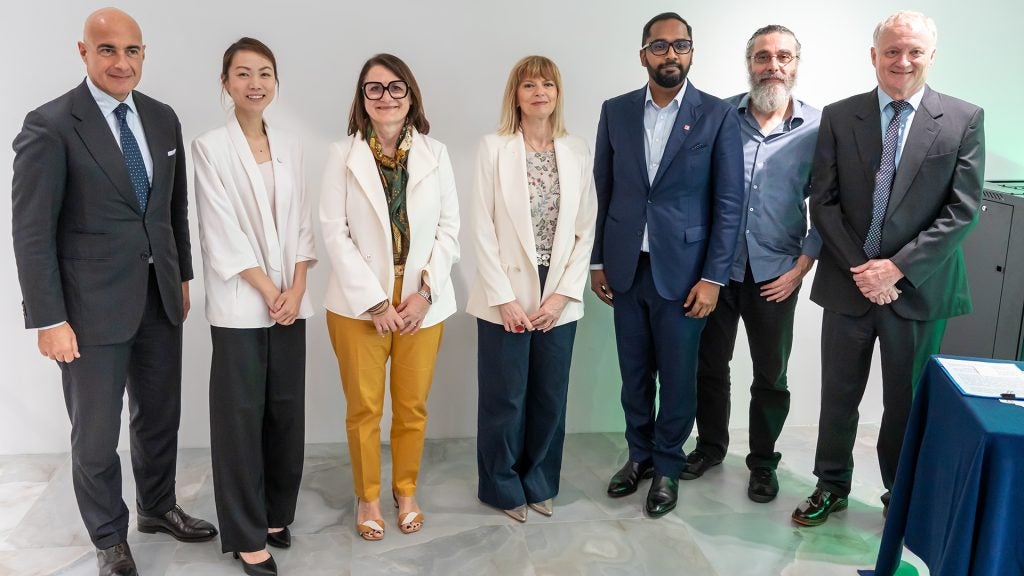
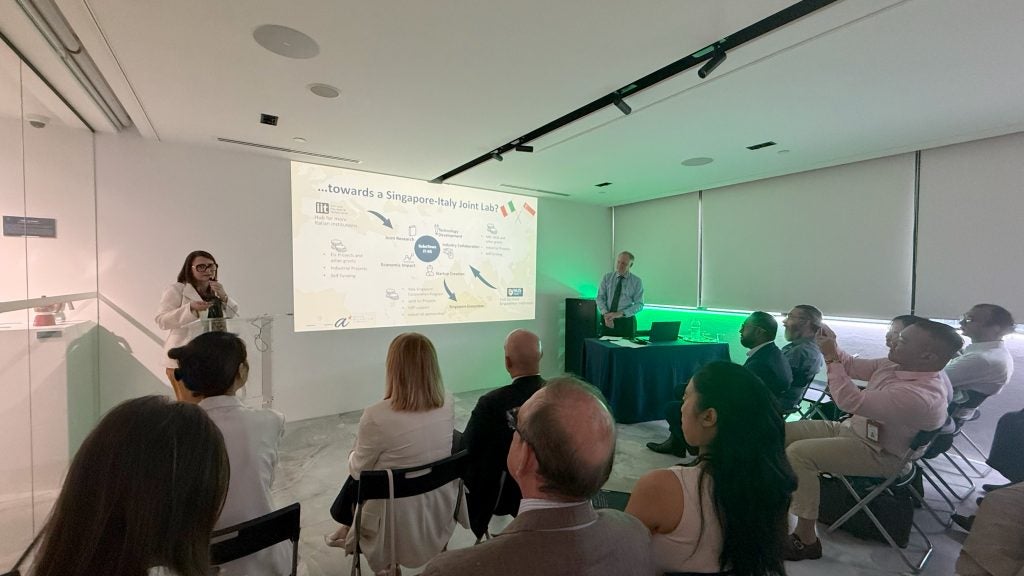
Robots do not need to precisely control every movement in order to function effectively.
At a seminar hosted by the Italian Embassy in Singapore, Professor Cecilia Laschi explained how learning from nature could simplify robotics while opening up significant improvements in performance.
The event brought together researchers, industry and policymakers from Italy and Singapore to discuss advances and opportunities for collaboration in biorobotics, a field that combines robotics, bioengineering and artificial intelligence to develop technologies that can work more closely with humans.
In her talk, Prof Laschi, who is Director of the Advanced Robotics Centre at NUS, introduced the concept of embodied intelligence, where a system’s behaviour is shaped not only by its “brain”, but also by its body and its interaction with the environment.
“Intelligence is not confined to the brain,” she said, explaining how the body itself plays a role in shaping behaviour.
“Living systems are far more complex than our robots, yet their behaviour appears simple and efficient,” Prof Laschi said, pointing to a broader lesson. “In robotics, there are simplifying principles in nature that we need to understand and use.”
Read more here.
Rethinking AI data centres as climate assets
Can AI data centres become part of the solution to climate and energy challenges, rather than adding to them? In a commentary in The Business Times, Professor Lee Poh Seng argues that as AI drives rapid growth in data centres, the focus must go beyond reducing their environmental footprint.
Data centres should be rethought as integrated infrastructure, he writes, designed to operate within wider energy and industrial systems rather than as standalone facilities.
This shift includes:
- managing computing workloads in response to grid conditions
- supporting energy system stability through flexible operations
- integrating with industrial ecosystems to reuse resources such as water and heat
The goal is to move towards data centres that function as “climate assets”, contributing to efficiency, resilience and productivity at the system level.
Read more here.
Major Grants Awarded
The major grants (start date in April 2026) with total project value > $1M.
| Hosting Unit | Project Title | Funding Programme (Source of Funding) |
Principal Investigator | Co-Investigator |
| NERI | An integrated catchment-coastal water quality modelling system for combating climate change | Marine climate change science programme – 2024/NRF | Gin Yew-Hoong, Karina | |
| ECE | National Semiconductor Translation and Innovation Centre (Power Electronics) | A*STAR manufacturing, trade and connectivity (MTC) industry alignment fund - pre positioning (IAF-PP) – 2025/A*STAR | Akshay Kumar Rathore | Gong Xiao |
| ECE | Energy-aware Accelerated Computing (EAC) | A*STAR manufacturing, trade and connectivity (MTC) programmatic fund – 2025/A*STAR | Ang Kah Wee; Gong Xiao; He Bingsheng (Computer Science) | |
| CQT | Integrated Quantum Light Sources for Photonic Quantum Processors | National Quantum Processor Initiative (Nqpi) – 2025/A*STAR | Zhu Di | |
| ECE | Vision-based fast indoor navigation for autonomous drones | Technology development programme for project charpi (TL) – 2025/MINDEF | Zhao Lin | |
| ECE | OUTSMART Corp Lab for On-chip UlTra-low-power Silicon systems with Gen-AI for Real-Time analytics at the edge | Industry Alignment Fund - Industry Collaboration Projects (IAF-ICP) - 2025 /A*STAR | Alioto, Massimo Bruno | Wang Xinchao; Trevor Erik Carlson (Computer Science) |
| ECE | Next Generation Asphalt Pavements for Singapore: Developing Guidelines and Standards for Durability, Sustainability and Maintainability | LTA Urban Mobility Innovation (UMI) Grant – 2025/LTA | Ong Ghim Ping, Raymond | Hu Jiangyong |
| ECE | Immersive Technologies for Heritage Engagement and Preservation | National Heritage Board (NHB) | Khoo Eng Tat (EDIC & ECE) | Cai Shaoyu (EDIC), Gabriel Lipkowitz (DID) |