Staff
Faculty
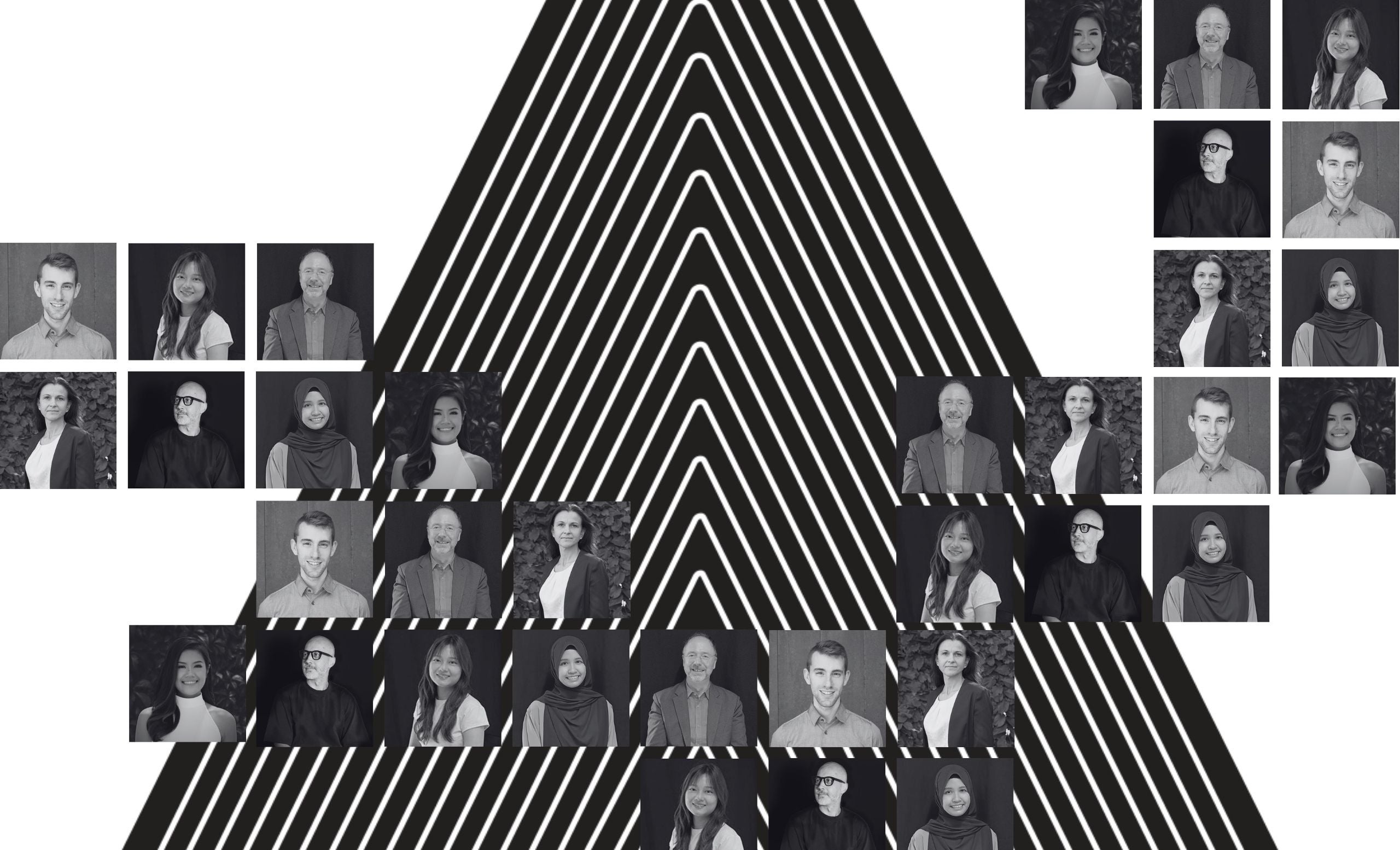
Gareth DOHERTY | Associate Professor (Tenured)
Gareth Doherty is a landscape architect, educator, and researcher whose work explores the intersection of environmental sustainability, social equity, and design. He adopts a human-centred approach to landscape architecture, integrating ethnographic fieldwork and participatory design methods to better understand and shape the relationships between people and their environments. His research challenges conventional design practices by foregrounding issues of identity, cultural space, and the human dimensions of climate change.
Before joining NUS, he spent over two decades at Harvard University’s Graduate School of Design, where he held several leadership roles, including Director of the Master of Landscape Architecture Programme. His interdisciplinary teaching brings landscape architecture into dialogue with fields such as anthropology, urban planning, and area studies. He is also the founder of the Critical Landscapes Design Lab.
What drew you to NUS: The NUS Department of Architecture is helping to redefine what it means to be a designer—I see fascinating work coming from a diverse range of perspectives. I especially appreciate the integration of the environmental, social, and aesthetic dimensions of design across the school, and the openness to critical, field-based research and teaching. Such a plurality of points of view allows us to expand the canon of design and helps us imagine new possibilities for the future. I want to be part of this exciting moment in the department.
Your interests outside of work: When I have some time to spare, I love to paint. I prefer painting people, though, not landscapes!
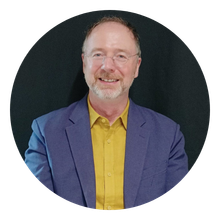
Christo MEYER | Associate Professor (Practice Track)
Christo Meyer is an Associate Professor in the Department and founder of CHRISTO MEYER WORKS. A UK-registered architect and Chartered Member of the Royal Institute of British Architects (RIBA), his work operates at the intersection of architectural practice, design research, and pedagogy, with a particular focus on design-through-making as a mode of inquiry and knowledge production.
Christo brings over two decades of experience spanning professional practice, architectural education, and interdisciplinary research. Prior to joining NUS, he served as Assistant Director for Academics and Fourth Year Coordinator at the International Program in Design and Architecture (INDA), Chulalongkorn University, Bangkok. He has also taught and lectured internationally at The Bartlett School of Architecture (UCL), the University of Greenwich, the University of Brighton, and the University of Central Lancashire.
Please share the areas you are most passionate about teaching: My teaching centres on the design studio as a space for exploration and experimentation. I encourage my students to use making not simply as a method of representation, but as a tool for generating ideas and testing possibilities. It’s no secret that my students are known for making large experimental models, but long before we arrive at that point, many of the most important discussions have already taken place. I am particularly interested in helping students develop a clear architectural position while cultivating curiosity, critical reflection, and confidence in their own creative process and design sensibilities.
Where appropriate, my teaching extends beyond speculation into the design and delivery of built work. In previous roles, I have worked closely with students to design and deliver real projects for real clients on real sites—commonly known as “live projects”. I hope to continue advancing this aspect of architectural education in my new role at NUS DOA.
My favourite quote: “Watch out where the huskies go, don’t you eat that yellow snow.” – Frank Zappa
One, it’s funny, and two, I like that it reminds us that not every opportunity is worth pursuing.
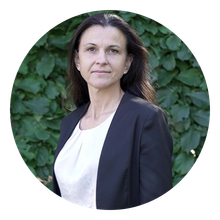
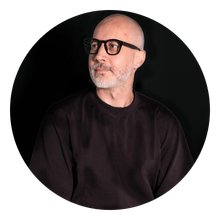
Anna KERR | Associate Professor (Practice Track)
Anna Kerr is an architect and urban strategist with over two decades of international experience across Europe and Asia. Educated at the Royal Danish Academy of Fine Arts, School of Architecture in Copenhagen, Denmark, she integrates professional practice, research, and teaching in sustainable urbanism and systems design. She has held key positions in global architectural practices, delivering large-scale sustainable and equitable urban design projects around the world.
Her work is rooted in the Scandinavian tradition of integrated sustainable development, drawing on the SymbioCity framework and the Hammarby model, which unite ecological, social, and economic dimensions into a coherent urban system. She led the Wuxi Eco City masterplan in China—winner of the MIPIM Future Award (2011)—which translated the Hammarby principles into an Asian context, integrating circular water, energy, and waste systems within a rapidly urbanising environment.
Kerr established her own practice after winning first prize in the international competition for the Seoul Performing Arts Centre in 2009, which marked the beginning of her long-term engagement with sustainable urbanism in Asia. She has lectured internationally at COP, the C40 Climate Summit, MIPIM, Rotterdam Urban Summit, World Mayor Forum, and the World Architectural Festival, to name a few, and she is frequently invited as a juror at international architectural competitions.
Her teaching philosophy is founded on the conviction that sustainable design must be understood as an integrated systems process, where ecological, social, and economic dimensions intersect. At NUS MSc in Integrated Sustainable Design, she will help to shape the curriculum, lead studios, and mentor students, preparing a new generation to tackle climate resilience, resource scarcity, and urban liveability across scales and disciplines.

Justin Matthew KOLLAR | Assistant Professor (Tenure Track)
Justin Kollar’s research examines the territorial, environmental, and political consequences of high-tech industrialization, with a focus on semiconductor manufacturing, AI data centers, cloud infrastructure, and the land, water, and energy systems that support them. His current book project, Silicon Frontier: Techno-statecraft and the New Geographies of Digital Capitalism, examines semiconductor and cloud infrastructure development in Taiwan and the United States. Before joining NUS, he worked as a planner and urban designer at Sasaki.
Please tell us what sparked your interest in joining us: I was drawn to the Department’s collegial culture and its strong connections across architecture, landscape architecture, urban design, planning, and engineering. My work sits between these fields, so NUS felt like a place where I could think across territory, infrastructure, design, and governance without treating them as separate conversations. I was also excited by the chance to study Singapore and Southeast Asia as central sites in debates on urbanisation, climate adaptation, industrial policy, and digital infrastructure.
Tell us about your interests beyond your professional life: Outside of work, I enjoy spending time with my family and exploring cities through walking, photography, food, and everyday observation. I also like reading across history, political economy, geography, architecture, and technology, especially books that help explain how large systems shape ordinary landscapes.

| Marianne Therese Caballero AMORES | Visiting Senior Fellow
Marianne (Yani) is a top-ranked, board-topping Architect, Master Planner, and Regenerative Design Expert with a proven track record in systems design, strategic planning, and frameworks for large-scale regenerative development. As the founder of The Regenesis Project, she specializes in restoring and regenerating ecosystems, communities, and industries through nature-based and systems-wide approaches that integrate permaculture, regenerative design, and strategic frameworks. Licensed as an Architect in the Philippines since 2011 (board topnotcher), Yani has extensive experience across diverse roles with consultants, contractors, developers, and government agencies in both the Philippines and Singapore. She is an NUS alumna, having completed her MSc in Integrated Sustainable Design in 2016. One professional accomplishment you’re especially proud of: I’m especially proud of authoring a regenerative impact investment thesis that not only finances place-based regenerative development, but whose whole architecture is designed to follow regenerative and Living Systems principles. One thing you hope to achieve in your first 90 days with MSc ISD? In my first 90 days, I hope to roll out the methodology in this semester’s studio while carefully documenting the process, testing mapping tools, and exploring how AI gets integrated along the way.
|
ADMINISTRATIVE
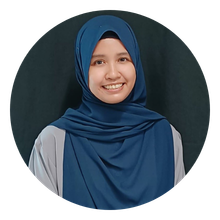
Huda Binte Muhammad Ilyasa | Executive
Huda brings valuable experience from the non-profit sector, where she developed a passion for meaningful, people-centred work. In her role, she coordinates design studio activities, including interim and final reviews, and provides administrative support for undergraduate and graduate programmes. She also contributes to curriculum implementation, admissions, and academic administration, working closely with faculty, students, and external stakeholders.
Tell us about your dream job as a child: I wanted to be a History teacher, but I realized that I preferred learning about history as a hobby. So I switched to Communications and New Media (CNM) at NUS for practical reasons and took an interest in interdisciplinary modules that emphasized culture and society alongside canonical media theories.
A skill you wish you could learn instantly: I would learn how to chop vegetables really fast to speed up my meal preparation time. I love to cook rice dishes because rice is a staple in Malay (and many Asian) cuisine.

Chrislyn LIM | Assistant Manager
Chrislyn Lim served in the public sector prior to joining the Department, where she gained valuable experience in project coordination, stakeholder management, and administration. In her current role, she supports a broad portfolio encompassing teaching and academic staffing, research grant administration and management, and alumni engagement.
If you could witness one thing in your lifetime, what would it be: To see the Northern Lights in person. The beauty of this natural phenomenon has always fascinated me, and it is something I hope to experience at least once in my lifetime.
Thinking about your journey so far, which milestone stands out to you: At this stage, I am most proud of learning to take things one step at a time and appreciate the present. Life can be fast-paced, so being at peace with where I am and finding contentment in the journey has been a meaningful milestone for me.