




Dear Reader,
Welcome to our latest edition of the CDE Research Newsletter!
How will we live, work, and thrive in a world shaped by climate change, rapid urbanisation and evolving societal needs? In this edition of Forging New Frontiers, we spotlight researchers in Architecture, Landscape Architecture and Industrial Design who are addressing this question through bold, interdisciplinary approaches. Their work demonstrates a strategic focus on creating resilient, equitable and sustainable futures by developing climate-adaptive urbanisms, “rewilding” cities to restore ecological balance and pioneering circular economies with materials like mass timber. We also explore emerging digital frontiers, where artificial intelligence, virtual reality and interactive technologies are reshaping the creative process. Finally, recognising that transformative research is driven by collaboration, we are pleased to introduce a new section highlighting partnerships and the CDE ecosystem that enable impactful ideas to move from concept to real-world change
Professor Silvija Gradečak-Garaj
Vice Dean, Research & Technology
JUNE ISSUE

Research by design: Building resilient and vibrant townships of the future
Using the design process itself as a form of inquiry, a multidisciplinary team reimagines Singapore’s future townships to adapt to an ageing society and a warming climate.
Read More | PDF Download

Curating wildness
It is an oxymoron until you see it working across five rewilding projects in Singapore, illustrating how designing for “messiness” can change a city’s relationship with Mother Nature.
Read More | PDF Download

Close, but not quite real
Virtual reality can replicate how we see and hear environments, but when it comes to psychological and physiological restoration, the body tells a different story.
Read More | PDF Download

The foundations of change: Building with mass timber in the tropics
Tropical plantation timber grows several times faster than its temperate counterparts. Engineered into structural panels and beams, it could turn Southeast Asia’s buildings from carbon sources into carbon stores.
Read More | PDF Download

Data-driven climate justice
From London’s flood-prone streets to Miami’s searing hot spots, a pair of new studies trains AI to answer a question bewildering urban planners: when the next climate shock arrives, who is protected and who is not?
Read More | PDF Download

The art of letting go
Eastern philosophy is challenging how technologies for reflection and rest are designed. It asks whether our digital tools have been solving the wrong problem all along.
Read More | PDF Download
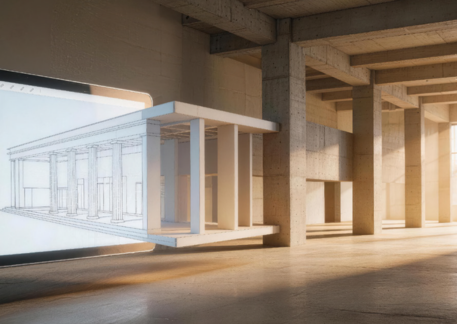
Designing architecture that you can walk into
A cross-platform system lets designers generate AI-driven 3D forms on a tablet, then step inside them at full scale — turning how early-stage architecture is conceived, evaluated and felt on its head.
Read More | PDF Download

Defying gravity: The new threads of space flight and beyond
An iron-woven vest for astronauts in microgravity is the starting point for a wider programme: fabrics that sense and regulate the body, whether in space, in hospitals or in sports settings.
Read More | PDF Download
Familiar ground: Ageing gracefully in places we know
A new NUS–UCL partnership is reimagining how our neighbourhoods can support people living with dementia, starting with the streets, spaces and systems they are already familiar with.
Read More | PDF Download

Teaching drones to hunt, rockets to land and lattices to absorb
From drone swarms that track evasive targets to ultralight lattices that gobble up electromagnetic noise, collaborative research between CDE and Temasek Laboratories is producing technologies that translate ingenuity from the lab to the field.
Read More | PDF Download
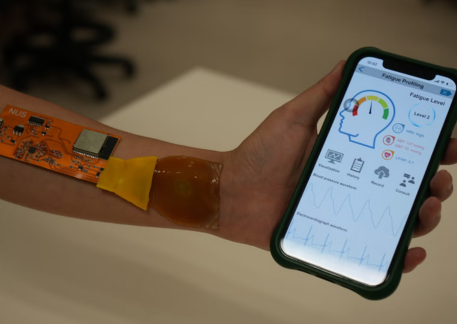
Wearable sensor enables real-time tracking of fatigue and mental health
A wearable sensor developed by researchers led by Professor Ho Ghim Wei (Electrical and Computer Engineering) enables clinical-grade monitoring of fatigue and mental health in real-world settings, even during movement, overcoming a major limitation of existing devices.
Read More

High-resolution simulations reveal Singapore’s tidal stream energy potential
A team led by Associate Professor Low Ying Min (Civil and Environmental Engineering) used high-resolution, turbine-scale ocean simulations to map where Singapore’s tidal currents are strongest, and how much electricity could be generated under practical siting constraints.
Read More
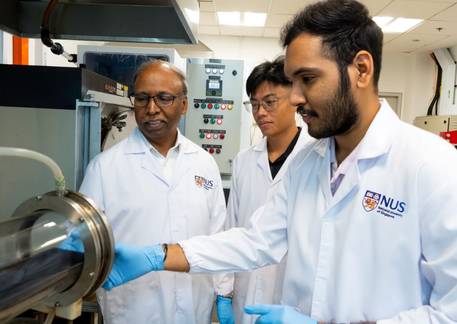
NUS CDE researchers develop safer all-solid-state sodium battery with low-cost 2D material
Overcoming key safety and durability barriers, research led by Associate Professor Palani Balaya (Mechanical Engineering) advances sodium batteries as a practical alternative to lithium for large-scale storage.
Read More
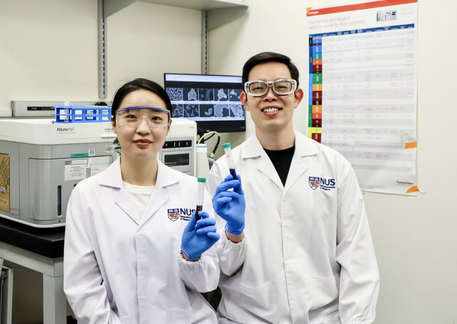
DNA ‘barcode’ platform developed by NUS CDE researchers speeds search for precision cancer nanoparticles
Read More

AI powers collaboration in climate predictions
A new physics-informed AI method that keeps long-term climate simulations stable and accurate, reducing computational cost, has been developed by researchers led by Assistant Professor Gianmarco Mengaldo (Mechanical Engineering).
Read More

Self-training muscle could power a new generation of biodegradable robots
Researchers led by Assistant Professor Tan Yu Jun (Mechanical Engineering) have developed a platform that strengthens lab-grown muscle, overcoming a key limitation in biohybrid robotics.
Read More

NUS CDE and NUH sign MOU to accelerate healthcare innovation through applied engineering and AI

NUS-ArCLab’s “living laboratory” aims to conserve the past while designing for a net-zero future

NUS start-up CBE Eco-Solutions turns carbon soot into high-value materials
CBE Eco-Solutions, a deep-tech startup founded by former researchers Dr Yao Zhiyi and Dr Babu Cadiam Mohan under Professor Wang Chi-Hwa (Chemical and Biomolecular Engineering), upcycles refinery carbon soot into high-value materials for batteries, tyres and energy storage. Its demo plant on Jurong Island plans to scale to a commercial facility producing around 15 tonnes of output daily.
Read More

Advancing sustainable 3D concrete printing for the construction industry
NUS researchers led by Dr Du Hongjian and Associate Professor Pang Sze Dai (Civil and Environmental Engineering) collaborated with Woh Hup to achieve a Singapore first by 3D-printing structural concrete elements on a live construction site.
Read More

Seatrium deepens support to drive offshore and energy innovation
Seatrium has further strengthened its commitment to Professorship activities and collaborations with NUS CDE via the Department of Civil & Environmental Engineering. This partnership aims to advance research in offshore infrastructure, sustainability and engineering solutions, as well as support existing initiatives such as the NUS Seatrium Public Lecture, which brings together academia and industry to exchange perspectives on emerging developments and challenges in the sector.
Read More

Partnerships to advance data centre solutions
CDE is partnering with Sembcorp and Schneider Electric Singapore to validate AI-ready, low-carbon data centre solutions via the Sustainable Tropical Data Centre Testbed (STDCT) 2.0, led by Professor Lee Poh Seng (Mechanical Engineering)
Read More about the Eaton partnership here
Read More about the Sembcorp partnership here
Read More about the Schneider Electric partnership here
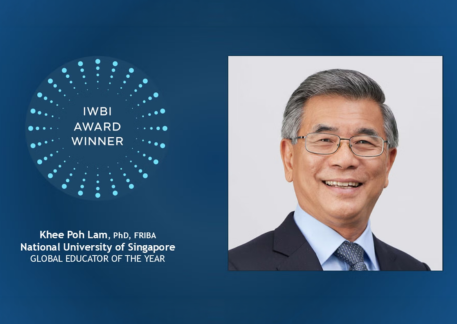
Professor Lam Khee Poh (Architecture and Built Environment) has been named Global WELL Educator of the Year 2025 by the International WELL Building Institute (IWBI), one of the organisation’s highest honours.
Read More

Professor Lim Chwee Teck (Biomedical Engineering), NUSS Chair Professor, has been elected an International Member of the US National Academy of Engineering (NAE), one of the highest professional honours accorded to engineers worldwide.
Read More

Professor Chandra Sekhar (Built Environment) has been honoured with the F. Paul Anderson Award, the highest technical honour from ASHRAE, a global professional society of more than 53,000 members that aims to advance human well-being through sustainable technologies for the built environment.
Read More

Professor Qiu Cheng-Wei (Electrical and Computer Engineering) has been named the 2026 recipient of the Joseph Fraunhofer Award/Robert M. Burley Prize, one of the highest honours in optical science and engineering, by Optica.
Read More
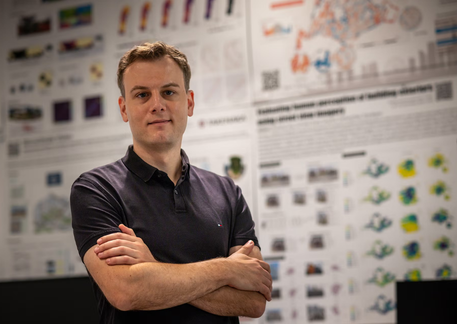
Assistant Professor Filip Biljecki (Architecture) has received the 2026 Gill Memorial Award from the Royal Geographical Society, recognising outstanding early-career contributions to geographical science.
Read More
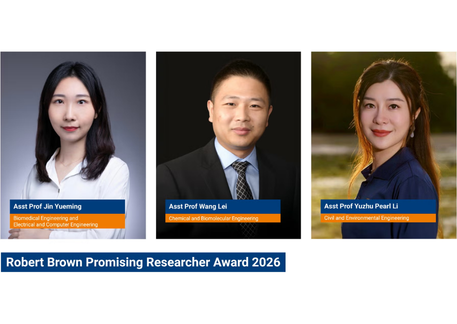
Assistant Professor Jin Yueming (Biomedical Engineering and Electrical and Computer Engineering), Assistant Professor Wang Lei (Chemical and Biomolecular Engineering) and Assistant Professor Pearl Li Yuzhu (Civil and Environmental Engineering) have been awarded the 2026 Robert Brown Promising Researcher Award from the Ministry of Education, Singapore, recognising outstanding early-career researchers with strong potential to advance academic research and innovation.
Read More

Assistant Professor Gianmarco Mengaldo (Mechanical Engineering) has been appointed to the Joint Advisory Group on Artificial
Intelligence (JAG-AI) at the World Meteorological Organization, a by invitation group of experts from around the world.
Read More
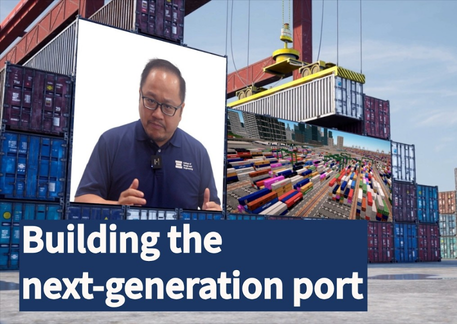
Designing the port of the future
As competition among the world’s leading ports intensifies, ports must become not only bigger and faster, but also smarter, more resilient and more sustainable. At the Centre of Excellence in Modelling and Simulation for Next Generation Ports (C4NGP), research in digital twins, simulation and decision-support tools is helping shape the future of Singapore’s port ecosystem.
Watch Video Here
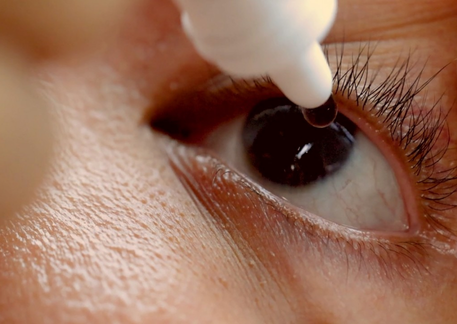
Eyes that photosynthesise
Drawing inspiration from how plants use photosynthesis to convert sunlight into energy, researchers led by Associate Professor David Leong Tai Wei (Chemical and Biomolecular Engineering) are pioneering a revolutionary treatment for dry eye disease, a condition affecting 1.5 billion people worldwide.
Watch Video Here
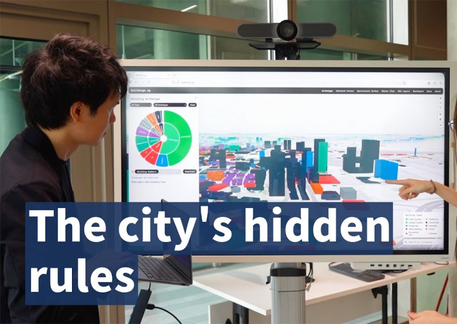
Decoding the hidden grammar of cities
Assistant Professor Ang Yu Qian (Presidential Young Professor, Built Environment) leads the City Syntax lab at CDE. His research uses data, advanced modelling and AI to uncover the hidden “grammar” of cities, developing solutions for shaping more liveable, sustainable and healthier urban environments.
Watch Video Here
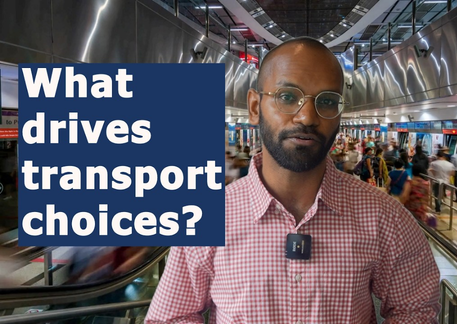
Better transport begins with understanding behaviour
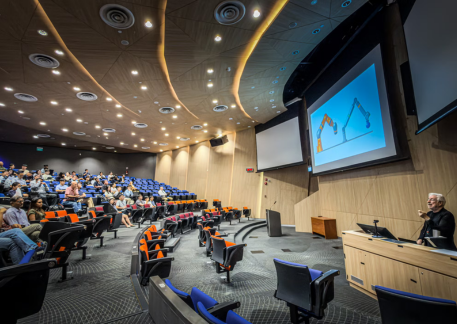
Robotics pioneer talks future of human-robot collaboration
At a seminar held at CDE, Professor Oussama Khatib, Director of the Stanford Robotics Centre, shared how robotics is extending human capability across distance and extreme environments.
Read More

First atom probe tomography facility in SE Asia opens at NUS
Researchers and industry partners from Singapore and overseas attended the inaugural symposium marking the opening of the Invizo 6000 Atom Probe Tomography Facility at CDE, the first of its kind in Southeast Asia.
Read More
Watch Video Here

‘Assembling the Social’ exhibition opened
Organised by the newly-launched Social Design Lab, established under the Department of Architecture, the exhibition explored how design works through care, relationships and collective action, rather than just objects or end results.
Read More
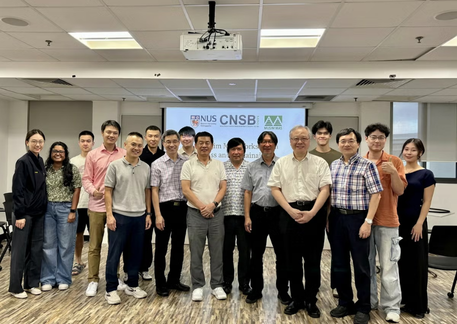
Musim Mas Workshop brings global experts together on biomass and sustainability
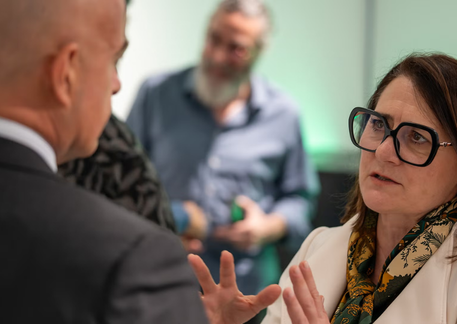
Learning from nature to build the next generation of robots
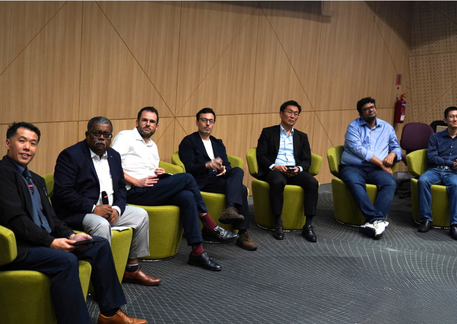
Ecosperity panel spotlights collaboration on low-carbon materials in the built environment


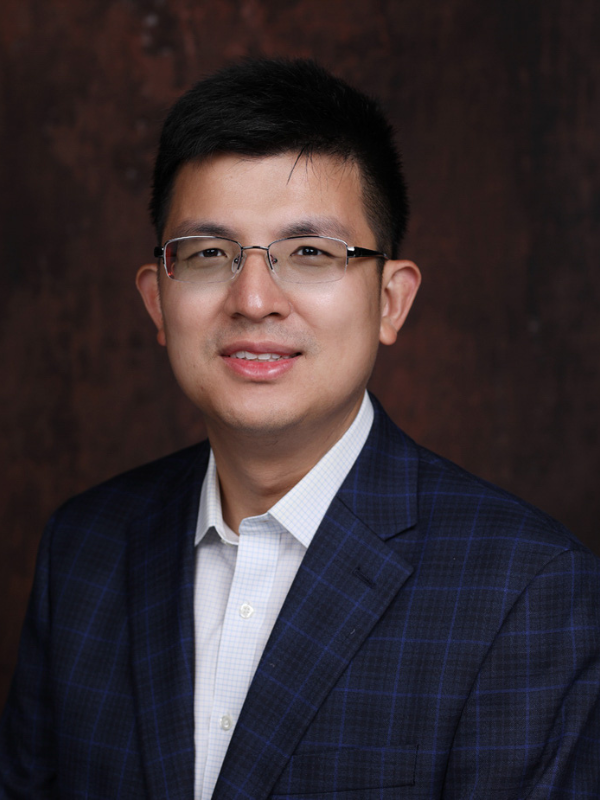
Asst Prof
Damson Choi
Industrial Design


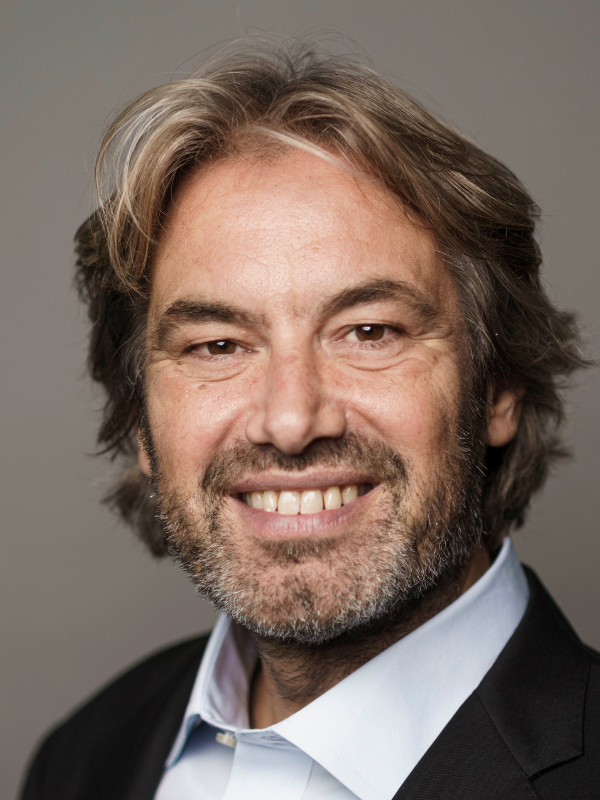
Visiting Prof
Richard Hendrik
Marc Goossens
Industrial Design

Lecturer
Dr Dai Fangzhou
.
NUS Cities, Dean's Office
Download the full issue below.
ISSUE 8
PAST ISSUES
Click Here to view earlier issues and articles.
SUBSCRIBE
Click Here to subscribe to our newsletter.
Some of the graphic images in this newsletter were generated using AI and intended only as a visualisation of general concepts or ideas related to the research.