


RESEARCH
Open data is changing the way cities are studied

From HDB resale transactions and bus arrival times to taxi availability and close to a million individually mapped trees, Singapore offers a rich set of open urban datasets that help reveal how the city functions.
For Assistant Professor Filip Biljecki, who was recently presented with the 2026 Gill Memorial Award by the UK-based Royal Geographical Society, this growing availability of open urban data is changing how researchers study cities. By making large datasets more accessible, he says, open data allows researchers to analyse urban environments at a scale and level of detail that would previously have been difficult, expensive or impossible.
The shift is part of a wider global movement. In countries such as the Netherlands, open data has helped change thinking around public information, with governments recognising that sharing datasets can create wider value for research, innovation and society than keeping them closed or selling access.
For Asst Prof Biljecki, science “should be open, transparent and reproducible.” When data is shared, he says, it allows others to build on the work, test findings, and develop new insights into the cities people live in every day.
Read more here
Book publication: Computational Fluid Dynamics in the Built Environment
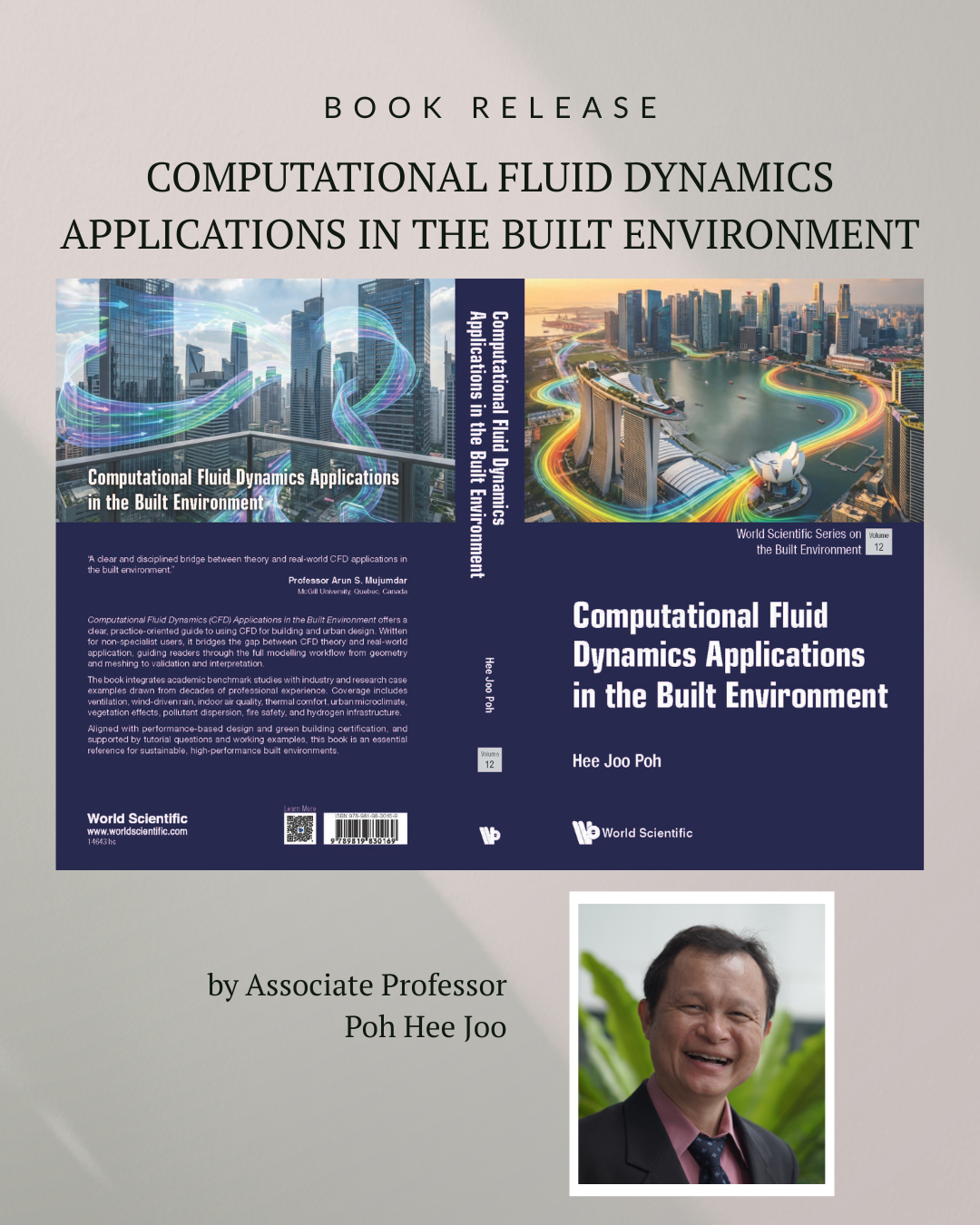
Associate Professor Poh Hee Joo has published a new book, Computational Fluid Dynamics (CFD) Applications in the Built Environment, with World Scientific.
Drawing on more than two decades of research, teaching and industry experience, the book aims to bridge the gap between CFD theory and practical application in climate-resilient and performance-based building design.
Written for students and practitioners, it covers applications including natural and hybrid ventilation, indoor air quality and thermal comfort, wind-driven rain and façade performance, fire safety and pollutant dispersion, and vegetation-microclimate interactions.
Assoc Prof Poh also acknowledged the support of colleagues, mentors and collaborators, especially Professor Willie Tan and Professor Chandra Sekhar.
CDE expertise to advance new centre for waste innovation
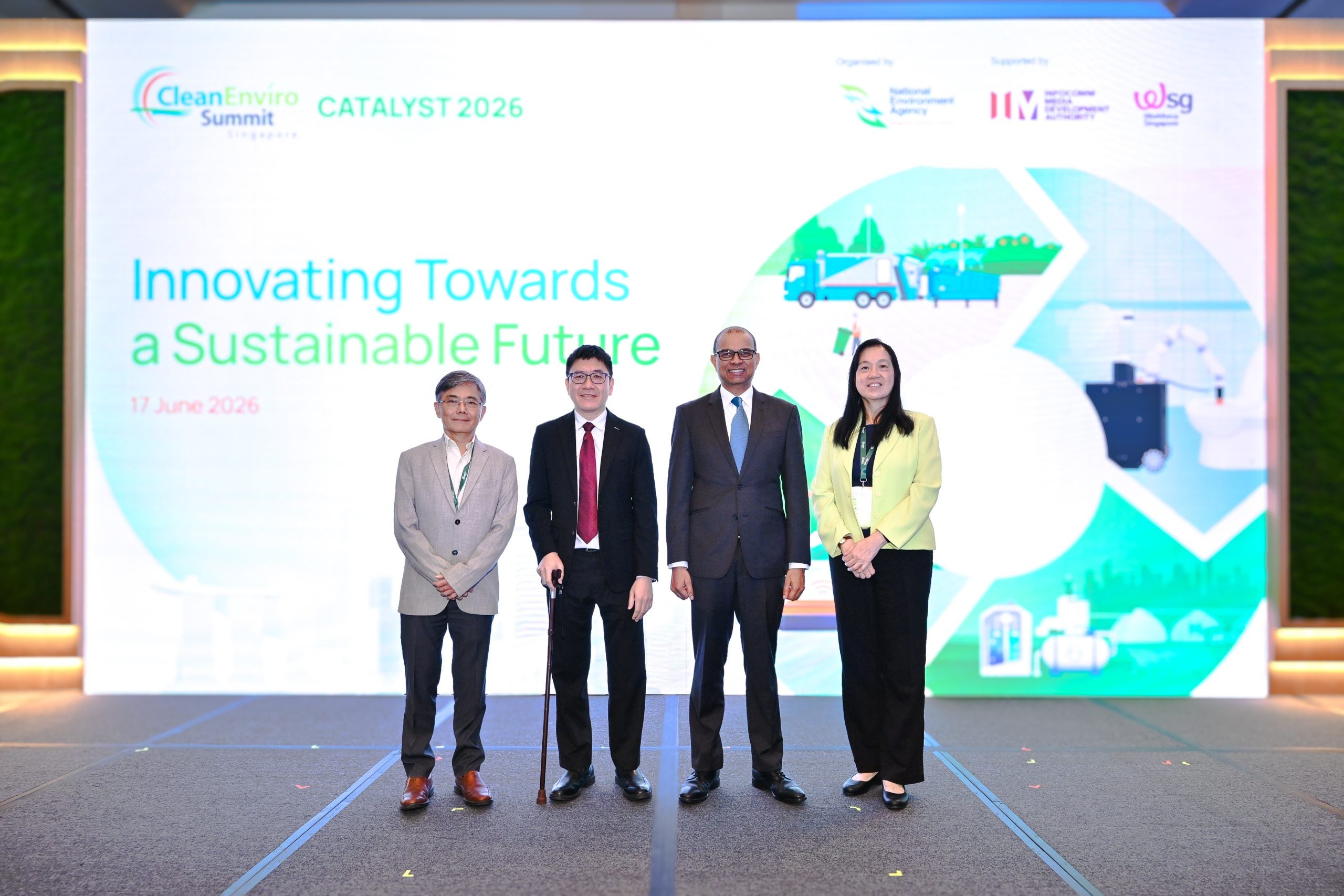
CDE expertise in waste-to-resource technologies is set to play a central role in a new national initiative to turn complex waste materials into reusable resources and build a more resource-efficient future.
Launched on 17 June 2026, the Towards Resource Efficiency And Sustainability for URban EnvironmentS (TREASURES) centre is Singapore’s first national research centre dedicated to advancing science and innovation in residue and toxic industrial waste management.
With the Semakau Landfill site expected to reach capacity by 2035, the centre aims to support longer-term efforts to transform Singapore’s only landfill from a disposal site into a hub for resource recovery and reuse. NUS is a key partner in the initiative, with CDE’s contribution grounded in longstanding research strengths in the area within the NUS Department of Civil & Environmental Engineering (CEE).
A key component is Node 2 of the TREASURES centre, jointly led by CEE’s Professor He Jianzhong and Associate Professor Guoqing Geng, which will focus on developing and applying new approaches to recover, treat and repurpose materials currently sent to, or already stored in, Semakau Landfill. The work builds on CEE expertise in environmental resilience, waste-to-resource technologies, sustainable construction materials, biotechnology and data-driven environmental assessment.
“As a key partner in the TREASURES initiative, the National University of Singapore looks forward to contributing our multidisciplinary expertise to address Singapore’s pressing landfill capacity challenges by translating scientific advances into practical environmental solutions,” said Professor Karina Gin, Acting Head of CEE. “We aim to accelerate the transformation of Semakau Landfill from a conventional waste disposal site into a hub for circularity, extending its operational lifespan and ensuring a more resilient, resource-efficient future for Singapore.”
Read more here
Helping young mangroves grow into coastal protectors
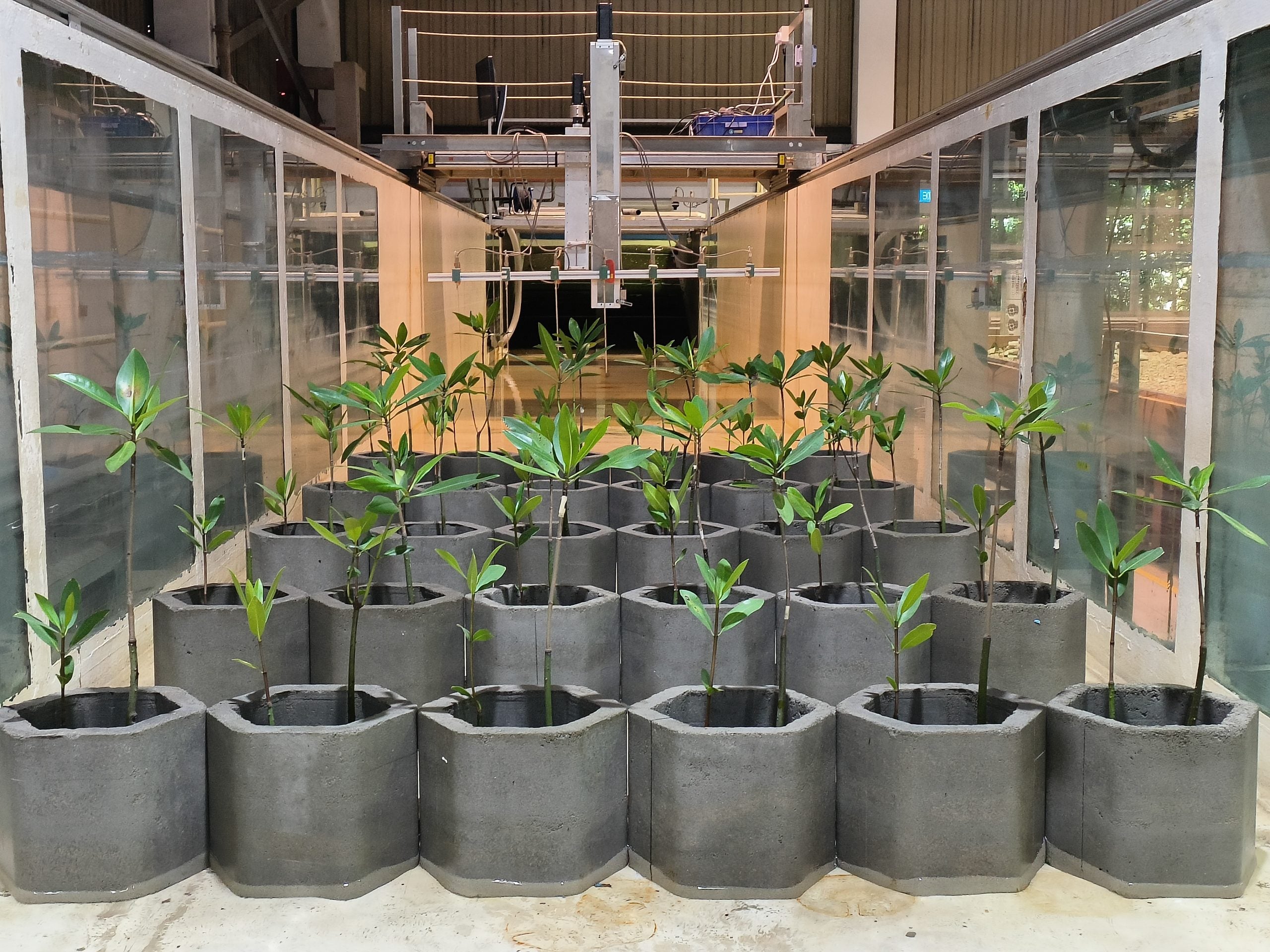
With climate change threatening more powerful storms and higher sea levels, coastal protection is about more than just building higher walls. Research led by Assistant Professor Gary Lei looks at how engineered structures and nature-based solutions can work together to help protect vulnerable coastlines.
Co-authored with Dr Yushu Xie and published in Applied Ocean Research, the study tested a hybrid system combining hexagonal concrete planters with live mangrove seedlings in a laboratory wave tank.
The researchers found that at the early seedling stage the planters do most of the immediate work in reducing wave height, with reductions of around 10 to 25 per cent in the lab tests, depending on the layout, water depth and wave conditions.
“Young mangroves need time to grow as coastal protectors,” said Asst Prof Lei. “These planters can help give them that chance, but the layout matters. If we get the design wrong, we may simply move the wave energy somewhere else.”
The study shows that denser planter arrangements can reduce incoming waves more effectively, but may push more wave energy back offshore or concentrate their energy in certain spots. These effects need to be considered carefully, the researchers say, as they could affect planter stability and create areas that need closer monitoring or added protection.
“A key takeaway from our study is that hybrid coastal protection is not simply about adding plants to structures - it requires careful design to balance wave protection, seedling survival and long-term ecological benefits, especially as the mangroves grow and begin to play a larger role themselves,” Asst Prof Lei said.
The study was funded through the Coastal Protection and Flood Resilience Institute (CFI) Singapore, a multi-institutional national Centre of Excellence hosted at NUS.
A self-testing quantum chip for digital security

All physical devices wear down, but when a quantum component degrades, it opens the door to sophisticated attacks that conventional security can't detect.
Now, a team led by Associate Professor Charles Lim has built a chip that breaks this pattern. Their new quantum random number generator (QRNG) uses the laws of quantum physics not just to create randomness, but to certify its own trustworthiness in real time.
This means the chip can guarantee its integrity, even against an adversary armed with a quantum computer. It’s a foundational step toward building truly secure systems for the quantum era.
“This chip paves the way towards integrating practical self-testing quantum random number generators into compact, secure systems,” Assoc Prof Lim said. “Provable secure randomness matters wherever decisions depend on numbers that cannot be predicted, from AI and financial services to healthcare and the Internet of Things.”
Read more here
CDE–Applied Materials researchers develop atom-thin coating for smaller chips

An atomically thin coating could help overcome one of the biggest challenges facing the future of semiconductors, enabling the microscopic copper wiring inside computer chips to keep shrinking without sacrificing performance.
Developed by a joint research team from NUS and Applied Materials, led by Professor Silvija Gradecak, the tungsten disulfide coating is just 0.7 nanometres thick. Yet it can perform two critical functions inside a chip: acting as a barrier to prevent copper atoms from migrating into surrounding materials and serving as a liner that helps copper form smooth, reliable electrical connections.
The breakthrough addresses a growing bottleneck in semiconductor scaling. As chips become smaller, the copper wires that carry signals around them are also shrinking. However, the protective coatings surrounding those wires cannot shrink at the same rate, taking up an increasing share of the available space and reducing speed, efficiency and reliability.
Published in Nature Electronics, the study showed that even a single layer of the ultra-thin coating can improve conductivity, suppress copper diffusion and extend projected wire lifetimes under electrical stress. Importantly, the material can be grown across industry-standard wafers using a process compatible with existing semiconductor manufacturing.
As demand continues to grow for AI systems, advanced computing and more powerful electronic devices, innovations like this could help keep semiconductor scaling on track for years to come.
Imaging technique reveals hidden battery reactions at single-ion scale
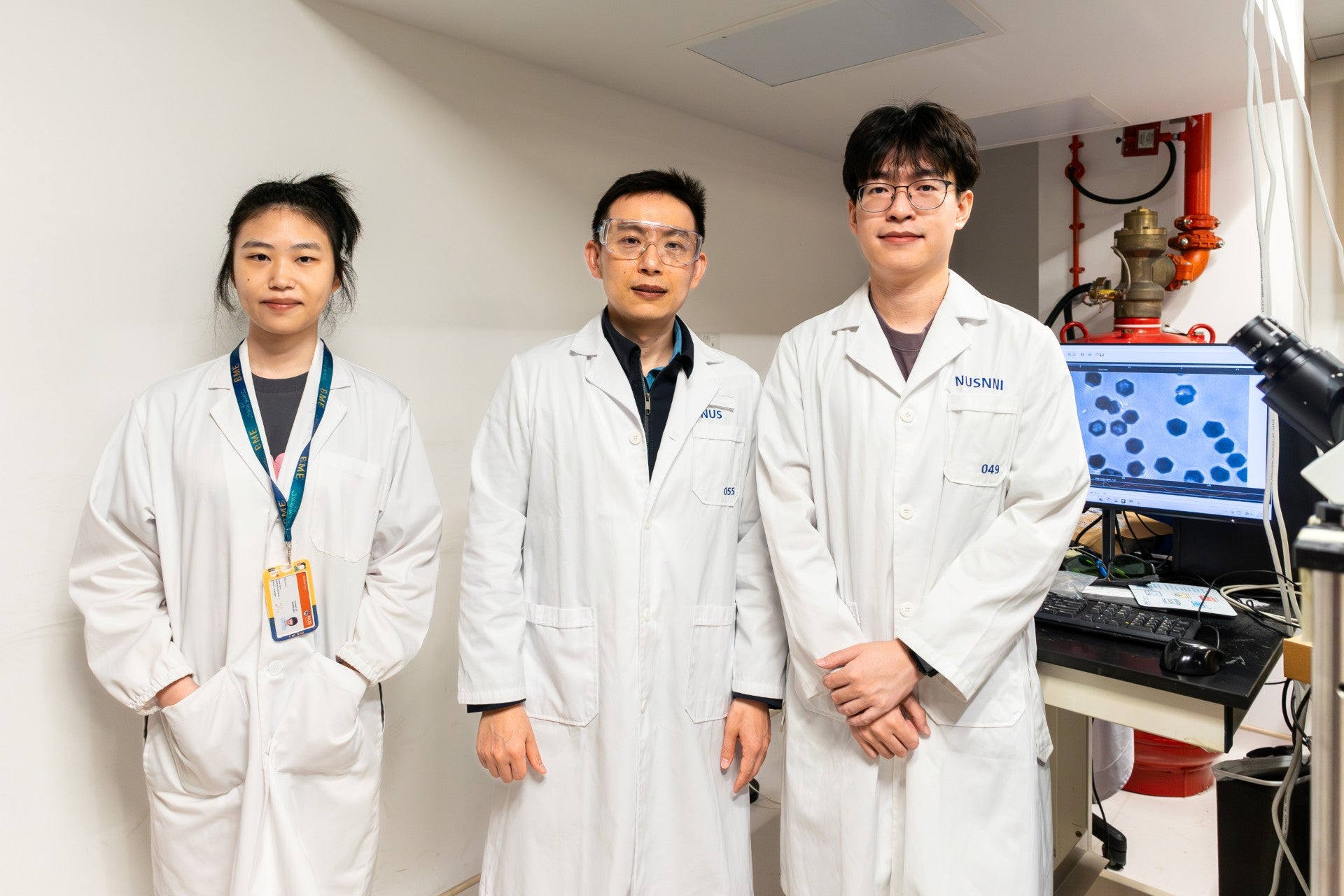
Researchers at MSE have developed a new optical imaging technique that allows scientists to observe battery reactions at the level of individual ions, offering a clearer view of how batteries work, age and degrade over time.
Called ion-localisation optical nanoscopy, or ION, the method turns previously invisible battery processes into tiny flashes of light that can be monitored in real time. It captures reactions with 50 nanometre spatial resolution and 20 millisecond temporal resolution, under realistic liquid-electrolyte operating conditions.
The study was led by Assistant Professor Xianwen Mao with Dr Weidong Zhang as first author. The findings were reported in Nature Materials on 27 April 2026.
“For a long time, many important battery reactions could only be inferred indirectly. With the ION technique, we can now directly watch these processes as they happen at the single-ion scale,” said Dr Zhang.
By showing where and when reactions occur on electrode surfaces, the technique could help researchers better understand battery degradation and guide the design of more stable materials, improved electrolytes and longer-lasting energy-storage systems.
The platform could also have applications beyond batteries, including the study of electrocatalysts, corrosion systems and membrane materials.
Tiny alloy clusters unlock catalyst breakthrough
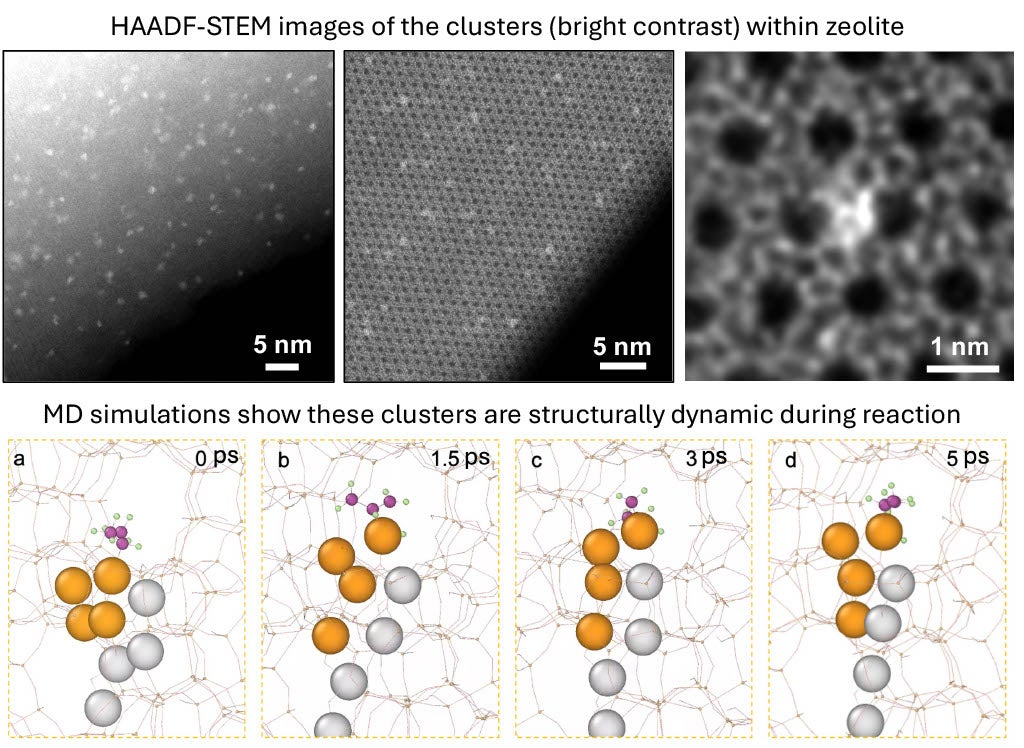
Researchers at MSE have developed a new catalyst built from alloy clusters containing only a few metal atoms, opening a new approach to designing high-performance catalysts for chemical production.
The study, led by Assistant Professor He Qian, focused on propane dehydrogenation, an industrial process used to produce propylene, a key chemical building block found in many everyday products, including plastics, synthetic rubber, fibres and packaging materials.
Current catalysts for this process often face a trade-off between activity and stability. They can be highly active, but may deactivate quickly under demanding operating conditions. The team addressed this challenge by developing platinum–tin alloy subnanometre clusters confined inside the nanoscale channels of silicalite-1 zeolite.
Reported in the May 2026 issue of Nature Catalysis, the catalyst sustained propylene productivity of around 1 mol per gram of catalyst per hour for more than 300 hours, while maintaining more than 99 per cent selectivity towards propylene. This was nearly an order of magnitude higher than state-of-the-art benchmarks. The spent catalyst could also be regenerated by simple air calcination, allowing its performance to be largely restored.
A key finding was that the few-atom alloy clusters are not static. During the reaction, they can shift between different structures and electronic states, allowing different forms of the same catalyst to support different reaction steps.
“In conventional catalyst design, we often look for one optimal active site, effectively the best compromise for all elementary steps,” said Asst Prof He. “Here, the catalyst behaves more like a dynamic ensemble. It can sample many different structures during the reaction, and can in principle optimise multiple reaction steps simultaneously, something a conventional catalyst can’t do.”
By showing how very small alloy clusters can enable new catalytic behaviour, the research could support the design of more efficient and durable catalysts for chemical manufacturing, with potential benefits for energy efficiency and sustainability.
Major Grants Awarded
The major grants (start date in June 2026) with total project value > $1M.
| Hosting Unit | Project Title | Funding Programme (Source of Funding) |
Principal Investigator | Co-Investigator |
| CEE | Digital Instrumentation for Dikes | Cities of Tomorrow R&D Programme: New Spaces – 2024/NRF | Chew Soon Hoe | Yeoh Ker-Wei, Justin |
| CEE | Sustainable, Productive and Biodiverse Armour Rock for Climate-resilient Coastal Revetments | Cities of Tomorrow R&D Programme: Greater Sustainability – 2025/NRF | Du Hongjian | Lei Jiarui, Gary; Chew Soon Hoe; Pang Sze Dai; Peter Alan Todd (Biological Sciences); |
| CEE | Improving Road Safety Through Age-inclusive Vehicle Speed Management: Driving Behavioural Modelling, Accident Risk Assessment and Policy Evaluation | Land Transport Authority (LTA) Urban Mobility Innovation (UMI) Grant – Behavioural Sciences in Walk, Cycle, Ride 2025/LTA | Meng Qiang | Yang Kaidi; Liu Yang; Ong Ghim Ping, Raymond; |
| CEE;ECE;ME | On-site Modular Robot System with Taxonomy Tool Phase 2: Platform Modular On-Site Robot System | Cities of Tomorrow R&D Programme – 2025/NRF | Chua Kim Huat, David | Chew Chee Meng; Prahlad Vadakkepat; |
| DOA | Biophilic Benchmarking: Advancing Landscape Design Through Ecosystem Modelling | Cities of Tomorrow R&D Programme: Greater Sustainability – 2025/NRF | Qi Jinda; | Yuan Chao; Lau Siu Kit; Hwang Yun Hye |
| i-FIM | Materials Data Foundry: Accelerating Synthesis of Complex Materials for Future Applications | NRF AI-for-Science (AI4S) Challenge Grant – 2025/nrf | Konstantin Sergeevich Novoselov | Daria Andreeva-Baeumler; Antonio Helio Castro Neto; Barbaros Oezyilmaz; Maciej Koperski; Stephen Gregory Dale; Li Qianxiao (Mathematics) |
| MSE | High Bandwidth BaTiO3 Thin Films Based Electro-optic Modulators for High-speed Optical Communication | A*STAR Manufacturing, Trade and Connectivity (MTC) Semiconductor RIE Flagship (Core Funding) – 2026 | Zhu Di | |
| NUS Cities | Human-Centric Approaches to Urban Thermal Comfort Perception: Leveraging Greenery and LiDAR in Dense Cityscapes | Cities of Tomorrow R&D Programme: City in Nature – 2025/NRF | Yuan Chao | Qi Jinda; Veerasekaran S/O P Arumugam (Office of the President); |
HIGHLIGHTS
RESEARCH
Open data is changing the way cities are studied
From HDB resale transactions and bus arrival times to taxi availability and close to a million individually mapped trees, Singapore offers a rich set of open urban datasets that help reveal how the city functions.
For Assistant Professor Filip Biljecki, who was recently presented with the 2026 Gill Memorial Award by the UK-based Royal Geographical Society, this growing availability of open urban data is changing how researchers study cities. By making large datasets more accessible, he says, open data allows researchers to analyse urban environments at a scale and level of detail that would previously have been difficult, expensive or impossible.
The shift is part of a wider global movement. In countries such as the Netherlands, open data has helped change thinking around public information, with governments recognising that sharing datasets can create wider value for research, innovation and society than keeping them closed or selling access.
For Asst Prof Biljecki, science “should be open, transparent and reproducible.” When data is shared, he says, it allows others to build on the work, test findings, and develop new insights into the cities people live in every day.
Read more here
Book publication: Computational Fluid Dynamics in the Built Environment
Associate Professor Poh Hee Joo has published a new book, Computational Fluid Dynamics (CFD) Applications in the Built Environment, with World Scientific.
Drawing on more than two decades of research, teaching and industry experience, the book aims to bridge the gap between CFD theory and practical application in climate-resilient and performance-based building design.
Written for students and practitioners, it covers applications including natural and hybrid ventilation, indoor air quality and thermal comfort, wind-driven rain and façade performance, fire safety and pollutant dispersion, and vegetation-microclimate interactions.
Assoc Prof Poh also acknowledged the support of colleagues, mentors and collaborators, especially Professor Willie Tan and Professor Chandra Sekhar.
CDE expertise to advance new centre for waste innovation
CDE expertise in waste-to-resource technologies is set to play a central role in a new national initiative to turn complex waste materials into reusable resources and build a more resource-efficient future.
Launched on 17 June 2026, the Towards Resource Efficiency And Sustainability for URban EnvironmentS (TREASURES) centre is Singapore’s first national research centre dedicated to advancing science and innovation in residue and toxic industrial waste management.
With the Semakau Landfill site expected to reach capacity by 2035, the centre aims to support longer-term efforts to transform Singapore’s only landfill from a disposal site into a hub for resource recovery and reuse. NUS is a key partner in the initiative, with CDE’s contribution grounded in longstanding research strengths in the area within the NUS Department of Civil & Environmental Engineering (CEE).
A key component is Node 2 of the TREASURES centre, jointly led by CEE’s Professor He Jianzhong and Associate Professor Guoqing Geng, which will focus on developing and applying new approaches to recover, treat and repurpose materials currently sent to, or already stored in, Semakau Landfill. The work builds on CEE expertise in environmental resilience, waste-to-resource technologies, sustainable construction materials, biotechnology and data-driven environmental assessment.
“As a key partner in the TREASURES initiative, the National University of Singapore looks forward to contributing our multidisciplinary expertise to address Singapore’s pressing landfill capacity challenges by translating scientific advances into practical environmental solutions,” said Professor Karina Gin, Acting Head of CEE. “We aim to accelerate the transformation of Semakau Landfill from a conventional waste disposal site into a hub for circularity, extending its operational lifespan and ensuring a more resilient, resource-efficient future for Singapore.”
Read more here
Helping young mangroves grow into coastal protectors
With climate change threatening more powerful storms and higher sea levels, coastal protection is about more than just building higher walls. Research led by Assistant Professor Gary Lei looks at how engineered structures and nature-based solutions can work together to help protect vulnerable coastlines.
Co-authored with Dr Yushu Xie and published in Applied Ocean Research, the study tested a hybrid system combining hexagonal concrete planters with live mangrove seedlings in a laboratory wave tank.
The researchers found that at the early seedling stage the planters do most of the immediate work in reducing wave height, with reductions of around 10 to 25 per cent in the lab tests, depending on the layout, water depth and wave conditions.
“Young mangroves need time to grow as coastal protectors,” said Asst Prof Lei. “These planters can help give them that chance, but the layout matters. If we get the design wrong, we may simply move the wave energy somewhere else.”
The study shows that denser planter arrangements can reduce incoming waves more effectively, but may push more wave energy back offshore or concentrate their energy in certain spots. These effects need to be considered carefully, the researchers say, as they could affect planter stability and create areas that need closer monitoring or added protection.
“A key takeaway from our study is that hybrid coastal protection is not simply about adding plants to structures - it requires careful design to balance wave protection, seedling survival and long-term ecological benefits, especially as the mangroves grow and begin to play a larger role themselves,” Asst Prof Lei said.
The study was funded through the Coastal Protection and Flood Resilience Institute (CFI) Singapore, a multi-institutional national Centre of Excellence hosted at NUS.
A self-testing quantum chip for digital security

All physical devices wear down, but when a quantum component degrades, it opens the door to sophisticated attacks that conventional security can't detect.
Now, a team led by Associate Professor Charles Lim has built a chip that breaks this pattern. Their new quantum random number generator (QRNG) uses the laws of quantum physics not just to create randomness, but to certify its own trustworthiness in real time.
This means the chip can guarantee its integrity, even against an adversary armed with a quantum computer. It’s a foundational step toward building truly secure systems for the quantum era.
“This chip paves the way towards integrating practical self-testing quantum random number generators into compact, secure systems,” Assoc Prof Lim said. “Provable secure randomness matters wherever decisions depend on numbers that cannot be predicted, from AI and financial services to healthcare and the Internet of Things.”
Read more here
CDE–Applied Materials researchers develop atom-thin coating for smaller chips
An atomically thin coating could help overcome one of the biggest challenges facing the future of semiconductors, enabling the microscopic copper wiring inside computer chips to keep shrinking without sacrificing performance.
Developed by a joint research team from NUS and Applied Materials, led by Professor Silvija Gradecak, the tungsten disulfide coating is just 0.7 nanometres thick. Yet it can perform two critical functions inside a chip: acting as a barrier to prevent copper atoms from migrating into surrounding materials and serving as a liner that helps copper form smooth, reliable electrical connections.
The breakthrough addresses a growing bottleneck in semiconductor scaling. As chips become smaller, the copper wires that carry signals around them are also shrinking. However, the protective coatings surrounding those wires cannot shrink at the same rate, taking up an increasing share of the available space and reducing speed, efficiency and reliability.
Published in Nature Electronics, the study showed that even a single layer of the ultra-thin coating can improve conductivity, suppress copper diffusion and extend projected wire lifetimes under electrical stress. Importantly, the material can be grown across industry-standard wafers using a process compatible with existing semiconductor manufacturing.
As demand continues to grow for AI systems, advanced computing and more powerful electronic devices, innovations like this could help keep semiconductor scaling on track for years to come.
Imaging technique reveals hidden battery reactions at single-ion scale
Researchers at MSE have developed a new optical imaging technique that allows scientists to observe battery reactions at the level of individual ions, offering a clearer view of how batteries work, age and degrade over time.
Called ion-localisation optical nanoscopy, or ION, the method turns previously invisible battery processes into tiny flashes of light that can be monitored in real time. It captures reactions with 50 nanometre spatial resolution and 20 millisecond temporal resolution, under realistic liquid-electrolyte operating conditions.
The study was led by Assistant Professor Xianwen Mao with Dr Weidong Zhang as first author. The findings were reported in Nature Materials on 27 April 2026.
“For a long time, many important battery reactions could only be inferred indirectly. With the ION technique, we can now directly watch these processes as they happen at the single-ion scale,” said Dr Zhang.
By showing where and when reactions occur on electrode surfaces, the technique could help researchers better understand battery degradation and guide the design of more stable materials, improved electrolytes and longer-lasting energy-storage systems.
The platform could also have applications beyond batteries, including the study of electrocatalysts, corrosion systems and membrane materials.
Tiny alloy clusters unlock catalyst breakthrough
Researchers at MSE have developed a new catalyst built from alloy clusters containing only a few metal atoms, opening a new approach to designing high-performance catalysts for chemical production.
The study, led by Assistant Professor He Qian, focused on propane dehydrogenation, an industrial process used to produce propylene, a key chemical building block found in many everyday products, including plastics, synthetic rubber, fibres and packaging materials.
Current catalysts for this process often face a trade-off between activity and stability. They can be highly active, but may deactivate quickly under demanding operating conditions. The team addressed this challenge by developing platinum–tin alloy subnanometre clusters confined inside the nanoscale channels of silicalite-1 zeolite.
Reported in the May 2026 issue of Nature Catalysis, the catalyst sustained propylene productivity of around 1 mol per gram of catalyst per hour for more than 300 hours, while maintaining more than 99 per cent selectivity towards propylene. This was nearly an order of magnitude higher than state-of-the-art benchmarks. The spent catalyst could also be regenerated by simple air calcination, allowing its performance to be largely restored.
A key finding was that the few-atom alloy clusters are not static. During the reaction, they can shift between different structures and electronic states, allowing different forms of the same catalyst to support different reaction steps.
“In conventional catalyst design, we often look for one optimal active site, effectively the best compromise for all elementary steps,” said Asst Prof He. “Here, the catalyst behaves more like a dynamic ensemble. It can sample many different structures during the reaction, and can in principle optimise multiple reaction steps simultaneously, something a conventional catalyst can’t do.”
By showing how very small alloy clusters can enable new catalytic behaviour, the research could support the design of more efficient and durable catalysts for chemical manufacturing, with potential benefits for energy efficiency and sustainability.
Major Grants Awarded
The major grants (start date in June 2026) with total project value > $1M.
| Hosting Unit | Project Title | Funding Programme (Source of Funding) |
Principal Investigator | Co-Investigator |
| CEE | Digital Instrumentation for Dikes | Cities of Tomorrow R&D Programme: New Spaces – 2024/NRF | Chew Soon Hoe | Yeoh Ker-Wei, Justin |
| CEE | Sustainable, Productive and Biodiverse Armour Rock for Climate-resilient Coastal Revetments | Cities of Tomorrow R&D Programme: Greater Sustainability – 2025/NRF | Du Hongjian | Lei Jiarui, Gary; Chew Soon Hoe; Pang Sze Dai; Peter Alan Todd (Biological Sciences); |
| CEE | Improving Road Safety Through Age-inclusive Vehicle Speed Management: Driving Behavioural Modelling, Accident Risk Assessment and Policy Evaluation | Land Transport Authority (LTA) Urban Mobility Innovation (UMI) Grant – Behavioural Sciences in Walk, Cycle, Ride 2025/LTA | Meng Qiang | Yang Kaidi; Liu Yang; Ong Ghim Ping, Raymond; |
| CEE;ECE;ME | On-site Modular Robot System with Taxonomy Tool Phase 2: Platform Modular On-Site Robot System | Cities of Tomorrow R&D Programme – 2025/NRF | Chua Kim Huat, David | Chew Chee Meng; Prahlad Vadakkepat; |
| DOA | Biophilic Benchmarking: Advancing Landscape Design Through Ecosystem Modelling | Cities of Tomorrow R&D Programme: Greater Sustainability – 2025/NRF | Qi Jinda; | Yuan Chao; Lau Siu Kit; Hwang Yun Hye |
| i-FIM | Materials Data Foundry: Accelerating Synthesis of Complex Materials for Future Applications | NRF AI-for-Science (AI4S) Challenge Grant – 2025/nrf | Konstantin Sergeevich Novoselov | Daria Andreeva-Baeumler; Antonio Helio Castro Neto; Barbaros Oezyilmaz; Maciej Koperski; Stephen Gregory Dale; Li Qianxiao (Mathematics) |
| MSE | High Bandwidth BaTiO3 Thin Films Based Electro-optic Modulators for High-speed Optical Communication | A*STAR Manufacturing, Trade and Connectivity (MTC) Semiconductor RIE Flagship (Core Funding) – 2026 | Zhu Di | |
| NUS Cities | Human-Centric Approaches to Urban Thermal Comfort Perception: Leveraging Greenery and LiDAR in Dense Cityscapes | Cities of Tomorrow R&D Programme: City in Nature – 2025/NRF | Yuan Chao | Qi Jinda; Veerasekaran S/O P Arumugam (Office of the President); |