


STUDENT ACHIEVEMENTS & STUDENT LIFE
CDE RAG Exposure Camp gives freshmen a first taste of RAG spirit
CDE hosted its RAG Exposure Camp to give incoming freshmen a hands-on introduction to RAG Season, while helping them make friends and learn more about university life. Through games and exposure to dance choreographies, float and costume-making, participants got a first taste of the creativity and energy behind RAG.
Recognition of DBE IPM students' research work at the World Sustainable Built Environment Conference 2026
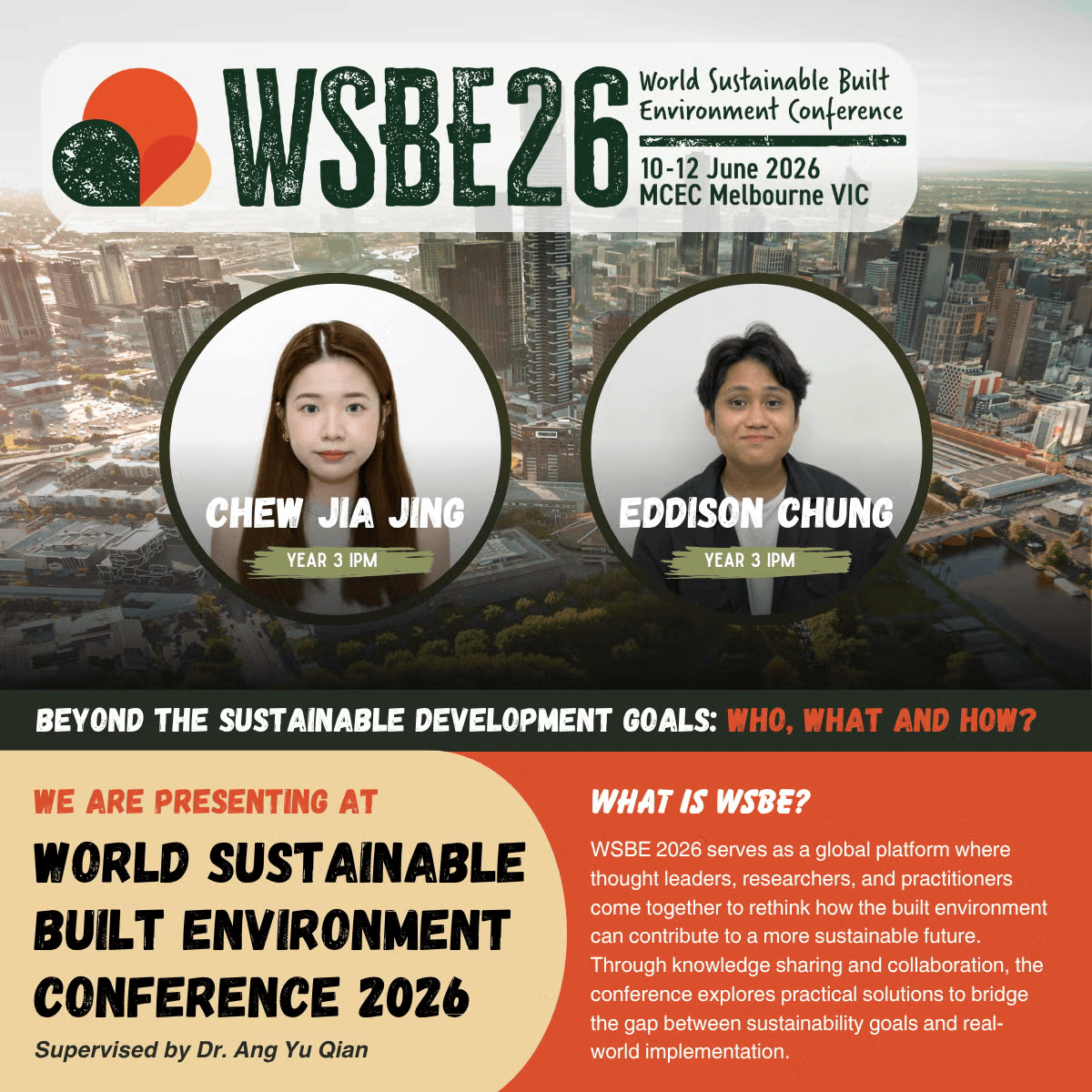
Research by Year 3 Infrastructure and Project Management students Chew Jia Jing and Eddison Chung, under the supervision of Dr Ang Yu Qian, was selected for an oral presentation at the World Sustainable Built Environment (WSBE) Conference 2026 in Melbourne, Australia, a premier global summit focused on urban sustainability.
Their paper, titled “The thermal comfort divide in Singapore’s high-density public housing: An equity-aware simulation workflow”, introduces an equity-aware simulation workflow to address “cooling poverty.” By integrating 3D modelling with sensor data, it quantifies the stark disparities between air-conditioned and naturally ventilated homes. The findings reveal that passive design interventions offer only modest improvements, highlighting that architectural fixes alone cannot bridge the comfort-affordability gap.
Lin Subin receives Indoor Air Quality, Ventilation and Energy Conservation in Buildings (IAQVEC) 2026 Scholarship Award
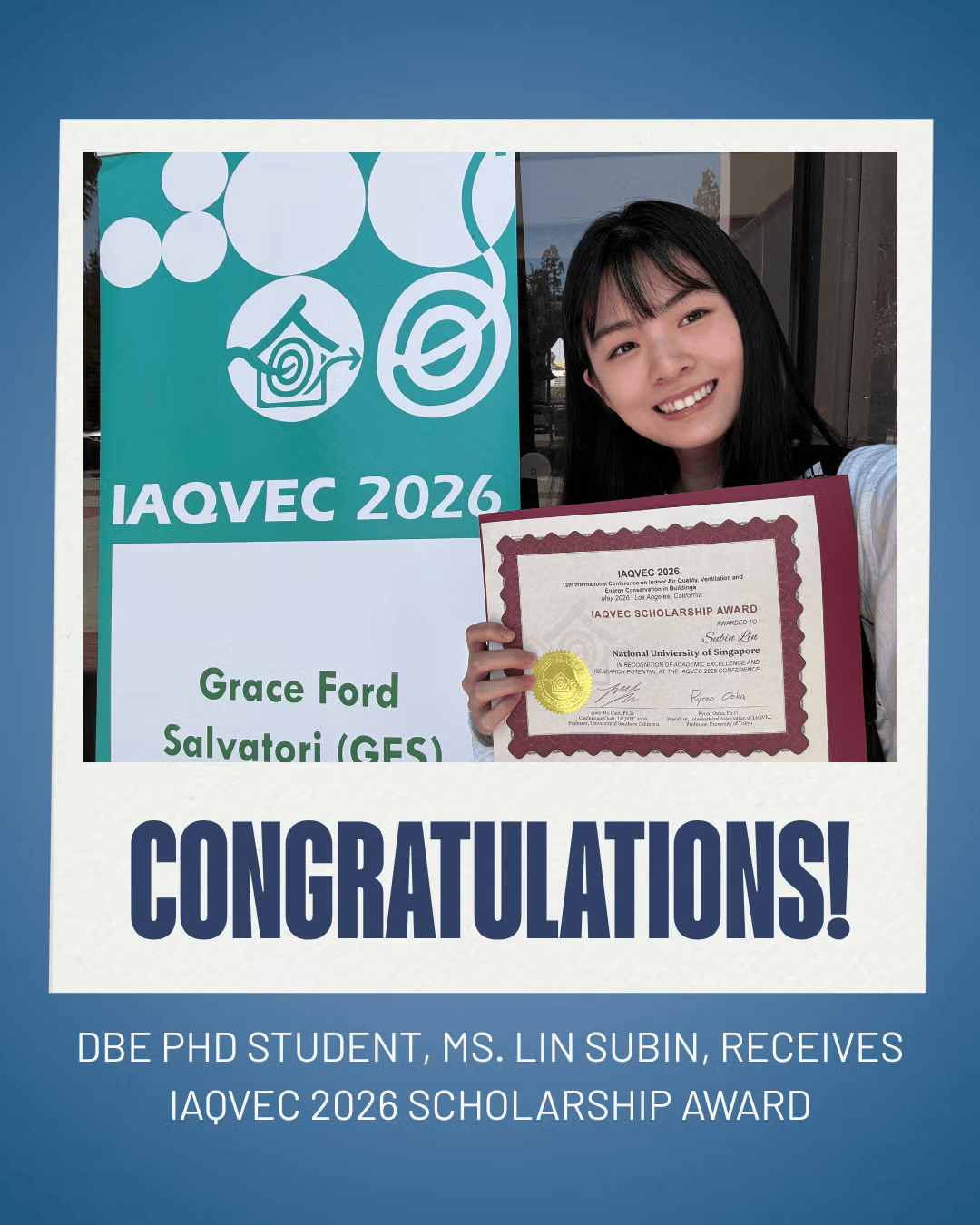
DBE PhD student Lin Subin received the Indoor Air Quality, Ventilation and Energy Conservation in Buildings (IAQVEC) 2026 Scholarship Award at the 12th International Conference on Indoor Air Quality, Ventilation and Energy Conservation in Buildings, held in Los Angeles, California.
Subin’s conference paper, titled “Aerodynamic Response and Ventilation Enhancement in Urban Street Canyons through Building Porosity: A Comparative Numerical and Experimental Study,” was co-authored with Dr Jason Leong, Professor Khoo Boo Cheong and Associate Professor Poh Hee Joo. The study examines how different building porosity configurations influence airflow and pedestrian-level ventilation in dense urban street canyons.
By combining wind tunnel experiments with Computational Fluid Dynamics simulations, the research highlights that certain vertical placements of building openings can adversely affect near-ground ventilation, underscoring the importance of careful porosity design for healthier and more climate-responsive urban environments.
Kavindra Yohan Kuhatheva Senaratna awarded the Outstanding Student & PhD Candidate Presentation (OSPP) award
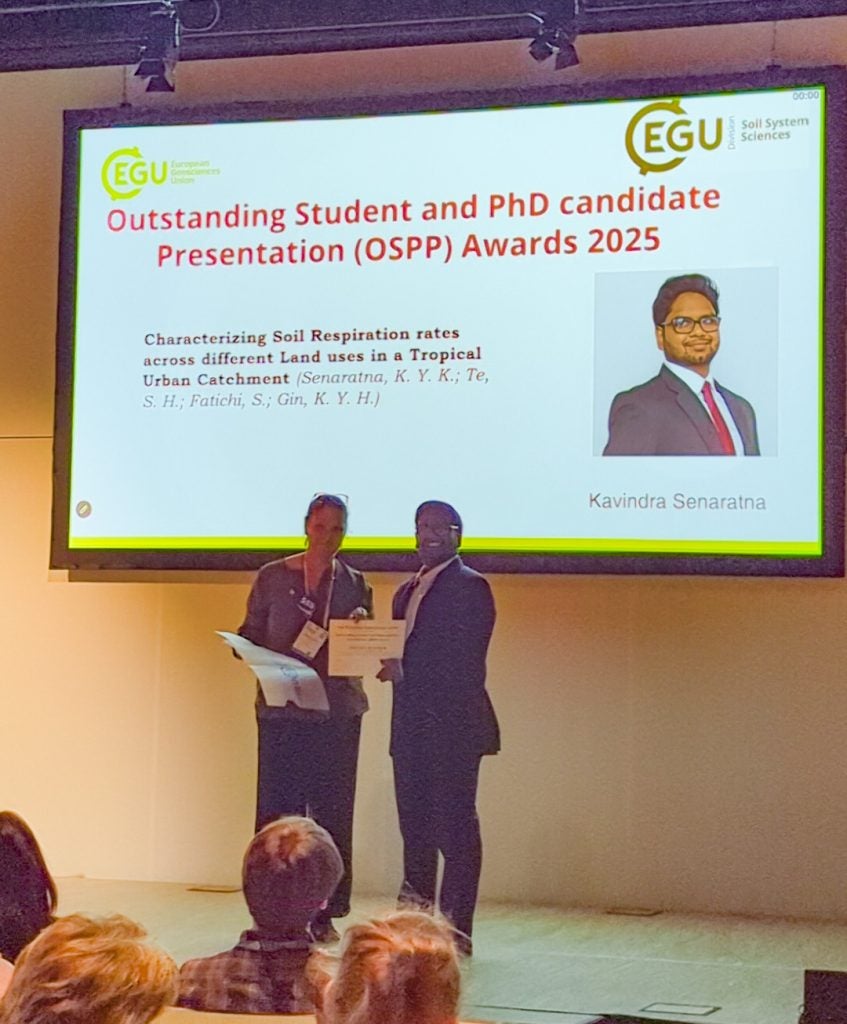
CEE PhD candidate Kavindra Senaratna, supervised by Professor Karina Gin was recently awarded the Outstanding Student & PhD Candidate Presentation (OSPP) award at the European Geosciences Union (EGU) General Assembly 2026, held in Vienna, Austria. The award was for his poster presentation made at the EGU General Assembly 2025, titled “Characterizing Soil Respiration rates across different land uses in a Tropical Urban Catchment”.
Small package, big ambition: Team LeoNUS heads to CanSat 2026
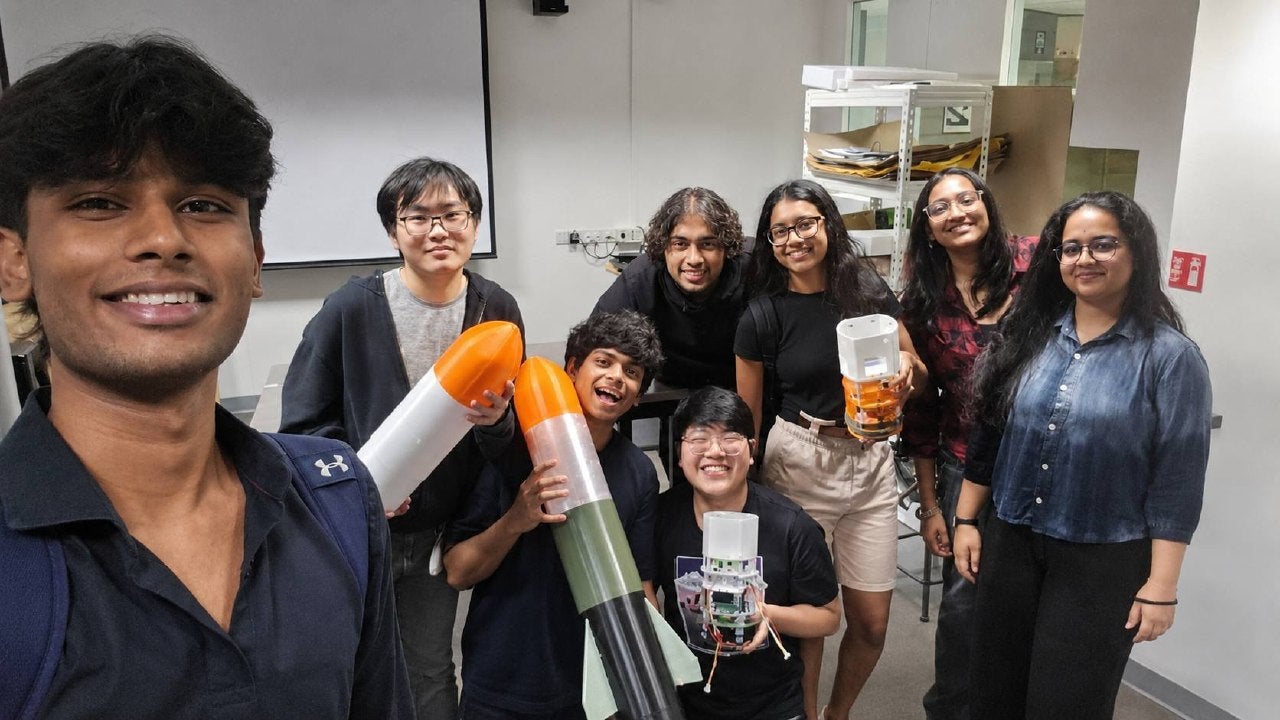
For students who dream of space, Team LeoNUS is proving that big ambitions can come in very small packages.
Team LeoNUS will soon embark for the 2026 CanSat competition in Monterey, Virginia, USA, where their CanSat will be launched on 6 June. Organised by the American Astronautical Society, this international collegiate-level challenge tasks students with designing, building, and launching a CanSat — a simulation of a real satellite, consisting of a container and payload.
This year’s mission is all about packing functionality into a highly compact system. After being ejected from a rocket, the CanSat must deploy a parachute, release a payload that deploys a paraglider, which will navigate autonomously to a designated zone and finally release a protected egg at 2 metres above ground without breakage.
To meet these challenges, the team developed several key design features:
- A modular, layered structure to keep the CanSat compact and rigid
- A slider-crank release mechanism for both the Cansat and egg release
- A winch-servo control system to guide the paraglider towards the target coordinates
For the Preliminary Design Review (PDR) stage, Team LeoNUS scored 260/262 (99.24%). The team was evaluated on their understanding of the competition mission, system requirements, concept of operations, preliminary design, prototyping and testing plans, preliminary budget, and the development schedule.
Combined with their Critical Design Review (CDR) score of 99.18%, this result places Team LeoNUS among the leading teams in the competition. Comprising eight members across Electrical Engineering, Mechanical Engineering and Computer Engineering, all of whom are pursuing a second major in the Innovation and Design Programme (iDP), the team shared, “We are proud to be representing Singapore at the international stage in Virginia this June.”
Chang Xu receives Best Student Oral Presentation Award at IEEE International Magnetics Conference (INTERMAG) 2026
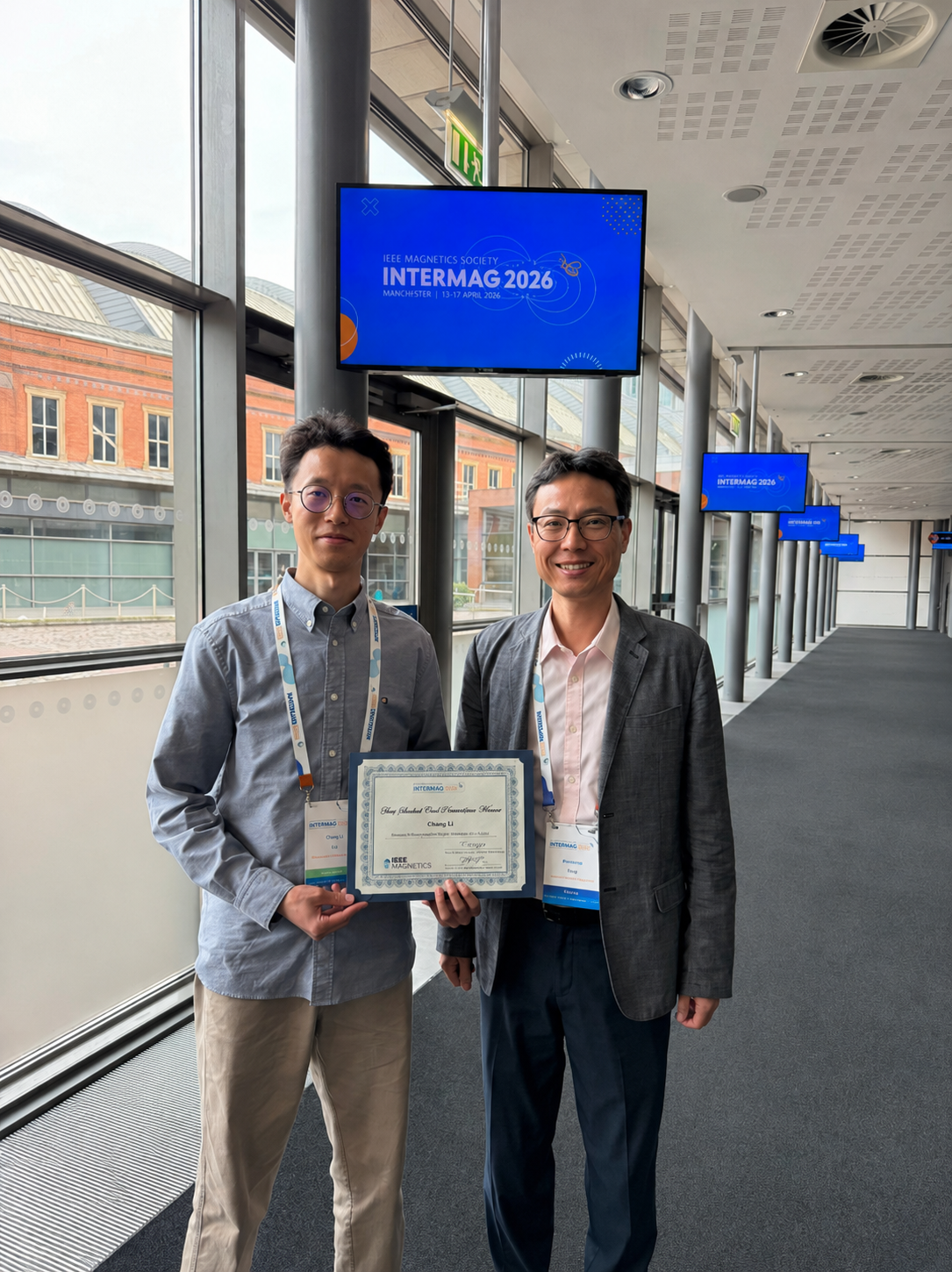
Chang Xu, an ECE PhD student from the research group of Professor Hyunsoo Yang, has been awarded the Best Student Oral Presentation Award at the 2026 IEEE International Magnetics Conference (INTERMAG) held in Manchester, United Kingdom.
INTERMAG is a leading international conference in the field of magnetism, covering both fundamental and applied research, and attracted more than 1,800 participants this year. The award recognises and encourages excellence in graduate research within the magnetics community.
Chang Xu’s research focuses on magnons (tiny waves of magnetism) in antiferromagnetic materials, where opposing magnetic moments cancel each other out. In such materials, magnons can exist in two distinct “handed” forms, analogous to left- and right-handed modes, each carrying spin in opposite directions.
His work demonstrates how these two types of magnetic waves can be independently controlled and utilised. This capability opens up new possibilities for faster and more energy-efficient technologies, particularly in the development of next-generation computing and spintronic devices.
Designing what’s next at the DID Gradshow
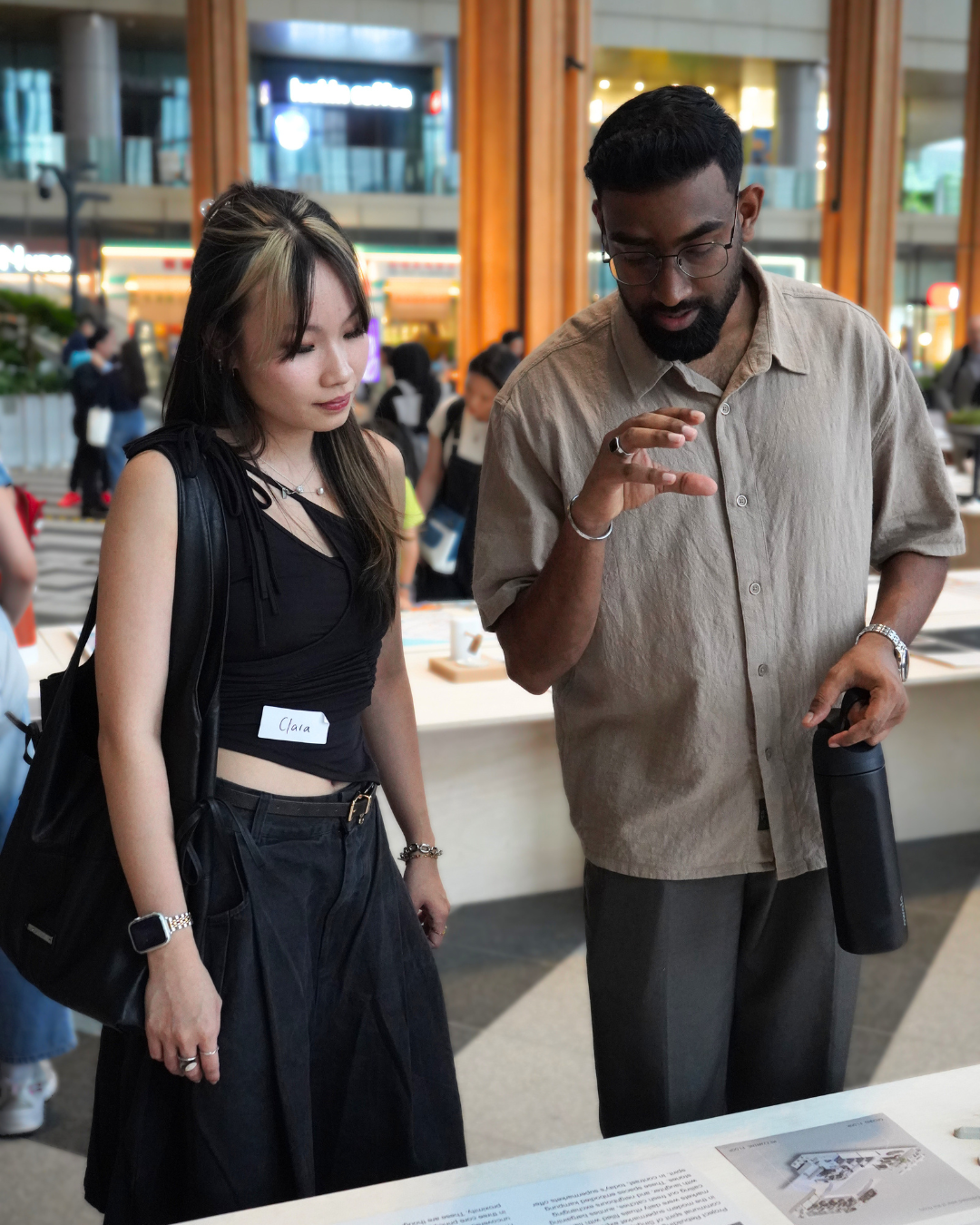
At the opening night of the Industrial Design Graduation Show 2026, Assoc Prof Brian Stone described this year’s theme “See How We Did It” as “a statement that demystifies the design process and illuminates the rigour of the work” by the graduating cohort.
In recognition of the students’ commitment to excellence, the following awards were presented:
- Milton Tan Medal & Prize — Vina Setiawaty for the highest mark for ID4107 Design Platform 1
- Lee Kuan Yew Gold Medal — Adam Choo, for best graduate throughout the course of study
- NUS-JTC Medal and Prize (Design) for Industrial Design — Leon Pereira for best design project addressing innovation in industrial facilities and infrastructure
The showcase brought together projects from the Master of Design in Integrated Design (MDes) programme and Bachelor’s thesis projects across three specialisations — Social & Service Transformation, Product Innovation and Design Futures & Critical Inquiry. The Bachelor’s projects included:
First Floor Friends — Social & Service Transformation
By Teo Jia Yu
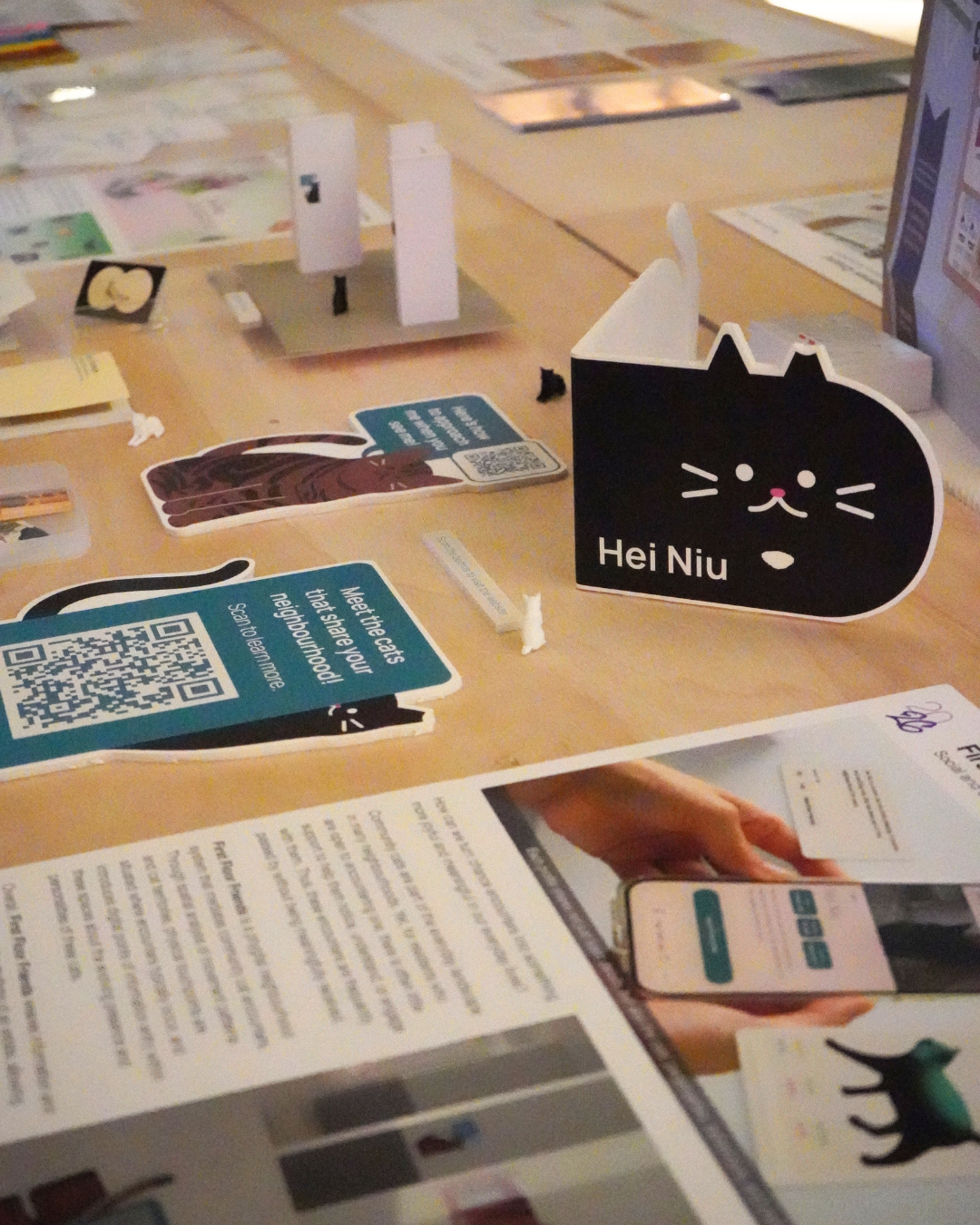
First Floor Friends is a phygital system that makes encounters with neighbourhood cats more meaningful by combining physical touchpoints with digital information about the cats’ presences and personalities.
First Hand — Product Innovation
By Vina Setiawaty
First Hand is an augmented reality anatomy learning app that overlays anatomical models onto the user’s hand. An LLM-powered tutor helps learners explore the links between nerve injury, muscle loss, and visible deformity.
A Service Set for One — Design Futures & Critical Inquiry
By Madeline See
A Service Set for One reimagines solo dining in a mobile-first age. By centering serviceware around the phone, the project contrasts historical dining rituals with today’s improvised behaviours, prompting reflection on what eating alone has become.
Project director Jocelyn Tan thanked her organising team of graduating students, saying, “It’s taken us ten months of curation and organising, and I’m deeply grateful to my team and the 41 students behind the works on display.”
To celebrate the past academic year, Assoc Prof Brian Stone presented the 2026 Graduation Book — an annual record of the division’s work — to Prof Cees de Bont, Head of the Division of Industrial Design, and Assoc Prof Martin Buist, Deputy Dean of Education.
DID graduate wins both iF Design Student Award and Red Dot Design Award 2026
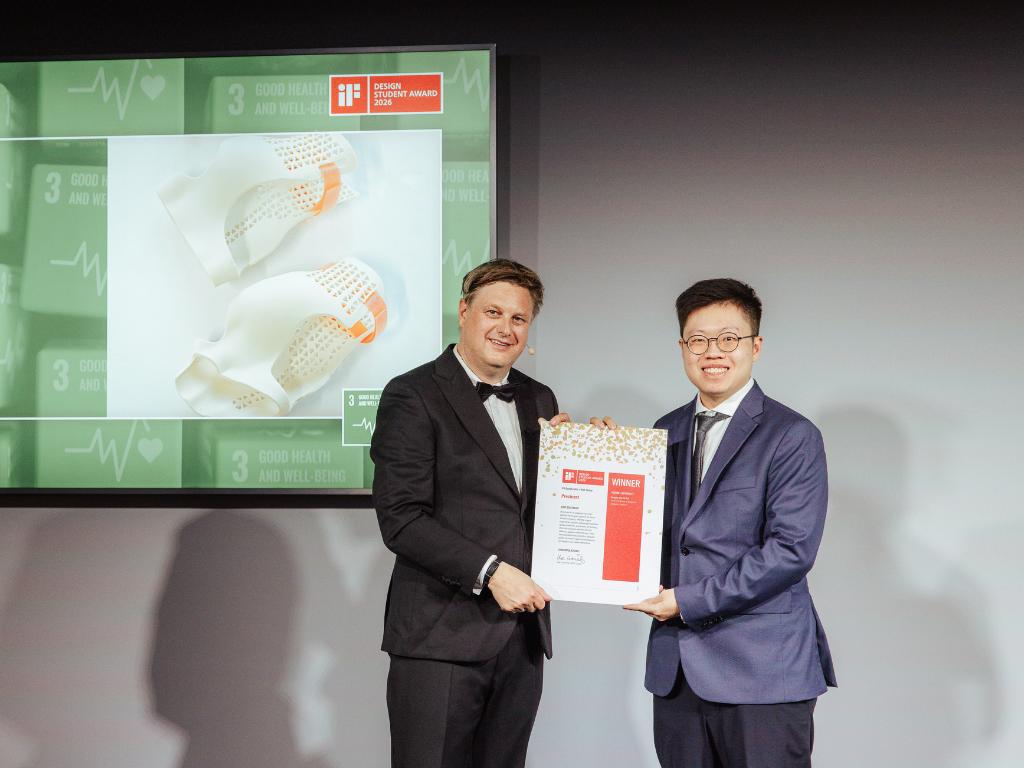
“These recognitions are a reminder to myself of what's possible when interdisciplinary design meets real purpose,” said Douglas Ong, an Industrial Design graduate from the Class of 2025. Selected amongst thousands of worldwide entries from two separate juries, he was awarded both the iF Design Student Award and the Red Dot Design Award 2026 for his thesis project, Precicast.
Precicast is a bespoke hand splint system for people recovering from flexor tendon injuries. After a patient's hand is scanned, generative computer-aided design (CAD) algorithm designs a splint mesh that is 3D printed the same day and fitted to the patient after surgery. Three splints are created to support recovery at each stage.
The project began with a personal frustration: watching his mother struggle with an ill-fitting orthopaedic splint. That led Douglas to consider how splint technology could be updated, leading him to refine its design through 51 iterations. Douglas explained that he had to balance patient needs for comfort, functional needs in structural integrity, with the realities of what could be 3D printed at scale with lowered costs.
As he put it, “every adjustment for comfort had implications for strength, and every adjustment for strength through Finite Element Analysis (FEA) had implications for cost and manufacturability.” Although the process was challenging, the highlight was finding a solution that felt genuinely custom for the patient. Douglas shared that Precicast reduces consult time by 75% and reduces weight by 30% over conventional splinting solutions.
Throughout the project, Douglas worked closely with his supervisor, Assoc Prof Song Kee Hong, whose astute guidance pushed him to go beyond surface-level solutions and design “a service system with real impact.” Co-advised by clinical collaborators and occupational therapists, this overall outlook has shaped Precicast and sharpened Douglas’ approach to design.
With collaborations already established with healthcare institutions in Singapore, Douglas hopes to bring the project closer to full adoption through further patient validation, refined production workflows and partnerships that could help scale splint production and reduce clinician workload.
Looking to develop design strategies for broader societal impact, Douglas is now pursuing a PhD in the Division of Industrial Design with Asst. Prof Gabriel Lipkowitz in the Interactive 3D Design Lab.
LA Gradshow: living landscapes, shared futures
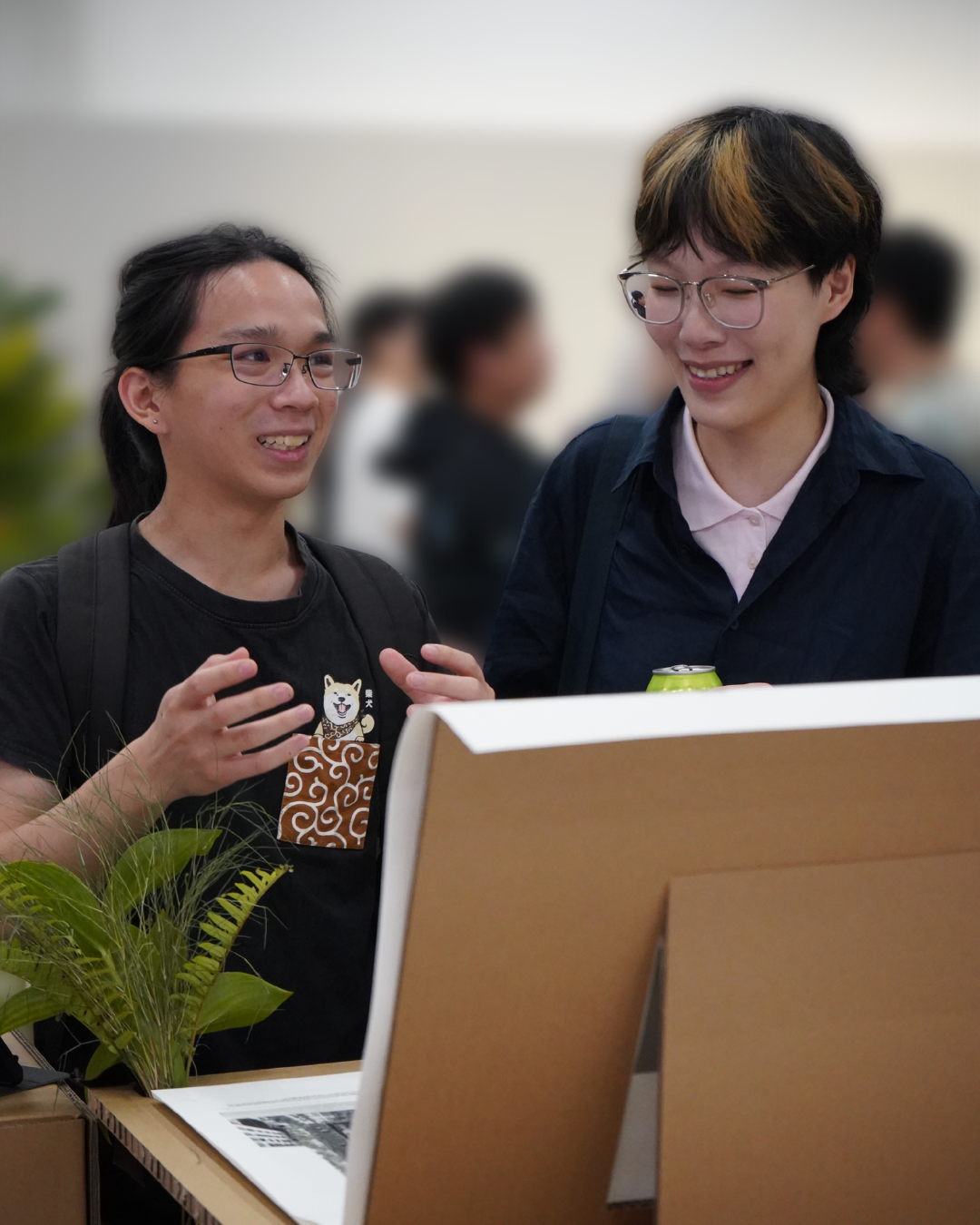
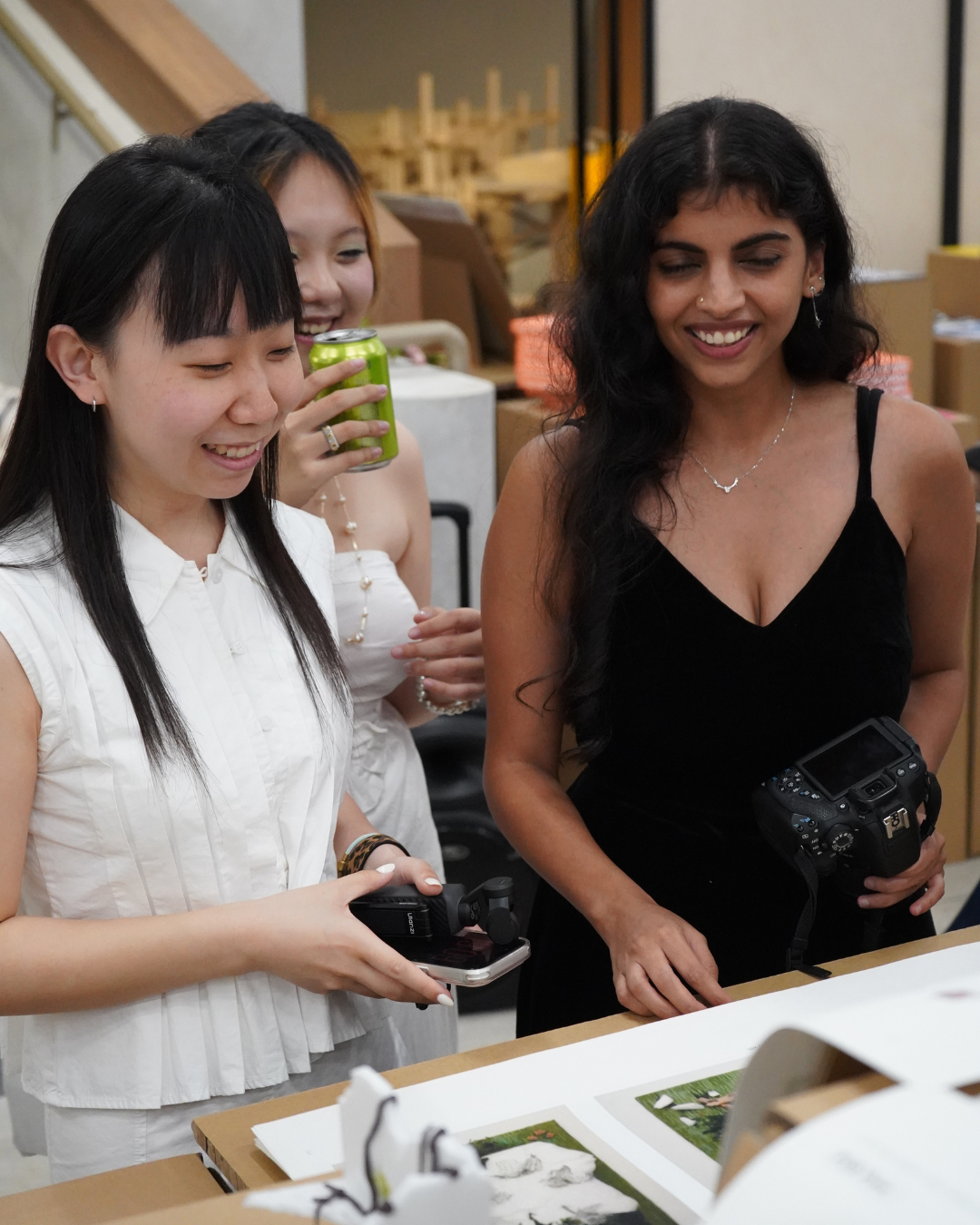
At the Landscape Architecture (LA) Gradshow, landscape was presented not merely as design, but as a way of reading the world and imagining how it might be transformed. Students from the Bachelor of Landscape Architecture (BLA) and Master of Landscape Architecture (MLA) programmes presented projects deeply attuned to today’s social and environmental challenges. Extending that sensibility beyond students’ folios, wasteXscape — a social enterprise founded by LA students and alumni — presented a lower-carbon floral display and invited visitors to create their own bouquets with overgrown trimmings from the campus.
Director of the MLA programme, Dr Victoria Marshall, welcomed everyone to the exhibition, before inviting Provost’s Chair of the Department of Architecture, Prof Jeff Hou, to deliver opening remarks. As he noted, “Our profession has the capacity to be transformative; we need to work with stakeholders, policy makers, and be advocates.” This collaborative spirit was echoed by Shruthakeerthi Karthikeyan (Year 2, Master of Landscape Architecture), who shared, “What the MLA Program gave me was a new way of thinking that takes research seriously, holds uncertainty honestly, and understands design as a collaborative and iterative process rather than a singular act.”
The breadth of the discipline came through in projects engaging questions of ecology, agriculture, culture, waste, and urban change across Asia. Some project highlights include:
[MLA] From Bitter Roots to Living Routes — Reframing Coptis as a Living Corridor of Culture and Production — Wu Qingyi (Year 2, Master of Landscape Architecture)
A landscape strategy for Shizhu, Chongqing, that combines agroforestry and rural tourism to reconnect Huanglian cultivation with ecological restoration, local culture, and farmers’ livelihoods.
[MLA] Gardens of Neglect: Ruderal Reorganisation of Ecology, Time and Informality in Urban Ruins — Shruthakeerthi Karthikeyan (Year 2, Master of Landscape Architecture)
A reinterpretation of abandoned urban sites in Hyderabad as spontaneous “ruin-gardens”, where neglect, ambiguity, and ruderal ecologies generate new social and ecological possibilities.
[MLA] Locality through Care: Reactivating Telajakan for Frangipani in Denpasar — Zhou Yao (Year 2, Master of Landscape Architecture)
An exploration of how everyday acts of planting, gathering, and ritual care shape a sense of place in Denpasar, Bali, with proposals to reactivate small green spaces as part of the city’s living cultural landscape.
[BLA] Matter in Place — Calyn Chia Xin Mei (Year 4, Bachelor in Landscape Architecture)
A proposal for Desa Penatih, Bali, that reframes textile and organic waste not as refuse, but as material in transformation, reassembled into evolving public landscape structures shaped by reuse, decay, and perception.
[BLA] Taste in Time: The Culinary Park — Choo Wei Ling, Clara (Year 4, Bachelor of Landscape Architecture, Minor in Visual Communication Design)
A culinary landscape for peri-urban Denpasar that responds to land conversion and changing food cultures by connecting cultivation, cooking, selling, and consumption through a shared community setting.
Together, the projects demonstrated how landscape architecture can move across systems and scales to open new ways of living with complexity, care, and change.
HIGHLIGHTS
STUDENT ACHIEVEMENTS & STUDENT LIFE
CDE RAG Exposure Camp gives freshmen a first taste of RAG spirit
CDE hosted its RAG Exposure Camp to give incoming freshmen a hands-on introduction to RAG Season, while helping them make friends and learn more about university life. Through games and exposure to dance choreographies, float and costume-making, participants got a first taste of the creativity and energy behind RAG.
Recognition of DBE IPM students' research work at the World Sustainable Built Environment Conference 2026
Research by Year 3 Infrastructure and Project Management students Chew Jia Jing and Eddison Chung, under the supervision of Dr Ang Yu Qian, was selected for an oral presentation at the World Sustainable Built Environment (WSBE) Conference 2026 in Melbourne, Australia, a premier global summit focused on urban sustainability.
Their paper, titled “The thermal comfort divide in Singapore’s high-density public housing: An equity-aware simulation workflow”, introduces an equity-aware simulation workflow to address “cooling poverty.” By integrating 3D modelling with sensor data, it quantifies the stark disparities between air-conditioned and naturally ventilated homes. The findings reveal that passive design interventions offer only modest improvements, highlighting that architectural fixes alone cannot bridge the comfort-affordability gap.
Lin Subin receives Indoor Air Quality, Ventilation and Energy Conservation in Buildings (IAQVEC) 2026 Scholarship Award
DBE PhD student Lin Subin received the Indoor Air Quality, Ventilation and Energy Conservation in Buildings (IAQVEC) 2026 Scholarship Award at the 12th International Conference on Indoor Air Quality, Ventilation and Energy Conservation in Buildings, held in Los Angeles, California.
Subin’s conference paper, titled “Aerodynamic Response and Ventilation Enhancement in Urban Street Canyons through Building Porosity: A Comparative Numerical and Experimental Study,” was co-authored with Dr Jason Leong, Professor Khoo Boo Cheong and Associate Professor Poh Hee Joo. The study examines how different building porosity configurations influence airflow and pedestrian-level ventilation in dense urban street canyons.
By combining wind tunnel experiments with Computational Fluid Dynamics simulations, the research highlights that certain vertical placements of building openings can adversely affect near-ground ventilation, underscoring the importance of careful porosity design for healthier and more climate-responsive urban environments.
Kavindra Yohan Kuhatheva Senaratna awarded the Outstanding Student & PhD Candidate Presentation (OSPP) award
CEE PhD candidate Kavindra Senaratna, supervised by Professor Karina Gin was recently awarded the Outstanding Student & PhD Candidate Presentation (OSPP) award at the European Geosciences Union (EGU) General Assembly 2026, held in Vienna, Austria. The award was for his poster presentation made at the EGU General Assembly 2025, titled “Characterizing Soil Respiration rates across different land uses in a Tropical Urban Catchment”.
Small package, big ambition: Team LeoNUS heads to CanSat 2026
For students who dream of space, Team LeoNUS is proving that big ambitions can come in very small packages.
Team LeoNUS will soon embark for the 2026 CanSat competition in Monterey, Virginia, USA, where their CanSat will be launched on 6 June. Organised by the American Astronautical Society, this international collegiate-level challenge tasks students with designing, building, and launching a CanSat — a simulation of a real satellite, consisting of a container and payload.
This year’s mission is all about packing functionality into a highly compact system. After being ejected from a rocket, the CanSat must deploy a parachute, release a payload that deploys a paraglider, which will navigate autonomously to a designated zone and finally release a protected egg at 2 metres above ground without breakage.
To meet these challenges, the team developed several key design features:
- A modular, layered structure to keep the CanSat compact and rigid
- A slider-crank release mechanism for both the Cansat and egg release
- A winch-servo control system to guide the paraglider towards the target coordinates
For the Preliminary Design Review (PDR) stage, Team LeoNUS scored 260/262 (99.24%). The team was evaluated on their understanding of the competition mission, system requirements, concept of operations, preliminary design, prototyping and testing plans, preliminary budget, and the development schedule.
Combined with their Critical Design Review (CDR) score of 99.18%, this result places Team LeoNUS among the leading teams in the competition. Comprising eight members across Electrical Engineering, Mechanical Engineering and Computer Engineering, all of whom are pursuing a second major in the Innovation and Design Programme (iDP), the team shared, “We are proud to be representing Singapore at the international stage in Virginia this June.”
Chang Xu receives Best Student Oral Presentation Award at IEEE International Magnetics Conference (INTERMAG) 2026
Chang Xu, an ECE PhD student from the research group of Professor Hyunsoo Yang, has been awarded the Best Student Oral Presentation Award at the 2026 IEEE International Magnetics Conference (INTERMAG) held in Manchester, United Kingdom.
INTERMAG is a leading international conference in the field of magnetism, covering both fundamental and applied research, and attracted more than 1,800 participants this year. The award recognises and encourages excellence in graduate research within the magnetics community.
Chang Xu’s research focuses on magnons (tiny waves of magnetism) in antiferromagnetic materials, where opposing magnetic moments cancel each other out. In such materials, magnons can exist in two distinct “handed” forms, analogous to left- and right-handed modes, each carrying spin in opposite directions.
His work demonstrates how these two types of magnetic waves can be independently controlled and utilised. This capability opens up new possibilities for faster and more energy-efficient technologies, particularly in the development of next-generation computing and spintronic devices.
Designing what’s next at the DID Gradshow
At the opening night of the Industrial Design Graduation Show 2026, Assoc Prof Brian Stone described this year’s theme “See How We Did It” as “a statement that demystifies the design process and illuminates the rigour of the work” by the graduating cohort.
In recognition of the students’ commitment to excellence, the following awards were presented:
- Milton Tan Medal & Prize — Vina Setiawaty for the highest mark for ID4107 Design Platform 1
- Lee Kuan Yew Gold Medal — Adam Choo, for best graduate throughout the course of study
- NUS-JTC Medal and Prize (Design) for Industrial Design — Leon Pereira for best design project addressing innovation in industrial facilities and infrastructure
The showcase brought together projects from the Master of Design in Integrated Design (MDes) programme and Bachelor’s thesis projects across three specialisations — Social & Service Transformation, Product Innovation and Design Futures & Critical Inquiry. The Bachelor’s projects included:
First Floor Friends — Social & Service Transformation
By Teo Jia Yu
First Floor Friends is a phygital system that makes encounters with neighbourhood cats more meaningful by combining physical touchpoints with digital information about the cats’ presences and personalities.
First Hand — Product Innovation
By Vina Setiawaty
First Hand is an augmented reality anatomy learning app that overlays anatomical models onto the user’s hand. An LLM-powered tutor helps learners explore the links between nerve injury, muscle loss, and visible deformity.
A Service Set for One — Design Futures & Critical Inquiry
By Madeline See
A Service Set for One reimagines solo dining in a mobile-first age. By centering serviceware around the phone, the project contrasts historical dining rituals with today’s improvised behaviours, prompting reflection on what eating alone has become.
Project director Jocelyn Tan thanked her organising team of graduating students, saying, “It’s taken us ten months of curation and organising, and I’m deeply grateful to my team and the 41 students behind the works on display.”
To celebrate the past academic year, Assoc Prof Brian Stone presented the 2026 Graduation Book — an annual record of the division’s work — to Prof Cees de Bont, Head of the Division of Industrial Design, and Assoc Prof Martin Buist, Deputy Dean of Education.
DID graduate wins both iF Design Student Award and Red Dot Design Award 2026
“These recognitions are a reminder to myself of what's possible when interdisciplinary design meets real purpose,” said Douglas Ong, an Industrial Design graduate from the Class of 2025. Selected amongst thousands of worldwide entries from two separate juries, he was awarded both the iF Design Student Award and the Red Dot Design Award 2026 for his thesis project, Precicast.
Precicast is a bespoke hand splint system for people recovering from flexor tendon injuries. After a patient's hand is scanned, generative computer-aided design (CAD) algorithm designs a splint mesh that is 3D printed the same day and fitted to the patient after surgery. Three splints are created to support recovery at each stage.
The project began with a personal frustration: watching his mother struggle with an ill-fitting orthopaedic splint. That led Douglas to consider how splint technology could be updated, leading him to refine its design through 51 iterations. Douglas explained that he had to balance patient needs for comfort, functional needs in structural integrity, with the realities of what could be 3D printed at scale with lowered costs.
As he put it, “every adjustment for comfort had implications for strength, and every adjustment for strength through Finite Element Analysis (FEA) had implications for cost and manufacturability.” Although the process was challenging, the highlight was finding a solution that felt genuinely custom for the patient. Douglas shared that Precicast reduces consult time by 75% and reduces weight by 30% over conventional splinting solutions.
Throughout the project, Douglas worked closely with his supervisor, Assoc Prof Song Kee Hong, whose astute guidance pushed him to go beyond surface-level solutions and design “a service system with real impact.” Co-advised by clinical collaborators and occupational therapists, this overall outlook has shaped Precicast and sharpened Douglas’ approach to design.
With collaborations already established with healthcare institutions in Singapore, Douglas hopes to bring the project closer to full adoption through further patient validation, refined production workflows and partnerships that could help scale splint production and reduce clinician workload.
Looking to develop design strategies for broader societal impact, Douglas is now pursuing a PhD in the Division of Industria Design with Asst. Prof Gabriel Lipkowitz in the Interactive 3D Design Lab.
LA Gradshow: living landscapes, shared futures
At the Landscape Architecture (LA) Gradshow, landscape was presented not merely as design, but as a way of reading the world and imagining how it might be transformed. Students from the Bachelor of Landscape Architecture (BLA) and Master of Landscape Architecture (MLA) programmes presented projects deeply attuned to today’s social and environmental challenges. Extending that sensibility beyond students’ folios, wasteXscape — a social enterprise founded by LA students and alumni — presented a lower-carbon floral display and invited visitors to create their own bouquets with overgrown trimmings from the campus.
Director of the MLA programme, Dr Victoria Marshall, welcomed everyone to the exhibition, before inviting Provost’s Chair of the Department of Architecture, Prof Jeff Hou, to deliver opening remarks. As he noted, “Our profession has the capacity to be transformative; we need to work with stakeholders, policy makers, and be advocates.” This collaborative spirit was echoed by Shruthakeerthi Karthikeyan (Year 2, Master of Landscape Architecture), who shared, “What the MLA Program gave me was a new way of thinking that takes research seriously, holds uncertainty honestly, and understands design as a collaborative and iterative process rather than a singular act.”
The breadth of the discipline came through in projects engaging questions of ecology, agriculture, culture, waste, and urban change across Asia. Some project highlights include:
[MLA] From Bitter Roots to Living Routes — Reframing Coptis as a Living Corridor of Culture and Production — Wu Qingyi (Year 2, Master of Landscape Architecture)
A landscape strategy for Shizhu, Chongqing, that combines agroforestry and rural tourism to reconnect Huanglian cultivation with ecological restoration, local culture, and farmers’ livelihoods.
[MLA] Gardens of Neglect: Ruderal Reorganisation of Ecology, Time and Informality in Urban Ruins — Shruthakeerthi Karthikeyan (Year 2, Master of Landscape Architecture)
A reinterpretation of abandoned urban sites in Hyderabad as spontaneous “ruin-gardens”, where neglect, ambiguity, and ruderal ecologies generate new social and ecological possibilities.
[MLA] Locality through Care: Reactivating Telajakan for Frangipani in Denpasar — Zhou Yao (Year 2, Master of Landscape Architecture)
An exploration of how everyday acts of planting, gathering, and ritual care shape a sense of place in Denpasar, Bali, with proposals to reactivate small green spaces as part of the city’s living cultural landscape.
[BLA] Matter in Place — Calyn Chia Xin Mei (Year 4, Bachelor in Landscape Architecture)
A proposal for Desa Penatih, Bali, that reframes textile and organic waste not as refuse, but as material in transformation, reassembled into evolving public landscape structures shaped by reuse, decay, and perception.
[BLA] Taste in Time: The Culinary Park — Choo Wei Ling, Clara (Year 4, Bachelor of Landscape Architecture, Minor in Visual Communication Design)
A culinary landscape for peri-urban Denpasar that responds to land conversion and changing food cultures by connecting cultivation, cooking, selling, and consumption through a shared community setting.
Together, the projects demonstrated how landscape architecture can move across systems and scales to open new ways of living with complexity, care, and change.