


RESEARCH
Deepening partnership with Indian Institute of Technology Delhi (IITD)
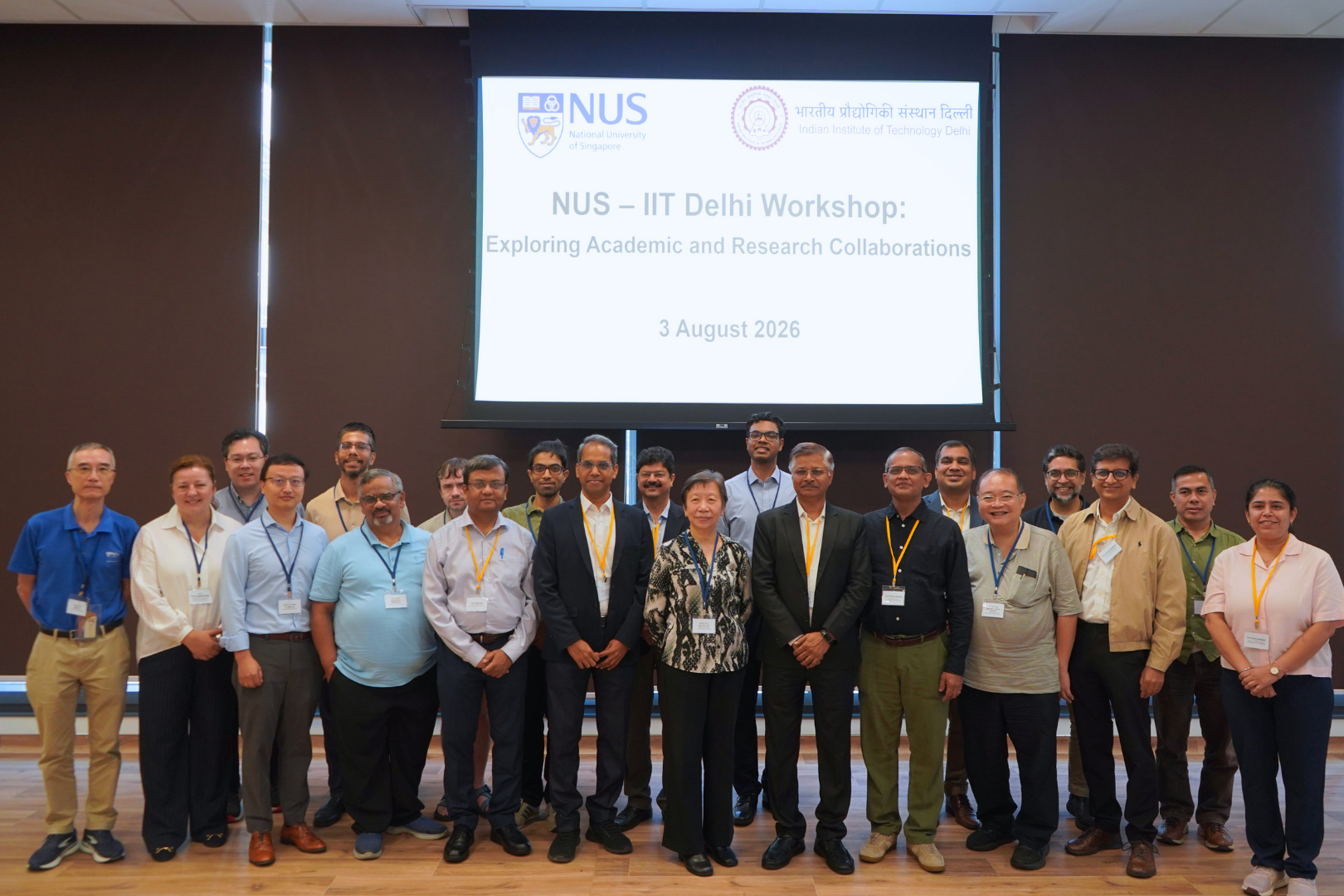
“At CDE, we value partnerships that create space for meaningful collaboration in research, innovation, and talent development,” said Prof Silvija Gradečak-Garaj (CDE Vice Dean for Research & Technology).
Hosted by CDE, together with the Faculty of Science and School of Computing, NUS welcomed the Indian Institute of Technology (IIT) Delhi delegation, led by Prof Anil Verma, Dean of International Relations at IIT Delhi.
The highlight of the programme was the signing of an MOU on research and education, marking a shared commitment to strengthening the partnership between the two institutions. Building on this foundation, a new seed funding programme was launched, along with a joint call for proposals, to deepen research links between NUS and IIT Delhi and to catalyse new collaborations in chemical engineering, computer science, electrical and electronics engineering, and advanced materials. Together, these initiatives provide a starting point for deeper engagement across research and education, and for a shared commitment to building longer-term collaboration between the two institutions.
Presentations by Prof Gradečak-Garaj provided an overview of CDE and its strong partnerships with industry, while Prof Ariando (Faculty of Science) and Asst Prof Diptarka Chakraborty (School of Computing) shared details on the education and research efforts in their faculties.
Faculty from IIT Delhi also took part in discussions and lab visits hosted by SoC, and CDE’s Department of Electrical and Computer Engineering, Department of Materials Science and Engineering, Department of Mechanical Engineering, and Department of Chemical and Biomolecular Engineering. The visits brought researchers together around shared areas of interest, sparking in-person conversations on complementary strengths, new research ideas, and promising opportunities for future collaboration.
There was also discussion at the university level with IIT Delhi on student exchange programmes for undergraduates, and Joint Degree Programmes for graduate students.
We look forward to building on this momentum and deepening our partnership with IIT Delhi, creating new opportunities for collaboration across research and education in the years to come.
Decoding the ‘DNA’ of Singapore’s shophouses with AI

Singapore’s shophouses are a defining part of the city’s urban identity but understanding how their styles evolved has often relied on manual observation and broad historical classifications.
Research led by Professor Heng Chye Kiang with Dr Xuan Xue as first author, introduces a new computational framework that brings together architectural knowledge, AI and phylogenetic analysis to study vernacular architecture in a more systematic way.
Using georeferenced Google Street View frontage images and on-site photography, the team analysed 1,276 historic shophouses in Singapore’s Chinatown and trained an AI-based model to identify 14 architectural elements on their façades. This enabled the researchers to map recurring features and reconstruct an architectural genealogy that reveals hidden relationships among shophouse styles.
"By recasting an architectural question as a mathematical one, we uncovered deeper synchronic threads of development that were previously invisible," said Prof Heng. "This not only helps us describe the forms more accurately but also reveals the underlying forces of cultural competition and evolution. It’s a powerful new lens for viewing our own history."
Read more here.
An AI framework to complete patchy US flood maps
Official flood maps shape how communities prepare for disasters, but gaps in these maps can leave flood risks hidden from view.
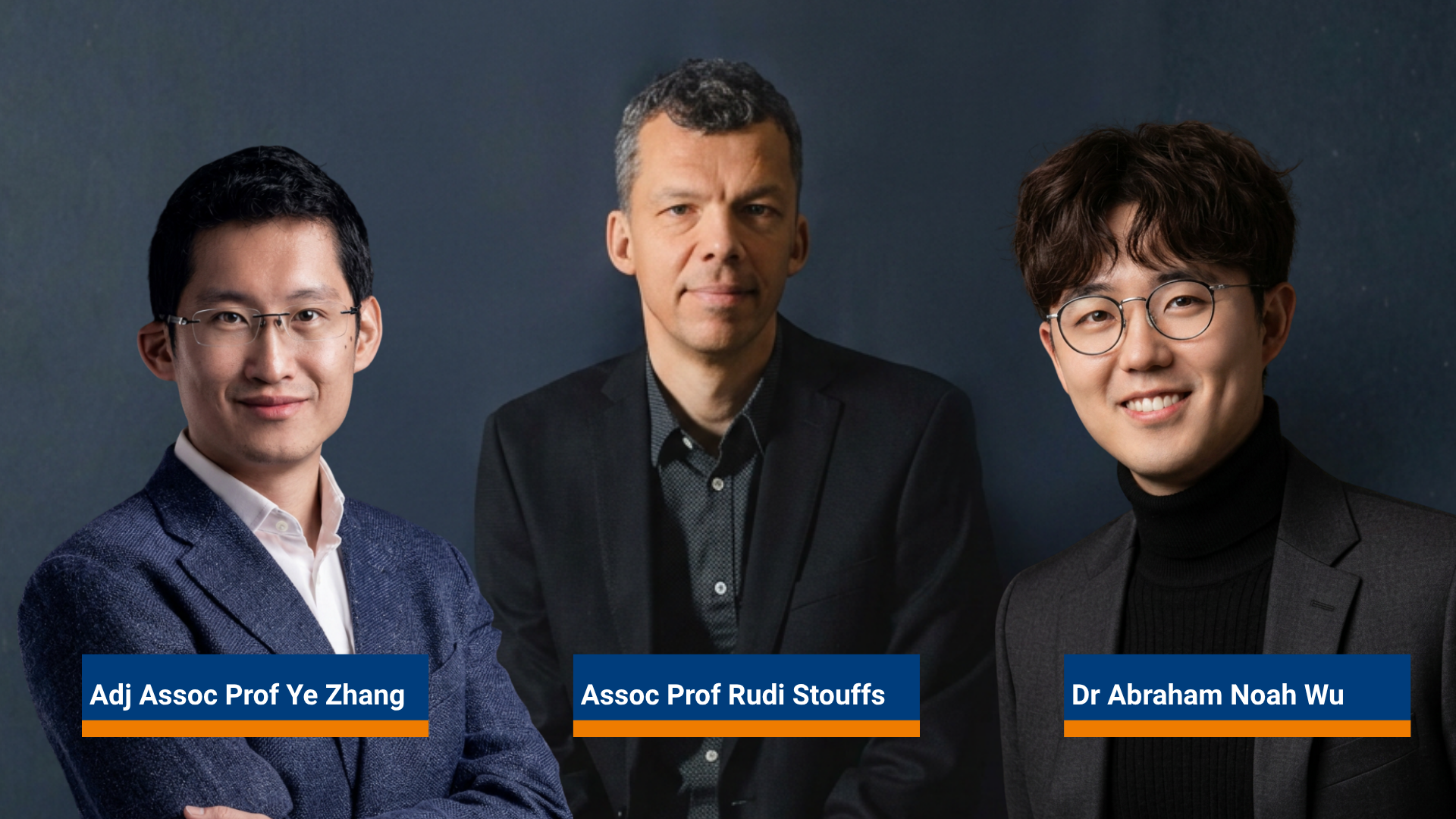
Researchers led by Associate Professor Rudi Stouffs have developed a deep learning framework that completes missing and under-mapped flood hazard zones across the contiguous United States. Published in Nature Communications, the study shows how AI can help build a more complete picture of flood exposure.
Drawing on terrain data and official flood records, the framework generated a spatially complete 30-metre flood hazard map and found that around 11 million people and 4.1 million buildings may have been left out of official mapped flood zones. The research also highlights how these gaps can affect socially vulnerable communities and limit more targeted resilience planning.
The team, including first author Dr Abraham Wu and Adjunct Associate Professor Ye Zhang, highlighted the potential of AI to improve public access to flood risk information and to support earlier, more informed decision-making.
"The model functions as a robust validation and correction system. It does not simply replicate outdated information; it actively leverages current topographical data to produce flood maps that are more consistent and, in many cases, more accurate than the source material,” said Assoc Prof Stouffs.
Read more here.
Breakthrough achieved in engineering colour-sensing yeast
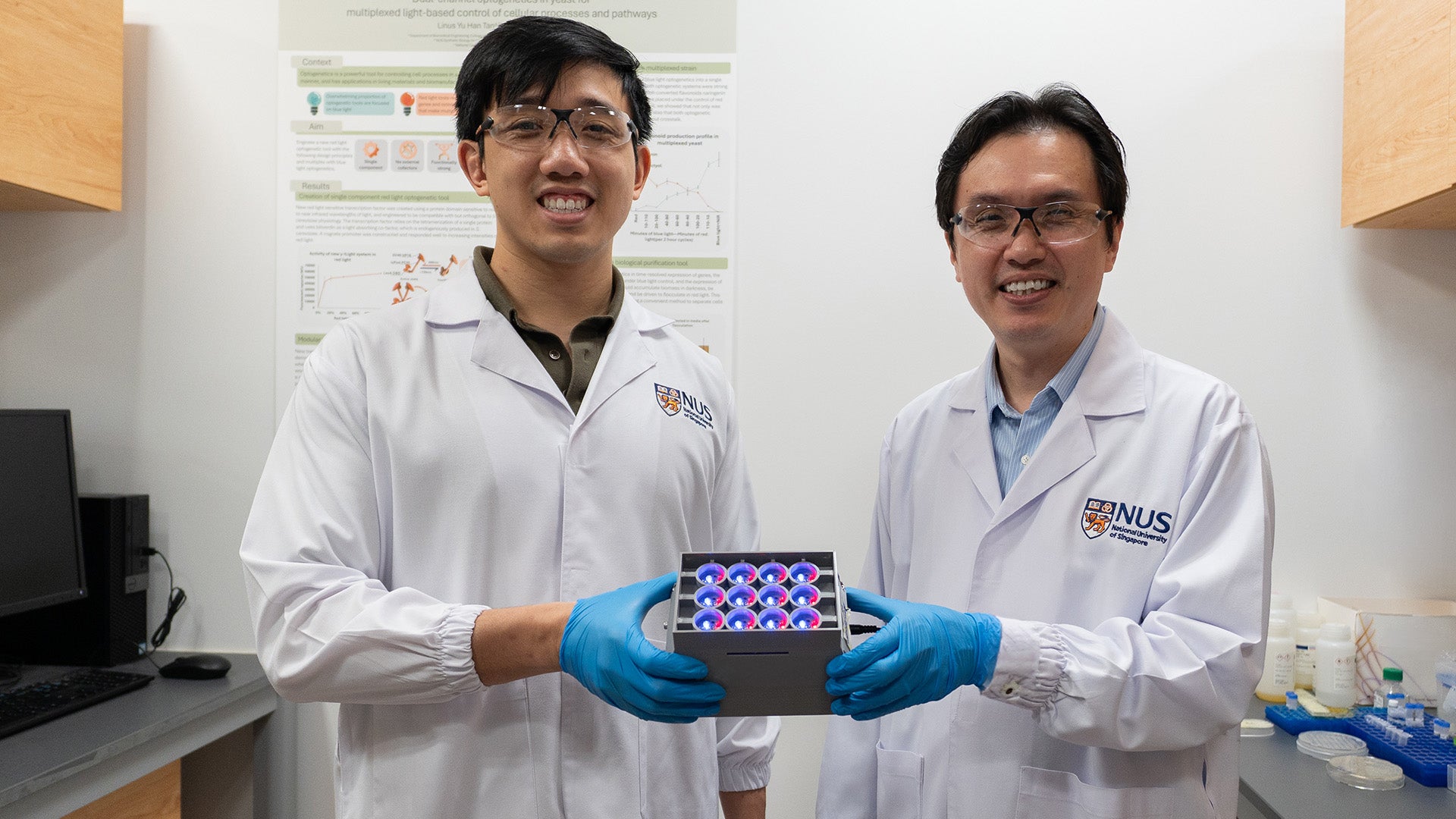
The same yeast used to make bread and beer could one day be controlled by coloured light to manufacture medicines, fuels and other valuable products.
Researchers at CDE have engineered baker’s yeast to independently respond to red and blue light, allowing scientists to control what cells do, when they do it, and even where it happens.
Led by Associate Professor Poh Chueh Loo with lead author PhD student Linus Tan, the team created the first single strain of yeast able to respond separately to more than one colour of light.
By changing the timing and combination of red and blue light, the researchers could switch different genes on and off, adjust the production of a useful plant compound, and even make yeast cells clump together and sink for easier separation.
This could help make biological manufacturing more precise and programmable, reducing the need to repeatedly add chemical triggers during production.
“By using different colours of light to dictate complex, multi-step processes, we are paving the way to make biological manufacturing more predictable and programmable,” said Assoc Prof Poh.
The research was published in Nature Communications.
Read more here.
Lightbulb-inspired reactor advances cleaner hydrogen, plastic recycling and methane conversion
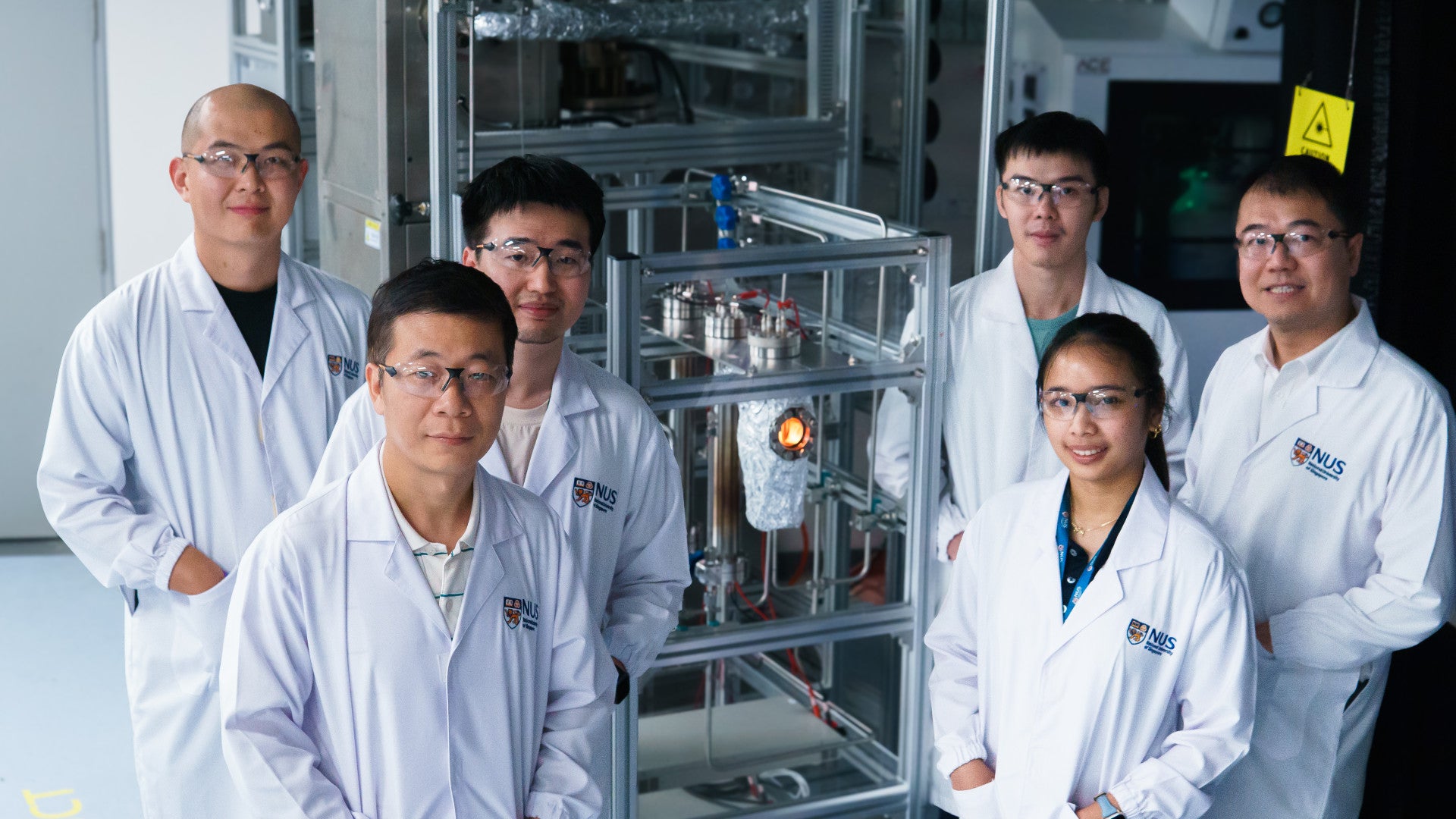
A compact, energy-efficient reactor, inspired by a traditional filament-based lightbulb, could help tackle three major decarbonisation challenges.
Developed by a team of researchers led by Professor Yan Ning, the electrically powered reactor can rapidly reach temperatures above 1,200°C, providing the intense heat needed for key chemical reactions while directing it precisely where the reaction takes place.
Many industrial chemical processes currently achieve high temperatures by burning fuels, consuming large amounts of energy and generating carbon emissions. The reactor developed by Prof Yan’s team instead passes electricity through a thin metal filament, heating only a small area rather than the entire reactor.
By reducing unnecessary heating, the design uses energy more efficiently and can be powered using electricity from renewable sources.
“Our goal is to develop practical technologies that can support the transition to a low-carbon future,” said Prof Yan, who is Director of the NUS Centre for Hydrogen and Carbon Innovations (CHCI).
Across three separate studies, the researchers demonstrated how the same reactor platform could address challenges in hydrogen production, plastic recycling and methane conversion.
Read more here.
Atom-thin carbon insulator for next-generation microchips
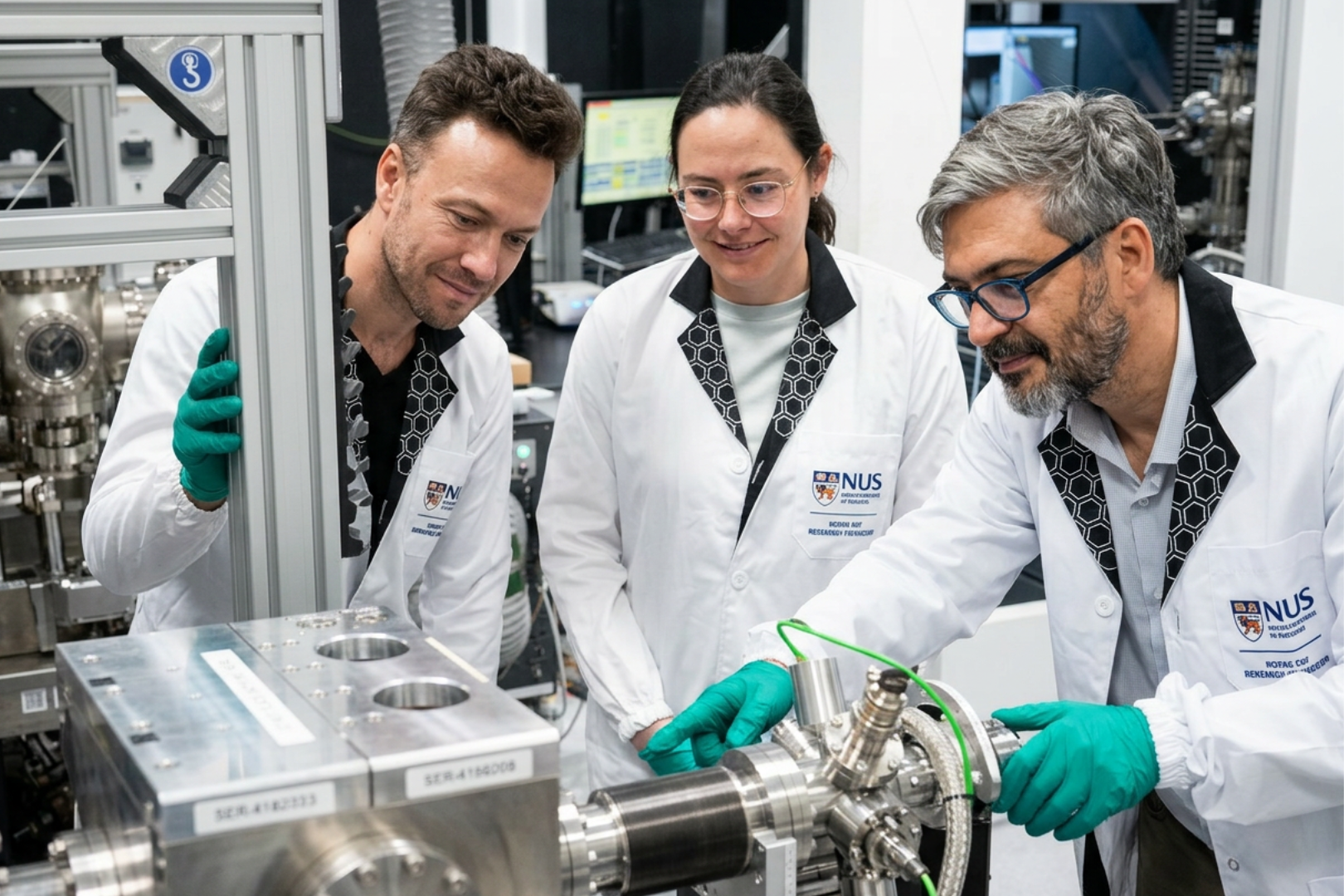
A new atom-thin carbon film could help overcome one of the biggest barriers to faster and more energy-efficient microchips.
Research led by Professor Barbaros Oezyilmaz developed the material to address the long-standing interconnect bottleneck in advanced microchips. Published in Nature Electronics, the study shows that the material retains an ultralow dielectric constant even at thicknesses below one nanometre, while also withstanding strong electric fields and blocking copper-ion diffusion.
The team, including co-first authors Dr Chee Tat Toh and Dr Artem Grebenko, showed that by combining insulation and copper-barrier functions in a single layer, the material could simplify chip wiring and free up more space for wider copper lines. This offers new possibilities for improving data transfer and energy efficiency in advanced microchips, including those used in AI processors.
“This is a more-than-20-year-old materials bottleneck: while transistor technology has changed radically, the basic copper-interconnect platform has remained largely intact and is now one of the dominant obstacles to converting further scaling into real performance and energy gains,” said Prof Oezyilmaz.
Read more here.
AI-guided design advances tougher polymer composites
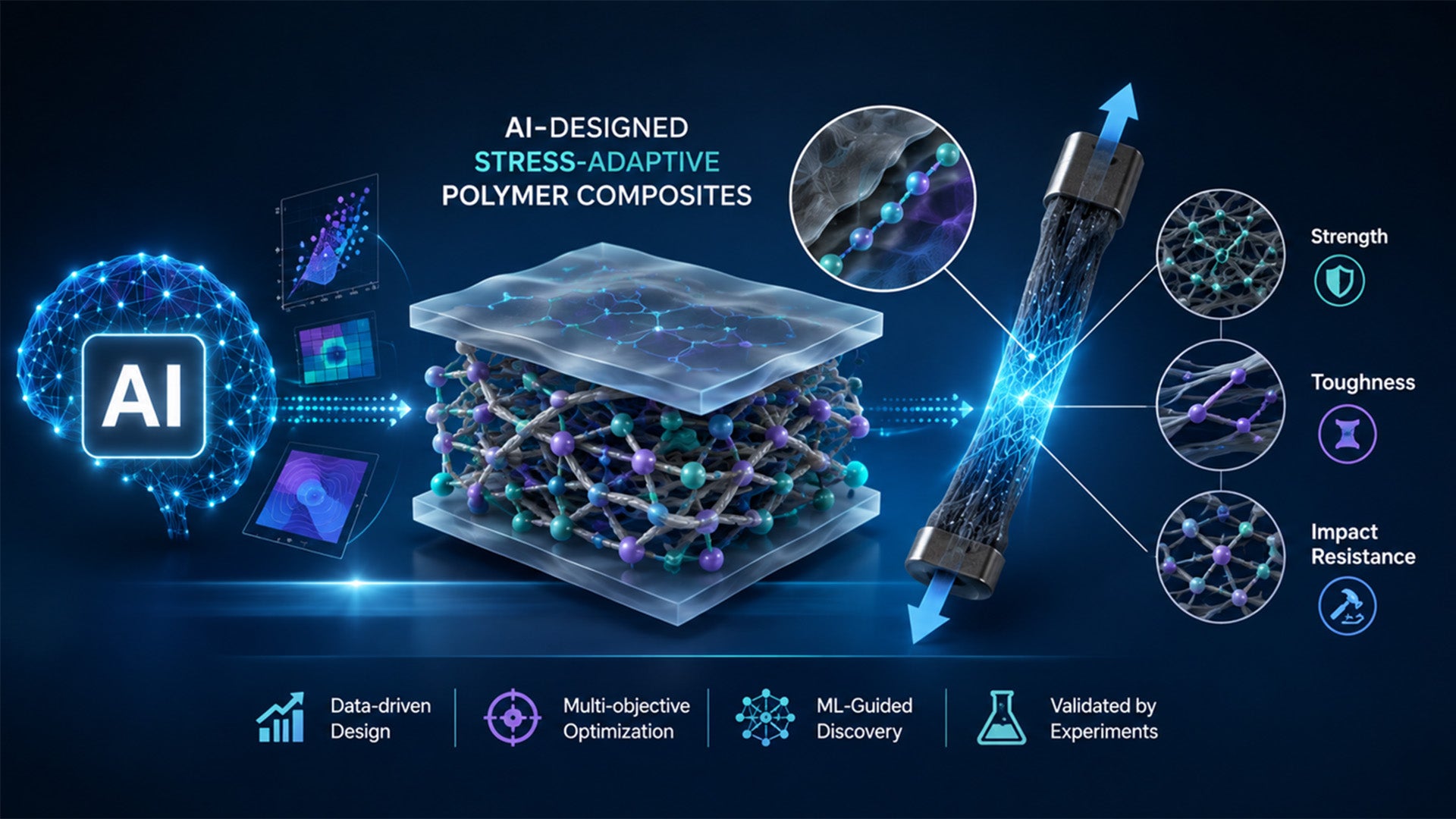
Polymer composites are widely used in applications that require strength and durability, from transport and infrastructure to advanced manufacturing. But improving one property can often compromise another, making it difficult to achieve high strength, toughness and impact resistance in the same material.
Researchers led by Professor He Chaobin have developed AI-guided strategies for designing stress-adaptive interfaces in polymer composites. These interfaces help materials respond more effectively to stress, enabling combinations of strength, fracture toughness, impact resistance and functionality that are difficult to achieve through conventional design methods.
The team applied the approach across two complementary material systems. One study used a bone-inspired trabecular interlock structure combined with a stress-adaptive interface to improve strength, toughness and impact resistance. A second study extended AI-assisted interface design to bio-interfacial nanocomposites, allowing structural performance and additional functionality to be optimised together.
“AI helps us search a much larger materials design space and identify interface structures that balance several competing properties at once,” said Dr Wang Hao, first author of both studies.
The advances were reported in studies published in Nature Communications and Advanced Materials.
“The key is to combine AI with our physical understanding of material interfaces,” said Prof He. “This gives us a broader platform for designing adaptive interfaces and developing next-generation structural and multifunctional composites.”
Together, the studies point towards a more efficient route for integrating AI, materials physics and experiments to accelerate the development of high-performance polymer composites.
A self-repairing, recyclable substrate for durable soft sensors
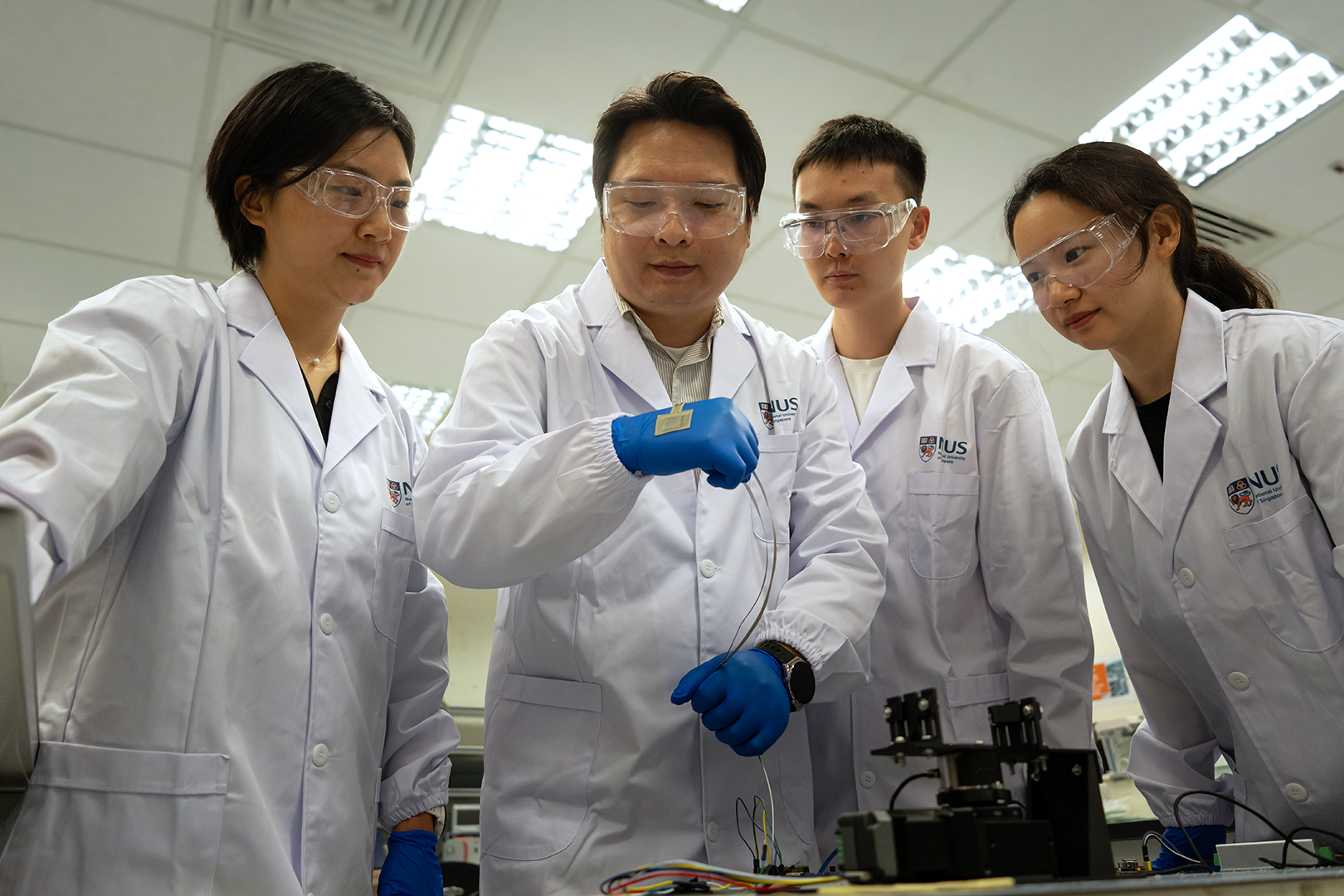
A new bio-derived material could help wearable sensors recover from damage, remain reliable longer, and generate less electronic waste.
Research led by Assistant Professor Zhai Wei has developed a resilient, self-repairing soft material that helps sensors continue working even when they are bent, stretched, rubbed or damaged.
Wearable sensors are increasingly being used to track health signals, body movement and environmental changes, but to support wider use, they need to keep working through repeated bending, rubbing and contact with skin, clothing and moving surfaces.
The research team’s breakthrough lies in how the material is built. Using a solvent-free heating process, the team combined phytic acid, a plant-based compound found in seeds, grains and legumes, with lipoic acid, a naturally occurring compound involved in metabolism. The result is a soft, self-repairing network that can recover after damage and help metal circuits stay attached during use.
Known as an intrinsically dynamic biosubstrate, or IDBS, the material was tested in electronic skin sensors and biointerface devices. The work points to a shift in how wearable sensors could be designed: with a soft base layer that helps the sensor stay attached, recover from damage and be taken apart more easily at the end of its life.
Published recently in Nature Sustainability, the research was led by Asst Prof Zhai and included first author Dr Dang Chao, collaborators from NUS and partner institutions.
Read more here.
Helping soft robotic sensors move from lab tests to real-world use
Soft sensors designed to give robots a sense of touch may work well in the lab, but that does not mean they will perform as well once built into a working robot.
Unlike rigid electronic components, soft tactile sensors bend and deform together with the robotic body around them. Once a sensor is wrapped around a finger, embedded in a gripper or stretched during movement, its behaviour changes.
This makes it difficult for researchers to compare technologies reliably, reproduce one another’s results and determine which sensors are ready for real-world use.
Researchers from NUS Soft Robotics Lab, led by Dr Matteo Lo Preti, Research Fellow in NUS Mechanical Engineering and the NUS Advanced Robotics Centre, have developed a two-stage framework to address this challenge.
Supervised by Professor Cecilia Laschi and conducted in collaboration with Petr Trunin and Dr Lucia Beccai from the Istituto Italiano di Tecnologia (IIT) and Professor Perla Maiolino from the University of Oxford, the study was published recently in Advanced Intelligent Systems.
Read more here.
Researchers push flexible display brightness to new records
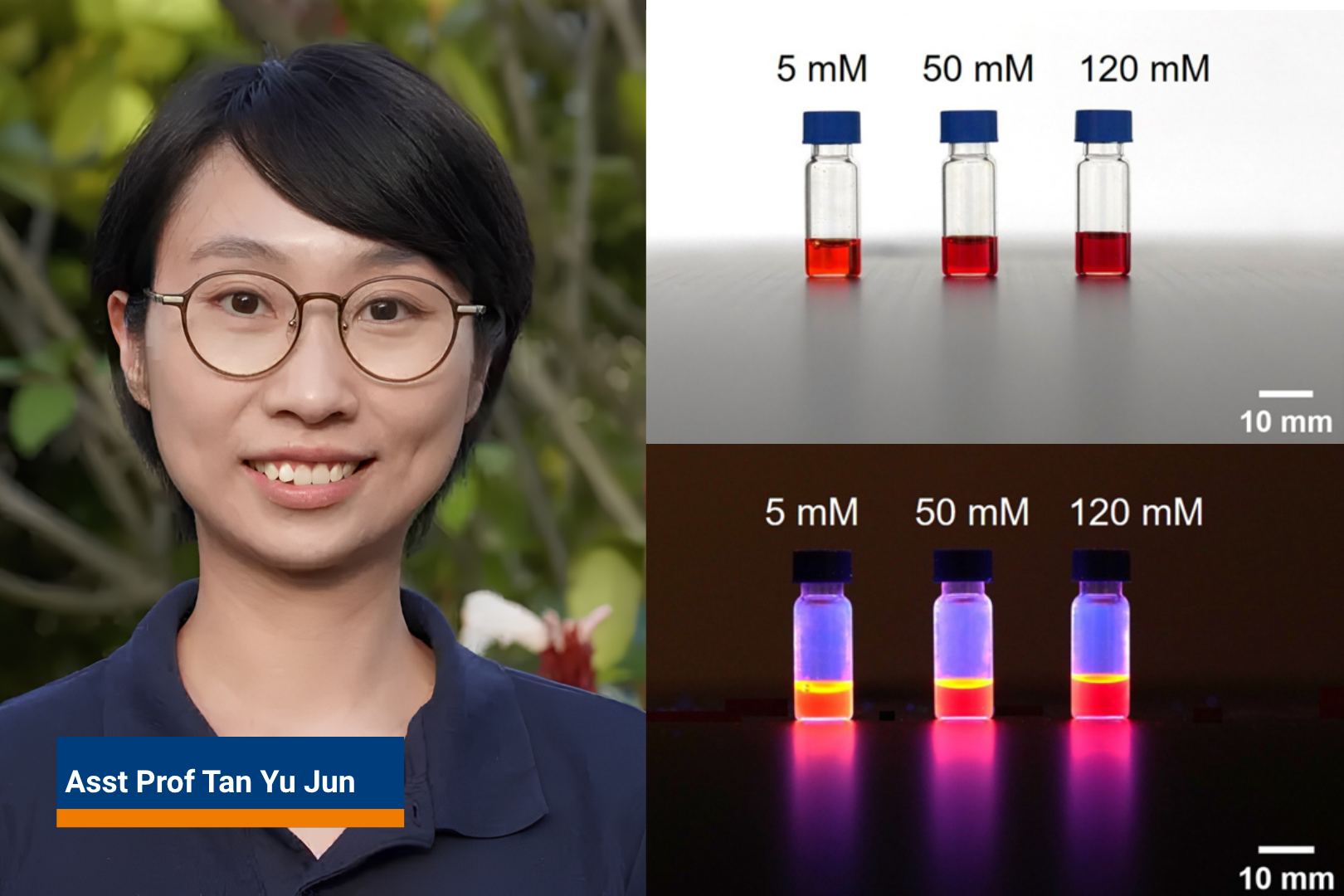
The growing demand for soft electronics, such as skin-worn health monitors and underwater displays, requires screens that are not only flexible and robust but also bright and energy-efficient.
Existing technologies present challenges: organic light-emitting diodes involve complex structures that are difficult to bend reliably, while light-emitting capacitors demand impractically high voltages for wearable applications.
Electrochemiluminescent (ECL) technology offers a promising alternative, using electrically triggered chemical reactions to produce light. However, its practical use has been limited by low brightness and instability.
A team led by Assistant Professor Yu Jun Tan, in partnership with A*STAR Institute of Materials Research and Engineering and A*STAR Institute of High Performance Computing, has overcome this barrier, achieving record-high brightness in ECL devices.
By developing a new electrolyte combined with a redesigned electrode architecture, the team successfully tripled the brightness of ECL devices.
This enhancement makes ECL a viable platform for a new generation of flexible electronics, moving the technology from laboratory demonstrations toward real-world applications.
Read more here.
Giving carbon fibre composite waste a second life
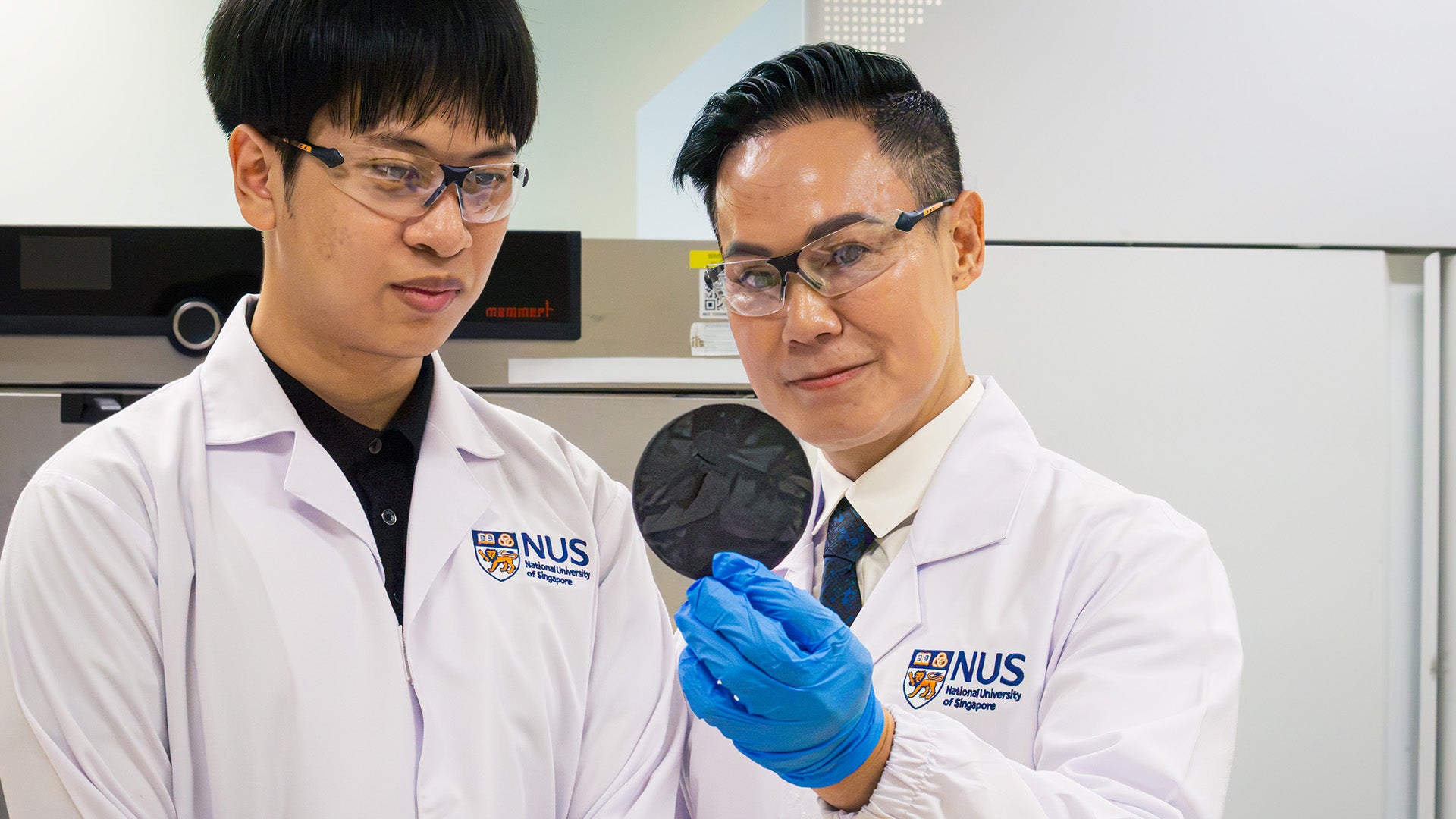
Hard-to-recycle carbon fibre composite waste could have a new lease of life as lightweight aerogels for thermal insulation, sound absorption and oil spill clean-up.
Widely used in aircraft, wind turbines, cars and other high-performance structures to improve strength, cut weight and resist corrosion, these composites combine strong carbon fibres with epoxy resin. However, once the epoxy is cured, it cannot simply be melted down and reshaped. Most existing recycling methods focus on recovering the fibres while destroying or discarding much of the resin.
A team led by Associate Professor Duong Hai Minh, with PhD student Mr Ngo Minh Quang Phan as first author, developed a different approach. By mechanically processing the waste, they were able to use both the carbon fibre and epoxy components to create a light, porous aerogel.
In tests, the material showed low thermal conductivity and good sound absorption, while a water-repellent version was able to absorb large amounts of oil, pointing to potential applications in insulation, sound control and environmental clean-up.
The research offers a possible route to recover more value from difficult-to-recycle composite waste while reducing what is discarded at the end of a material’s useful life.
The study was published in the scientific journal Waste Management.
Read more here.
Major Grants Awarded
The major grants (start date in January 2026) with total project value > $1M.
| Hosting Unit | Project Title | Funding Programme (Source of Funding) |
Principal Investigator | Co-Investigator |
|
MSE |
Lifting the Fog: Unveiling Materials Dynamics in High-Pressure Gaseous Environments Using Graphene Gas Cells With Atomic Resolution and Single-Atom Sensitivity |
AcRF Tier 2 Grant – 2026 / MOE |
He Qian |
Wan Yi; |
|
ChBE |
Advancing Circularly Polarized Luminescence in Metal Nanocluster for Next-Generation Light-Emitting Devices |
AcRF Tier 2 Grant – 2026 / MOE |
Xie Jianping |
|
|
BME |
Next-Generation AI-AR-Enabled Navigation Platform for Safe and Precise Minimally Invasive Surgery With Multi-Modal Generative Intelligence |
AcRF Tier 2 Grant – 2026 / MOE |
Jin Yueming |
Gao Yujia (Surgery) |
|
i-FIM |
Tuning Quantum Phenomena in Multitwisted Van Der Waals Heterostructures |
AcRF Tier 2 Grant – 2026 / MOE |
Alexey Berdyugin |
|
|
CFIS |
Rapid deployment of Movable Coastal Barrier based on Screw pile and Caisson foundation (MCB-SC) |
Coastal Protection and Flood Management Research Programme (CFRP) – 2026 / NRF |
Rui Shengjie |
Chew Soon Hoe; Yuzhu Li, Pearl |
|
ChBE |
Understanding Upscaling Loss in Doctor-bladed Perovskite Solar Cells |
/ Qingdao Institute of Bioenergy and Bioprocess Technology, Chinese Academy of Sciences |
Hou Yi |
|
|
MSE |
The AI Foundry: Foundational AI, Data and Autonomous Laboratory Platform for Advanced Compositionally Complex Alloys and Ceramics |
NRF Returning Singaporean Scientists Scheme (NRF-RSSS) – 2026 / NRF |
Ong Shyue Ping |
|
|
CMS |
Economic Value and Impacts of Maritime Decarbonization Measures on Singapore |
Singapore Maritime Institute (SMI) Policy Research – 2026 / SMI |
Ng Szu Hui; |
Chai Kah Hin; Su Bin (Energy Studies Institute); |