CDE3301 Projects for January 2027 and August 2027 semesters
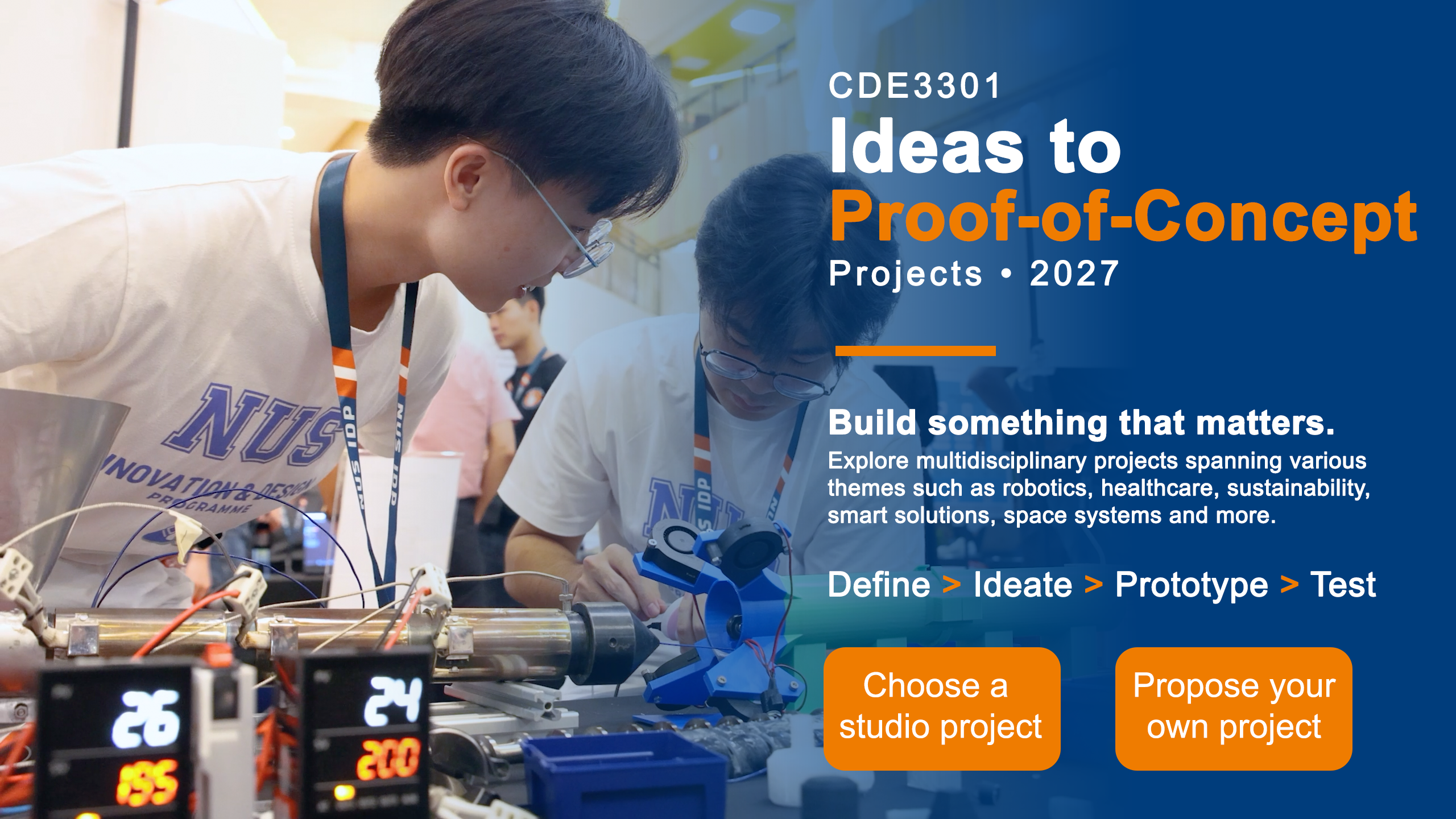
CDE3301 Ideas to Proof-of-Concept is a two-semester project course which focuses on conceptualisation, implementation and realisation of a product solution to solve an identified problem while providing experience in an integrated product design and development process where technology plays a central role. Through lecture classes, studio sessions and an open-ended project, you will learn how to create a product idea to address a problem of interest, generate and evaluate concept designs, and build proof-of-concept prototypes for user testing. You also learn how to work in a multidisciplinary team and with various stakeholders.
Find out more about course, the staff/industry-proposed projects, and student-proposed projects that will be offered for the next run of CDE3301 in the January 2027 and August 2027 semesters. Everyone is welcome to enrol in this course!
GEAR UP! for 3301
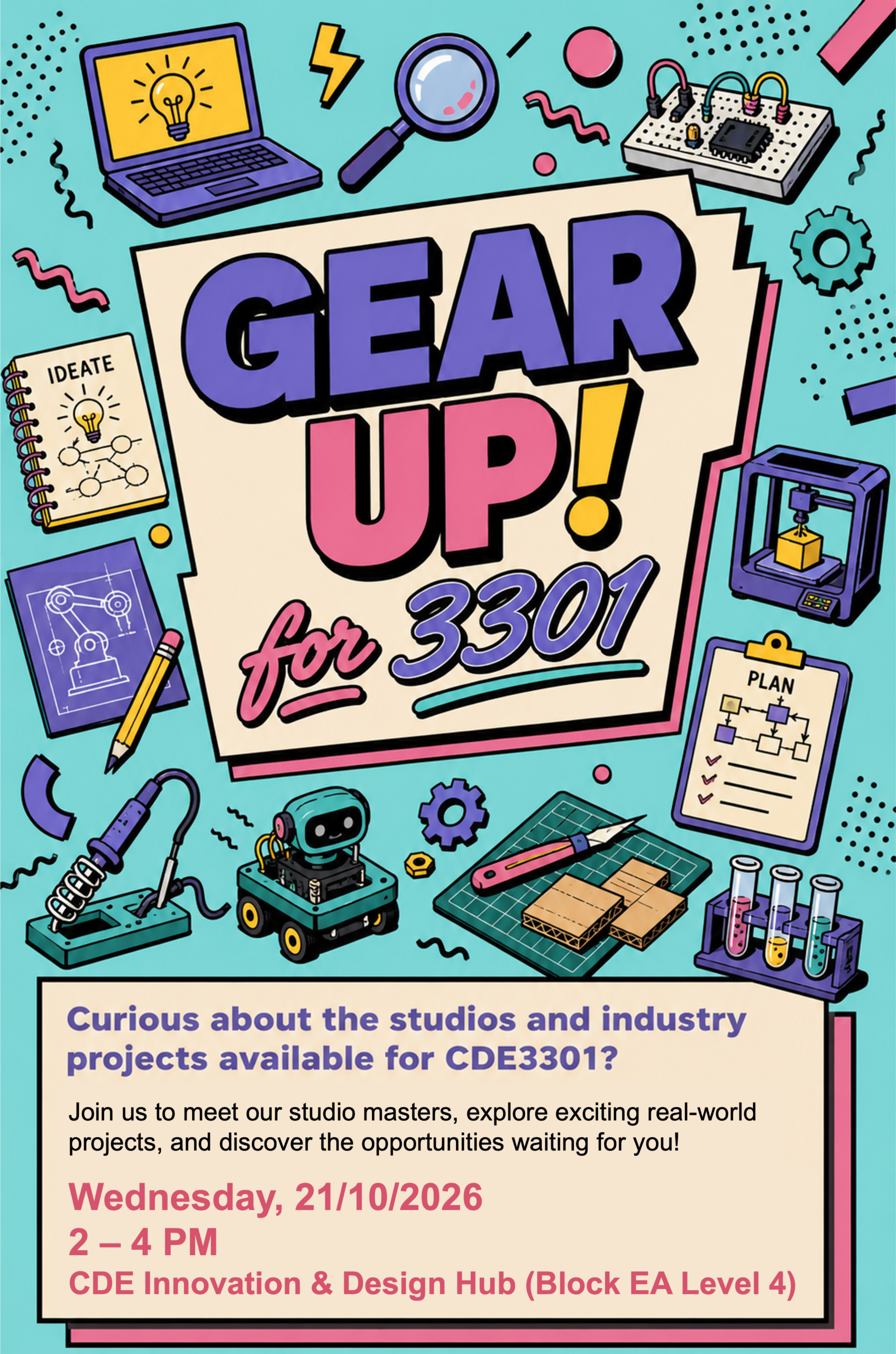
Curious about the studios and projects you could work on in the next run of CDE3301 in 2027? Come and get an early look at the exciting opportunities that are lined up for the course!
🏗️ Discover the studios
Meet the project supervisors (a.k.a. “studio masters”) and learn about the different project themes, challenges and areas you can explore in CDE3301.
🌏 Explore industry projects
Get a preview of real-world projects offered by industry partners and find out what you could be working on.
💡 Find what excites you
Whether you’re into designing, building, prototyping, experimenting or tackling real-world problems, come discover a project that sparks your interest!
🤝 Recruit your teammates
Meet other students who are interested in the same projects, and start forming your CDE3301 team.
🗓️ Wednesday, 21 Oct 2026
⏰ 2 PM to 4 PM
📍 CDE Innovation & Design Hub (Block EA Level 4)
No registration is needed for this event. Come curious, ask questions, and GEAR UP for 3301! 🚀
CDE3301 course timeline
CDE3301 runs across the January and August semesters of each calendar year and is roughly divided into three phases:
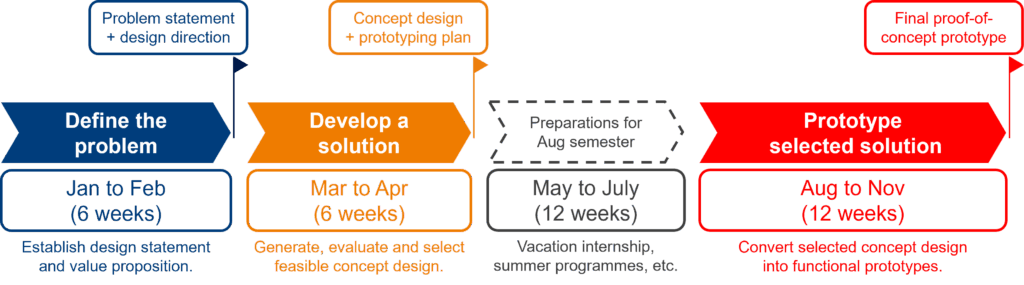
You must be in NUS for both semesters of CDE3301. You cannot enroll concurrently in credit-bearing internship or go on overseas student exchange or an NOC programme during both semesters of the course.
Completing CDE3301 during Special Term
If you would like to embark on credit-bearing internship, student exchange, or NOC in the August semester, you can opt to complete CDE3301 during Special Term (i.e. May to July) immediately after the first semester of the course, subject to the following conditions:
- Everyone in your project group must complete CDE3301 together during Special Term regardless whether they are in NUS in the August semester.
- The second half of CDE3301 cannot be taken concurrently with a credit-bearing vacation internship during Special Term.
Hence, if you puruse this option, you need to form a team up with other students who can complete the same project with you during Special Term.
CDE3301 project selection exercise
The project selection exercise will be open until 1 December 2026. You can select from the list of thematic studios or student-proposed projects to join, or propose your own projects for CDE3301.
Watch this space for the link to the online project selection form.
Projects in thematic studios
Projects in similar areas are grouped into thematic studios in CDE3301, with each studio having problem statements from various industry partners. Find out more about these studios and the projects that will be offered under each studio.
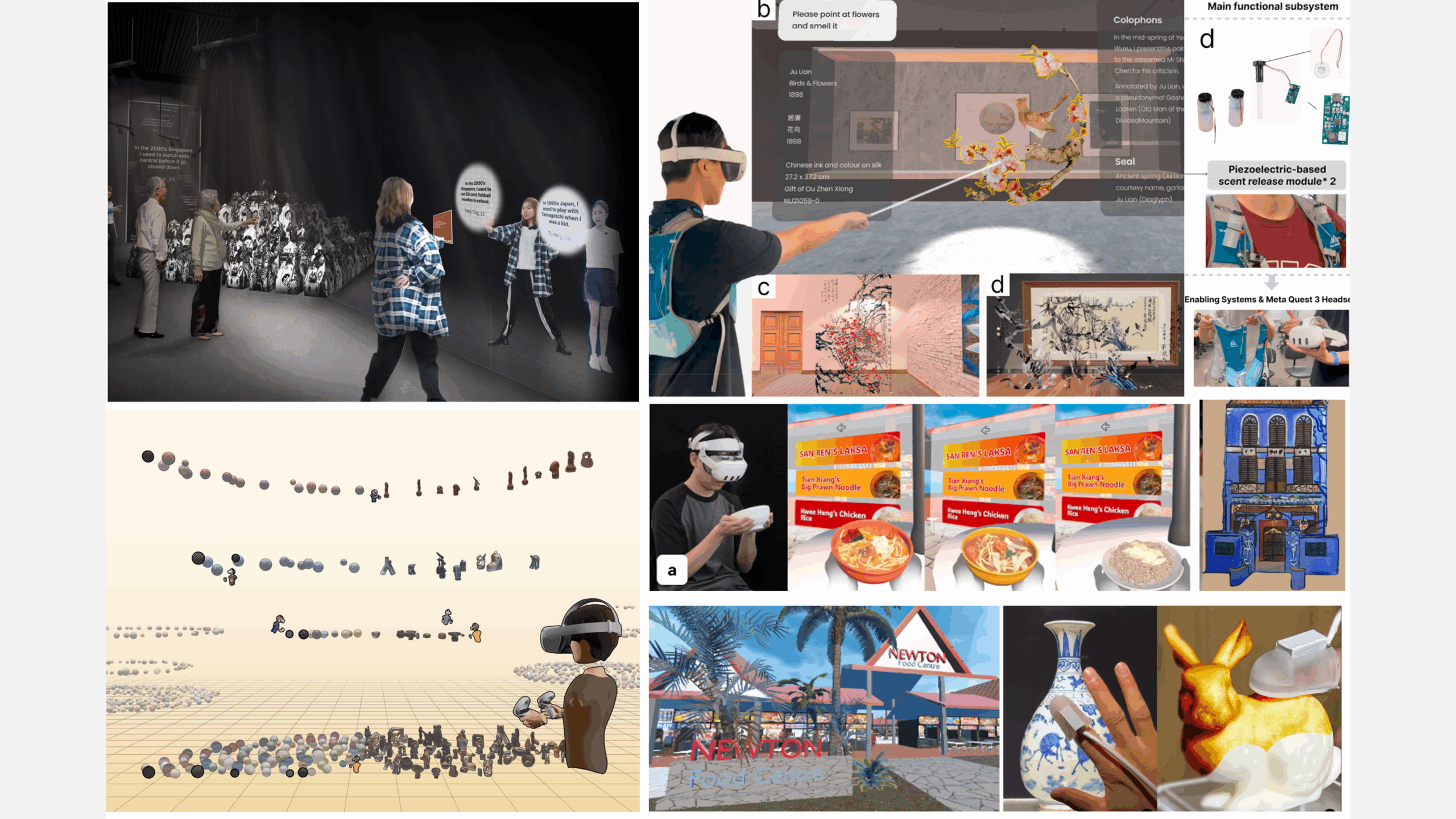
Creative Media Technology (opens in new tab)
Studio slot: Thursday 1 pm to 4 pm
In an age where art, design, and computation converge, Creative Media Technology invites students to explore how immersive systems, generative media, and interactive interfaces can transform storytelling, cultural experience, and public engagement. This studio bridges creativity and engineering innovation, empowering students to design experiences that are both technologically advanced and emotionally resonant.

Defence Technology Studio (opens in new tab)
Studio slot: Thursday 1 pm to 4 pm
As aerial threats become increasingly diverse and sophisticated, air defence faces growing challenges in detecting, tracking, identifying, and responding to threats quickly and reliably. In this studio, students will explore emerging defence technologies, including radar and sensing, computer vision, artificial intelligence, autonomous systems, and sensor fusion, to develop innovative solutions that enhance situational awareness and protect critical infrastructure and assets. Projects emphasise systems engineering, multidisciplinary integration, and iterative prototyping to develop practical, robust solutions for complex and rapidly evolving defence environments.
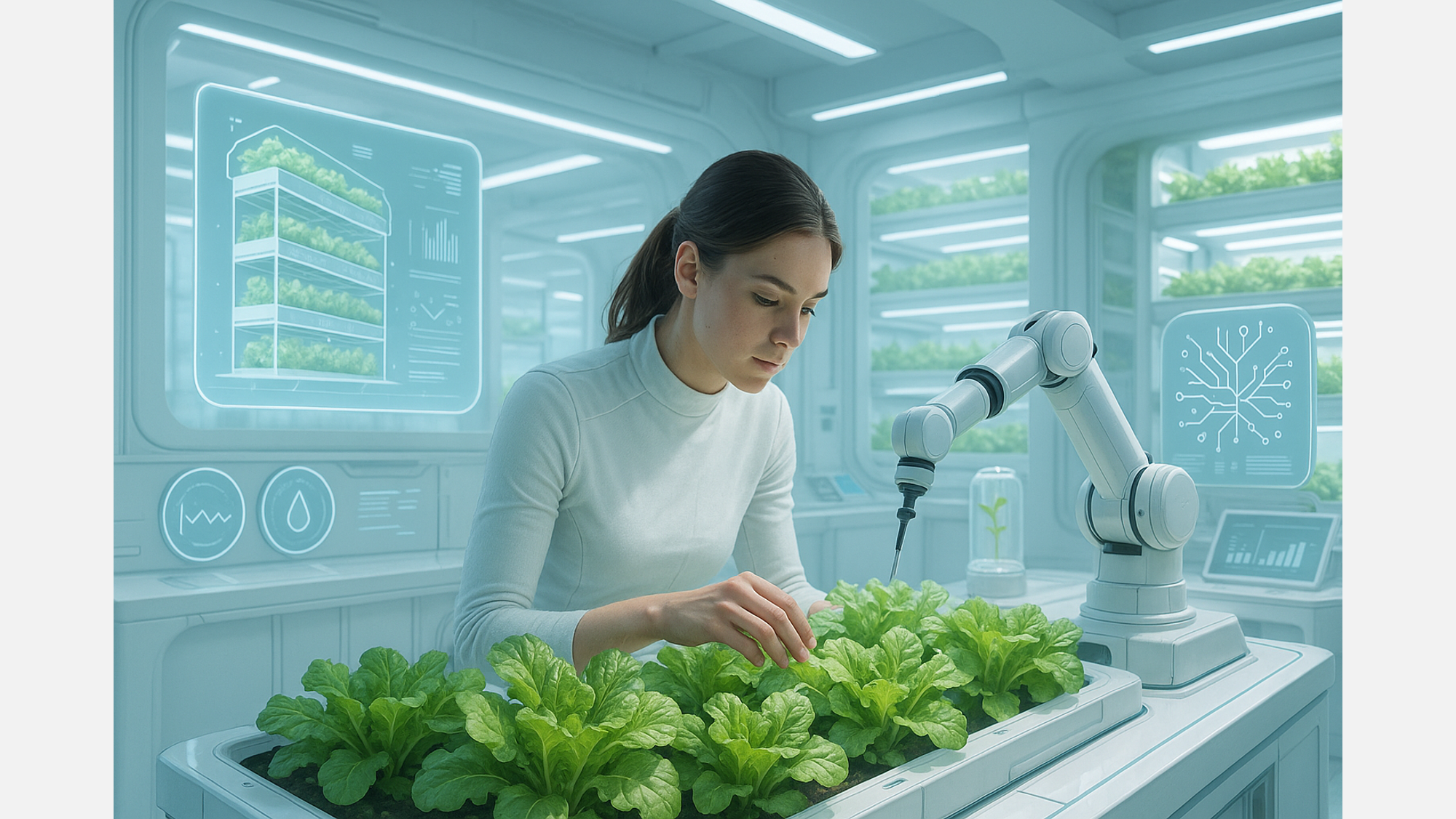
D-Tech Studio: Autonomous Farming Systems (opens in new tab)
Studio slot: Wednesday 9 am to 12 pm
This studio explores the next generation of resilient, equitable food systems using cutting-edge technology. Students will work in interdisciplinary teams to tackle real-world challenges and explore new technologies for precision agriculture that can delivering impactful concepts to transform the food supply chain from soil to table.
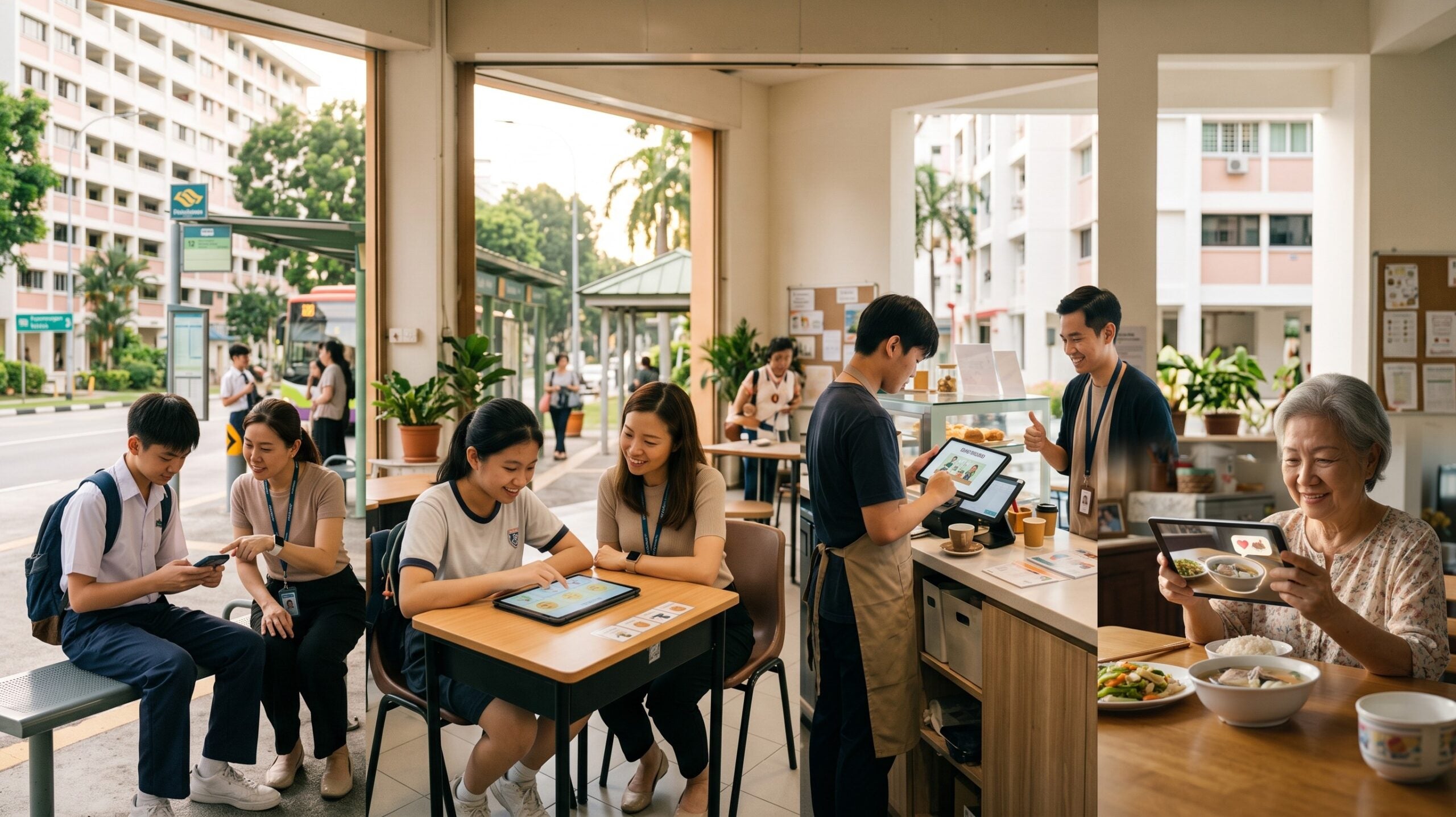
Designing for Community Wellbeing (opens in new tab)
Studio slot: Wednesday 9 am to 12 pm
This studio challenges students to develop inclusive, user-centred technologies that empower youths with special learning needs and seniors to live more independently, confidently and meaningfully. Working with community partners and through hands-on engagement with end users, students will identify real-world needs as well as design, prototype, and test accessible solutions that support daily living, social connection and wellbeing.
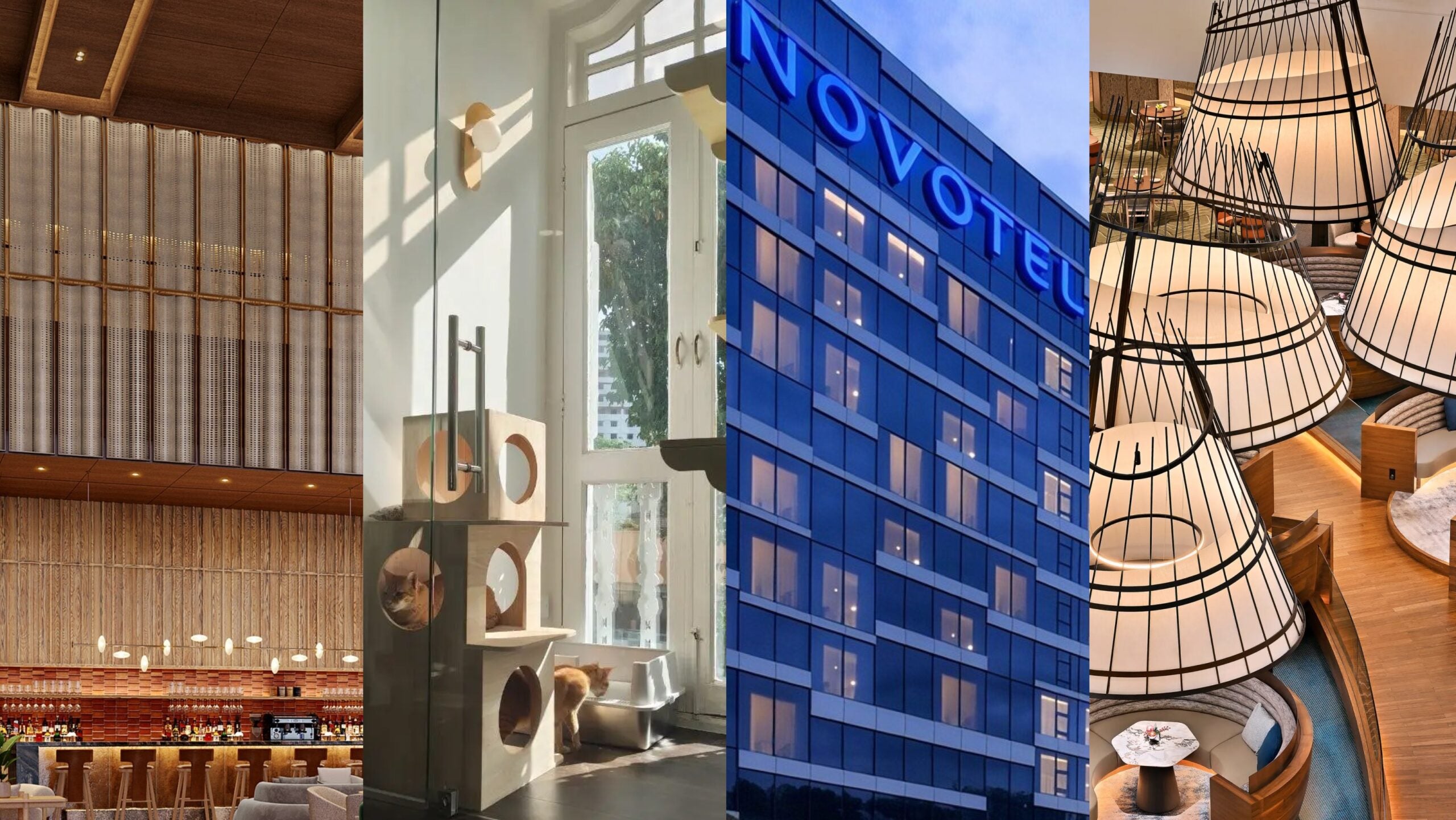
Hospitality Studio (opens in new tab)
Studio slot: Wednesday 9 am to 12 pm
This studio explores how technology can transform frontline hospitality by enhancing service quality, improving operational efficiency, and delivering more personalised guest experiences. Students will investigate real-world challenges faced by hospitality operators and experiment with technologies to develop and prototype innovative solutions that empower frontline staff, streamline operations, and create more seamless, personalised, and memorable experiences for guests.
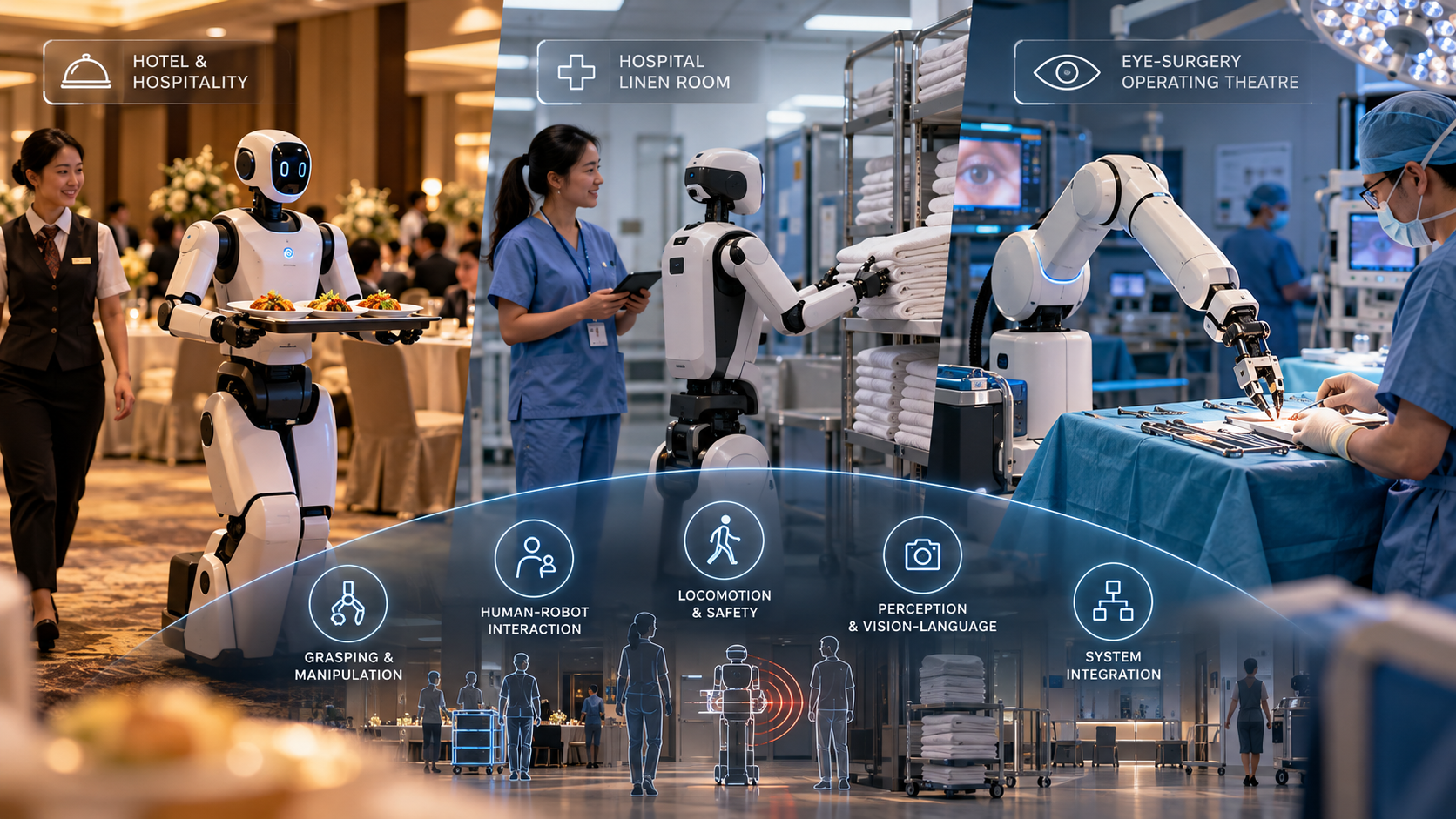
Human-Centred Automation and Robotics (opens in new tab)
Studio slot: Thursday 1 pm to 4 pm
This studio explores the design and prototyping of automation and robotics solutions that address real-world problems in areas such as healthcare and service industries. Through hands-on experimentation and systems thinking, students will work on robotic mechanisms, control systems, and human-machine interaction.
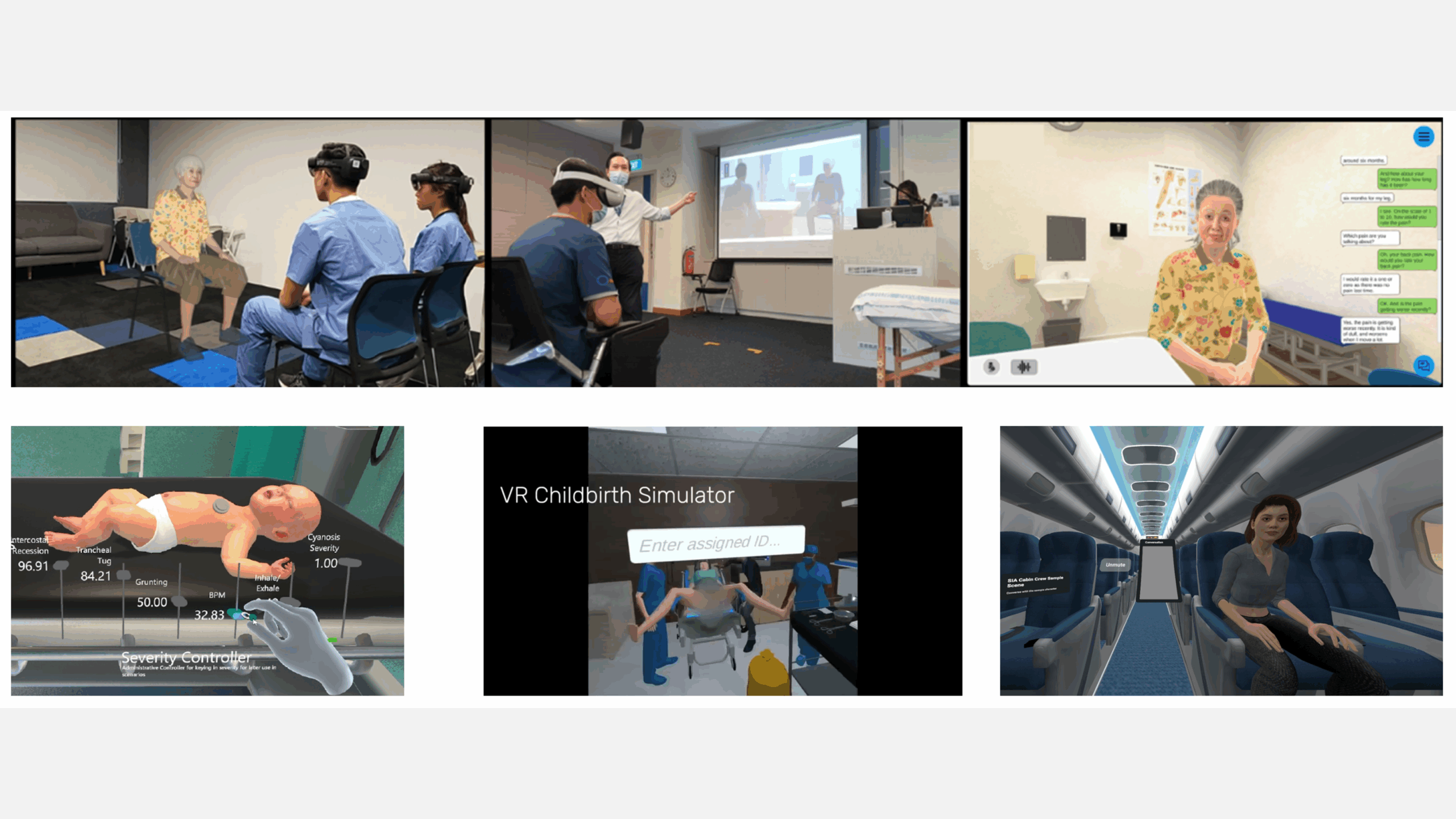
Immersive Intelligence: Transforming Healthcare and Aviation Futures
Studio slot: Wednesday 9 am to 12 pm
In an era where Generative AI, spatial computing, and immersive technologies are redefining how humans learn and perform, this studio invites students to push the boundaries of training and simulation for healthcare and aviation. It explores how Extended Reality (XR) platforms can be integrated with contextual intelligence and large language models (LLMs) to create realistic, adaptive, and emotionally responsive training environments. Students will investigate how immersive systems can be made more intelligent, human-centric, and effective, focusing on both technical innovation and user experience design.
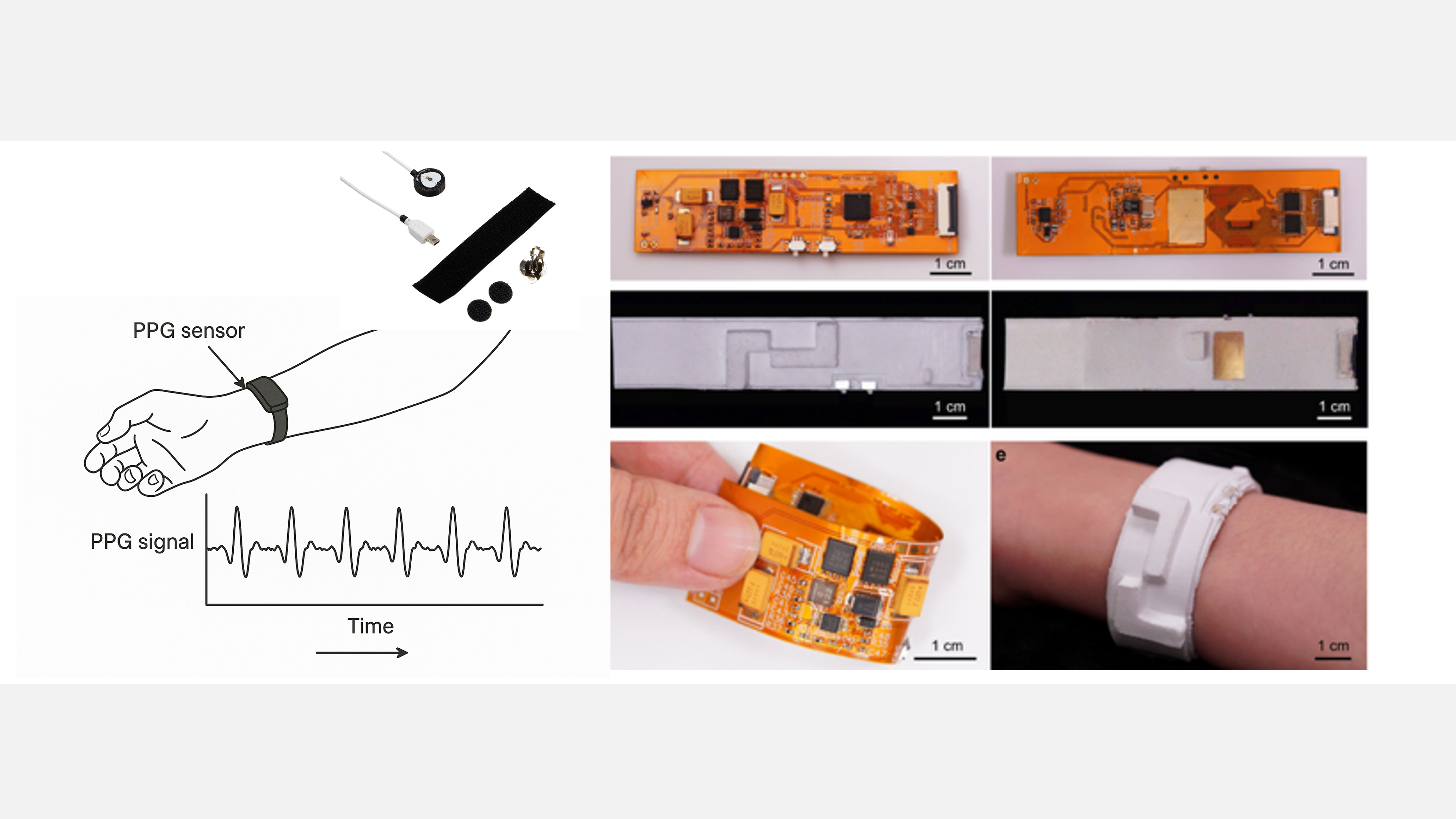
Intelligent Wearable Technology (opens in new tab)
Studio slot: Wednesday 9 am to 12 pm
Wearable technology is transforming the way humans perceive, interpret, and interact with their surroundings. This studio focuses on human-centred intelligent wearable technologies for healthcare applications, exploring how design, sensing, and computation can converge to empower innovative medical care. Through a combination of research, prototyping, and experiential learning, students will investigate how wearable devices can monitor, assist, and enhance human wellbeing across clinical and personal health contexts.

MedTech Innovation Studio (opens in new tab)
Studio slot: Thursday 1 pm to 4 pm
In this studio, students will learn how to create innovative medical technologies to meet the needs of clinicians following the Biodesign methodology which encompasses a thorough analysis of a clinical need, careful selection and evaluation of possible solutions, and development of a proof-of-concept prototype.
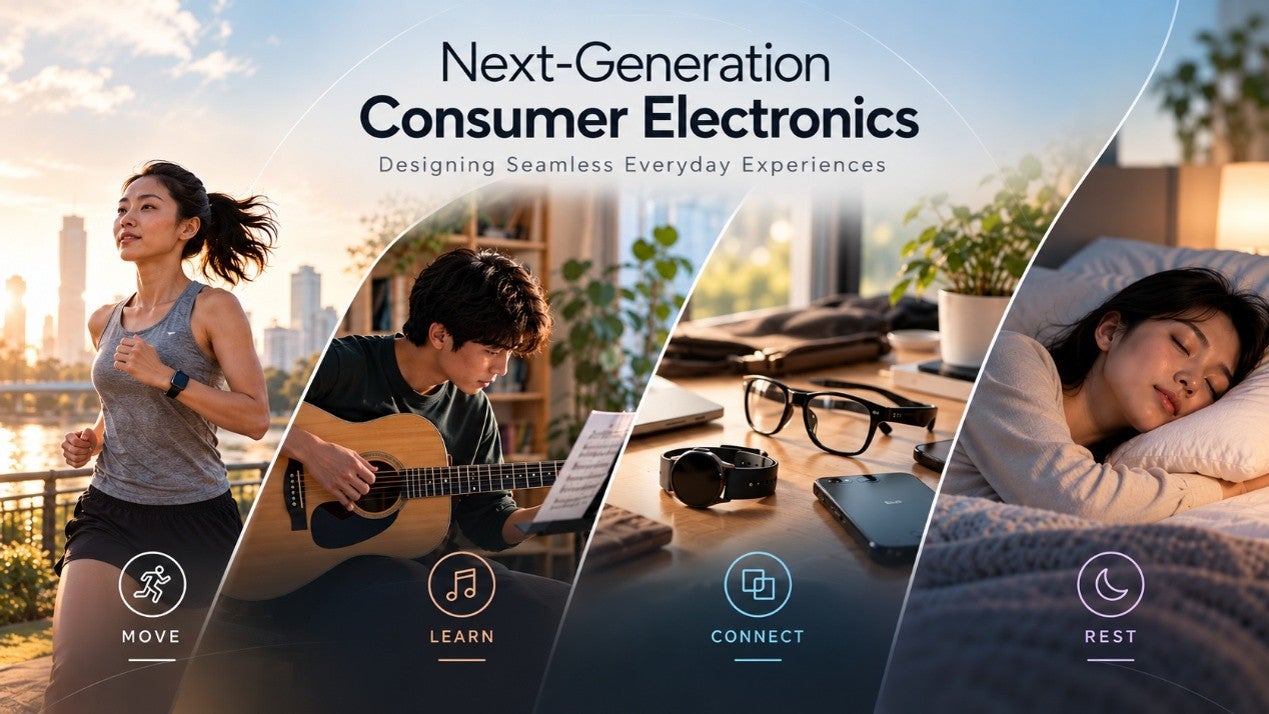
Next-Generation Consumer Electronics (opens in new tab)
Studio slot: Wednesday 9 am to 12 pm
In collaboration with a major consumer electronics company, this studio challenges students to reimagine the next generation of consumer electronic products by exploring emerging technologies and unmet user needs in areas such as sports, music learning, personal well-being, and interconnected devices. Through a human-centred and interdisciplinary approach, students will investigate real-world challenges, identify opportunities for innovation, and develop novel product concepts that integrate technology, industrial design, human factors, and user experience.
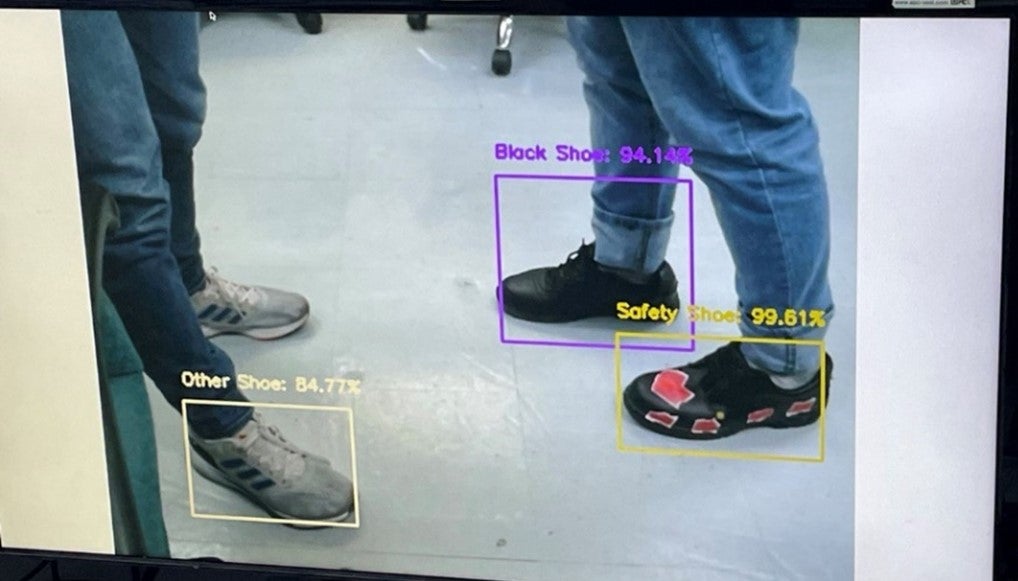
Smart Solutions Studio (opens in new tab)
Studio slot: Thursday 1 pm to 4 pm
This studio brings together like minded students who are interested in artificial intelligence (AI), edge computing, Internet-of-things (IoT) systems and general automation. Along with the studio supervisors, teams will be working together with industry/technology partners to understand the project needs and prototype solutions through a build, test and validation approach that is in line with the project partner's vision.
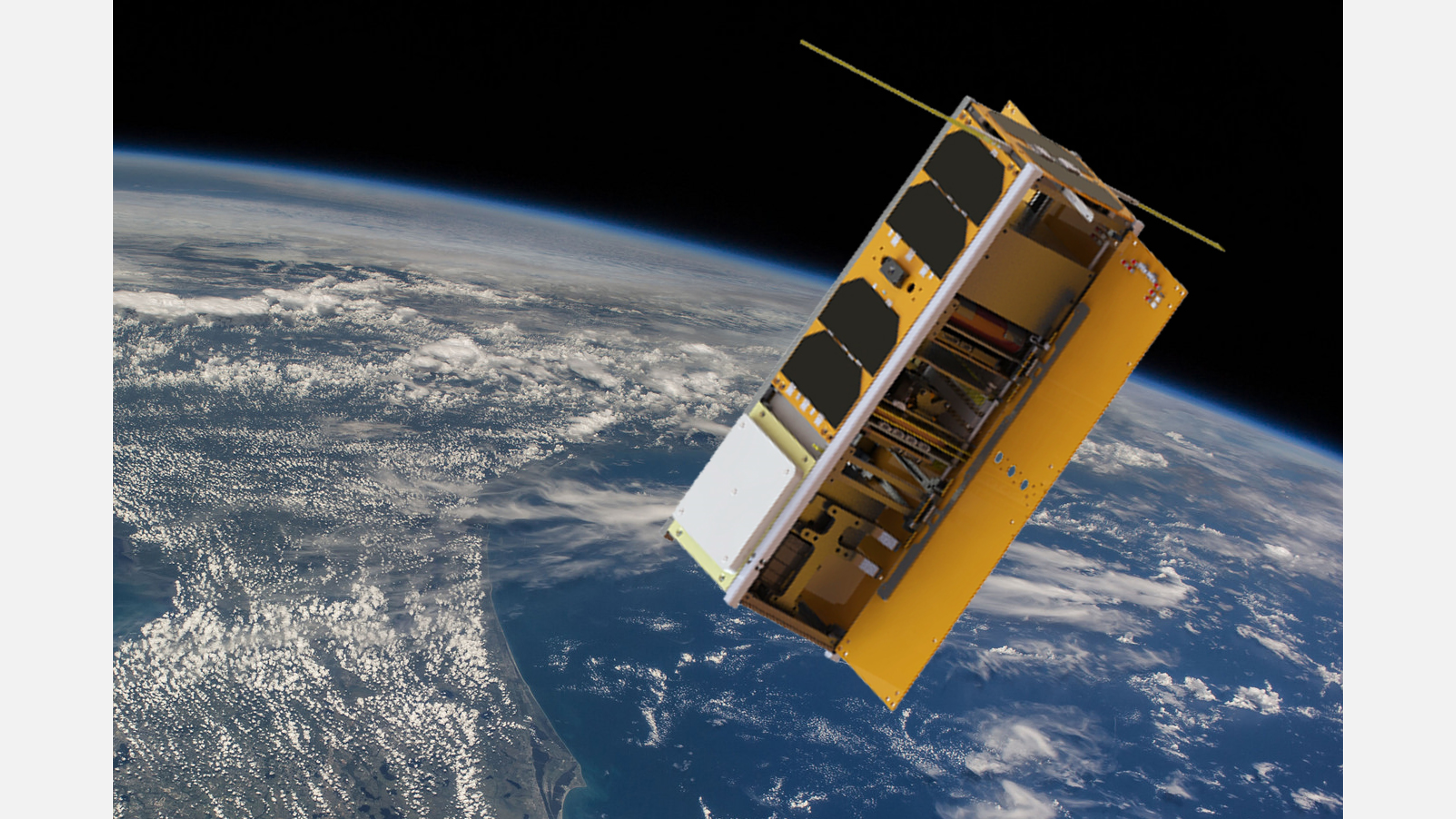
Space Systems Studio: Galassia-5 (opens in new tab)
Studio slot: Tuesday 9 am to 12 pm
This studio aims to bring together like-minded people to take part in projects related to space systems. The studio also aims to get students connected with people in the industry and aims to give them a head start for a career in the local space industry. This studio will focus on the development of the Galassia-5 nanosatellite.
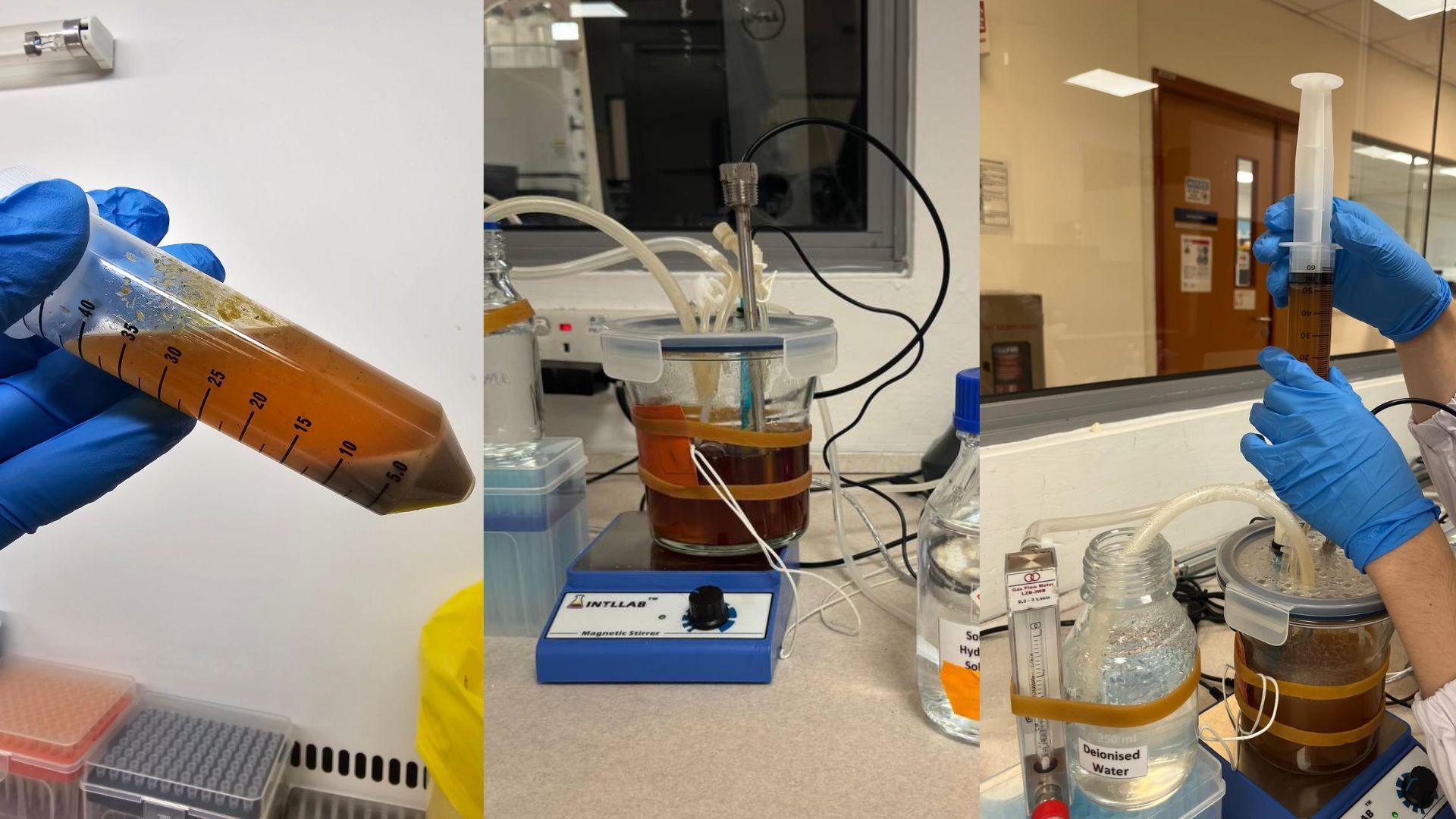
Sustainable Innovation Studio (opens in new tab)
Studio slot: Thursday 1 pm to 4 pm
With significant environmental and economic benefits, many companies and organisations are actively exploring ways to achieve circularity and energy efficiency. This studio explores problems in sustainability by creating products and solutions to promote circularity and improve the efficient use of energy and natural resources that can also lead to creation of new jobs and commercial opportunities for businesses.
Student-proposed projects
Interested to work on projects proposed by your peers? Find out more about these student-proposed projects and get in touch with the proposers if you are keen to join them!
Each student-proposed project should have between 3 and 5 members, preferably from at least 2 different disciplines.