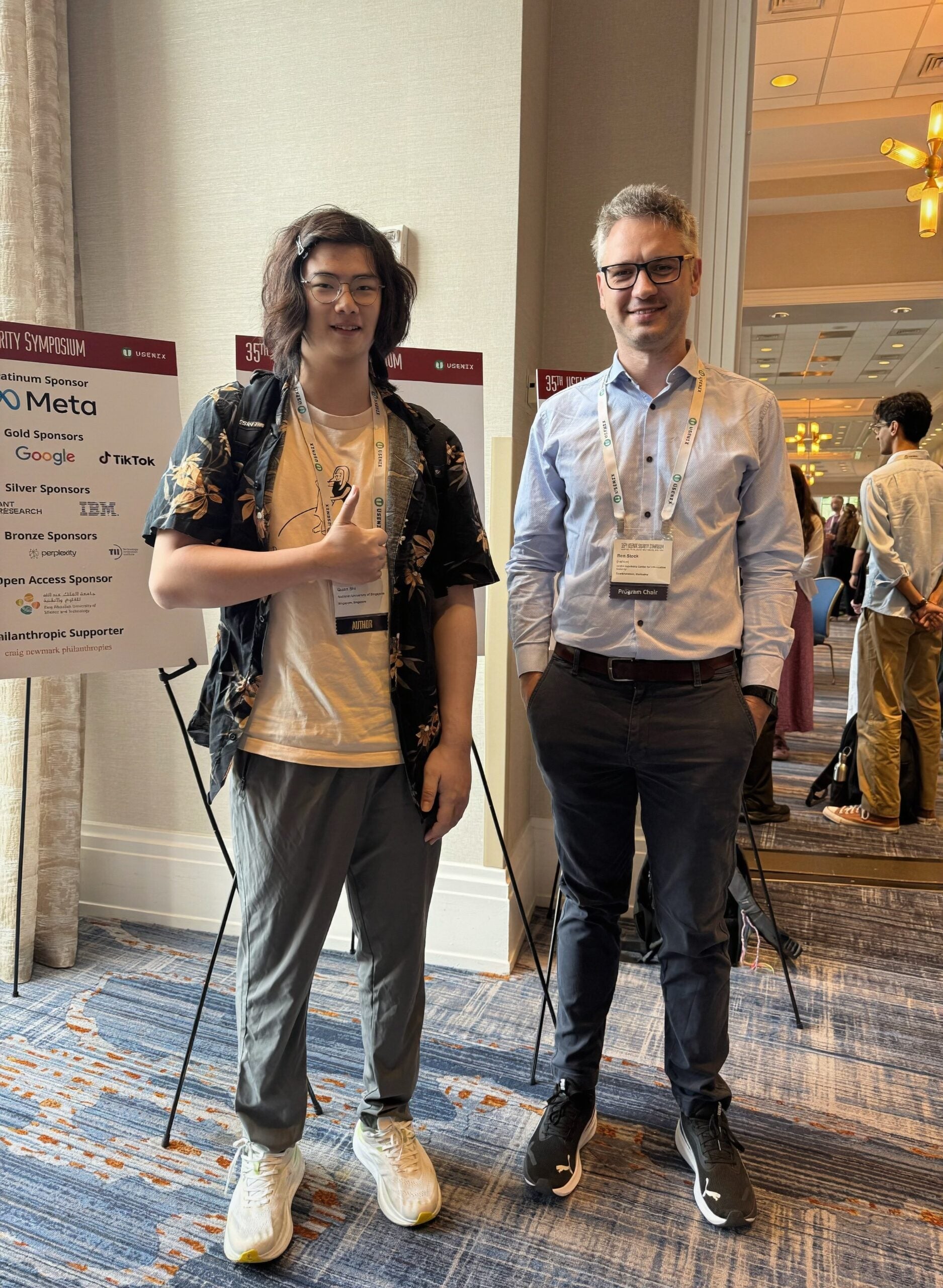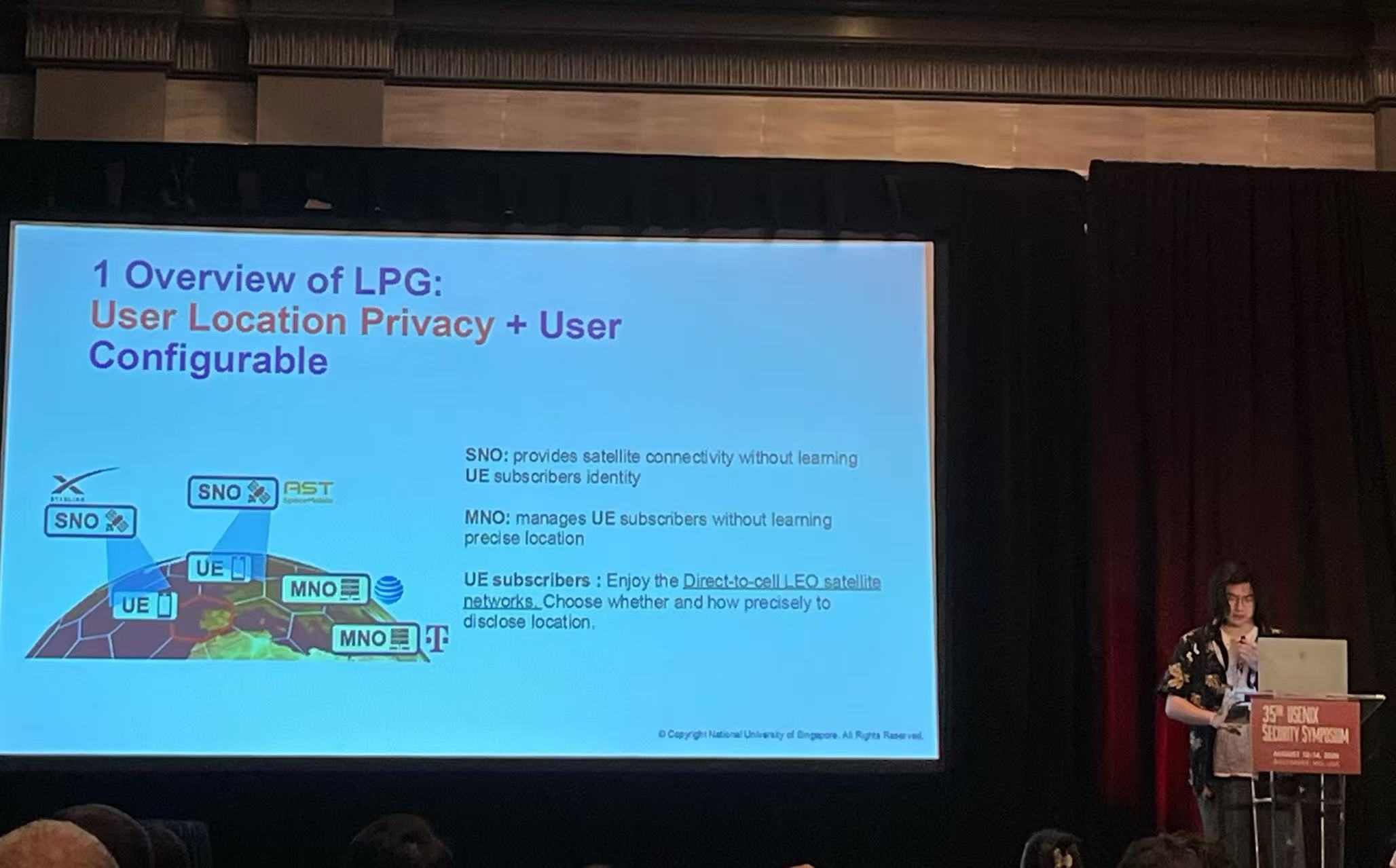

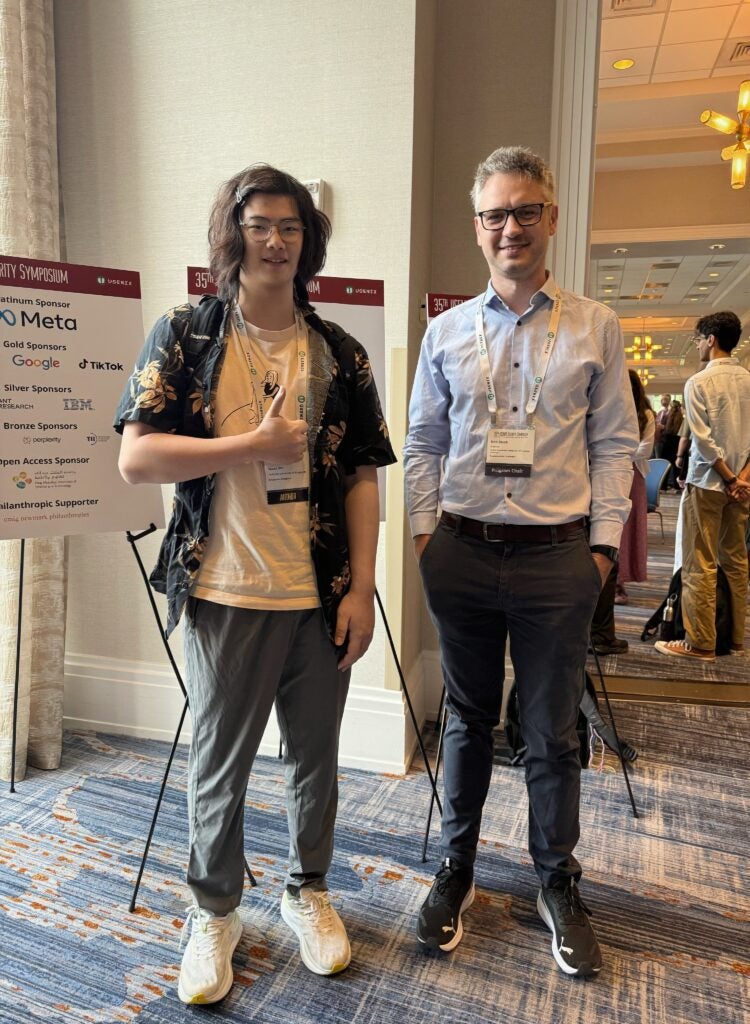
Mr. Shi Quan is the first author of the paper, which was co-authored with Prof Sikdar and other research collaborators. The work investigates location privacy risks in emerging Direct-to-Cell Low-Earth-Orbit (LEO) satellite networks and introduces a framework designed to strengthen user privacy while maintaining network performance.
Non-Terrestrial Networks (NTNs) extend mobile connectivity beyond conventional ground-based cellular infrastructure through platforms such as satellites. In particular, Direct-to-Cell LEO satellite networks are rapidly emerging as a means of providing connectivity to standard mobile devices, including in remote areas, oceans and disaster-affected regions where terrestrial infrastructure may be limited or unavailable.
While these networks offer significant opportunities to expand global connectivity, their deployment also presents new security and privacy challenges. Among these is the protection of users’ location information, as satellite-based communication introduces new mechanisms through which a user’s location may potentially be inferred.
In the paper, they examine location privacy vulnerabilities in Direct-to-Cell LEO satellite networks and propose LPG, a framework designed to enhance location privacy without compromising network performance.
A key aspect of the research is its evaluation on a real in-orbit LEO satellite platform. This provides practical validation of the proposed approach under the resource constraints of an operational satellite environment, complementing conventional evaluations based on simulations and laboratory settings.
The findings demonstrate the feasibility of incorporating privacy-preserving mechanisms into emerging satellite communication systems while maintaining their operational requirements. Such approaches could contribute to the development of more secure and privacy-conscious satellite-enabled mobile networks as Direct-to-Cell technologies continue to evolve.
The USENIX Security Symposium is a leading international forum for research in computer and network security, bringing together researchers and practitioners working across a broad range of cybersecurity topics. The 35th edition of the symposium was held from 12 to 14 August 2026 in Baltimore, Maryland, USA.
The Distinguished Paper Award recognises papers that demonstrate particularly strong contributions to the field. The award reflects the technical quality and research significance of the work, and highlights the importance of addressing privacy and security considerations as satellite and mobile communication technologies increasingly converge. The recognition also underscores the contributions of NUS ECE research to emerging challenges in cybersecurity, privacy and next-generation communication networks.