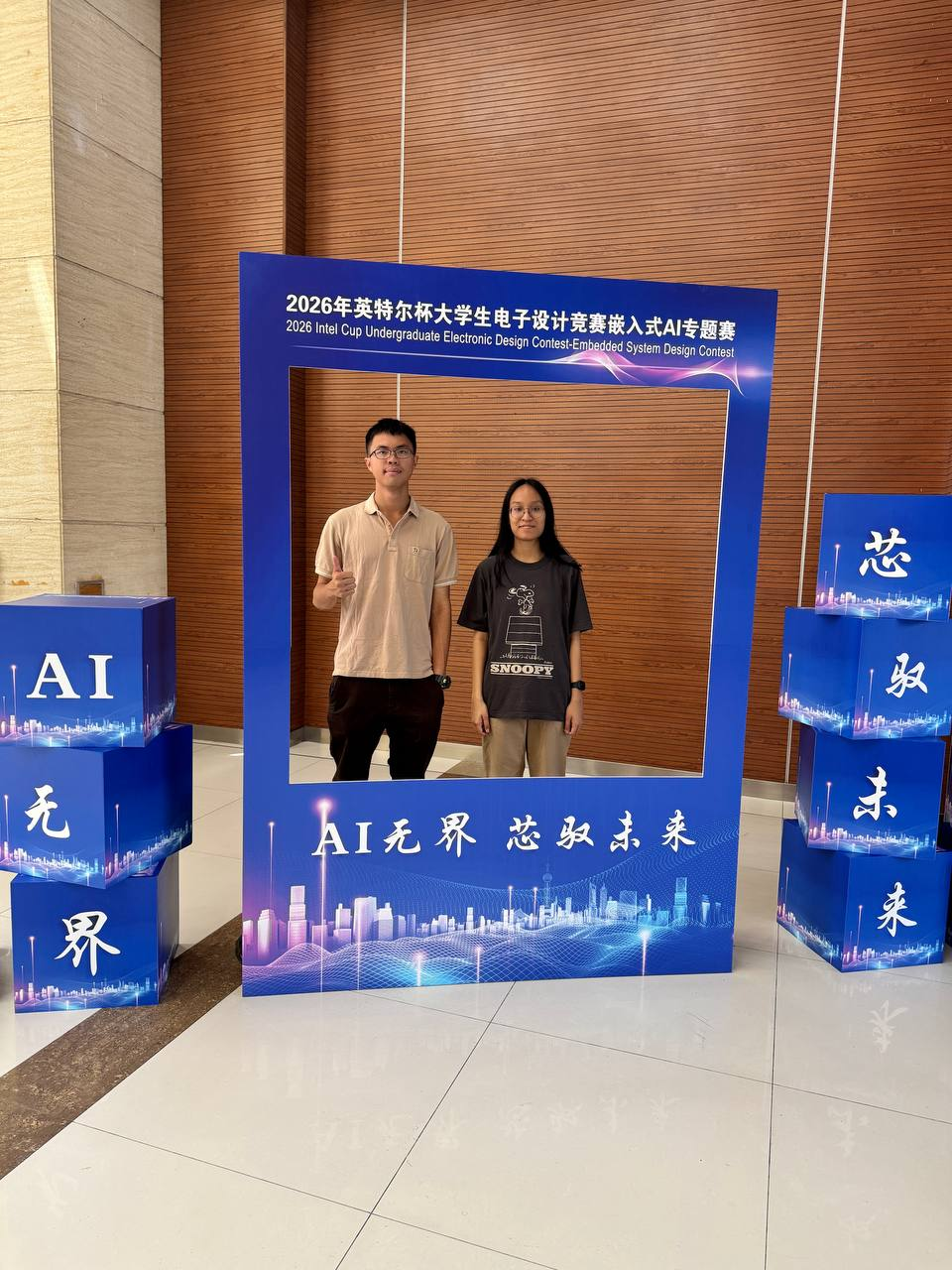

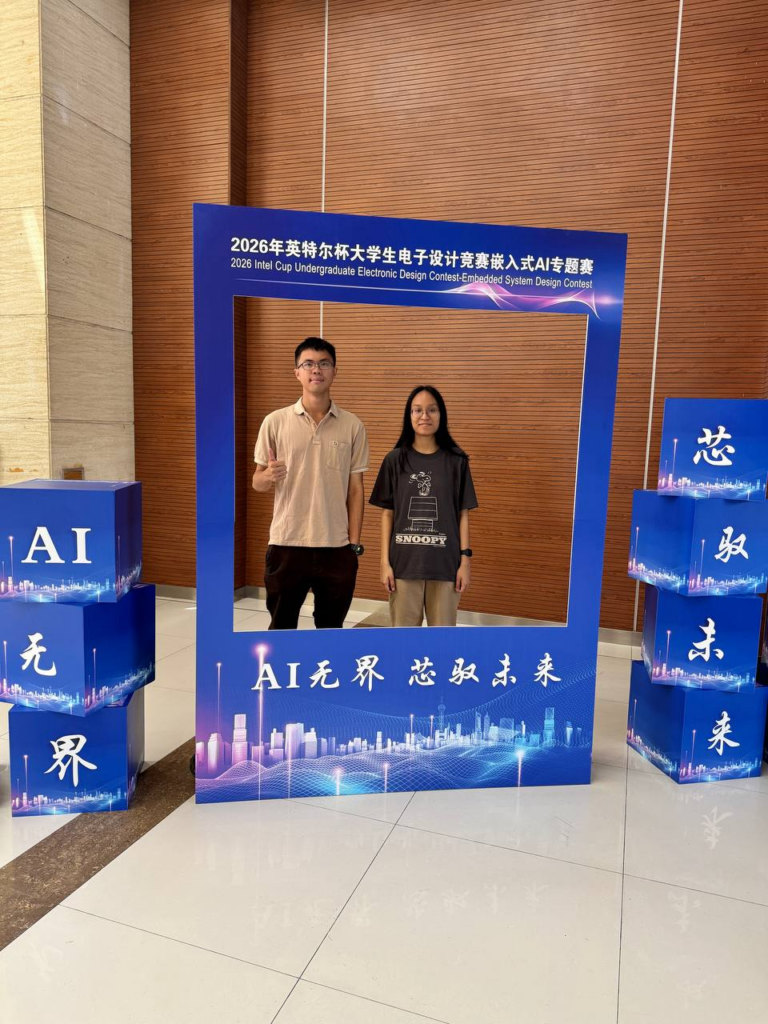
The Intel Cup Undergraduate Electronic Design Contest – Embedded System Design Contest is an international undergraduate competition focused on embedded system design and innovation. The 2026 edition brought together teams from universities across multiple countries and regions, with the appraisal conducted in Shanghai on 21 and 22 July 2026.
EdgeSight was developed around a simple but important challenge: everyday indoor environments can change in small ways that may be difficult for visually impaired users to detect. A chair may be moved, an object may be left in a walkway, or another person may enter the user’s path.
While cloud-based visual assistance systems can help interpret such environments, they may introduce concerns around privacy, latency and connectivity. EdgeSight addresses these challenges by performing the visual processing locally on the device. Built on Intel’s DK-2500 development board, the system uses an ESP32 camera to continuously capture the surrounding environment. A local vision-language model then generates descriptions of the scene, while a reasoning agent analyses the information to identify potential hazards and respond to users’ spoken questions. The system adopts a speech-first interaction model, allowing users to interact with the assistant through voice. Importantly, the visual and reasoning processes are p erformed entirely on-device, so the captured data does not need to be transmitted to external cloud services.
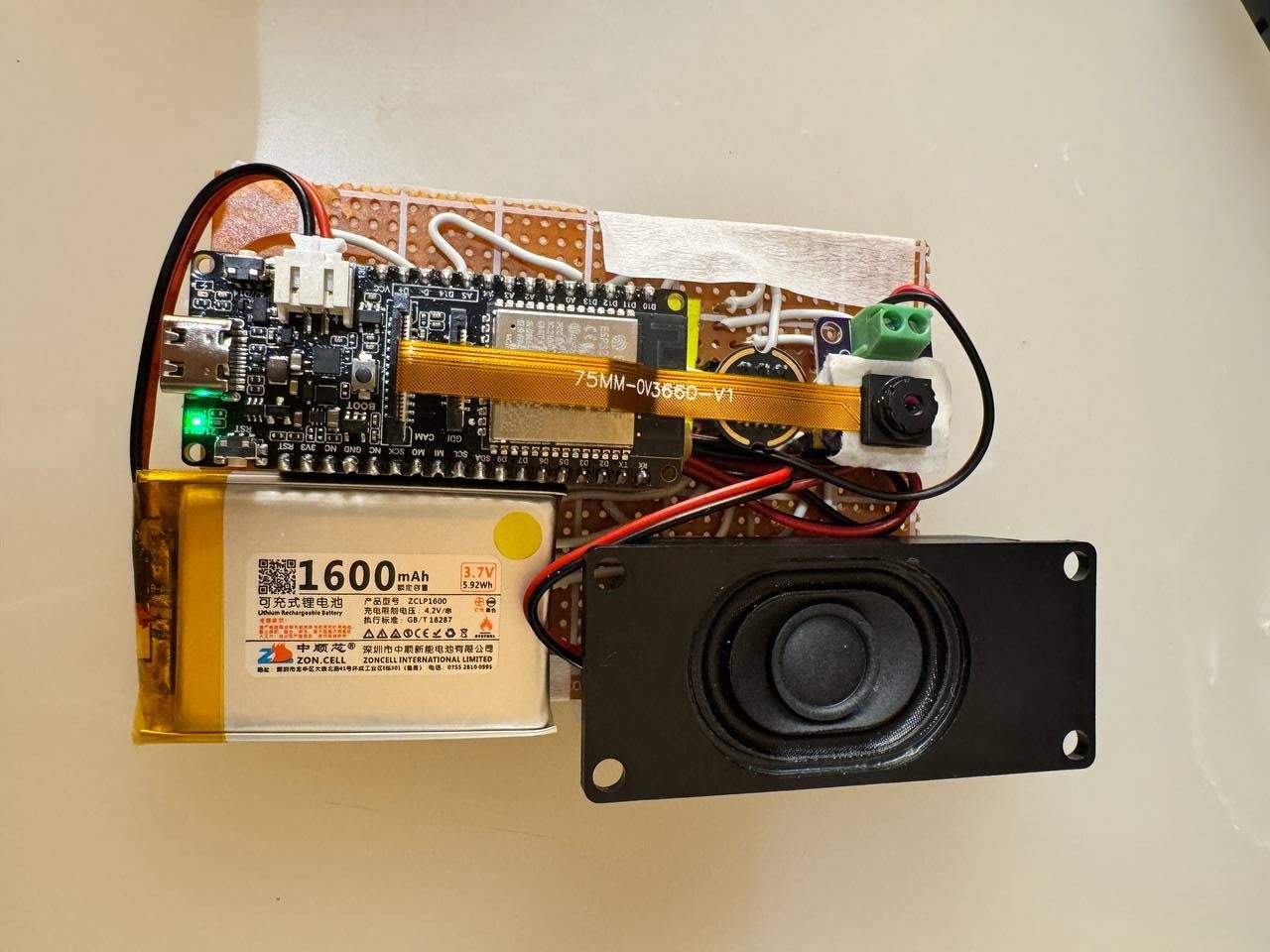
The team evaluated EdgeSight across a range of scenarios, including general scene description, spatial awareness and hazard detection. They also incorporated warning-suppression logic to reduce unnecessary alerts, helping the system distinguish between situations that require user attention and those that do not. Through this combination of embedded hardware, computer vision, vision-language models and intelligent reasoning, EdgeSight demonstrates how edge AI can be applied to develop more private, responsive and accessible assistive technologies.
The project also highlights the value of interdisciplinary student learning, bringing together knowledge in electrical engineering, computer engineering, computer science and embedded system design to address a real-world accessibility challenge.
NUS ECE congratulates Badrinath Sandhya, Chan Zun Mun Terence and Hsu Myat Noe on this achievement and for demonstrating how engineering and AI can be harnessed to create technologies with meaningful social impact.